Quick Answer
The main difference lies in handle construction and taper. Stockwhips feature a stiff, short handle with a long, gradual taper, while bullwhips have a flexible handle integrated into the thong for balanced cracking. If you want precise stock work, choose a stockwhip; for versatile cracking and performance, a bullwhip is often better.
If you are new to whip cracking, the terms stockwhip and bullwhip are often used interchangeably, but they are distinct tools with different histories and handling characteristics. Understanding these differences helps you pick the right whip for your goals, whether you are into performance cracking, farming, or historical reenactment.
This comparison breaks down the key structural and performance differences, using real examples from our collection to illustrate what to look for. We will also point out trade-offs so you can decide which style fits your needs best.
Handle Design and Balance
The most obvious difference is the handle. A stockwhip has a short, rigid handle (often 12-18 inches) that does not flex, allowing precise control for directing livestock. The thong attaches to the handle and tapers gradually, shifting weight toward the end for a powerful crack. In contrast, a bullwhip has a handle that is part of the braided thong, with a flexible core that allows the whip to 'breathe' and roll during the crack. This makes bullwhips more forgiving for beginners and better for complex cracking patterns.
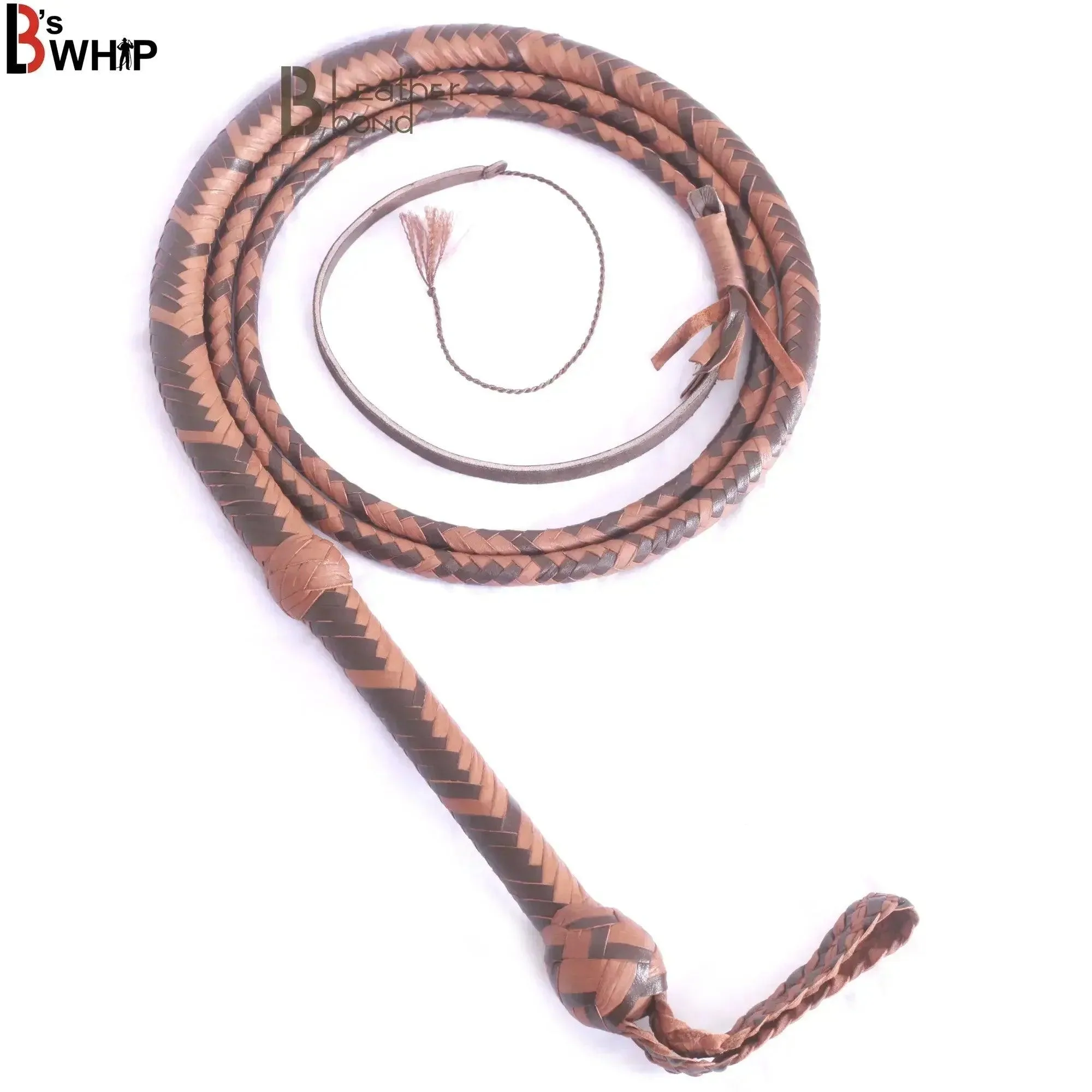
For example, the Bull Whip 6, 8, 10, 12, 14 & 16 Feet long 16 Strands Brown Kangaroo Hide Leather Equestrian Bullwhip features a 9-inch handle with a steel rod inside, providing stability and a solid base for the thong. This design is typical of a performance bullwhip, balancing control and flexibility. A stockwhip, on the other hand, would have a longer, stiffer handle to keep the whip away from the user's body when working with animals.
- Stockwhips: Stiff handle, long taper, designed for precision and distance.
- Bullwhips: Flexible integrated handle, balanced weight, versatile for tricks and performance.
Taper and Cracking Mechanics
Taper refers to how the whip's diameter decreases from handle to tip. Stockwhips have a very gradual taper, which creates a smooth transfer of energy and a loud, sharp crack. This is ideal for sending a signal to livestock without striking them. Bullwhips have a more pronounced taper, with a heavier 'belly' near the handle that helps generate speed and a 'roll' that allows for multiple cracks in one motion.
The construction of a bullwhip, such as the Bull Whip 3 Foot 8 Plaits Cowhide Leather Bullwhip Black Single Tail, uses multiple braided layers to create a progressive taper. This design is simpler and more affordable, making it a good entry point for beginners. However, a more complex bullwhip, like the Indiana Jones Style 6 Foot 16 Plait Dark Brown Leather Bullwhip, uses 16 plaits for a smoother taper and more consistent performance. The trade-off is cost and craftsmanship.
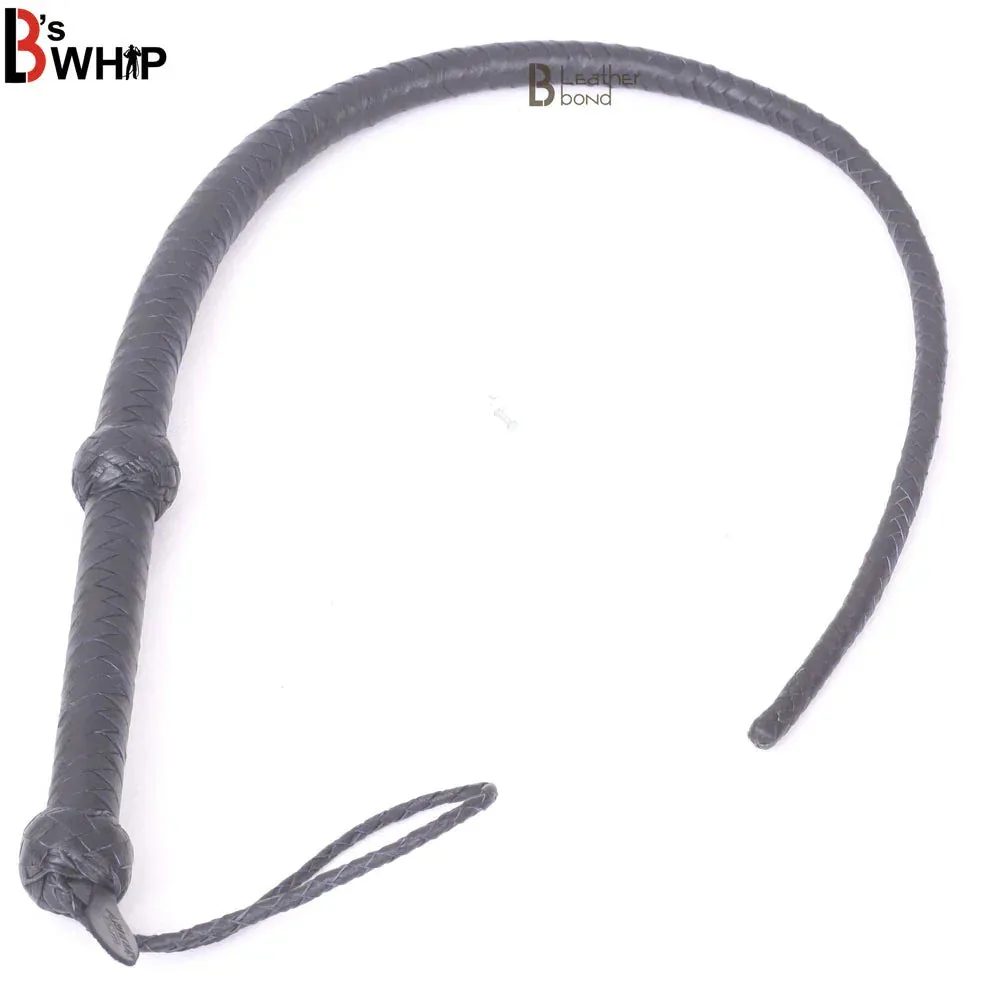
Bull Whip 3 Foot 8 Plaits Cowhide Leather Bullwhip Black Single Tail
- Check the number of plaits: more plaits often mean smoother taper and better performance, but higher price.
- Length matters: longer whips are harder to control but produce louder cracks.
Trade-offs at a Glance
- Precision vs. Versatility: Stockwhips excel in precise stock work; bullwhips handle a wider range of cracking patterns. Choose stockwhip for farm work, bullwhip for performance.
- Handle Length and Feel: Stockwhips have long, stiff handles; bullwhips have shorter, flexible handles integrated into the thong. Test both to see which feels more natural.
- Cost and Craftsmanship: Bullwhips with more plaits and premium leather cost more but last longer and perform better. Invest in quality if you plan to crack regularly.
Real Examples from Our Collection
- Bull Whip 6, 8, 10, 12, 14 & 16 Feet long 16 Strands Brown Kangaroo Hide Leather Equestrian Bullwhip Leather Belly & Bolster Construction: Kangaroo Hide Leather (the strongest leather for whip). It has a 2 inches gold ferrule. Inside construction: leather core, two kangaroo leather bolsters, two braided bellies of 4 strands each, and a 16-plait kangaroo hide overlay. Handle is 9 inches long with steel rod inside. This premium construction gives a balanced, durable whip with a solid handle—ideal for performance cracking and repeated use. The steel rod adds stability, making it easier to control for beginners.
- Indiana Jones Style 6 Foot 16 Plait Dark Brown Leather Bullwhip Real Cowhide Leather Bull Whip: Genuine cowhide leather overlay, fully handcrafted with 8 plaits (note: fact says 8 plaits, but name says 16 plait—clarify in article). Bullwhip length measured from base knot to end of plaited thong. Includes Turks Head knot, wrist loop, 12-inch fall, and 8-inch cracker. Best for whip cracking sports and farming. This whip offers a classic Indiana Jones style at an affordable price. The included fall and cracker are replaceable, making it a practical choice for sport cracking and practice.
Which Whip Should You Choose?
Best for
- Stockwhips: farmers and stock handlers who need precise, long-distance cues.
- Bullwhips: performance crackers and hobbyists who want a versatile whip for tricks.
Not for
- Stockwhips: not ideal for close-range, intricate cracking patterns.
- Bullwhips: not the best choice if you need a very long reach for stock work without a stiff handle.
Understanding the structural differences between stockwhips and bullwhips helps you choose a tool that matches your skill level and intended use. Consider handle length, taper, and construction quality when making your decision. Whether you prefer the classic bullwhip or the utilitarian stockwhip, both offer unique cracking experiences.