Quick answer
Buy the Stone Ruins Add-On Pack (Painted) if you want ready-to-play ruined dungeon terrain without painting, and your goal is vertical, broken-wall spaces. Choose ledges instead if you need negative space such as pits, chasms, and crumbling floors. The two approaches solve different problems, so pick based on the encounter you run most.
What the 19 pieces actually build
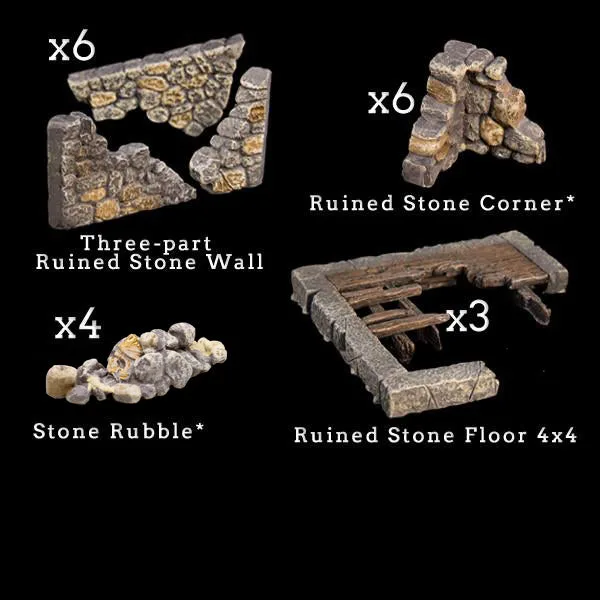
The pack breaks down into six wall sections (two large, two medium, two small), six ruined corners, three 4x4 ruined floors, and four rubble pieces. That mix is built for elevation and broken architecture: walls that stop mid-height, corners that read as collapsed rooms, and floors that sit under the debris. Because the walls come in three sizes, you can stagger heights instead of repeating one silhouette across the table.
The painted finish matters here. Ruins live or die on readable texture, and a painted set skips the priming and drybrushing step that unpainted Dwarvenite requires. If your group plays weekly and you would rather spend prep time on the encounter than on a paint queue, this is the practical pick.
How to set up stone ruins on a table
Start with the three 4x4 ruined floors as your footprint, then place corners to define room boundaries. Use the large wall sections on the outer edge where players will see them, and save the small sections for interior dividers or choke points. Drop the four rubble pieces where a wall meets a floor so the transition reads as collapse rather than a clean cut.
Because the walls are open-topped, ruins play differently from intact dungeons: line of sight runs over the walls in places, so ranged characters and flying enemies get more options. Decide before the session whether you want that openness. If you need full cover, this pack is not the tool; it is designed to leave gaps.
Where this pack fits with the rest of your terrain
Ruins scatter terrain works best as a layer on top of a base layout, not as the whole map. Set your standard dungeon floors first, then use this pack to convert one room into a collapsed antechamber or a partially buried shrine. That keeps your build time short and makes the ruined section feel intentional rather than like the only thing you own.
If you also run tavern or town scenes, note that this pack is stone-only. The Tavern Accessories Add-On Pack covers furniture and props for social encounters, so the two do not overlap; buy them for different session types rather than as substitutes.
Painted versus unpainted: the real trade-off
The painted version costs more up front and removes a multi-evening painting project. The unpainted route saves money but assumes you already have a primer and a paint plan, and Dwarvenite takes paint differently than resin or plastic, so mismatched paint choices show. If you are new to painting terrain, the painted pack is the lower-risk purchase.
One honest limitation: the catalog does not list piece-level dimensions or exact wall heights for this pack, so if you are matching it against an existing grid or a specific build plan, check those measurements before ordering rather than assuming they will line up.
Decision rules for buying ruins terrain
- Choose this pack if you want broken walls and elevation: The 19-piece mix of walls, corners, floors, and rubble is built for collapsed rooms and staggered heights, and the painted finish means it hits the table the day it arrives. Buy it when vertical ruin shapes are the point of the encounter.
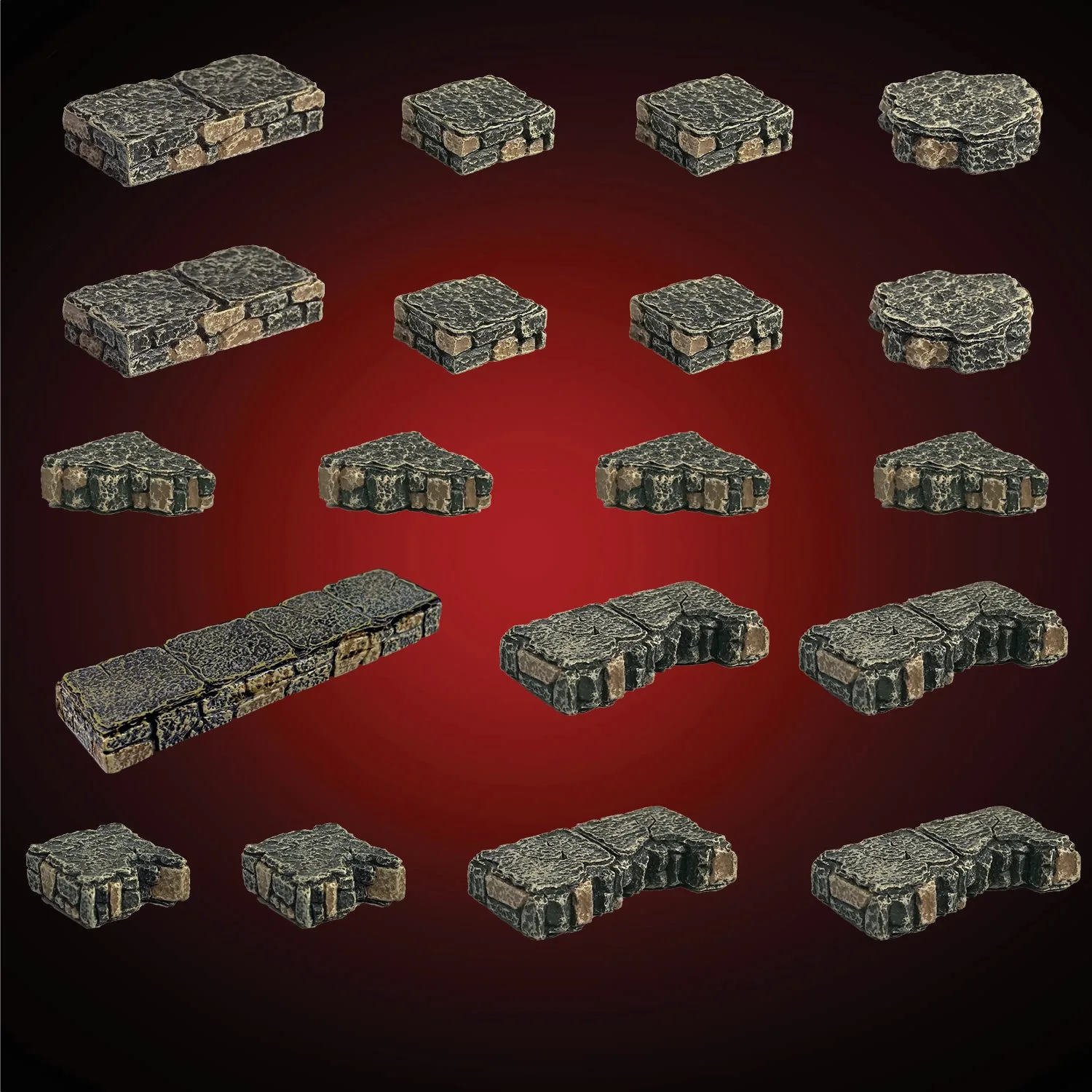
- Choose ledges instead if you need pits and chasms: Ledges are double-sided negative-space pieces for crumbling floors and precarious drops. They are a different build tool, not a cheaper version of this pack. If your encounter has a hole in the floor, ledges are the answer.
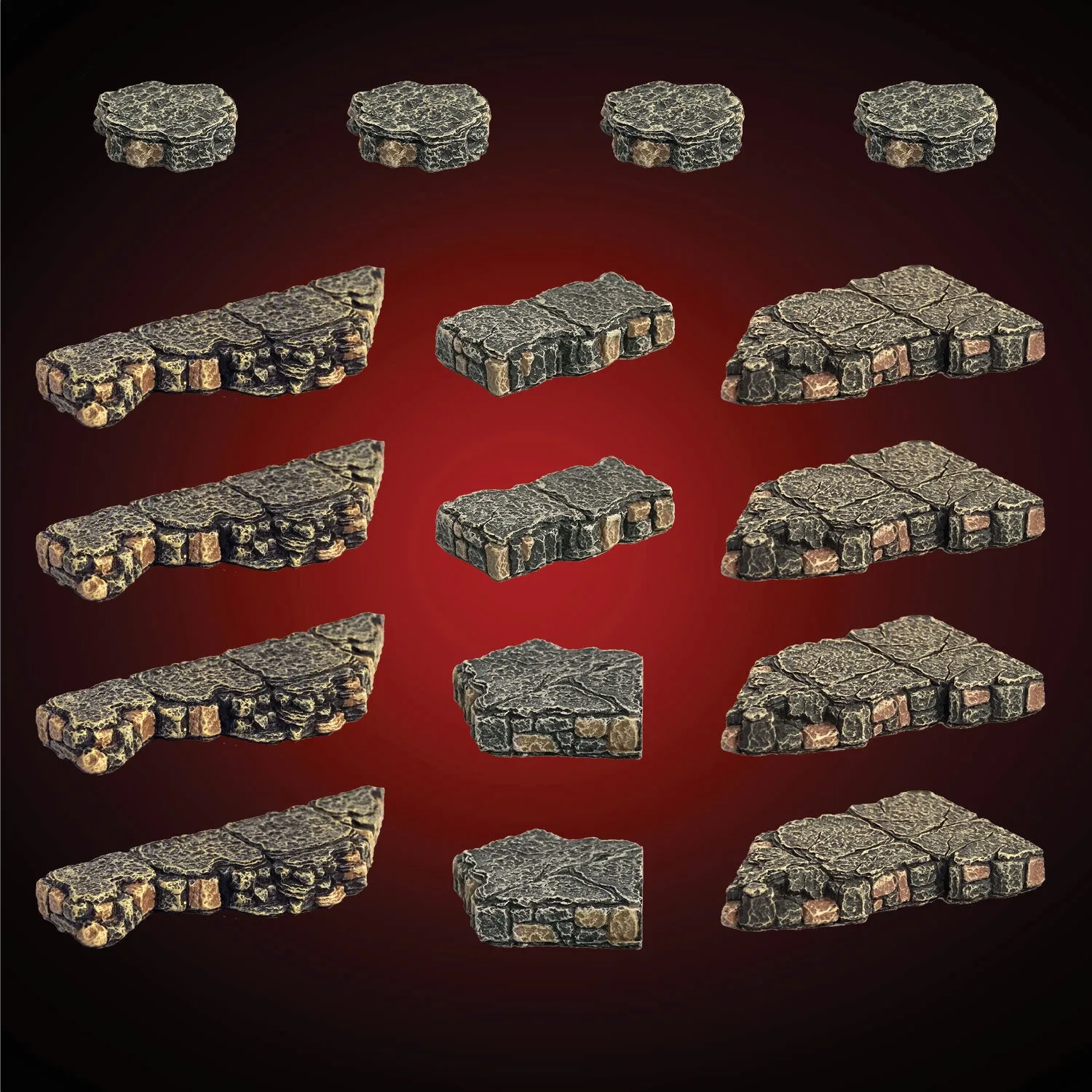
- Add angled ledges only for curves and causeways: The 45 degree pieces create large curves and extended straight edges that straight ruined walls cannot match. Buy them as a supplement, not a replacement. Skip them unless your layout needs curved ruin edges.
- Check measurements before matching an existing grid: The catalog does not list piece-level dimensions or wall heights for this pack, so verify them against your current build if exact alignment matters. Measure first if you are fitting this into a fixed layout.
Product facts
- Stone Ruins Add-On Pack (Painted): Contains 19 pieces: two large, two medium, and two small three-part ruined stone walls, six ruined stone corners, three 4x4 ruined stone floors, and four stone rubble pieces. The wall-size spread lets you vary height and silhouette across a room instead of repeating one wall shape, and the rubble pieces hide the seams where walls meet floors.
- Ledges (Unpainted): Ledges are double-sided pieces for ruined floors, crumbling pits, precarious chasms, and other negative space builds, and the anchor magnets are fully enclosed to keep the pieces reversible, which reduces magnet pull somewhat. If your encounter centers on a pit or chasm rather than broken walls, ledges solve that problem and this pack does not; the enclosed magnets are the trade-off for reversible pieces.
- Angled Ledges (Unpainted): Angled Ledges are larger pieces with a 45 degree angle, intended for large curves, extended straight edges, and treacherous causeways. Use these when your ruin needs a curved edge or a narrow walkway; the straight ruined walls in the Stone Ruins pack cannot create that geometry on their own.
Who should buy it
Best for
- Groups that want painted, ready-to-play ruins terrain without a painting project
- GMs building collapsed antechambers, broken shrines, or partially buried rooms
- Players who already own dungeon floors and want to convert one room into ruins
Not for
- GMs who need pits, chasms, or negative space builds; choose Ledges (Unpainted) instead
- Builders who need curved ruin edges or causeways; Angled Ledges cover that geometry
- Buyers who need exact piece dimensions listed before purchase; the catalog does not supply them