Quick answer
Store transparent card sets flat, inside acid-free sleeves and a rigid box or binder, away from direct sun and heat. Handle edges only, and check for bending every few months.
Why transparent PET cards need different handling
Transparent cards show every fingerprint, edge nick, and surface scratch, so the usual sleeve-and-box routine needs a little more care. PET is also stiffer than paper card stock, which means a bent corner tends to stay bent rather than flatten out. The goal is to prevent pressure and movement before they happen, not to fix damage afterward.
When a binder is the wrong choice
A binder is convenient for browsing, but it puts cards under constant pressure from neighboring pages and the rings. For transparent sets you want to keep pristine, use a binder only for display copies and store the rest flat in a rigid box. If you do use a binder, choose one with fixed, top-loading pages rather than loose ring pages that can shift and press on edges.
Step-by-step storage routine
- Sleeve each card before it touches anything else: Use a clean, acid-free sleeve sized for the card. For the 100 x 100mm ZZZ card set, choose a square sleeve rather than a standard trading-card sleeve. Common mistake: reusing a sleeve that already has dust or creases inside, which can scratch the PET surface. Check sleeves against a light before inserting; discard any with grit or folds.
- Handle by the edges only: Hold the card between thumb and forefinger at the border, never on the printed image. PET shows fingerprints clearly, and oils are hard to remove without rubbing the print. Common mistake: pressing a thumb on the center to slide the card out of a stack. Keep a clean microfiber cloth nearby for accidental smudges, and wipe gently.
- Store flat in a rigid box: Lay sleeved cards flat in a rigid, acid-free box with a lid, and avoid stacking heavy objects on top. For the ZZZ card set, keep the cards in the original order so you can spot a missing card quickly. Common mistake: storing the box on a shelf where sunlight hits it for part of the day. Choose a spot with stable temperature and no direct sun, such as a closed drawer.
- Use a binder only for display copies: If you want to browse a set, put one copy in a binder with fixed top-loading pages and keep the rest flat in the box. Common mistake: overfilling a ring binder so pages press against each other and leave curved marks. Leave one empty slot at the end of each page to reduce pressure.
- Check for bending every few months: Take the cards out, look along each edge against a light, and feel for a curve. If a card has started to bow, move it to the bottom of a flat stack under light weight, not a heavy book. Common mistake: trying to flatten a bent PET card with heat or force, which can warp the print. Note the date of your last check so you can keep the routine consistent.
Product note
-
【Pre-Order】Zenless Zone Zero - New Eridu Series Image Collectible Transparent Card Set Vol.3: PET material, approx. 100 x 100mm, double-sided printing, release date 2026.06. The square format and see-through printing mean both faces need protection, so sleeve each card individually rather than stacking them bare.
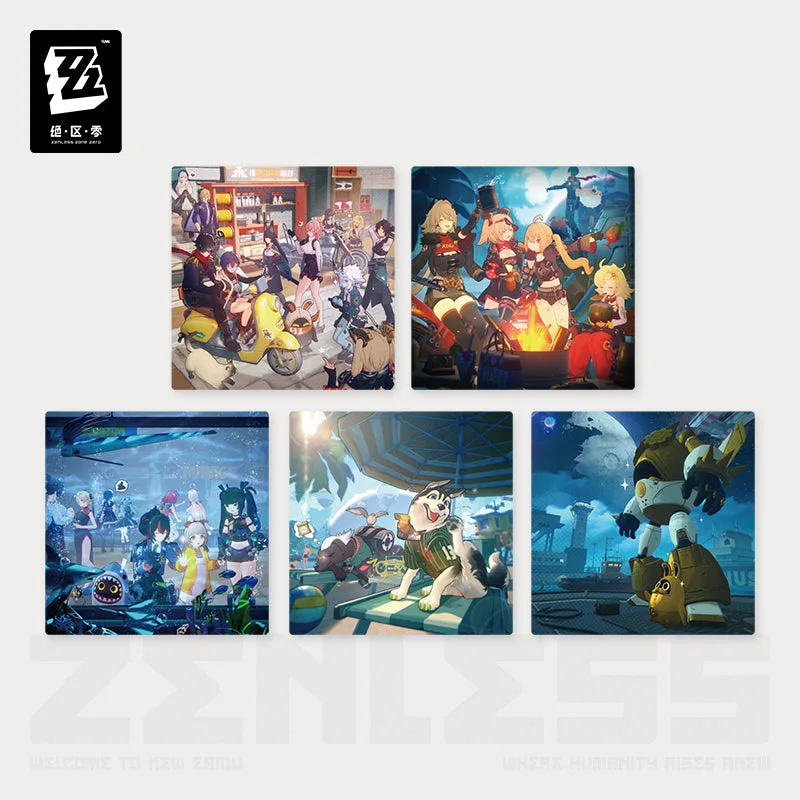
【Pre-Order】Zenless Zone Zero - New Eridu Series Image Collectible Transparent Card Set Vol.3