Quick answer
Store books upright, cards in a rigid box and puzzles flat in a dry, stable room. Keep all three away from damp walls, direct sun and heat sources. If you notice warping, sticking or crumbling, the cause is almost always moisture, pressure or temperature swings, and each has a different fix.
Why storage damage happens to books, cards and puzzles
Paper, board and card stock all absorb and release moisture as the surrounding air changes. When the air is damp, fibers swell; when it dries out, they shrink. If one part of an object swells more than another, it warps, curls or delaminates. Heat speeds this up, and direct sunlight fades inks and makes board brittle. Pressure from stacking heavy items on top of a puzzle or a softcover book flattens or creases it permanently. The practical takeaway is that stable, moderate conditions matter more than any single storage product.
Book storage tips that prevent warping
Stand hardcovers and paperbacks upright on a shelf, supported on both sides so they do not lean. Leaning books sag at the spine and can warp the boards over time. If a book is too tall for the shelf, lay it flat rather than forcing it upright. Keep shelves at least a few centimeters off an exterior wall, because exterior walls are the coolest and dampest surface in most rooms. For long-term storage, use an acid-free box and avoid sealing books in plastic bags, which can trap moisture. If a book already has a slight wave in the pages, stand it upright in a dry room with good airflow and let it settle; do not press it under heavy weight, which can crack the spine.
Storing playing cards safely
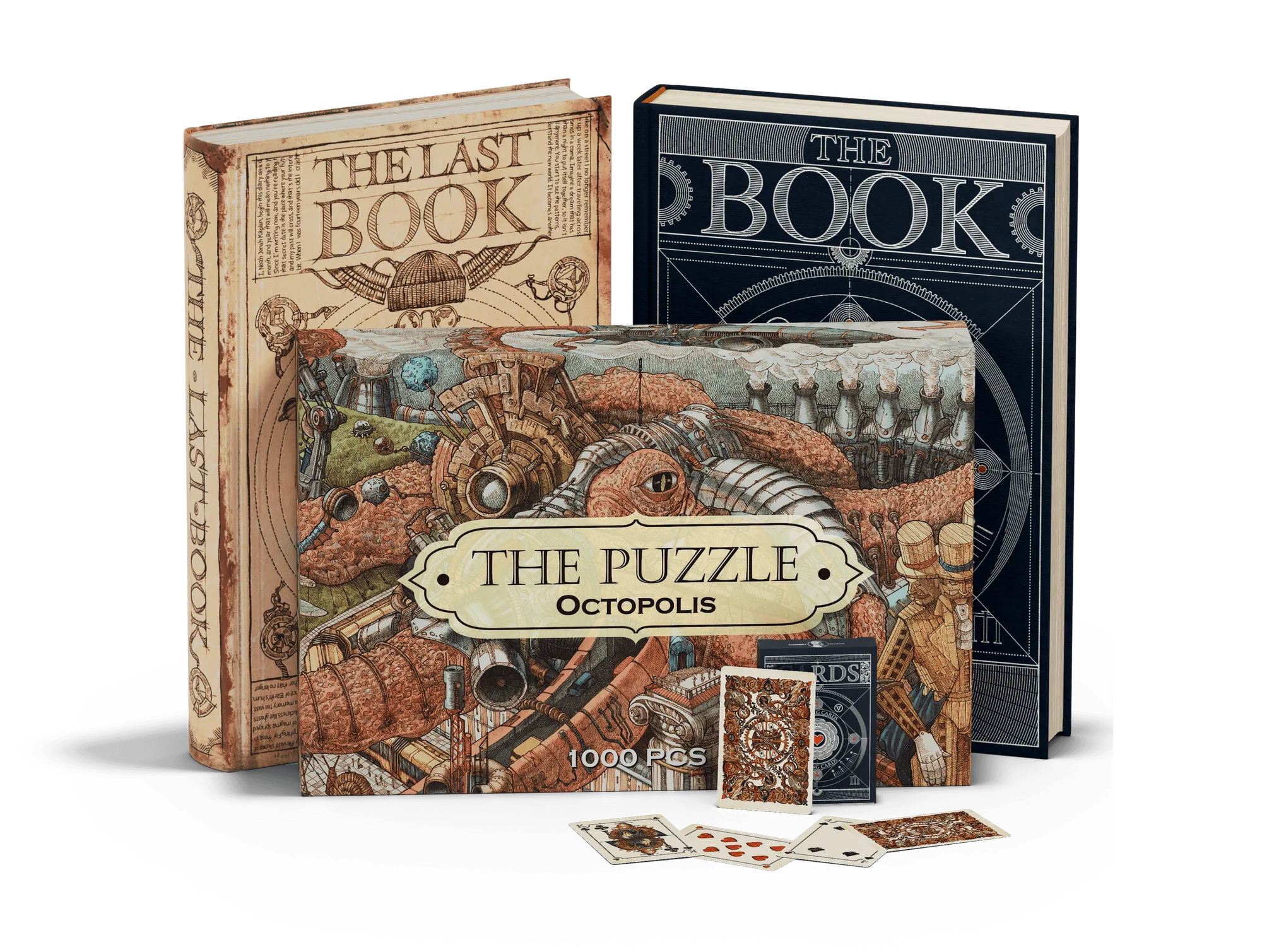
Cards bend, stick together and lose their snap when they are stored loose or in a damp drawer. Keep each deck in its own rigid box or a dedicated card case so the edges stay square. Avoid rubber bands, which dent the edges and leave residue. Store decks flat, not on their side, and do not stack heavy objects on top. If cards feel tacky, they have picked up moisture; let them air out in a single layer in a dry room before returning them to the box. For a deck that is also an artwork, such as the playing cards in the Hungry Minds range, a box that holds the cards snugly but not tightly is the right fit, because movement is what scuffs the faces.
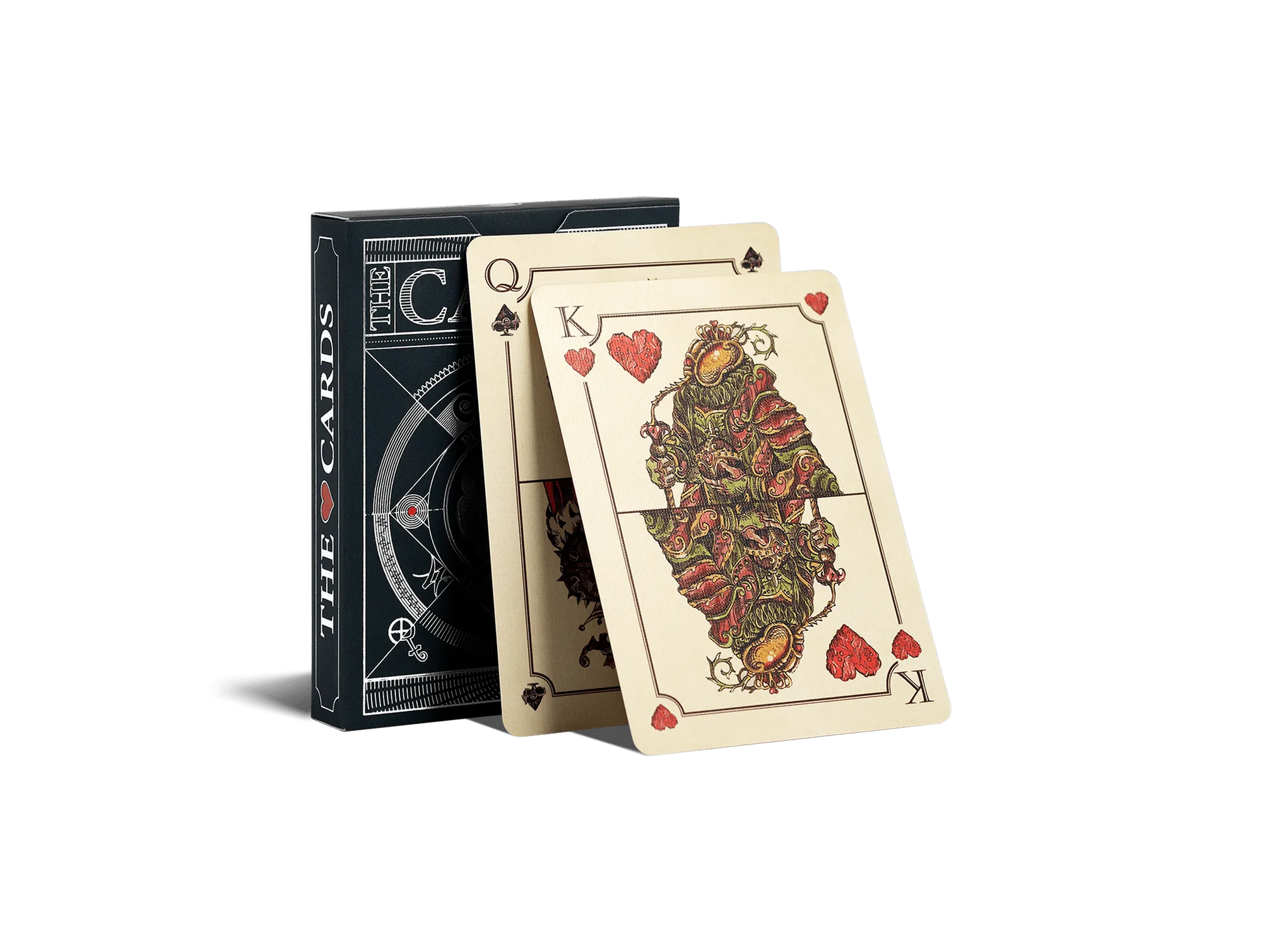
the playing cards
Long term puzzle storage and preventing puzzle damage
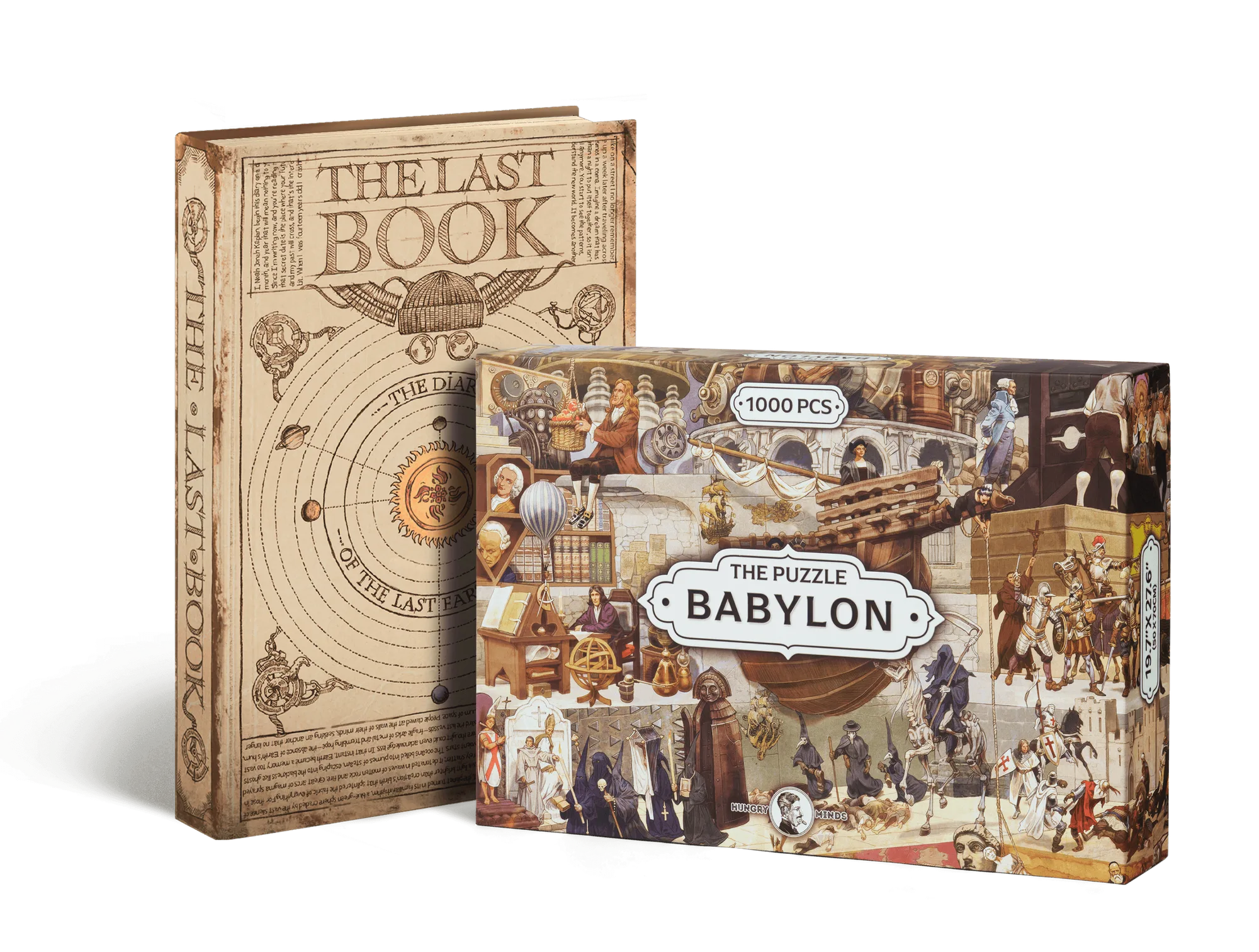
Puzzles are the most vulnerable of the three because a single missing or bent piece ruins the finished image. Store completed puzzles flat, either on a dedicated board or between two rigid sheets, and keep them out of humid rooms. If you break a puzzle down, bag the pieces in a breathable cotton bag or a zip bag left slightly open, then place the bag inside the original box. Never store puzzle pieces loose in a box with other hard objects, because edges chip. For a puzzle with a distinctive cut, such as the Babylon puzzle in the Legacy Keeper Set, keeping the pieces in the supplied box is the simplest way to protect the knife design. If you live in a very humid climate, add a reusable silica gel packet to the storage box and replace it when the indicator changes.
Storage problem diagnosis
- Book pages are wavy or the cover curls: This is almost always moisture from a damp wall, a basement or a bathroom shelf. Move the book to an interior shelf in a room with steady temperature, stand it upright and let it dry slowly. Do not iron or press it. If the pages are still wavy after two weeks in a dry room, the damage is set and further drying will not help.
- Playing cards stick together or feel soft: Humidity has been absorbed into the card stock. Spread the cards in a single layer in a dry room for a day, then return them to a rigid box. If the deck was stored in a plastic bag, stop doing that. If the cards remain tacky or the edges have swollen, the deck is no longer suitable for play and should be kept as a display piece.
- Puzzle pieces are bent, chipped or missing: This points to loose storage, pressure from stacking or a damp box. Move the puzzle to a flat, rigid surface, bag the pieces and store the bag inside the original box. Add a silica packet in humid rooms. If more than a few pieces are damaged, replace the puzzle rather than trying to flatten them, because force will crack the printed surface.
Sets built for careful storage
- The Mindcraft Set. The Book, The Last Book, The Puzzle & The Playing Cards: The Mindcraft Set brings together The Book, The Last Book, a puzzle and a deck of playing cards in one collector's edition. Because it contains all three formats, you need one storage plan that covers books, cards and puzzle pieces together rather than three separate setups.
- Legacy Keeper Set. The Last Book & Babylon: The Legacy Keeper Set pairs The Last Book with Babylon, a puzzle with a unique knife design inspired by the book. The puzzle's distinctive cut makes flat, dry storage more important, since bent or lost pieces are harder to replace than in a standard grid puzzle.