Quick answer
Store enamel pins face-up in a felt-lined board or a divided tray so the metal never rubs against another pin, and press each rubber backing down until it seats flat against the post. If a backing keeps sliding off, replace it rather than bending the post, because a bent post is the one pin repair you cannot undo.
Why pins scratch even when they are sitting still
Hard enamel is durable, but the black nickel plating on the face and edges is softer than the enamel itself. Two pins sharing a loose drawer will slide a few millimeters every time the drawer opens, and that repeated metal-on-metal contact dulls the high points of the casting. The same thing happens when a pin rests directly on a hard shelf: the post and clasp take the weight, and the face grinds against the surface.
A storage surface that grips slightly solves most of this. Felt, cork, or a foam-backed board holds the pin in place so it cannot migrate. If you use a shadow box or frame, make sure the pin backs are not pressing into the glass, because that pressure pushes the face forward and scratches it against the pane.
Choosing between a board, a tray, and a binder page
A pin collection storage board is the best default for pins you want to see. It keeps every pin face-out, spreads the weight across a wall or shelf, and lets you rearrange without handling each pin twice. The tradeoff is dust and light exposure, so keep the board out of direct sun.
Divided trays work better for pins you rotate or travel with, because each pin sits in its own compartment and cannot touch a neighbor. Binder pages are the most compact option, but the plastic sleeve can press the backing into the pin and leave a faint ring on the enamel over time. If you use pages, store them flat rather than upright so gravity does not drag the pins down inside the sleeve.
The rubber backing problem, and when to stop fixing it
Rubber backing clasps hold by friction on the post. They loosen for three reasons: the rubber dries out and hardens, the post gets slightly bent from repeated removal, or the backing was pushed on at an angle and never seated fully. You can fix the first and third by replacing the clasp or reseating it straight. You cannot reliably fix a bent post, and straightening it usually cracks the solder joint at the base.
Test a suspect pin by pressing the backing on and giving it a gentle sideways tug. If it holds, the pin is fine. If it slides, swap in a fresh rubber clasp of the same size. If a new clasp also slides, the post is the problem, and that pin should move to a display spot where it stays put rather than a travel case.
Handling and cleaning without adding scratches
Touch pins by the edges, not the face. Skin oils dull the plating and attract dust, and the grit on your fingers is what actually scratches the surface. For dust, use a dry microfiber cloth and light pressure. Do not use paper towels, and do not polish the metal with anything abrasive, because both remove the thin black nickel layer that gives the pin its contrast.
When you move a pin, remove the backing first and lift the pin straight off the board. Pulling a pin off while the backing is still attached flexes the post and is the most common cause of a backing that will not stay tight afterward.
Pin storage diagnosis
- Fine scratches across the face: Caused by pins sliding against each other or against a hard surface in a loose drawer or box. Move pins to a felt, cork, or foam-backed board with at least a finger-width between pins.
- Scratches only near the edges: Usually contact with a frame, glass, or the rim of a tight compartment pressing the pin sideways. Add clearance so the pin face never touches glass, and size compartments to the pin diameter.
- Backing slides off with light pressure: The rubber clasp has hardened or was seated at an angle rather than straight down the post. Reseat it straight; if it still slides, replace the clasp and re-test with a gentle sideways tug.
- New clasp still will not hold: The post is bent, which happens when pins are pulled off a board with the backing still attached. Stop trying to fix it. Display that pin in a fixed spot and keep it out of travel cases.
Pin specs that affect how you store them
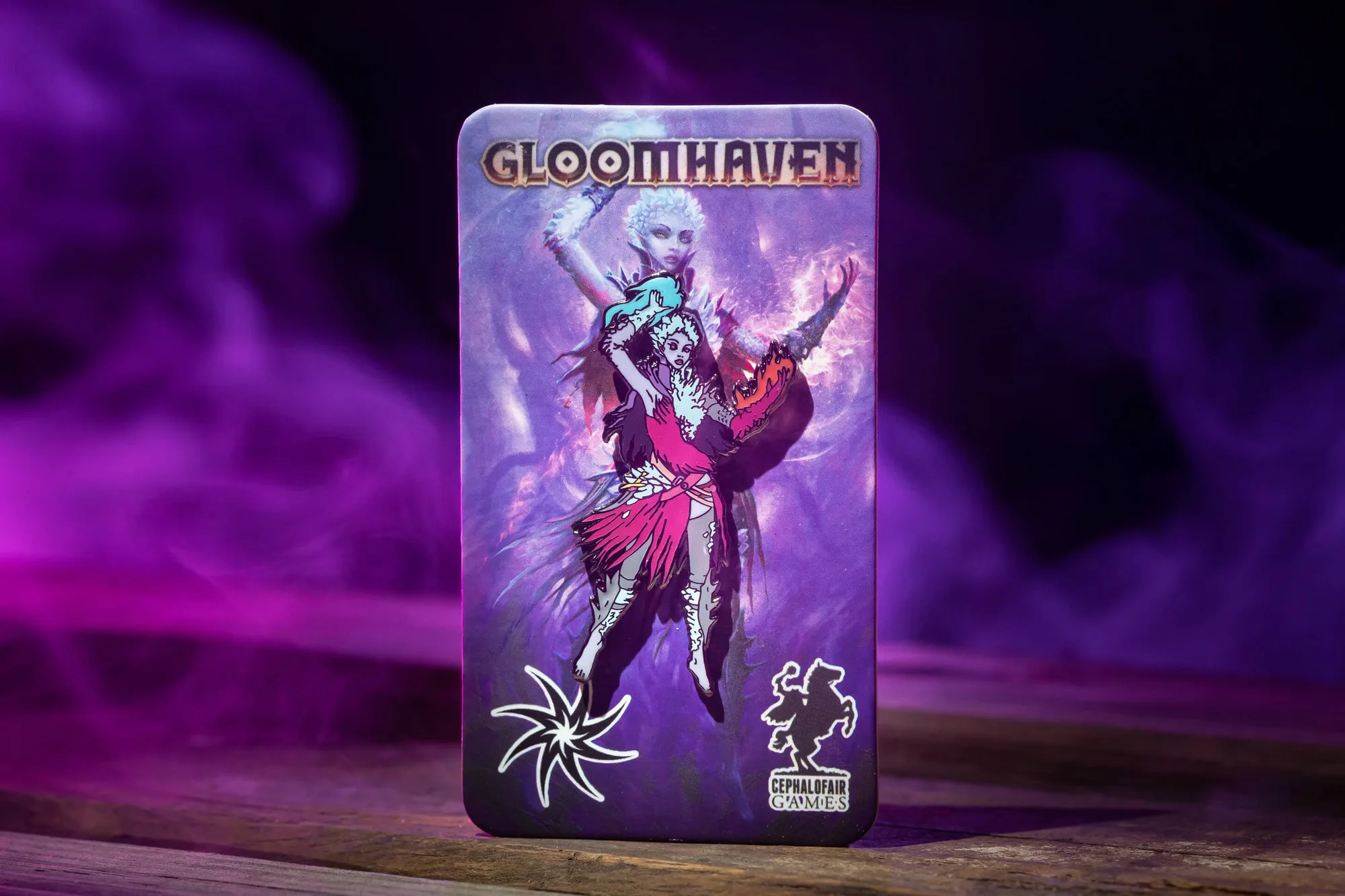
- Spellweaver Collectors Pin: 2-inch collectors pin with high quality synthetic hard enamel, cast in black nickel, rubber backing clasps. The 2-inch face is small enough for a divided tray compartment, and the black nickel finish is the surface most likely to show handling marks, so edge-only handling matters here.
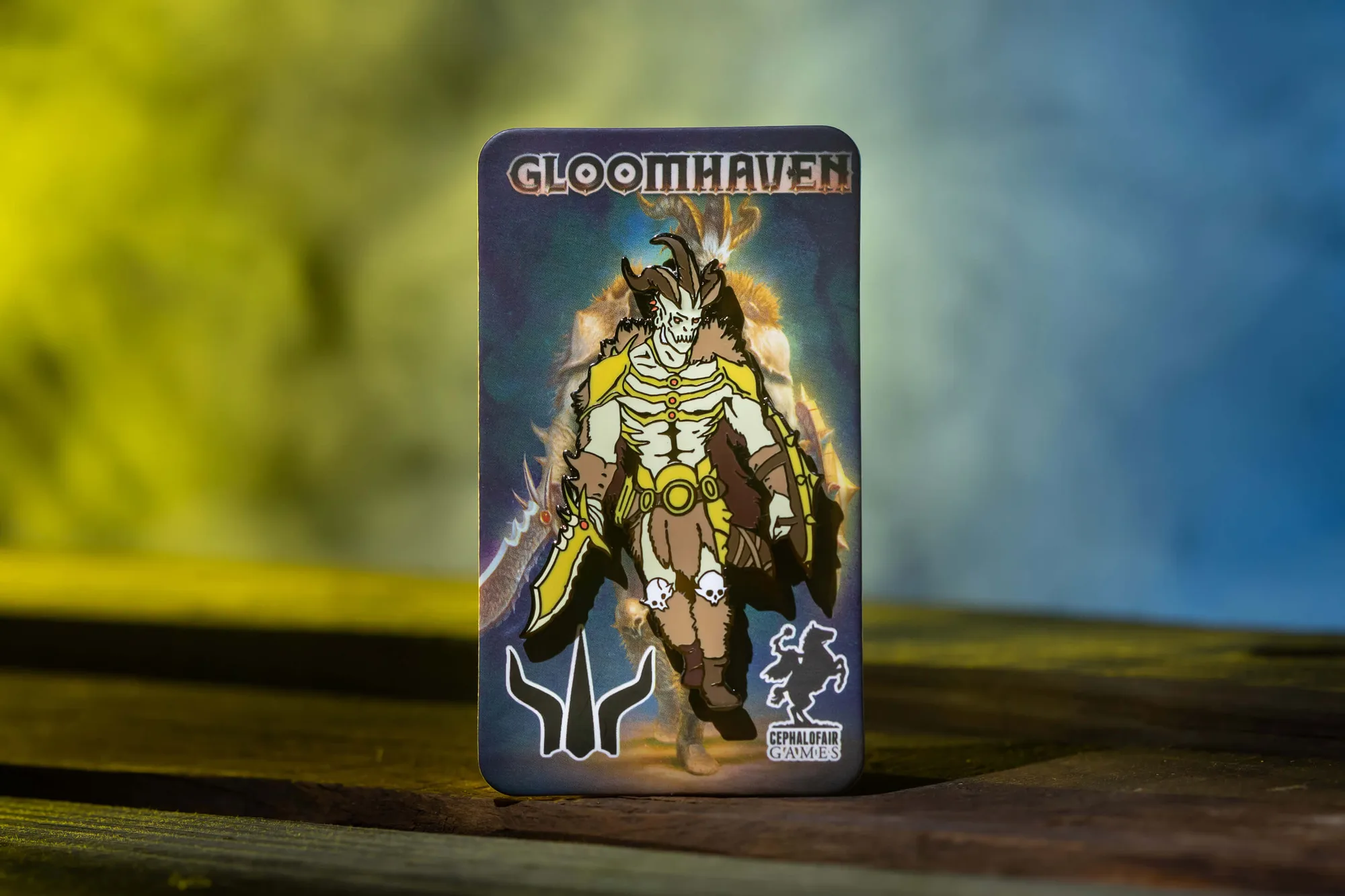
- Bruiser Collectors Pin: 2.5-inch collectors pin with high quality synthetic hard enamel, cast in black nickel, rubber backing clasps. The larger 2.5-inch face needs a wider board spacing or a deeper compartment so it does not overlap a neighboring pin and rub against it.