Quick answer
Store Clixo pieces in a shallow, clear bin or a zip-top pouch sorted by set, not in one deep toy box. Keep each pack's pieces together in its own labeled container, place the bin where kids actually build, and do a two-minute piece sweep after each session. This prevents the slow spread that causes most lost pieces.
Why Clixo pieces disappear (and it is not just kids being careless)
Clixo pieces are flexible, magnetic, and small enough to slide under furniture or get swept into a vacuum. The real problem is usually the storage system, not the child. When all pieces from different packs go into one deep bin, kids dig, pieces scatter, and nobody notices what is missing until the next build. A shallow container with a visible bottom makes it obvious when a piece is gone.
Another common cause: storage lives in a different room from where kids build. If the bin is upstairs and building happens at the kitchen table, pieces migrate and never return. Put storage within arm's reach of the build zone, even if that means a smaller bin that holds only the current favorite set.
Set up a two-container system that matches how kids actually play
Use one small, clear container per active set and one larger bin for sets that are rotated out. Clear containers let kids see what is inside without dumping everything. Shallow is better than deep: a container about 2 to 3 inches tall lets pieces lie flat and makes counting easy. If you want to keep instructions or inspiration cards with the pieces, choose a container with a little extra room so the lid closes without bending the cards.
Label each container with the set name and a simple icon or color dot. For pre-readers, a sticker of a dinosaur or bird works better than words. When a set goes into rotation, its container moves to the build area and the previous one goes back to the larger bin.
Cleanup routines that take two minutes, not twenty
The fastest cleanup is a piece sweep before anyone leaves the table. Set a timer for two minutes and have kids pick up only the pieces they can see. Then do a parent check under the table, along chair legs, and near the edge of the rug. Magnetic pieces attract each other, so a quick pass with a magnetic wand or a hand held just above the floor can catch strays without bending down.
For sets with many small parts, keep a small cup or pouch on the table during play. Kids drop loose pieces into it as they swap them out, which reduces the number that hit the floor. At the end, the cup goes straight into the container.
Travel and rotation: keeping sets together away from home
For car rides, restaurants, or grandparents' houses, use a zip-top pouch or a small hard case instead of a loose bag. A pouch keeps pieces from spreading across a seat and makes it easy to see if something is missing before you leave. Choose a pouch with a flat profile so it slides into a backpack pocket.
If you rotate sets, store the inactive ones in a larger bin with their containers closed. Do not mix pieces from different packs in the same container unless you are intentionally combining them for a build. Mixing makes it harder to know which set is incomplete and slows down the next setup.
Diagnosis: which storage problem are you actually solving?
- Symptom: pieces are always missing after a build: Likely cause: one deep bin for all sets, so pieces scatter and are not missed until later. Corrective action: switch to one shallow clear container per active set and do a two-minute sweep after each session. Stop here if pieces stay together for a week; if not, check under furniture and inside vacuum bins before changing the system again. If pieces still vanish, the issue is location, not container type.
- Symptom: kids avoid building because setup takes too long: Likely cause: pieces are stored out of reach or mixed with other toys. Corrective action: move the current set's container to the build area and keep only that set accessible. Choose another option if the build area is shared with meals; in that case, use a portable pouch that can be moved in one motion. If setup takes more than one minute, the storage is too far away or too mixed.
- Symptom: a specific mechanism or custom piece is lost: Likely cause: the piece was stored with a different set or left loose on a table. Corrective action: return custom parts to their original pack's container immediately after play. Stop looking for a new storage product if the piece is simply gone; contact the manufacturer for replacement options instead of reorganizing everything. Custom pieces need a dedicated home, not a shared bin.
What different Clixo packs mean for storage
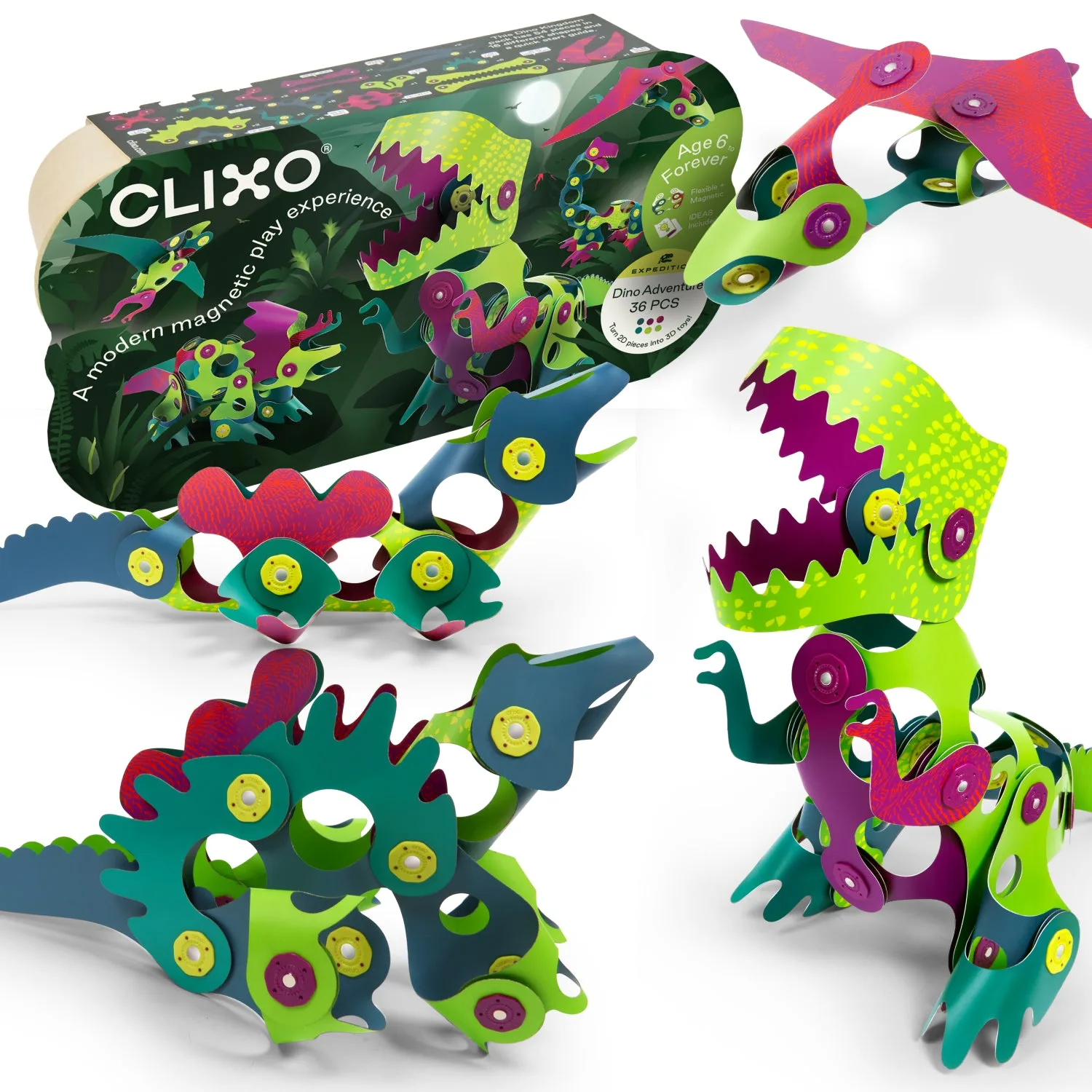
- Dino Adventure Pack: Dino Adventure Pack has 36 pieces in 16 shapes, colors and patterns, including over 13 custom pieces. With 16 distinct shapes, a shallow clear container helps kids find the exact piece without dumping the whole pack. The custom pieces are easy to spot when they are not buried under standard shapes.
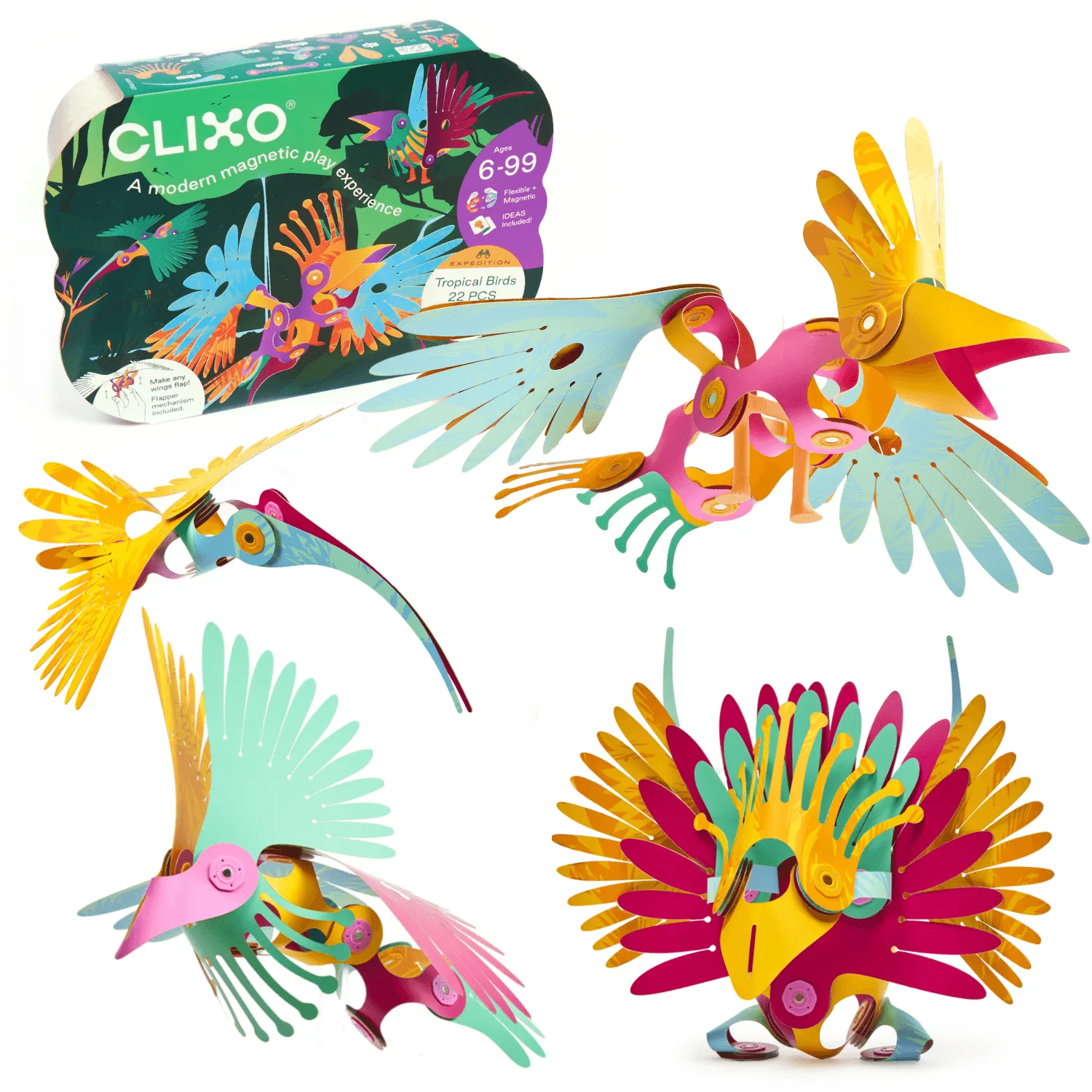
- Tropical Birds Pack: Tropical Birds Pack includes a custom wing-flapping mechanism and nature-inspired pieces. The wing-flapping mechanism is a specific part that is easy to lose if pieces are mixed. Keep this pack in its own labeled container so the mechanism stays with the bird pieces it belongs to.
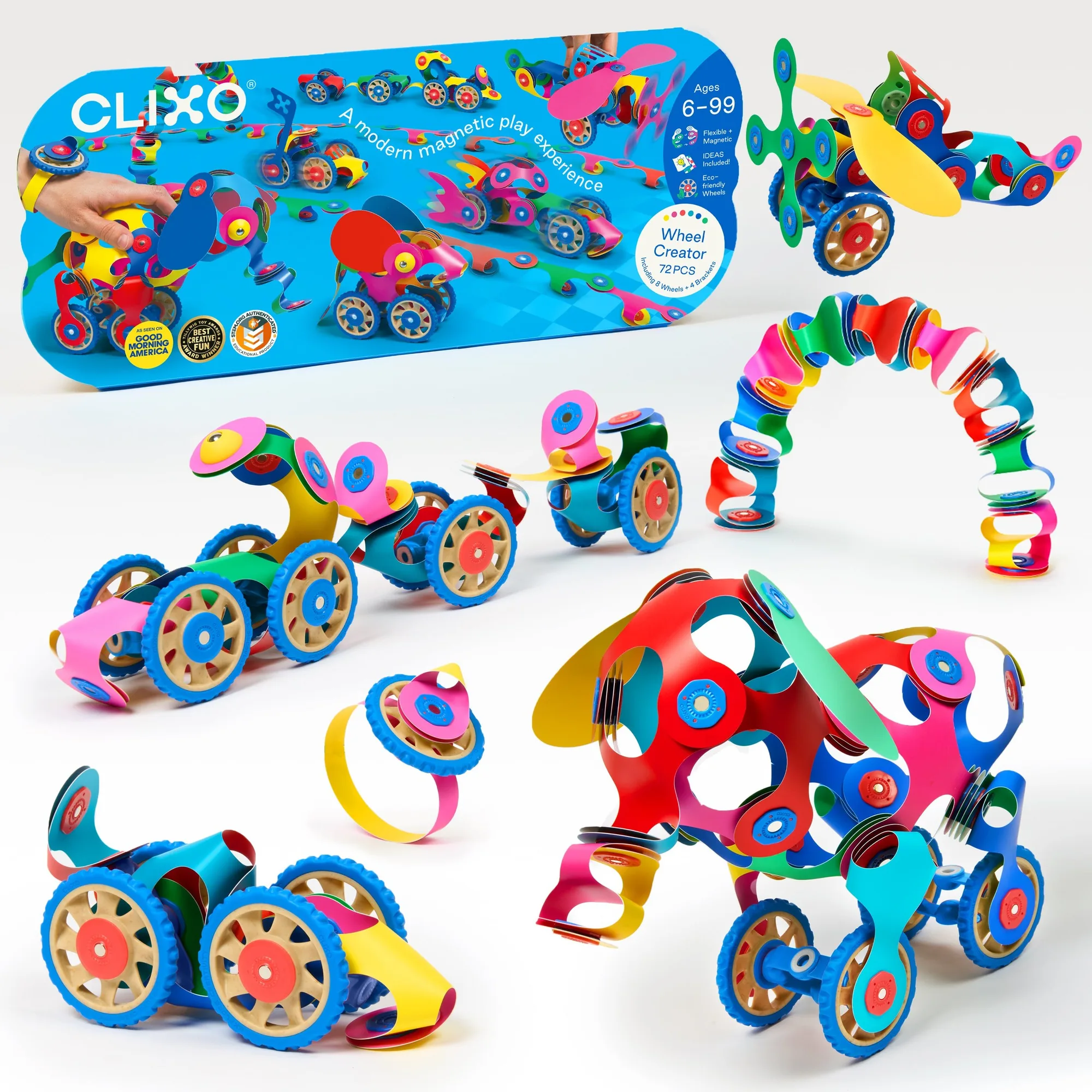
- Wheel Creator Pack: Wheel Creator Pack has 72 pieces in 15 shapes, including new wheels and brackets. Wheels and brackets roll away easily. A container with a flat bottom and a lid that closes securely keeps them from escaping, and a slightly larger bin makes it easier to gather 72 pieces at cleanup.