Quick Answer
A straw holder and organizer is worth it if loose reusable straws keep rolling around your drawer or counter. Choose a drawer insert if you want a hidden, dust-free setup; choose a countertop holder if you grab straws daily and want them visible. Whichever you pick, make sure it drains or dries, because trapped moisture is the main reason straws get grimy.
Drawer vs. countertop: which straw storage actually fits your kitchen?
Drawer storage wins for neatness and dust protection, but only if you measure first. A straw organizer for drawer use needs enough depth for your longest straws, and enough width that straws do not jam when the drawer slides. Countertop holders win for access: you can grab a straw mid-cooking without opening anything, and guests can help themselves. The tradeoff is exposure to cooking splatter and dust, so countertop holders need a quick rinse or wipe more often.
If you have both a crowded drawer and counter space, a hybrid works well: keep everyday straws in a small countertop holder and store the rest flat in a drawer organizer. That keeps the visible holder from becoming a catch-all.
How do I keep reusable straws clean and tidy between uses?
Rinse immediately after drinking, especially after smoothies, iced coffee, or anything with pulp. A quick flush under warm water prevents residue from drying inside the bore, which is where straws get that lingering smell. If your straws came with a cleaning brush, keep the brush with the holder so it is never lost, and use it at least every few days rather than only when straws look dirty.
Dry straws completely before they go back in the organizer. Standing them upright in an open holder or laying them on a drying rack both work; the point is airflow. Storing damp straws in a closed drawer or a sealed container traps moisture and undoes your cleaning.
What should I look for in a straw holder or organizer?
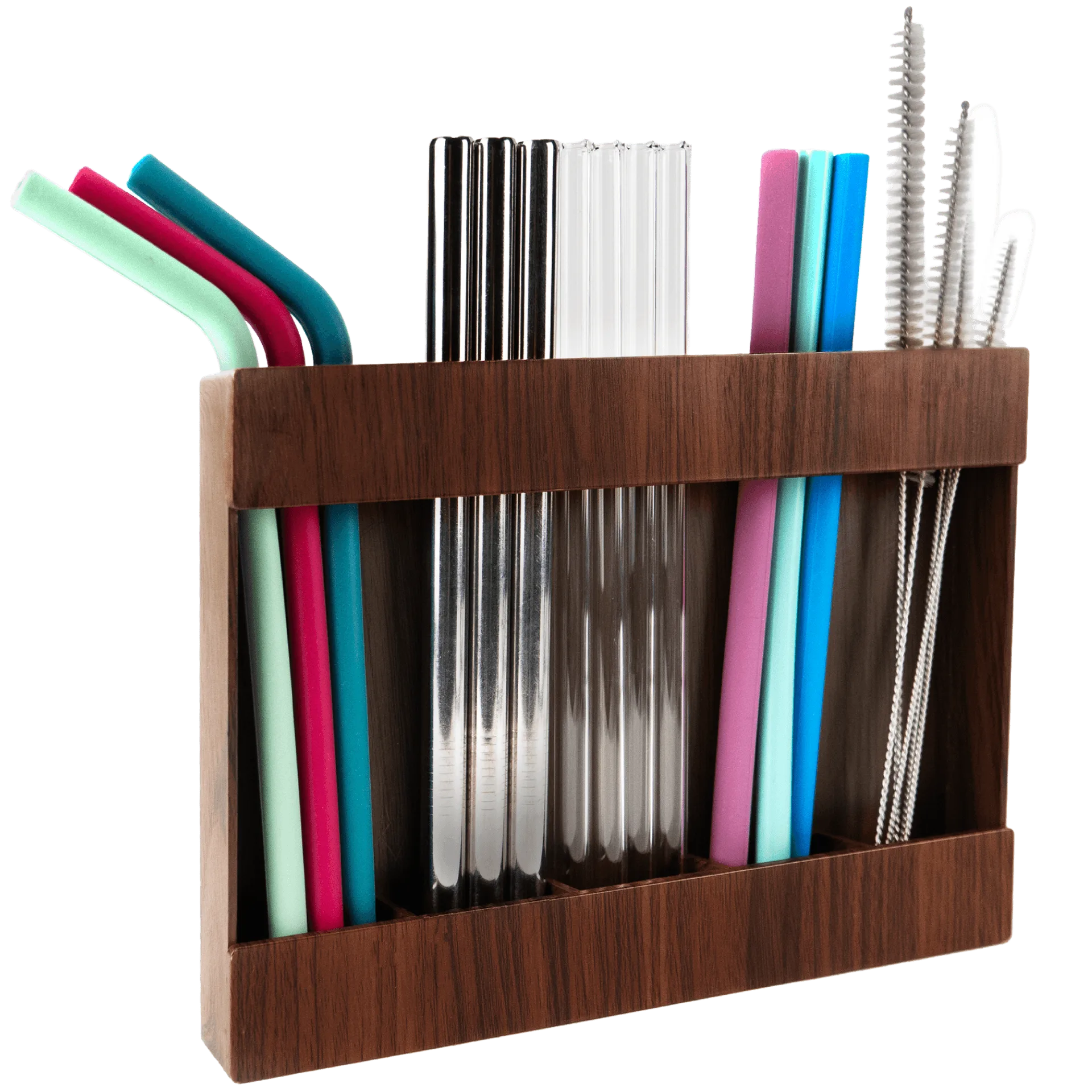
Look for a holder that matches your straw diameter and length first, since that is the one thing you cannot adjust later. Then check drainage and airflow: slots or mesh that let water evaporate beat a solid closed box. If the organizer will sit on a counter, check that the base is stable enough not to tip when you pull one straw out. Finally, think about whether you want compartments, because separating cocktail straws from smoothie straws saves time when you are hosting.
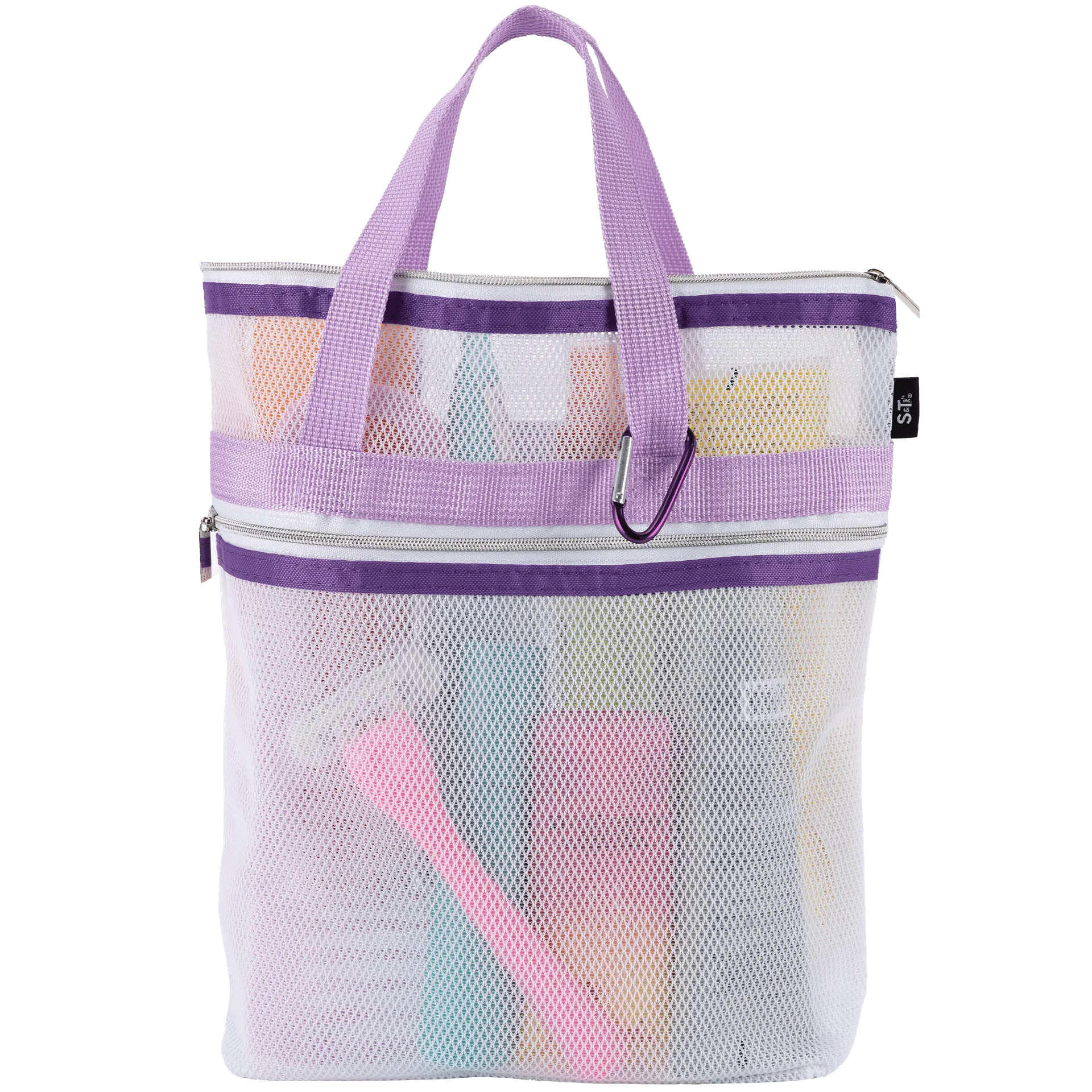
For travel or dorm use, a holder with a clip or a compact profile is more practical than a large countertop rack. If you also carry shower and gym items, the same logic applies: quick-dry mesh and a carabiner clip keep small essentials reachable without digging.
Straw Storage FAQ
Can I put a straw holder in the dishwasher?
Only if the holder is labeled dishwasher-safe. Many plastic and metal organizers are, but wooden or bamboo ones usually are not. When in doubt, hand-wash with warm soapy water and let it air dry completely. Check the label before the first wash; heat can warp or crack non-dishwasher-safe holders.
How many straws should a holder hold?
Match the count to your household: two to four straws per regular user is a reasonable buffer. A holder that is too large invites clutter, while one that is too small means straws end up loose in the drawer again. Buy for your real daily count, not the maximum the product claims.
Are metal, glass, or silicone straws better for organizers?
Rigid metal and glass straws hold their shape and sit neatly in slots, while silicone straws can bend and may need wider compartments. If you mix types, choose a holder with adjustable or wider slots so nothing gets pinched. Match slot width to your stiffest straws; flexible ones will fit anywhere.
How often should I clean the holder itself?
Wipe or rinse the holder weekly, and more often if it sits on the counter near cooking. Residue and dust collect in the base, and a dirty holder makes clean straws dirty again. Add the holder to your weekly kitchen wipe-down so it never becomes the weak link.
Product Facts
- mesh shower tote: https://stproductsshop.com/products/mesh-shower-tote-75674https://stproductsshop.com/products/mesh-shower-tote-75675Mesh shower tote with two zippered pockets, reinforced handles, and a carabiner clip; quick-dry mesh holds full-sized bottles. If you already use a mesh tote for shower or gym gear, the same quick-dry, clip-on approach works for keeping small accessories reachable and aired out.
- microfiber honeycomb gym towels: Honeycomb microfiber exercise towel made from a soft microfiber terry blend, lightweight, for gym, yoga, and fitness workouts. A lightweight microfiber towel dries fast, so it is a sensible companion when you want to wipe down a straw holder or dry items without leaving them damp.