Quick answer
Most stretch bracelet fit problems come from the elastic cord relaxing or the band being the wrong circumference for your wrist, not from the beads themselves. If it slides off, restring with fresh elastic or add a bead; if it digs in, remove a bead or size up. Stop adjusting once the band leaves deep marks or the cord shows wear, and replace it instead.
A stretch bracelet should slide over your hand and then sit still. When it keeps falling off or leaves a red groove by lunchtime, the problem is usually the elastic or the band's circumference, and both have practical fixes you can do at home.
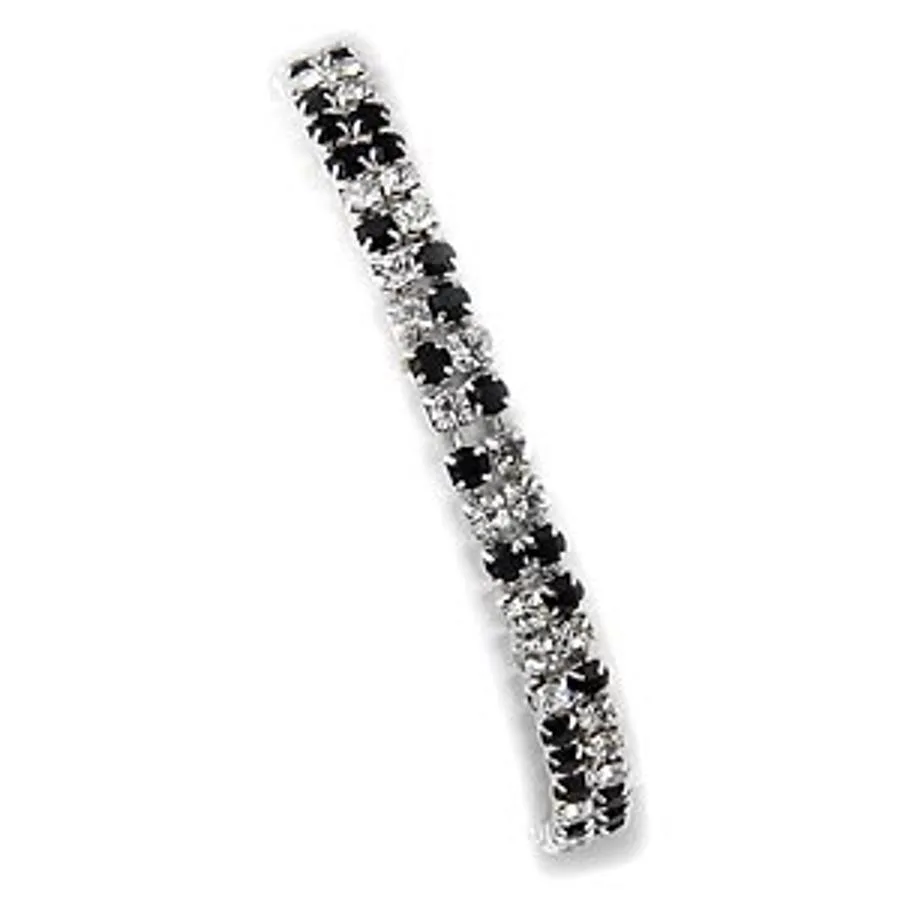
This guide separates the symptom from the likely cause so you can decide whether to tighten, loosen, restring, or replace the piece. It uses the Rosa Rhinestones 2-Row Jet Stretch Bracelet and the Wearable Art Silver-Tone Filigree Crystal Flower Pendant as examples of how construction affects fit.
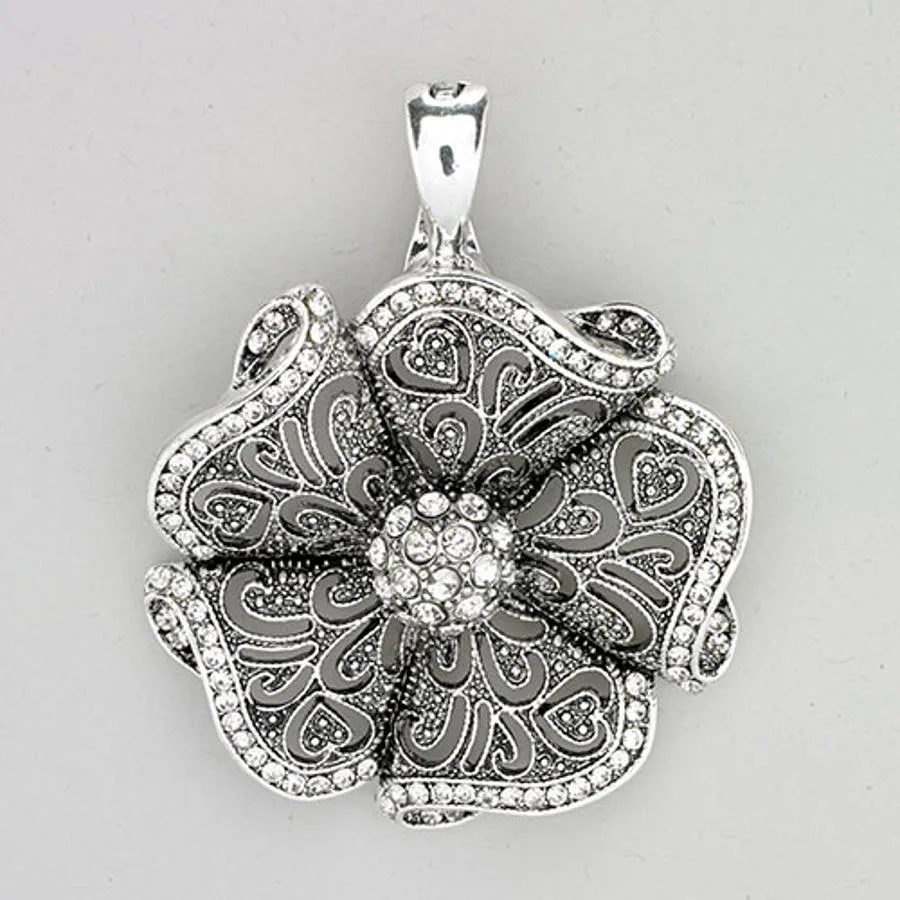
Wearable Art Silver-Tone Filigree Crystal Flower Pendant
Why stretch bracelets loosen or tighten over time
Stretch bracelets are strung on elastic cord, and elastic behaves differently from a metal clasp. Repeated stretching over your hand, plus heat, lotion, and water, gradually relaxes the cord, so a bracelet that fit in spring can feel loose by fall. That is normal wear, not a defect.
A too-tight fit is usually a sizing issue rather than wear. If the band was never large enough to clear your hand comfortably, it will keep pinching no matter how much you tug. Bead diameter also matters: larger beads reduce the inner circumference even when the bracelet looks the same size on a card.
- Measure your wrist snugly with a soft tape, then add about 1/2 inch for a comfortable stretch fit.
- Check whether the looseness appeared over time (cord stretch) or was there from day one (wrong size).
Fix a stretch bracelet that is too loose
If the bracelet slides over your knuckles without resistance, the cord has likely relaxed. The durable fix is to restring the beads on fresh elastic cord, which restores the original tension. Use beading elastic rated for bracelets, knot it tightly, and seal the knot with a tiny dot of jewelry glue before trimming.
For a quick fix without restringing, add one or two small spacer beads to reduce the inner circumference, or wear the bracelet higher on your forearm where the taper holds it. These are temporary measures; they buy time but do not restore worn elastic.
- Restring when the cord looks frayed or stretched thin, not just when the fit feels loose.
- Avoid double-looping a stretch bracelet around a thin wrist, since that over-stretches the cord.
Fix a stretch bracelet that is too tight
A bracelet that leaves marks or feels warm and numb should come off, not be stretched into place. If you made it yourself, remove one bead and re-knot. If it is a finished piece, check whether a larger size or a different style exists before altering it, since cutting the cord voids any return option.
Sometimes the issue is bead shape rather than circumference. A two-row design with crystal and jet stones, like the Rosa Rhinestones 2-Row Jet Stretch Bracelet, has less give than a single row because the rows sit side by side. If that style pinches, a single-row or smaller-bead bracelet may suit you better.
- Never force a tight stretch bracelet over your hand repeatedly; that accelerates cord wear.
- If your wrist measures between sizes, choose the larger band for stretch styles.
When to stop adjusting and choose another option
Stop adjusting when the elastic is visibly frayed, when the bracelet leaves deep indentations after 30 minutes, or when you have restrung it twice and it still slips. At that point the piece is not the right fit for your wrist, and further tweaks risk breaking the cord and losing beads.
If you want a similar look without fit guesswork, a pendant on an adjustable chain is a lower-risk choice. The Wearable Art Silver-Tone Filigree Crystal Flower Pendant uses a filigree flower motif with crystals, so you get sparkle without relying on elastic tension. For a stretch piece you can still wear, the Rosa Rhinestones 2-Row Jet Stretch Bracelet is a good reference point for checking whether a two-row band suits your wrist before you buy.
- Replace rather than repair when the cord has stretched more than about half an inch.
- Choose adjustable closures when you are between sizes or new to a brand's fit.
Fit diagnosis: symptom, cause, fix, and stop point
- Slides off when you gesture: The elastic cord has relaxed with wear, or the band was always slightly too large for your wrist. Restring on fresh elastic or add a spacer bead. Stop if the cord is frayed; replace instead.
- Leaves red marks or feels warm: The inner circumference is too small, often because the band was undersized or the beads are large. Remove a bead if you made it, or size up. Stop wearing it if your hand tingles or numbs.
- Feels fine on the card but tight on your wrist: Bead diameter and multi-row construction reduce the real inner circumference compared with the listed size. Measure your wrist plus 1/2 inch and compare to the band's inner measurement before buying.
- Loose again after one restring: The beads or cord may be mismatched, or the elastic quality is too low for daily wear. Switch to a pendant or adjustable chain rather than restringing a third time.
Product details that affect fit
- Rosa Rhinestones 2-Row Jet Stretch Bracelet: Silver-tone stretch bracelet with two rows of genuine Austrian crystal and jet stones, designed to slip on and off. Two side-by-side rows reduce stretch compared with a single row, so this style feels snugger and is less forgiving if your wrist is between sizes.
- Wearable Art Silver-Tone Filigree Crystal Flower Pendant: Silver-tone filigree flower pendant with sparkling crystals and a vintage-inspired motif. A pendant avoids elastic sizing entirely, making it a practical alternative when a stretch bracelet will not stay put or keeps pinching.
Stretch bracelet fit problems are usually solvable with a restring, a bead change, or a size adjustment. When the elastic keeps failing or the band keeps pinching, choose a piece with an adjustable closure and enjoy the sparkle without the guesswork.