Quick answer
Use a stroller insect net when bugs, bees, or mosquitoes are the problem and you still want maximum airflow. Use a stroller rain cover when rain, wind, or cold is the problem and you need a dry, sheltered layer. If it's hot and humid with no rain, skip the rain cover and use mesh only, because trapping warm air around your baby is worse than a few bugs.
Match the cover to the weather, not the season
Parents often grab a cover based on the calendar instead of the actual conditions. A warm, still evening in early fall can be worse for a covered stroller than a breezy spring morning, because heat and moisture build up fast under any non-breathable layer. Before you leave, check three things: precipitation, wind, and bug activity. Rain or strong wind points to a weather shield. Visible insects or standing water nearby points to a bug net. Neither problem means you can leave the cover at home.
A stroller insect net is not a rain shield. Ultra-fine mesh blocks bugs but lets rain through, so using it in a drizzle just leaves your baby damp and unhappy. A stroller rain cover is not a bug solution either. It keeps rain out, but if you leave it on in warm weather with no rain, you're creating a humid pocket. The fix is simple: choose the layer that matches the active problem, and remove it as soon as that problem is gone.
How to use a bug net without blocking airflow
A bug net works best when it's stretched taut around the stroller frame, not bunched against your baby's face or arms. Elastic edges are designed to wrap around the stroller for a secure fit, but you still need to check that the mesh sits away from the canopy opening and any grab bars. If the net sags inward, insects can still reach through loose folds, and your baby can pull it against their mouth or nose.
Ventilation is the whole point of mesh, so don't layer a blanket over the net to "seal" it. If the air feels still inside, open the stroller canopy slightly at the back or use a clip-on fan rated for strollers. When you stop for a feed or a diaper change, lift the net rather than reaching through it, then re-secure the elastic before you start walking again.
- Stretch the net so it doesn't touch your baby's face, hands, or the canopy edge.
- Check the mesh every 15–20 minutes for trapped insects or gaps at the corners.
- Remove the net once you're indoors or in a screened area; don't leave it on as a habit.
Rain cover rules: short trips, open vents, constant checks
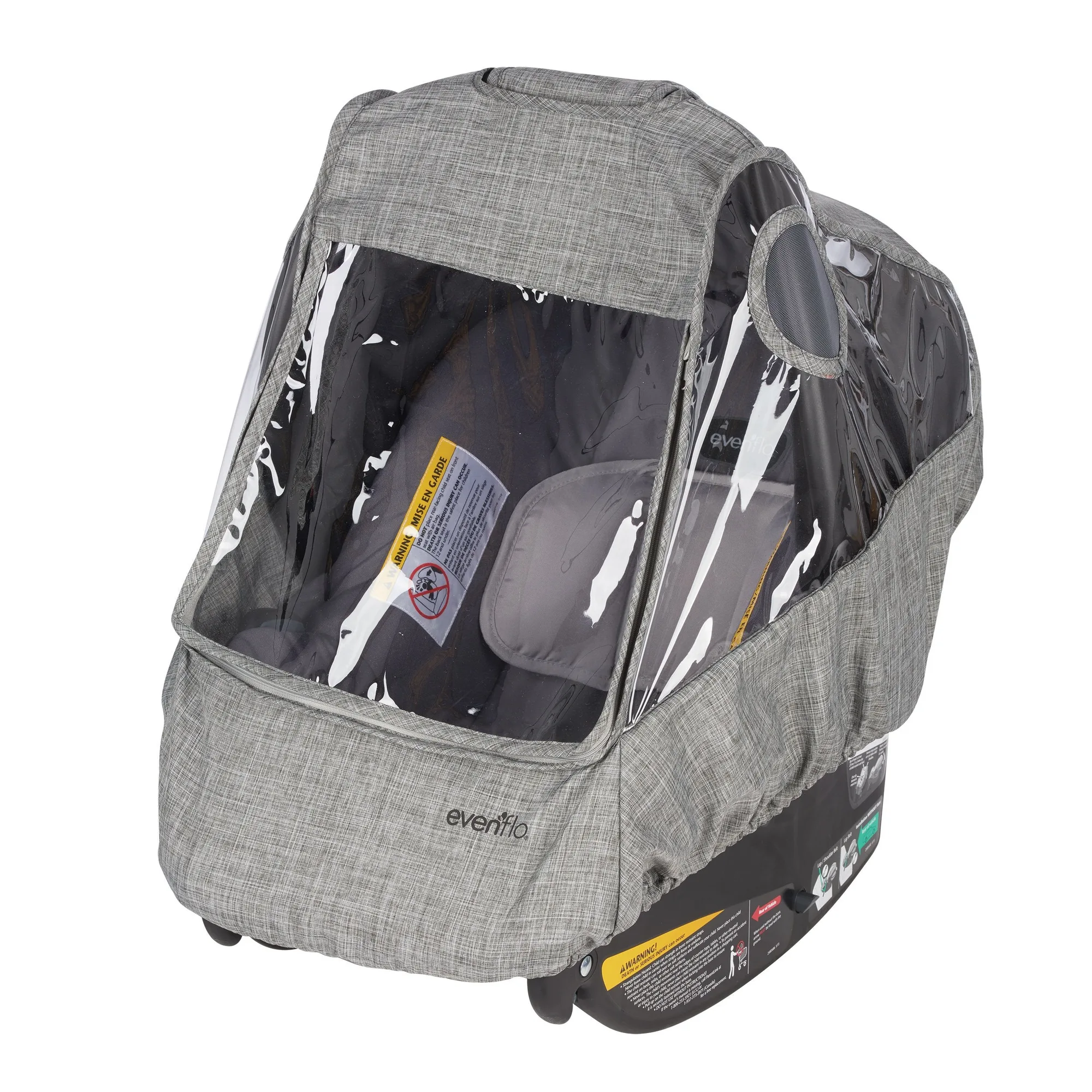
A stroller rain cover is a temporary shield, not a full-time enclosure. Use it for the walk from the car to the door, or for a steady rain where you'd otherwise cancel the outing. The clear front window on a well-designed cover lets you see your baby without unzipping, and a zippered opening gives you access for a pacifier, a wipe, or a quick temperature check. That access matters because overheating is the main risk with any rain cover.
If your cover has mesh side holes, keep them clear of blankets, bags, or your own coat. Those vents are the difference between a sheltered ride and a sauna. On mild rainy days, dress your baby in normal layers and let the cover do the weather work. On cold, windy days, add a hat and a footmuff inside the stroller rather than piling blankets on top of the cover, which can block the vents and shift loose fabric over your baby's face.
When to use both, and when to leave both at home
There is a real scenario for using both: a rainy evening in a mosquito-heavy area, or a camping trip where drizzle and bugs overlap. In that case, put the rain cover on the outside and the insect net underneath, or choose a rain cover that already includes mesh ventilation. The key is that the mesh layer stays closest to your baby and the waterproof layer stays outermost, so rain runs off without soaking the net.
Leave both covers at home when the weather is dry and bug-free, or when you're walking in a mall, airport, or other climate-controlled space. Covers add heat, reduce your view of your baby, and make quick interactions slower. If you're unsure, pack the lighter option: a bug net folds smaller and breathes better, so it's the safer default when conditions are borderline.
Diagnose the walk: symptom, cause, fix, stop point
- Symptom: baby is sweaty or flushed under the cover: The cover is trapping heat and moisture, usually because vents are blocked or the cover has been on too long without a check. Stop, move to shade or indoors, remove the cover, and check your baby's neck and back. If they're damp and hot, switch to mesh-only or no cover for the rest of the walk.
- Symptom: bugs are landing on the stroller despite a net: The net is likely loose, bunched, or not sized to the stroller, leaving gaps at the canopy or foot area. Re-stretch the elastic edges and tuck the net under the canopy lip. If gaps remain, the net doesn't fit that stroller; use a different cover or avoid bug-heavy routes until you have one that fits.
- Symptom: rain is soaking through a mesh-only setup: Mesh blocks insects but is not waterproof, so a bug net alone will not keep rain off your baby. Switch to a rain cover with vents, or head home. If you need both, layer the rain cover outside the insect net and keep the vents clear.
- Symptom: you're unsure which cover to pack: Borderline conditions, like cloudy skies with a light breeze and no visible bugs, don't require a full weather shield. Pack the insect net as your default because it breathes and folds small. Add the rain cover only if rain is actually in the forecast, and remove either cover the moment the problem passes.
Stroller and car seat accessories that match these jobs
- Universal Stroller Insect Net Support: Evenflo Universal Stroller Insect Net Support uses ultra-fine mesh with elastic edges that wrap around most single strollers, and it's machine-washable. This is the right layer for bug-heavy walks because the mesh keeps fresh air flowing while blocking mosquitoes and flying insects, and it can be washed after sweaty or dusty outings.
- Infant Car Seat Weather Shield Rain Cover: Evenflo Infant Car Seat Weather Shield Rain Cover fits all Evenflo infant car seats and includes mesh side holes, a clear front window, and a zippered opening for access to your child. The vents and clear window let you monitor your baby and reach them without removing the whole cover, which is the practical way to reduce overheating risk on rainy or windy trips.
- BPA-Free Child Snack Tray with Snack Cup: Evenflo BPA-Free Child Snack Tray with Snack Cup attaches to your stroller and has a unique angled surface designed to help beginner eaters pick up finger foods, plus a removable snack cup. If you're stopping mid-walk to feed your baby, a tray keeps snacks and a sippy cup within reach so you're not digging through a bag with one hand while the other holds the stroller.