Start with the object you actually have
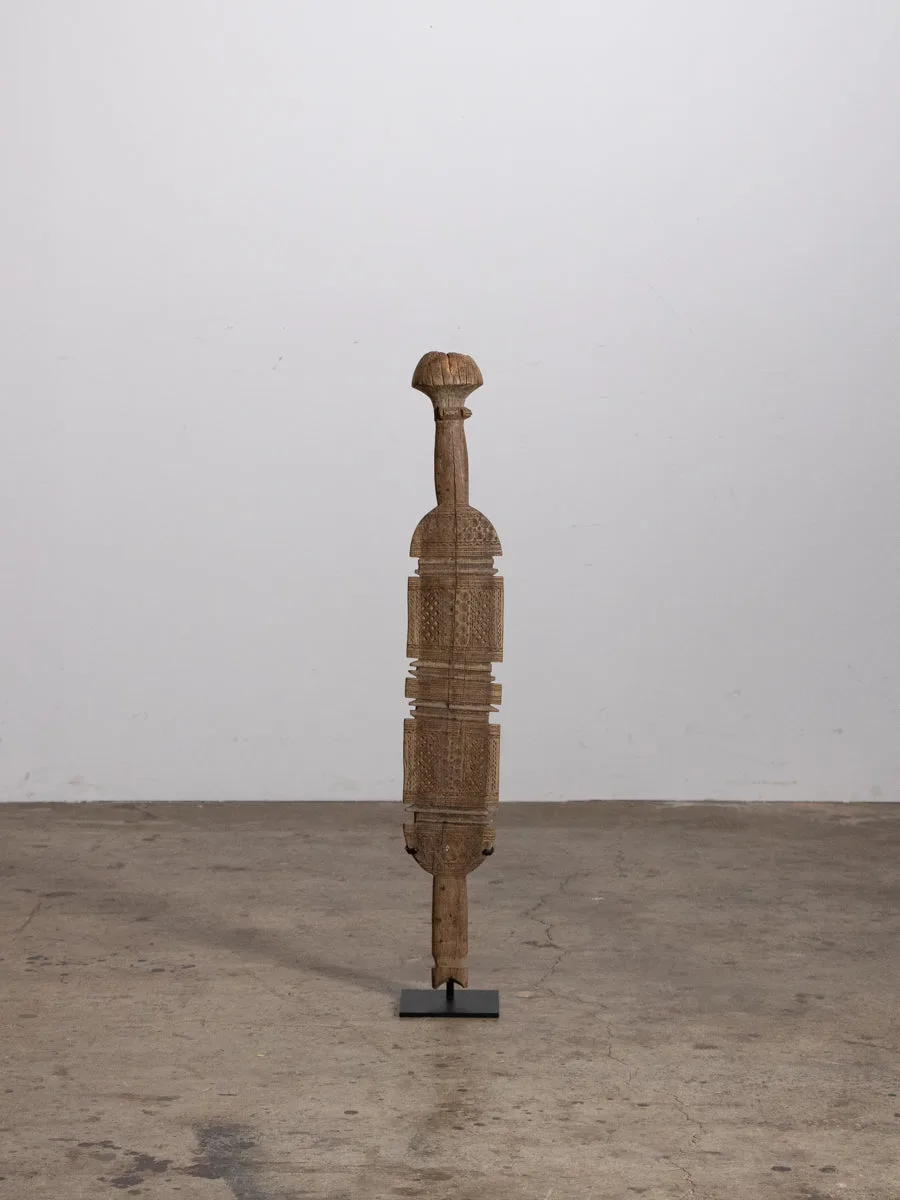
The Tuareg Tribe Stake from CASICA is cataloged as a handcrafted art object and a unique cultural decorative piece, suitable for display or collection. That framing matters: you are styling a cultural object, not assembling a load-bearing post or a piece of furniture. The confirmed record does not include dimensions, weight, finish, or a base, so the first practical step is to treat placement as a decision you make with the object in hand rather than from a spec sheet.
The goal of this guide is a stable, deliberate floor display that lets the carving read as sculpture. Because the record gives no installation hardware or structural ratings, every step below stays within what the catalog supports and flags where you must verify conditions yourself.
Confirmed catalog facts before you plan
-
トゥアレグ族の杭: Handcrafted object reflecting traditional Tuareg artistry, categorized as an art object. Confirms the piece is intended for display or collection, which sets the styling brief: visual presentation, not structural use.
トゥアレグ族の杭
-
トゥアレグ族の杭: Described as an authentic Tuareg Tribe stake and a unique cultural decorative piece. Signals that the object's value is cultural and sculptural, so the display should keep the carving visible rather than bury it in clutter.
A supported sequence for a freestanding floor display
The record does not supply a mounting method, so this sequence assumes the post stands on its own or rests against a stable surface. Adjust only after you have inspected the actual piece.
- 1. Inspect the base and the full length: Check how the end sits on the floor and whether the post can stand without assistance. The catalog does not confirm a flat base or integrated stand, so do not assume either.
- 2. Choose a low-traffic floor zone: Place it where it will not be leaned on, brushed by bags, or used as a doorstop. A sculptural floor object reads best when it is not in a walking path.
- 3. Set the viewing angle before styling around it: Turn the post so the most legible carving faces the room. Because no dimensions are supplied, judge the sightline from where people actually sit or enter.
- 4. Stabilize only with methods you can verify: If the post does not stand securely, do not improvise permanent fixings. Use a stable, non-damaging temporary support or reconsider the location; the record offers no approved anchoring instructions.
- 5. Add context, not clutter: A restrained pairing—one low object, a clear wall, or a contrasting textile nearby—keeps attention on the wood. Avoid stacking heavy items against it.
Placement ideas that suit a carved wood pillar
These are styling directions, not manufacturer instructions. Choose based on the room and the actual size of your piece.
- Beside a low console or bench: A vertical carving gains presence next to a horizontal surface. Keep the top of the post clear so the silhouette stays readable.
- In a corner with breathing room: Corners reduce the risk of knocks and give the post a natural frame. Leave space around it so the carving is not lost in shadow.
- As a floor anchor for a seating group: Use it to mark the edge of a reading nook or conversation area, provided it is out of the main walking line.
- Against a plain wall as sculpture: A neutral backdrop lets the carved surface do the work. This is the simplest way to treat it as sculptural floor decor.
Handling and care when the record is silent
The supplied product record contains no care, cleaning, humidity, or finish instructions. That is a limitation of the available evidence, not a statement that the object requires no care. The honest approach is to avoid aggressive treatment and to test anything you do on an inconspicuous area first.
For a handcrafted wood object, the safe defaults are conservative: dust gently rather than wet-wash, avoid soaking the surface, and keep the piece away from sustained moisture or direct heat sources unless you have confirmed otherwise with the seller. Do not apply oils, waxes, or sealers based on this article; the record does not confirm a finish or an approved product. If the surface feels fragile or has loose material, stop and ask CASICA for guidance before cleaning further.
When moving the post, support its full length rather than lifting by one end. The record does not give weight, so judge the lift yourself and use a second person if the piece feels awkward.
What the catalog settles and what it leaves to you
Use this split to decide what you can plan now and what must wait until the object arrives.
- Settled by the catalog: It is a handcrafted Tuareg Tribe stake, sold by CASICA, categorized as an art object, and described as a unique cultural decorative piece suitable for display or collection.
- Not settled by the catalog: Dimensions, weight, base type, finish, mounting hardware, and care instructions are not confirmed in the supplied record. Do not treat their absence as proof that the full documentation lacks them.
- Your decision: Placement height, viewing angle, room position, and whether the piece stands safely on its own are judgments you make with the physical object.
A final check before you commit to the spot
Stand at the room's main entry point and look at the post. If the carving reads clearly, the base sits without wobble, and nothing nearby invites people to lean or trip, the display is doing its job. If any of those fail, move the piece rather than forcing it with fixings the record does not support.
Treat the Tuareg Tribe Stake as a cultural object first and a decor element second. A restrained, stable floor display respects both roles and keeps the handcrafted surface visible for the long term.