Quick answer
Buy a suitcase set when you regularly travel with a companion, take both short and long trips, or want one storage footprint and one consistent set of wheels, handles and shells. Skip the set if you fly mostly carry-on only, if your trips are all the same length, or if you need one specialist case such as a trunk or a dual-opening large. A set pays off when every piece gets used at least a few times a year.
A matching set looks tidy in photos, but the real question is whether you will actually use more than one size. Sets usually cost less per case than buying the same cases separately, and they share the same handle feel, wheel type and shell material, which matters more than most shoppers expect once you are moving through a busy airport.
This guide walks through the decision in plain terms: which combinations earn their storage space, which ones quietly become clutter, and how to match case sizes to the trips you take. It is written for travelers comparing a cabin and large suitcase set against buying one good case at a time.
What a suitcase set actually gives you
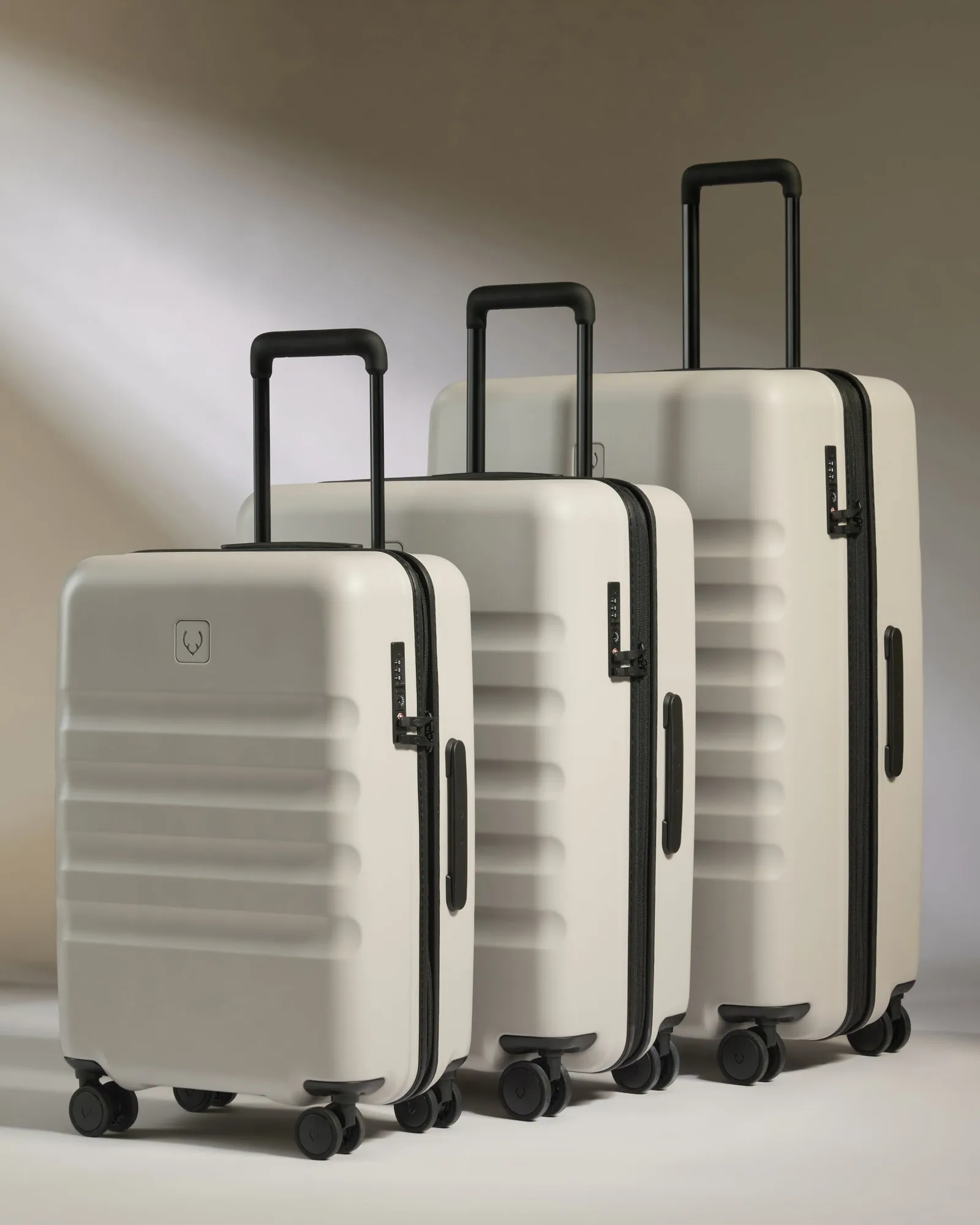
A set is a bundle of sizes, usually a cabin case plus one or two larger cases. The practical benefit is consistency: the same spinner wheels, the same telescopic handle height, and the same shell construction across every piece. When you switch from a carry-on to a large case, your packing rhythm does not change.
The second benefit is storage and identification. Nesting cases take up roughly the footprint of the largest one, and matching pieces are easier to spot on a baggage carousel than a random collection of mismatched bags. The trade-off is commitment: you are paying for sizes today that you may not need for another year.
- Check that the smaller case nests inside the larger one before you commit to the storage footprint.
- Confirm the cabin case meets the carry-on limits of the airlines you fly most, since limits vary by carrier.
When a set is the smarter buy
Sets make sense when your travel splits between short and long trips. A cabin case handles a two-to-three night work trip, while a large case covers a two-week holiday or a family trip where you are packing for more than one person. If both scenarios happen a few times a year, the second case is not dead weight.
They also make sense for households that travel together. Two people sharing one large case plus a cabin case each is often cheaper and easier than three separate mid-size bags, and the matching shells make it obvious which bags belong to whom when you split up at the airport.
- Track your last six trips: if two or more needed more than carry-on space, a set is likely worth it.
- If you travel with a partner, count total bags rather than bags per person before choosing a set size.
When a set is the wrong call
If almost every trip is a two-night carry-on, a large case will sit in a closet for years. Buy the cabin case you actually use and add a larger case later if your travel changes. The same applies if your trips are all one length: a single well-chosen medium or large case covers you, and a set just duplicates capacity.
Specialist needs are another reason to skip a bundle. If you need a trunk for a long move, a dual-opening case for tight hotel rooms, or an expander cabin for return-trip shopping, buy that specific case rather than a set that includes a size you will not use.
- Do not buy a set just because the per-case price looks lower; unused cases have no value.
- If you need one specialist case, price it alone first and compare against the set before deciding.
How to match sizes to your trips
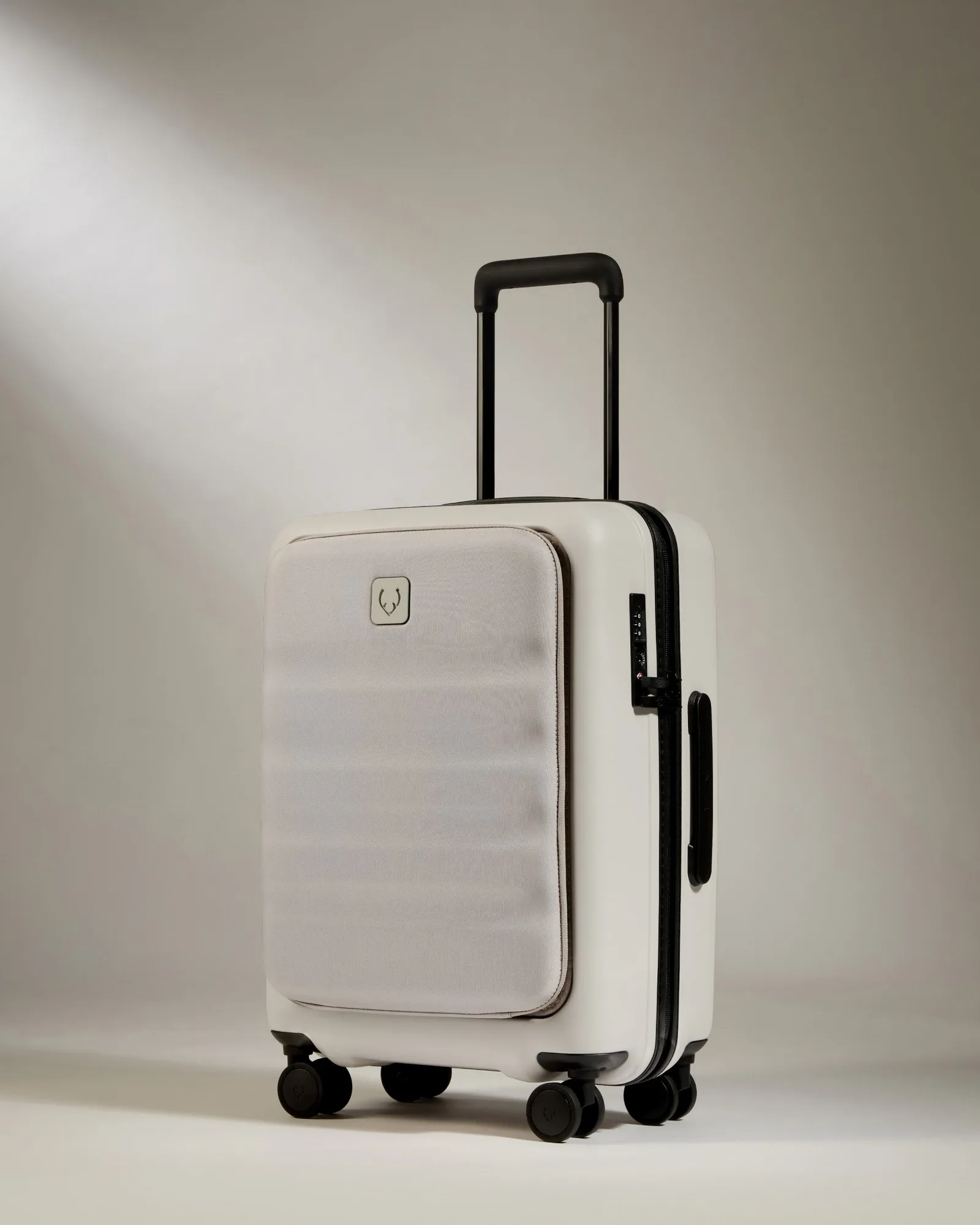
Start with the cabin case, because it is the piece you will use most. A pocket cabin case adds front access for a laptop or documents without eating into the main compartment, which suits business travel. A standard cabin case maximizes interior space for clothes. If you often return with more than you left with, an expander cabin gives you a few extra centimeters when you need them.
For the larger piece, match capacity to trip length rather than to ambition. A medium case covers roughly a week of clothing for one person. A large case suits two-week trips, cold-weather packing, or traveling with children. A dual-opening large adds front access so you can reach items without laying the case flat, which helps in smaller rooms.
- Choose the cabin case first, then add the smallest large case that covers your longest regular trip.
- If you fly budget carriers often, verify the cabin case dimensions against their specific limits.
What to check before you buy
Compare shell material and weight across the set. Polycarbonate shells are hardwearing and protect contents well, while polypropylene shells tend to keep weight down. Neither is automatically better; the right choice depends on whether you prioritize protection or lighter handling when lifting cases into overhead bins and car boots.
Check the wheels, handle and interior organization on the smallest piece, because that is the one you will judge the whole set by. Double spinner wheels roll smoothly on terminal floors. A compression zip inside packing cubes or cases lets you fit more in without a second bag. And confirm the set includes the sizes you need rather than a size you will store indefinitely.
- Weigh the largest case empty if you plan to check it; every kilogram counts against airline limits.
- Look for a set that nests so storage does not become the reason you stop using it.
Decision rules: set or single case
- You take both short and long trips: If two or more of your last six trips needed more than carry-on space, a set earns its storage space because both sizes get used. Buy the set, starting with a cabin case you will use weekly.
- You fly carry-on only: A large case will sit unused, and the per-case saving does not offset the cost of a bag you never check. Buy one cabin case now and revisit a set if your travel changes.
- You need one specialist case: Trunks, dual-opening cases and expander cabins solve specific problems that a standard set may not address. Price the specialist case alone before comparing it with a bundle.
- You travel as a household: Count total bags across travelers; one large case plus two cabins is often cheaper and easier than three mid-size cases. Choose set sizes by total capacity, not by one bag per person.
Examples from the current range
- Large Carry-on Luggage Set in Taupe - Icon Stripe: Combines three sizes of the Icon Stripe in one set, including the Biggest carry-on case, and is crafted from recycled polycarbonate. A three-piece set covers short and long trips in one purchase, and the recycled polycarbonate shell protects contents when the case is checked or stored in a car boot.
- Carry-on with Pocket Luggage in Taupe - Icon Stripe: A carry-on with a front pocket that holds tech and essentials without reducing the interior capacity, built with a hardwearing polycarbonate shell. If your cabin case is the piece you use most, front pocket access keeps a laptop and documents reachable without opening the whole case.
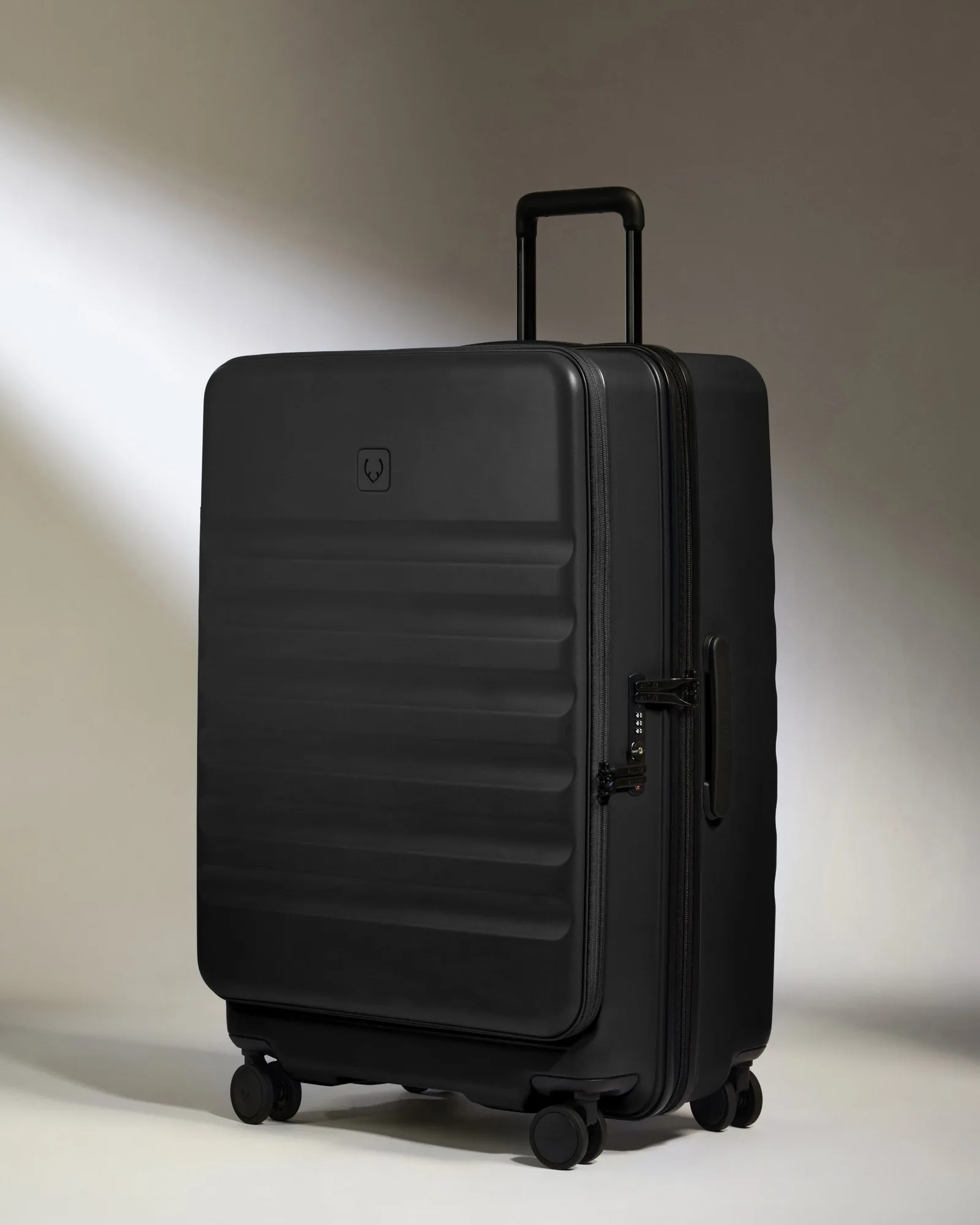
- Dual Opening Large Luggage in Black - Icon Stripe: Combines a traditional clamshell layout with front-opening access, designed for extended trips and family holidays. Front access lets you reach items in tight hotel rooms and repack faster on longer journeys without laying the case flat.
- Packing Cubes in Black - Set of 6: Includes an extra strong compression zip and a mesh window, and coordinates with the Icon Stripe suitcase. Cubes let you lift packed sections straight out on arrival and see contents at a glance, which makes a two-case set easier to live with.
Who a matching set suits
Best for
- Travelers who mix short carry-on trips with longer checked-bag holidays
- Households and couples who travel together and share packing space
- Shoppers who want one consistent wheel, handle and shell system across sizes
Not for
- Carry-on-only travelers who rarely check a bag
- Travelers whose trips are all the same length and need only one case
- Anyone who needs a specialist case such as a trunk or expander cabin rather than a standard size bundle
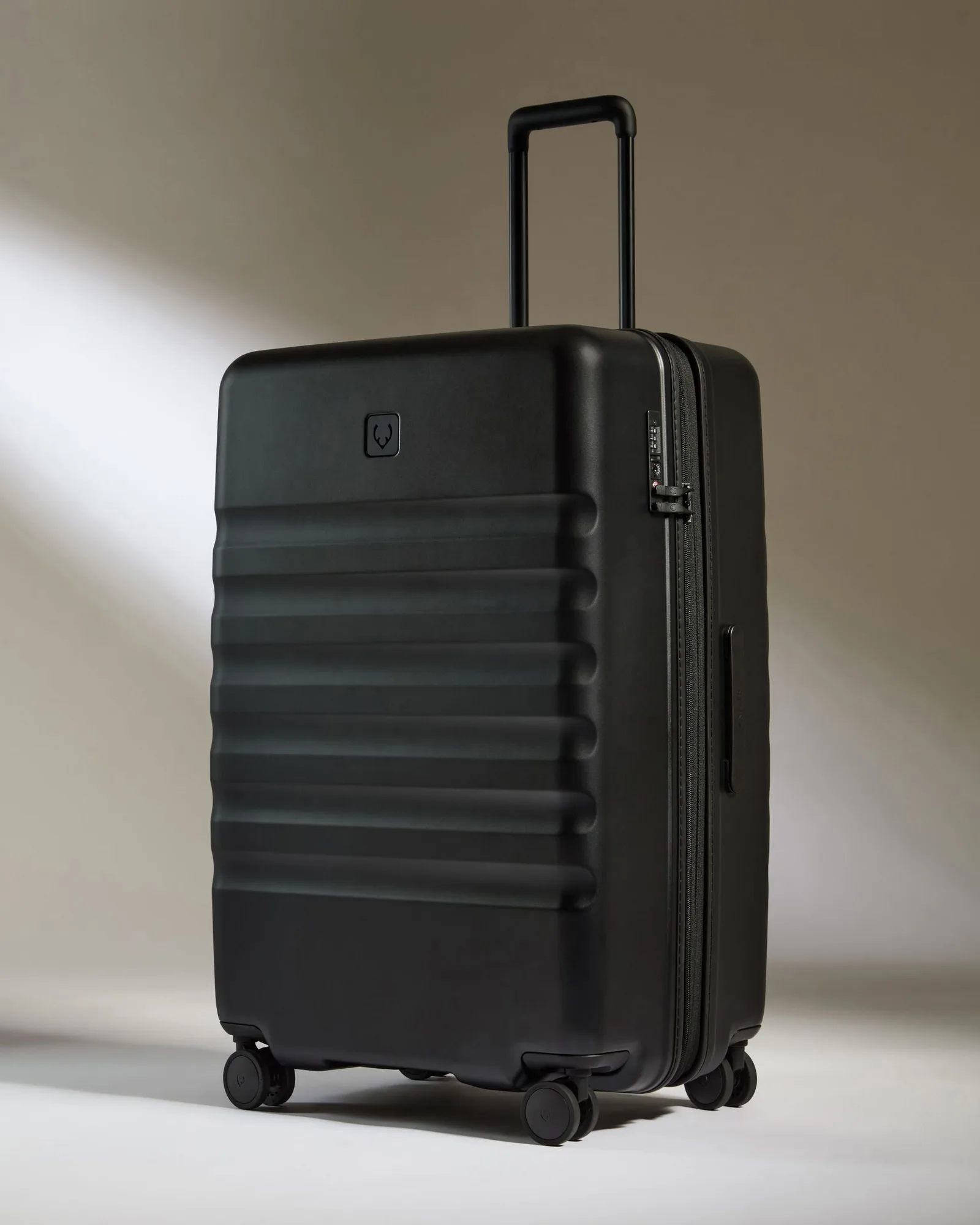
A suitcase set pays off when every piece has a job in your normal travel year. Start with the cabin case you will use most, add the smallest large case that covers your longest regular trip, and skip the bundle if one size would sit unused. If you want to compare options, look at the Icon Stripe set and the Single Stripe large case side by side before deciding.