Quick answer
Store suitcases empty, upright, and out of direct heat and sunlight, with nothing stacked on top of a hard shell. The four mistakes that cause the most damage are long-term compression, damp storage, heat exposure, and hanging a case by its handle. Fix those and your luggage will still feel new when the next trip comes around.
The damage that shortens a suitcase's life usually happens in the weeks and months you're not using it. A case that survives a rough baggage carousel can still come out of storage with a warped shell, a flattened wheel, or a handle that no longer retracts cleanly.
None of that requires special equipment to prevent. It requires knowing which storage habits actually cause harm, which are harmless, and which are only a problem for certain suitcase types. Here's how to store luggage so it's ready when you are.
Mistake 1: Storing a suitcase under weight
Stacking boxes or other suitcases on top of a hard case is the most common cause of long-term shell damage. Polycarbonate and polypropylene shells flex by design, and a constant load in one spot can leave a permanent dent or a stress mark that later becomes a crack. The risk is highest in warm rooms, where the material is softer.
The fix is simple: store hard cases upright on their wheels or flat on their back, and never let anything rest on the shell for months at a time. If floor space is tight, use a shelf or a luggage rack rather than a pile. Soft cases tolerate stacking better, but they still shouldn't carry weight that compresses the frame or the wheels.
- Never store a hard case with a heavier case balanced on top of it
- If you must stack, put soft bags on top and hard shells at the bottom of the pile
- Check the shell once a season for dents that don't spring back
Mistake 2: Damp basements, garages, and lofts
Humidity is quiet damage. A damp garage or basement can leave a musty smell inside the lining, corrode zipper pulls and hardware, and in cold climates, trap moisture that freezes and expands. A loft or attic has the opposite problem: heat cycles that dry out rubber and plastic components over time.
A dry interior closet is the best home for most luggage. If you only have a garage or basement, keep cases off the concrete floor on a shelf or pallet, and leave a desiccant packet inside each case. Before storing, wipe the shell and leave the case open for a few hours so any moisture from the last trip can escape.
- Concrete floors wick moisture — always use a shelf or rack
- Air cases out fully after a trip before closing them
- Replace desiccant packets once or twice a year
Mistake 3: Direct sun and hot cars
UV light and heat are the two fastest ways to age a suitcase. Sun fades fabric, makes plastic brittle, and softens shells enough that they take a set in whatever position they're stored. A case left against a sunny window for a summer can come out with a curve it never had before.
Keep stored luggage out of direct sunlight, and don't treat a hot car or a sun-baked garage as long-term storage. If your only space is a bright room, a luggage cover does double duty: it blocks light and keeps dust out of the zippers and wheels. That's a small investment compared with replacing a case early.
- A luggage cover blocks UV and dust at the same time
- Avoid storing cases pressed against a sunny window or radiator
- Never leave a suitcase in a hot car for weeks at a time
Mistake 4: Hanging a case by its handle
Handles are designed to carry a loaded case for short distances, not to support its full weight for months. Hanging a suitcase from a hook or a garage rafter puts constant stress on the handle mounts and can stretch or crack the attachment points. Telescopic handles are especially vulnerable if they're extended while the case hangs.
Store cases on their wheels or flat on their back, with telescopic handles fully retracted. If you use a wall hook for a soft bag, make sure the hook supports the bag's body rather than a single strap or handle. The same logic applies to wheels: a case resting on one wheel for months can develop a flat spot.
- Retract telescopic handles before storing
- Rest cases on all four wheels or lay them flat
- Rotate which side a case rests on if shelf space forces it upright
Mistake 5: Storing a suitcase dirty or packed
Sand, grit, and salt from a beach trip work their way into wheel housings and zipper teeth, where they grind away at the mechanism every time the case moves. Left long enough, grit in a wheel bearing is one of the few suitcase problems you can't fix at home. A quick vacuum and a wipe-down before storage prevents it.
Storing a case packed with clothes is a separate issue. Fabric holds moisture, and a full case under compression keeps the shell and zippers under load for months. Empty the case, clean it, and store it open for a day before closing it. If you use packing cubes, store those separately so the case can relax.
- Vacuum wheel housings and zipper tracks after every trip
- Wipe shells with a damp cloth, then dry fully
- Store packing cubes outside the case, not compressed inside it
Storage damage diagnosis: symptom, cause, fix
- Shell has a dent or curve that won't spring back: Likely cause: long-term weight on the shell or heat exposure in a warm room. Move the case to an upright position with nothing on top, and let it sit at room temperature for a few days. If the dent remains after a week, the material has taken a permanent set — stop trying to press it out, which risks cracking the shell.
- Musty smell inside the lining: Likely cause: stored in a damp basement or garage, or closed while still holding moisture. Air the case open in a dry room, wipe the lining, and add a desiccant packet. If the smell returns after cleaning, the lining has absorbed moisture — choose a different storage location rather than repeating the same fix.
- Wheels roll roughly or squeak after storage: Likely cause: grit or sand left in the wheel housing. Vacuum the housing and remove any visible debris before rolling the case again. If a wheel still drags after cleaning, the bearing is damaged — stop rolling it loaded and have it repaired or replaced.
- Telescopic handle sticks or won't retract fully: Likely cause: the case was stored with the handle extended, or the mechanism picked up grit. Retract it fully, clean the track, and work it up and down a few times. If it still jams, don't force it — a bent handle tube is a repair job, not a storage fix.
- Zipper pulls corroded or stiff: Likely cause: humidity exposure over months in storage. Clean the teeth, apply a small amount of zipper lubricant, and move the case to a drier spot. If the zipper tape itself is cracking, the damage is done — plan for replacement rather than another round of cleaning.
Materials that change your storage plan
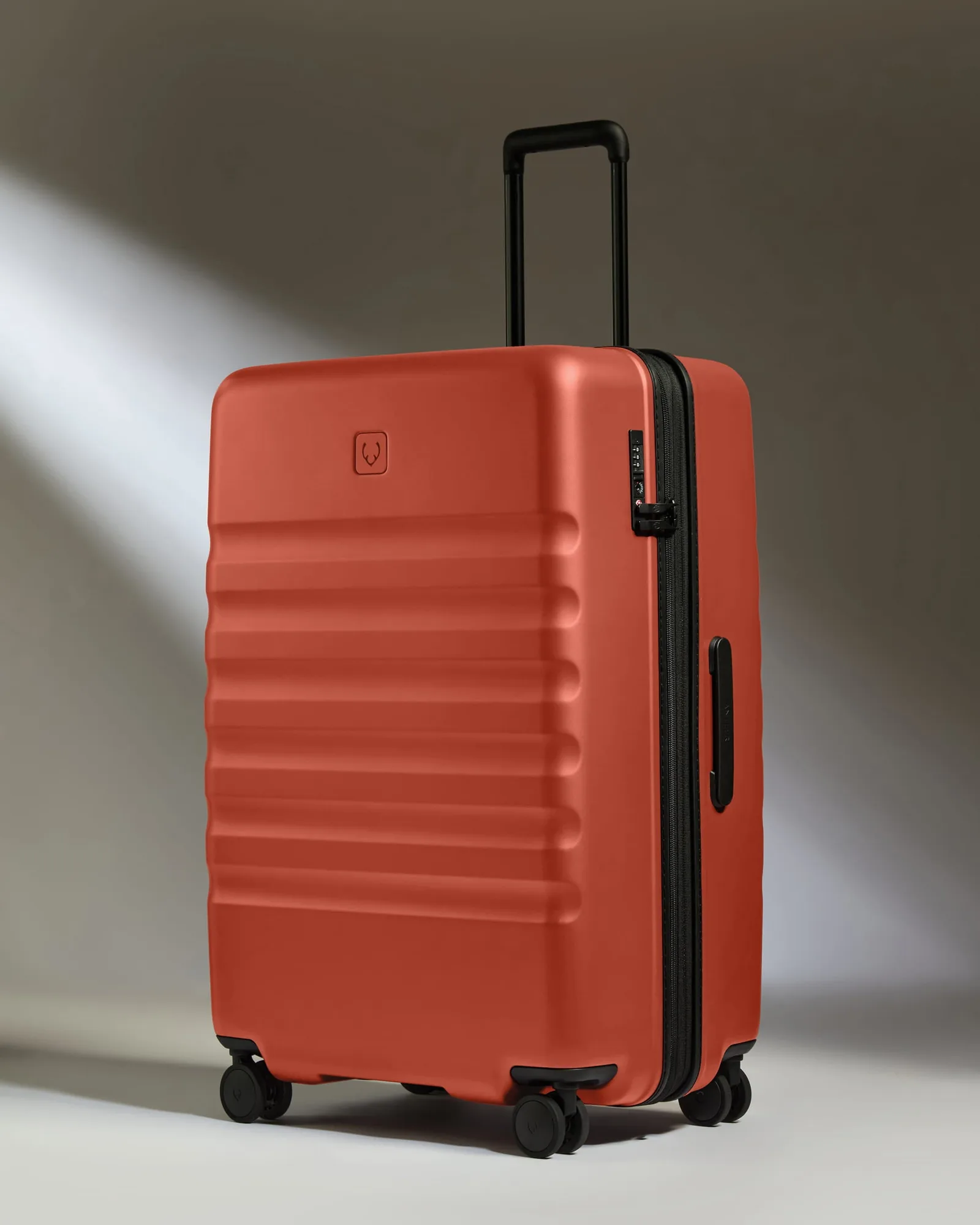
- Large Luggage in Buckthorn Red - Icon Stripe: Crafted from recycled polycarbonate, the hardwearing shell is designed to protect belongings when checked in or stowed in the car. Polycarbonate flexes under load, so this is exactly the kind of case that should never sit under a stack of boxes in a warm room.
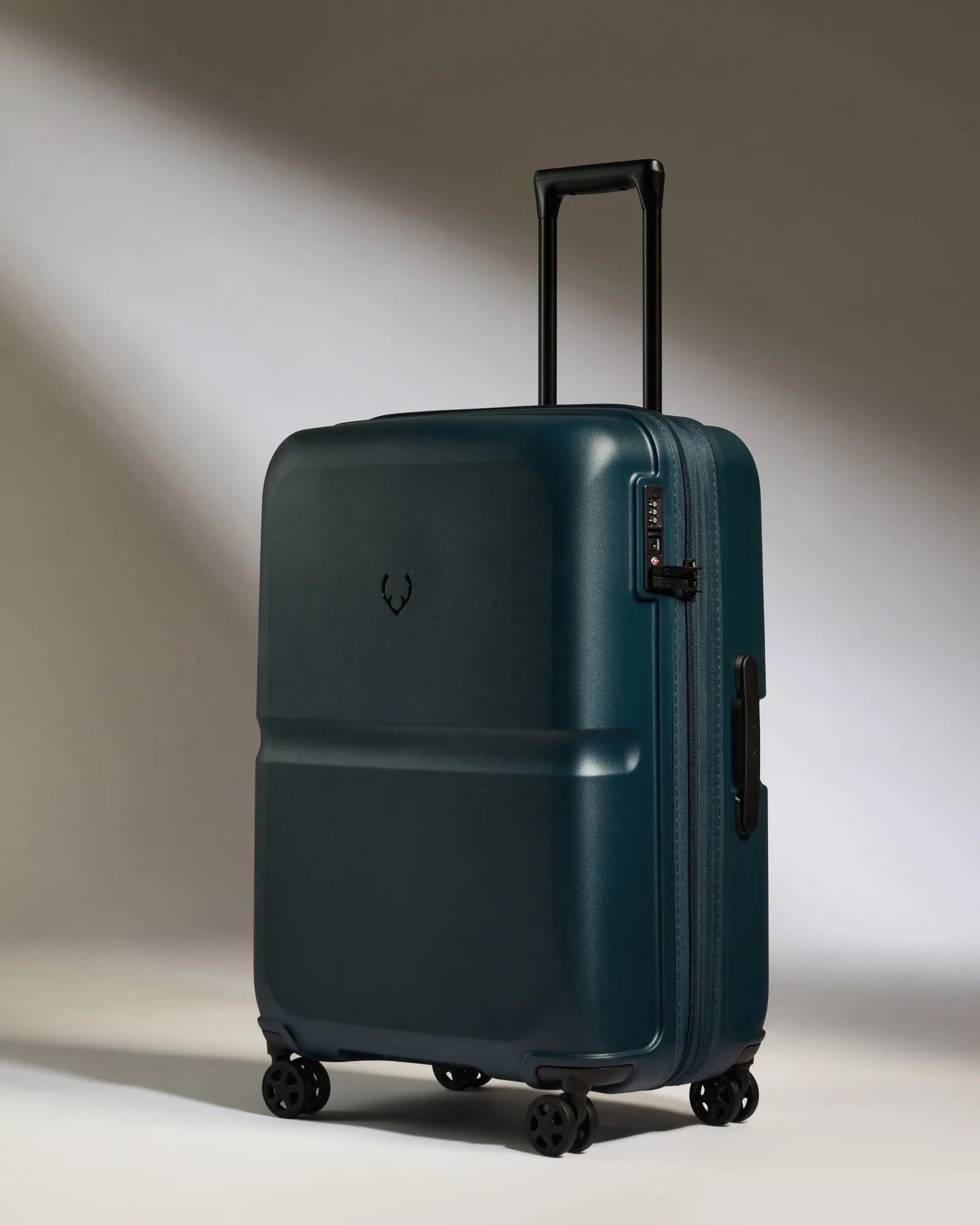
- Medium Luggage in Indigo Blue - Single Stripe: Made with a durable polypropylene shell, it's described as the lightest hardside case in the range. Lightweight shells are easier to move around for storage, but they also take a set more easily — store it upright on its wheels rather than wedged on its side.
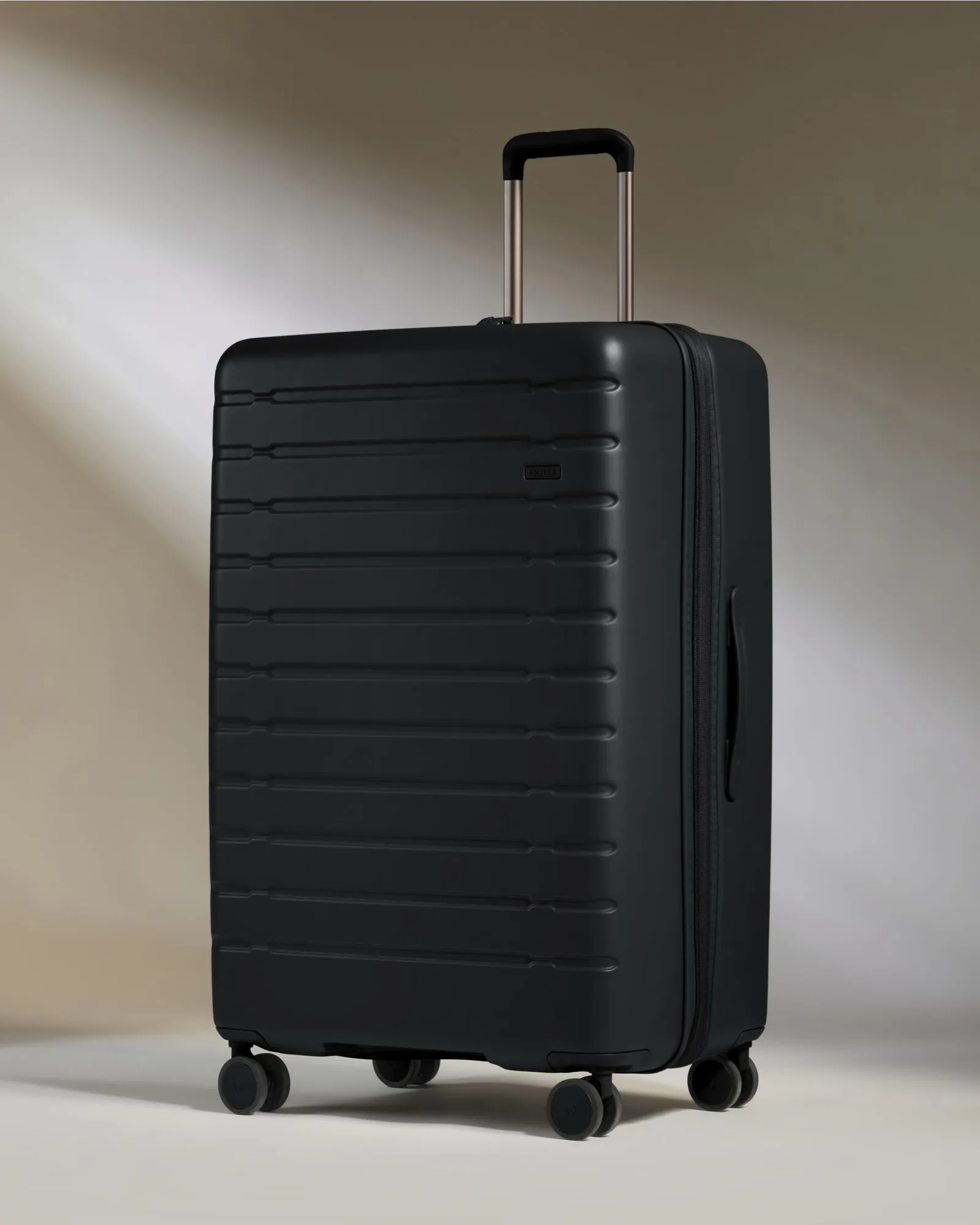
- Large Luggage in Midnight Black - Stamford 2.0: The case features Japanese Hinomoto 360-degree rotating wheels with a muted tread. Precision wheel assemblies are the first thing grit damages, so cleaning the wheel housings before storage matters more on a case like this.
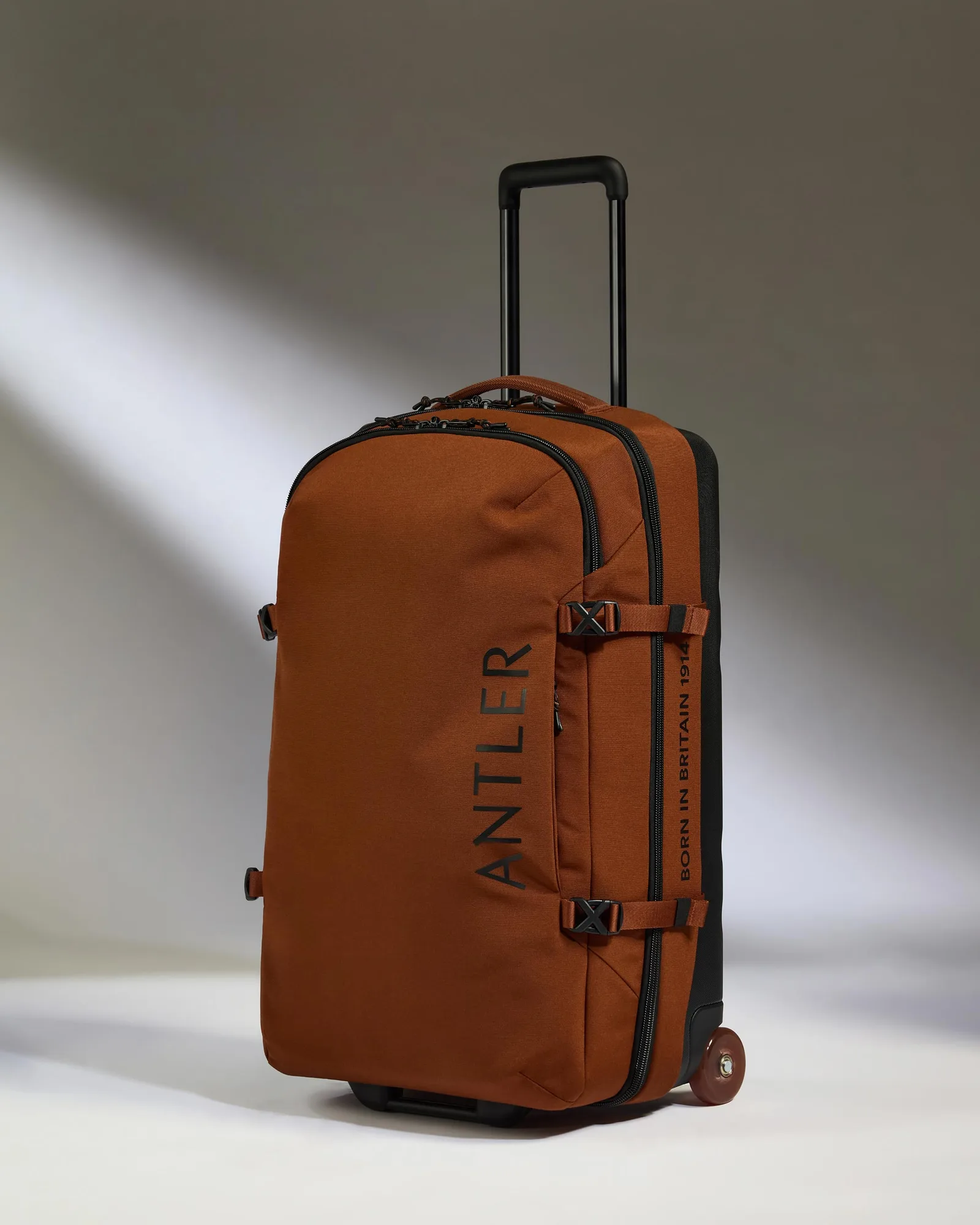
- Discovery Wheeled Duffel in Clay Brown: The durable hard shell back resists scuffs and scratches, while the water-repellent recycled fabric front flexes for easy packing. A hybrid like this needs to be stored unloaded and dry: the fabric front can hold moisture, while the hard back is the part that shouldn't carry weight.
Good suitcase storage isn't complicated: empty it, clean it, dry it, and keep it out of heat, damp, and compression. Do that, and the case you bought for one trip will still be ready for the next ten.