Quick answer
Prioritize four-spinner wheels with a smooth glide and a telescopic handle that locks without wobble. Spinner wheels roll upright and take pressure off your wrist; inline wheels track straighter over rough ground. Check wheel housing, handle play, and grip comfort before you buy.
Wheels and handles are the parts you touch most, yet they are often the last things shoppers check. A suitcase can have a tough shell and still feel wrong if the wheels drag or the handle rattles. This guide covers what to look for, how spinner and inline wheels differ, and which handle types suit different trips.
You do not need lab tests to judge these parts. A few minutes of handling in the store or a careful read of the product details will tell you most of what you need. The goal is simple: choose a case that rolls easily, steers predictably, and feels stable when you pull it.
Why wheels and handles matter more than you think
A suitcase spends more time rolling than being carried, so wheel quality affects your wrist, shoulder, and patience. Poor wheels catch on carpet edges, vibrate on tile, and need constant correction. Good wheels glide with light effort and keep the case upright when you stop moving.
Handles matter for the same reason. A telescopic handle that wobbles forces you to grip harder and makes the case feel heavier than it is. A top or side grab handle that digs into your palm is a problem when you lift the case into an overhead bin or a car trunk. These are small details that show up on every trip.
- Roll the case on a hard floor and a carpet sample if the store allows it.
- Pull the handle out and push it side to side to feel for play.
- Lift the case by each grab handle to check comfort and balance.
Spinner vs inline wheels: which rolls better for you
Spinner wheels rotate 360 degrees, so the case rolls upright beside you. That is easier on your wrist and works well in airports, train stations, and hotels. The trade-off is that spinners can drift on sloped pavements and take up more width when you walk. Inline wheels, also called recessed wheels, roll in one direction and track straighter over rough ground, but you tilt the case to pull it.
If you mostly move through smooth terminals and want the least effort, spinners are the practical choice. If you often roll over cobblestones, gravel, or uneven sidewalks, inline wheels can feel more controlled. Some travelers prefer a spinner for the outbound airport day and accept the drift because the upright roll saves their shoulder.
- Choose four spinners for airports, cities, and easy rolling.
- Choose inline wheels if you regularly cross rough or uneven ground.
- Test a spinner on a slight slope to see how much it drifts.
Luggage handle types and what to check
Most suitcases use a telescopic handle with one or two metal or composite tubes. A single-tube handle is lighter but can twist; a two-tube handle is usually more stable. Look for a release button that works with one hand and a grip that feels secure when your palm is sweaty. The handle should extend in clear stops and lock without slipping.
Top and side grab handles are the other half of the story. Padded or molded handles are kinder when you lift a loaded case. On hard suitcases, check that the handles sit flush so they do not catch on carousels or straps. If a product page does not list handle material or wheel type, treat that as a missing detail and ask before buying.
- Prefer a two-tube telescopic handle for stability.
- Check that the release button does not pinch your fingers.
- Confirm the handle locks at your preferred height.
Suitcase wheel quality: what to look and feel for
Wheel quality comes down to housing, material, and how the wheel meets the ground. A sturdy housing protects the wheel from curbs and keeps it aligned. Soft, quiet wheels roll smoothly indoors but can wear faster outdoors. Harder wheels last longer on rough surfaces but transmit more vibration.
Spin each wheel with your hand. It should turn freely without grinding or wobbling. Push the case loaded, not empty, because weight changes how wheels behave. If you buy online, look for details about wheel type and replacement. Wheels are the most common repair point, so a replaceable design extends the life of the case.
- Spin wheels by hand and listen for grinding or clicking.
- Push a loaded case to judge real rolling effort.
- Check whether wheels are replaceable before you commit.
A practical luggage buying checklist
Use this checklist when you compare suitcases in a store or read product pages. It keeps you focused on the parts that affect daily use rather than color alone. You can apply it to hard and soft cases alike.
Start with wheel type and count, then handle stability, then grab handle comfort. After that, check the shell material and capacity for your trip length. If you are choosing between sizes, a medium case suits one to two week trips, while a large case fits longer journeys or family packing.
- Wheels: four spinners or two inline, with smooth rotation.
- Handle: telescopic with minimal wobble and a secure lock.
- Grab handles: comfortable when the case is loaded.
- Shell: durable material that matches your travel style.
- Size: medium for most trips, large for extended travel.
Decision rules for wheels and handles
- If you fly often and want easy rolling: Choose a four-spinner case with smooth, quiet wheels and a two-tube telescopic handle. Spinners reduce wrist strain in terminals, but expect some drift on sloped pavement.
- If you travel over rough ground: Choose inline wheels or a case with larger, harder wheels that track straight. You will tilt and pull the case, but it will handle cobblestones and gravel better.
- If you pack heavy: Test the handle and wheels with weight, not empty. Look for a stable handle and wheels that do not wobble under load. A case that rolls well empty can feel unstable when full.
- If you want one set for the family: Buy a matching set so wheel and handle feel is consistent across sizes. Sets simplify packing and reduce the chance of a weak link in the group.
Product facts to compare
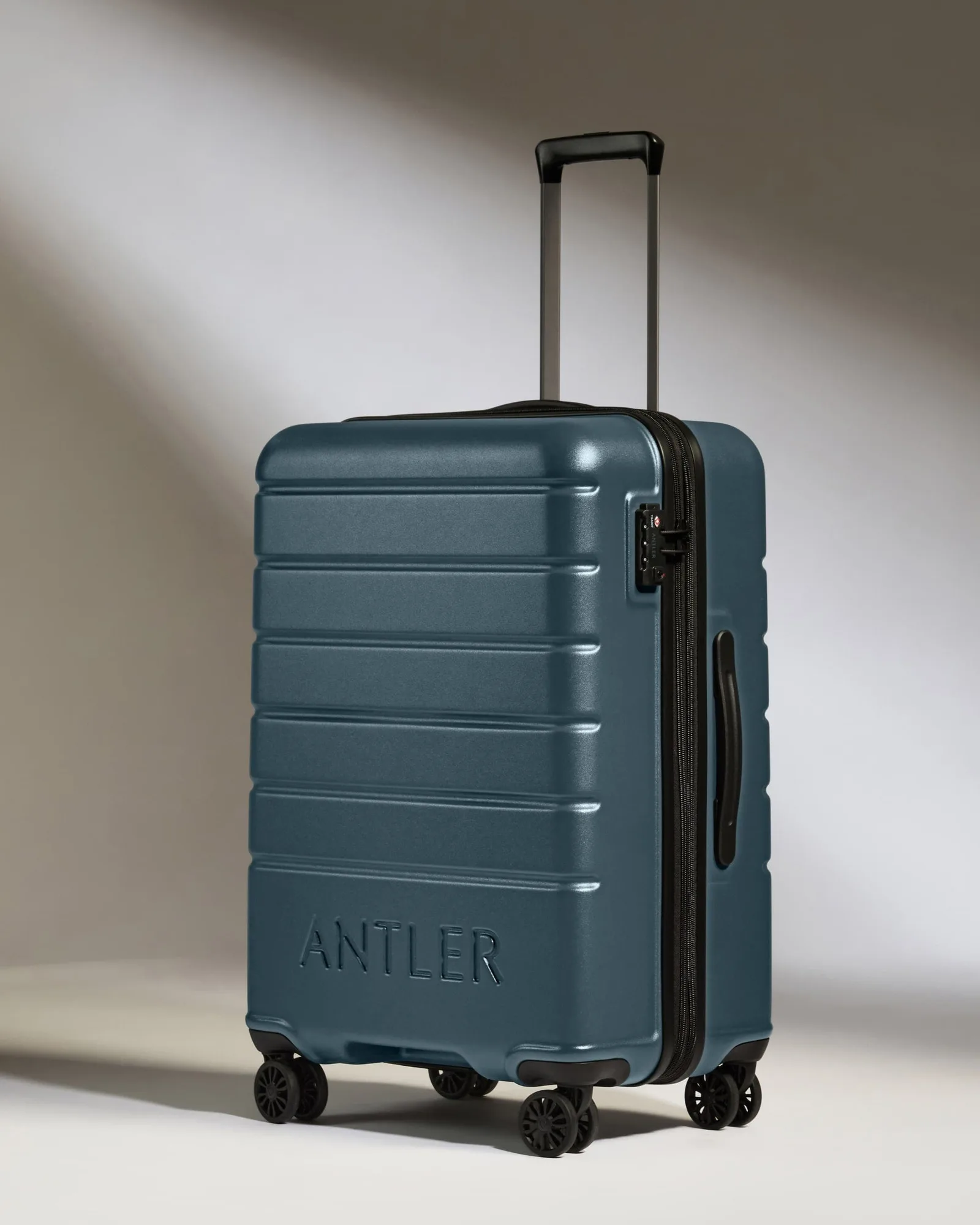
- Medium Luggage in Blue Gray - Logo: Crafted from durable polycarbonate with an ergonomic grip handle and double spinner wheels for seamless navigation. Double spinner wheels and an ergonomic handle address the two parts you touch most, which makes this a practical choice for frequent rolling through airports.
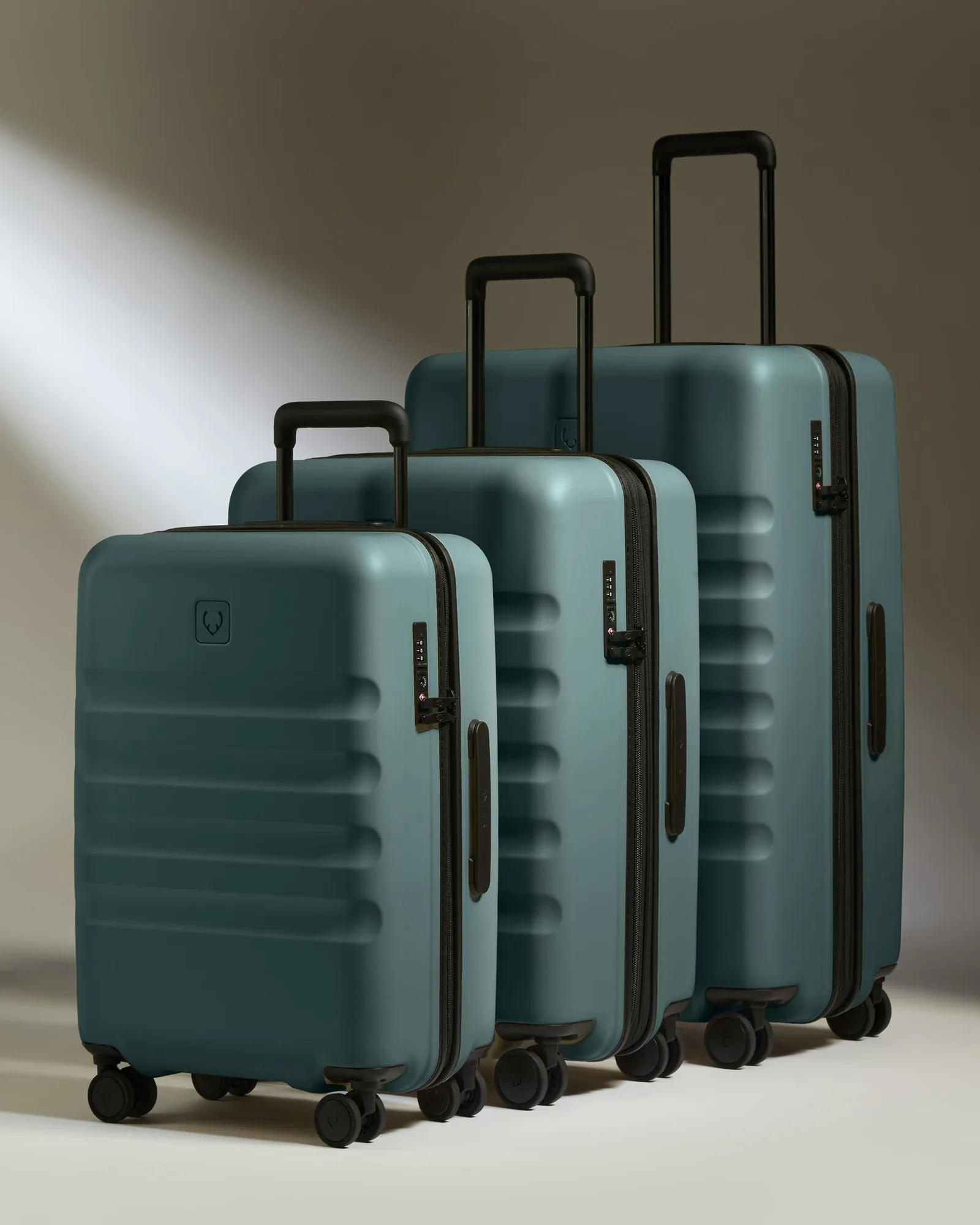
- Large Carry-on Luggage Set in Glade Blue - Icon Stripe: Combines three sizes of the Icon Stripe in one set, including the Biggest cabin, Medium, and Large, crafted from recycled polycarbonate. A set lets you match wheel and handle feel across sizes, so you are not relearning how each case rolls on every trip.
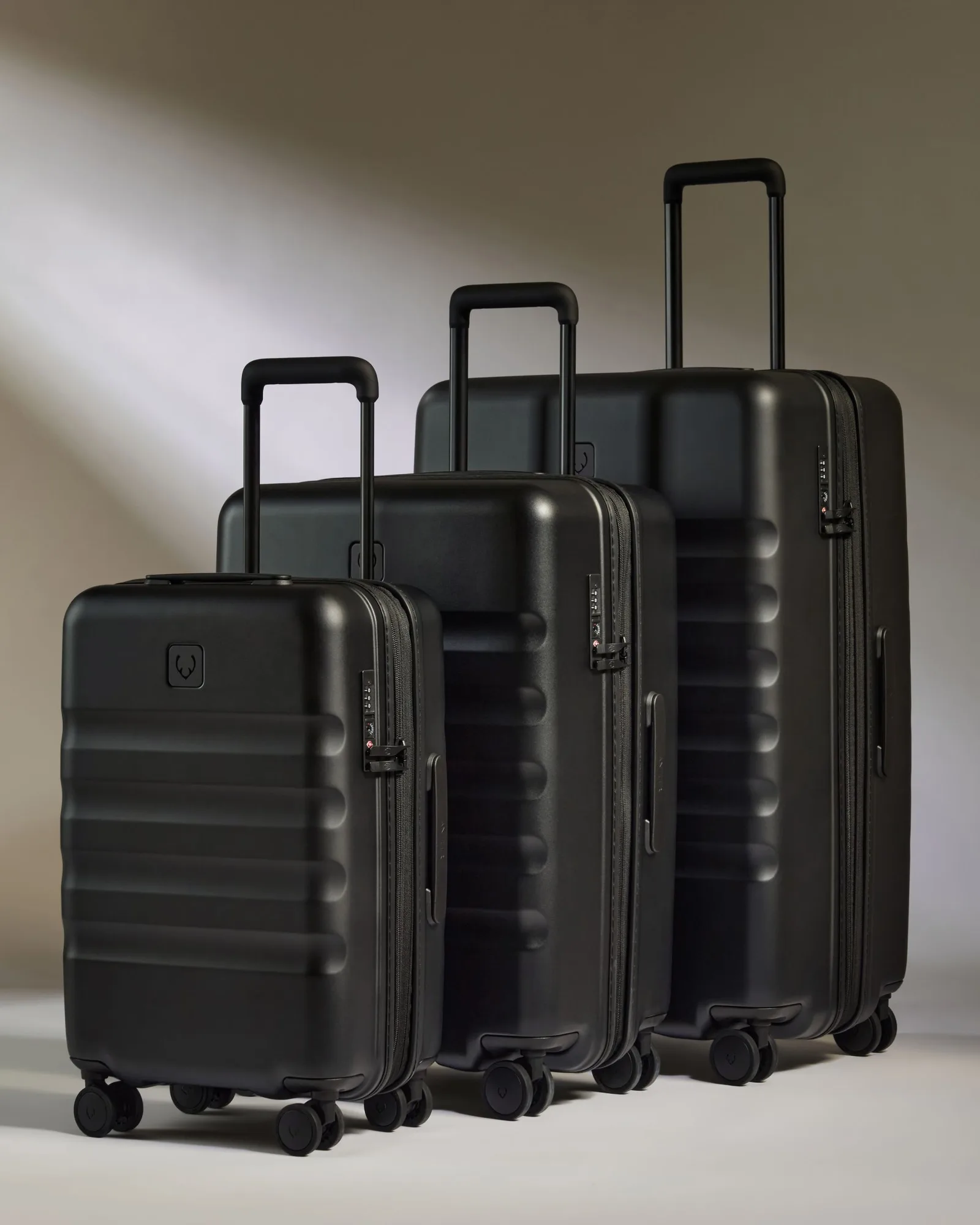
- Expandable Carry-on Luggage Set in Black - Icon Stripe: Includes one carry-on case with expandable design, crafted from recycled polycarbonate. Expansion adds packing flexibility, but check that the wheels and handle still feel stable when the case is fully packed.
Who this guide is for
Best for
- Travelers buying a new suitcase and unsure which wheels or handles to prioritize
- Shoppers comparing hard suitcases online and wanting a practical checklist
- Anyone replacing a case because the wheels or handle failed first
Not for
- Shoppers looking for a deep dive into shell materials or locking systems
- Travelers who only need a carry-on backpack or weekender bag
- Buyers who have already chosen a model and only want color advice
Wheels and handles are the parts that decide whether a suitcase feels like a tool or a chore. Use the checklist, test with weight when you can, and choose the wheel type that matches your most common ground. If you are comparing models, start with the Medium Luggage in Blue Gray - Logo or a matching Icon Stripe set to keep the rolling feel consistent.