Quick Answer
Most suitcase zipper problems come down to dirt, a misaligned slider, or fabric caught in the teeth. Clean the track, run a dry lubricant like wax or silicone along the teeth, and ease the slider by hand before you reach for pliers. If the zipper coil is torn, missing teeth, or the slider splits open again right after you close it, stop and use luggage straps or a luggage cover for the trip instead of forcing it.
A zipper that jams at the airport is one of the most stressful luggage failures because it usually happens when you are already late. The good news is that many suitcase zipper problems are fixable in a few minutes with things you already have in a hotel room or kitchen drawer.
This guide separates the symptom from the likely cause so you can choose the right corrective action and, just as importantly, know when to stop. Forcing a damaged zipper is how a small repair turns into a broken suitcase zipper that needs a professional.
Start With the Symptom, Not the Zipper
Before you touch anything, look closely at where the zipper is failing. Is the slider stuck in one spot, does it move but leave a gap behind it, or does it feel gritty the whole way around? That single observation tells you whether you are dealing with debris, a misaligned slider, or worn teeth.
Run your finger along the track and check for thread, lint, or a piece of lining caught in the teeth. On softside cases, fabric can fold into the coil when the bag is overpacked. On hardside cases, the zipper sits in a rigid channel, so a stuck slider is more often grit or a bent pull than fabric.
- Zip the case fully closed and watch the slider from the outside, not from above.
- Mark where it sticks with a piece of tape so you can test the same spot after cleaning.
- Never yank a stuck slider with the pull tab; the tab is the weakest part.
Clean and Lubricate a Stuck Zipper
Most suitcase zipper stuck complaints resolve with cleaning. Use a soft toothbrush or a dry cloth to sweep out the teeth, then blow out the channel with short bursts of air. If the zipper is gritty, a lightly damp cloth with mild soap is fine, but dry the track completely before you lubricate it.
For lubrication, a wax candle, a dry silicone stick, or a graphite pencil rubbed along the teeth works well. Avoid oil, butter, or cooking spray. Those attract dust and sand, which is exactly what caused the problem. Work the slider back and forth a few centimetres at a time rather than forcing it the full length.
- Rub wax on both sides of the coil, not just the top.
- Move the slider in small strokes and reapply if it still drags.
- Wipe away excess wax so it does not stain light-coloured fabric.
When the Slider Splits Open Behind You
If the zipper closes but opens again right behind the slider, the slider itself has likely spread. You can sometimes squeeze it back with a pair of pliers, but this is a controlled repair, not a force move. Wrap the jaws in tape to avoid scratching the metal, apply gentle pressure on the top and bottom of the slider body, and test after each small squeeze.
If the slider still splits after two or three gentle adjustments, stop. Over-squeezing cracks the slider or bends the pull, and a cracked slider cannot be fixed at home. At that point, a luggage strap around the case or a luggage cover will hold everything together for the rest of the trip.
- Squeeze in tiny increments and test between each one.
- If the slider feels brittle or the pull snaps, stop immediately.
- Do not use this method on plastic sliders; they crack instead of bending.
Torn Coil, Missing Teeth, and Split Seams
A broken suitcase zipper with visible missing teeth, a torn coil, or a seam that has pulled away from the shell is not a home repair. Zipper replacement requires opening the lining and re-stitching the track, which is a job for a luggage repair shop or the manufacturer's warranty service.
This is also where luggage repair tips matter most: check whether the damage is covered before you pay for a repair. Wear and tear from overpacking is usually not covered, but a failed slider or a manufacturing defect often is. Photograph the damage before you send the case anywhere.
- Count missing teeth; more than one or two means replacement, not repair.
- Check the warranty terms before booking a paid repair.
- Keep the case closed with straps or a cover while you decide.
Prevent the Next Zipper Failure
Suitcase care starts with how you pack. An overstuffed case puts constant tension on the zipper, and that tension is what spreads sliders and pulls teeth out of alignment. If you have to press down on the lid to close it, the zipper is already under too much load.
Packing cubes, a laundry bag, and a shoe bag help you compress soft items without forcing the closure. When you travel, loosen the zipper slightly before you check the bag, and never lift a suitcase by its zipper pull. The handle is designed for weight; the zipper is not.
- Leave a small gap in the load so the zipper closes without pressure.
- Clean the zipper track after dusty trips.
- Use a luggage cover to keep grit out of the channel in transit.
Zipper Diagnosis Chart
- Slider stuck in one spot: Usually grit, lint, or fabric caught in the teeth. Clean the track, dry it, then apply wax or silicone and work the slider in small strokes. If it still sticks after cleaning and lubricating, stop and have a repair shop inspect the track.
- Zipper closes but splits behind the slider: The slider body has spread. With taped pliers, squeeze gently and test after each small adjustment. Two or three gentle squeezes without success means the slider should be replaced, not squeezed harder.
- Missing teeth or torn coil: The zipper track itself has failed. This is not a home fix; it needs a luggage repair shop or warranty service. Secure the case with luggage straps or a luggage cover and stop zipping it entirely.
- Zipper feels stiff but moves: Normal wear or a dry track. Clean and lubricate, then check whether the case is overpacked. If stiffness returns on the next trip, reduce the load before you blame the zipper.
Cases Built to Reduce Zipper Strain
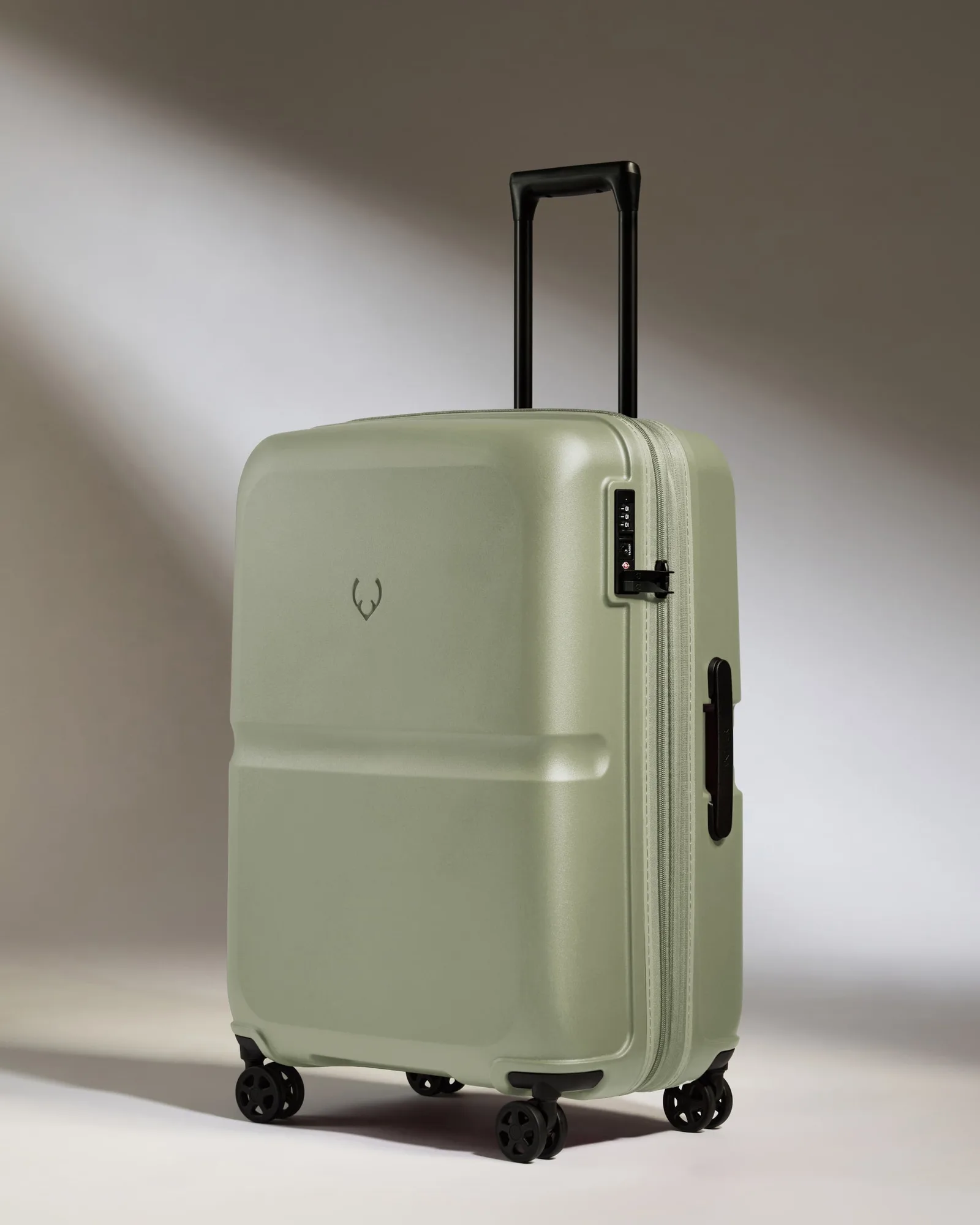
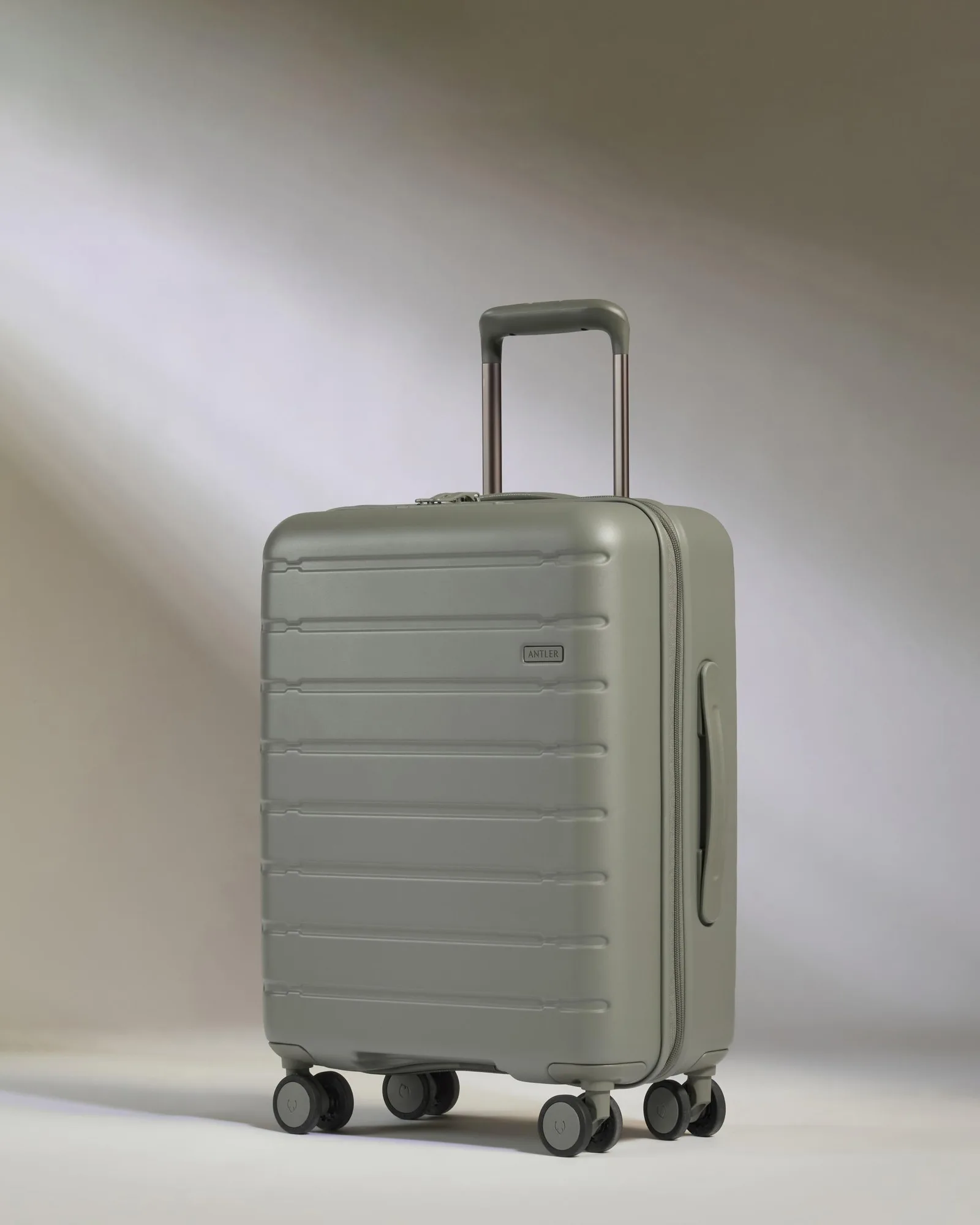
- Medium Luggage in Clover Green - Single Stripe: Made with a durable polypropylene shell and described as Antler's lightest hardside case, balancing style, space, and practicality. A lighter shell means less weight pressing on the closure, and the rigid hardside channel keeps the zipper track straighter than a soft bag when the case is full.
- Expandable Carry-on Luggage in Field Green - Stamford 2.0: Features Hinomoto 360-degree rotating wheels with a muted tread for whisper-quiet gliding. Smooth rolling reduces the twisting and dragging that can pull a zipper out of alignment when you haul a case through an airport.
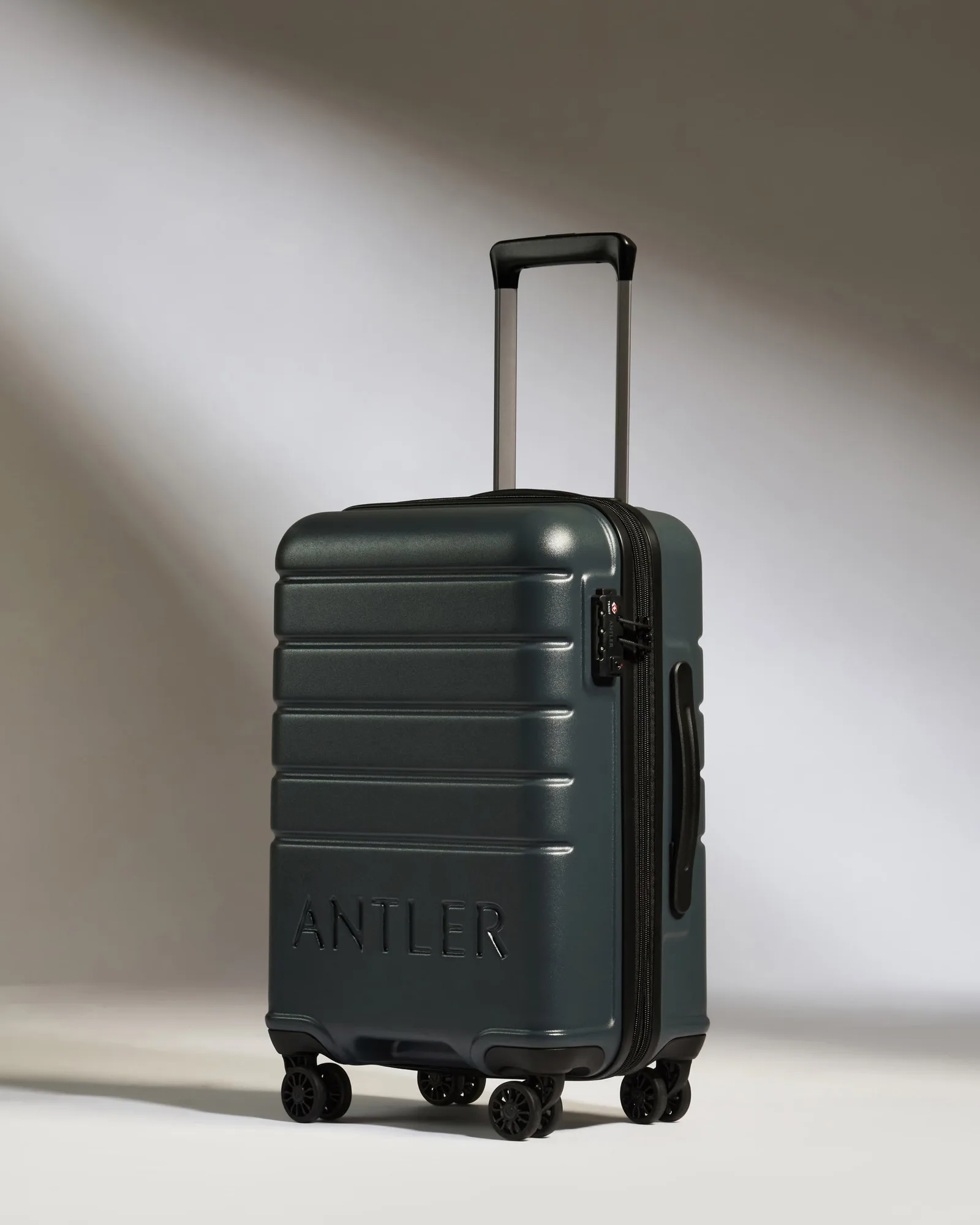
- Expandable Carry-on Luggage in Granite Gray - Logo: Crafted from durable polycarbonate with an ergonomic grip handle and double spinner wheels. The ergonomic handle encourages you to lift by the handle instead of the zipper pull, which is one of the most common causes of broken suitcase zipper pulls.
Most suitcase zipper problems are a cleaning and lubrication job, not a replacement. Diagnose the symptom first, make one gentle correction at a time, and stop the moment the slider cracks or the coil tears. If you are buying a new case, look for a rigid hardside shell and an ergonomic handle, because those two details take the daily strain off the zipper.