Quick answer
For beach volleyball, choose polarized or mirrored lenses with a no-slip, no-bounce frame and UV400 protection. For indoor volleyball, choose non-reflective or lightly tinted lenses so you can read the ball under gym lights. If you want one pair for both, prioritize grip and coverage first, tint second.
Start with the court, not the color
Indoor courts run on flat, bright, overhead lighting, so a dark tint or a mirror finish can make the ball disappear against the ceiling. You want a lens that cuts glare without dimming the play. Non-reflective lenses or a light tint keep the ball readable when it crosses a light fixture.
Beach courts are the opposite problem: sand reflects light from below while the sun hits from above. That is where polarized or mirrored lenses earn their place, because they cut the bounce coming off the sand. If you play both, buy for the surface you play most and accept a compromise on the other.
Tint choices that match how you play
Gray and neutral tints keep colors true, which helps when you are tracking a ball against a busy background. Mirrored lenses cut total light and add a reflective layer that helps on bright sand. A single-lens or wraparound shape gives more coverage at the edges, which matters when you look up for a set or track a ball crossing your peripheral vision.
Do not assume every tint is polarized. Polarization is a separate feature, and if a product page does not list it, treat the lens as non-polarized. That is a decision limitation, not a flaw: many players prefer non-polarized indoors because polarization can interact with certain screens and surfaces.
Fit rules that keep frames planted
A frame that slides during a serve is worse than no sunglasses at all, because you will spend the rally pushing instead of playing. Look for no-slip, no-bounce construction, then check three points: the bridge should sit without pinching, the temples should hug without pressing behind the ear, and the frame should not shift when you look down sharply.
Test the fit by shaking your head side to side and then bending forward. If the frame moves, tighten the fit or choose a different shape. Cat-eye and square frames both work on court, but the shape matters less than whether the frame stays put through a dive.
Coverage, sweat, and the sand problem
Sand glare comes from below, so coverage under the eye matters as much as coverage above it. A frame with a taller lens or a slightly wrapped shape blocks more of that bounce. Sweat is the other enemy: a frame that does not slip when you sweat is doing real work, because beach play involves heat, movement, and repeated bending.
If you wear a hat or visor, check that the temples do not collide with the brim. If you play in a windy spot, a closer-fitting frame keeps sand out of your eyes better than a loose one.
Decision rules for volleyball eyewear
- If you play indoors: Choose non-reflective or lightly tinted lenses and skip the mirror finish. A dark or mirrored lens can make the ball disappear against gym lights. Prioritize ball readability over maximum shade.
- If you play on sand: Choose polarized or mirrored lenses with UV400 protection to cut the glare bouncing off the sand from below. Sand glare is a coverage problem as much as a tint problem.
- If you play both: Buy for the surface you play most. A non-reflective lens works on sand with a hat; a mirrored lens indoors is the harder compromise. Grip and coverage first, tint second.
- If your frames slip: Look for no-slip, no-bounce construction and test with a head shake and a forward bend before you commit. A frame that moves during a rally is the wrong frame.
Product facts that matter on court
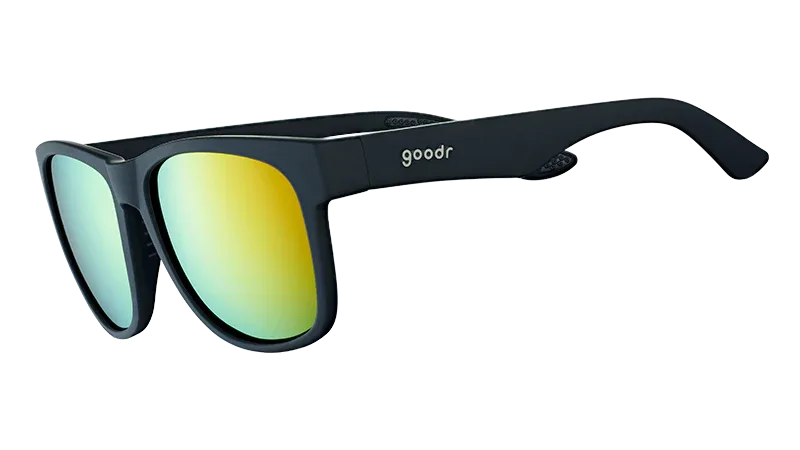
- Voight-Kampff Vision: Polarized gray and red single-lens futuristic sunglasses with UV400 protection; won't slip when you sweat or bounce when you move. Polarized lenses and UV400 protection are the two features that matter most for beach volleyball, and the no-slip, no-bounce build addresses the biggest fit failure on court.
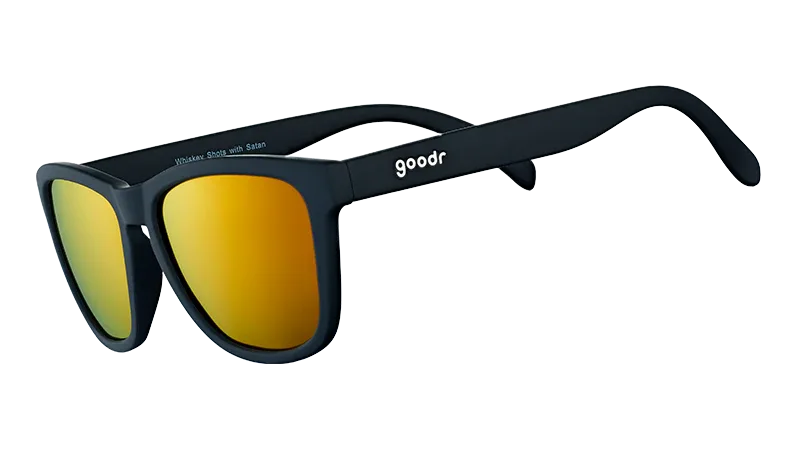
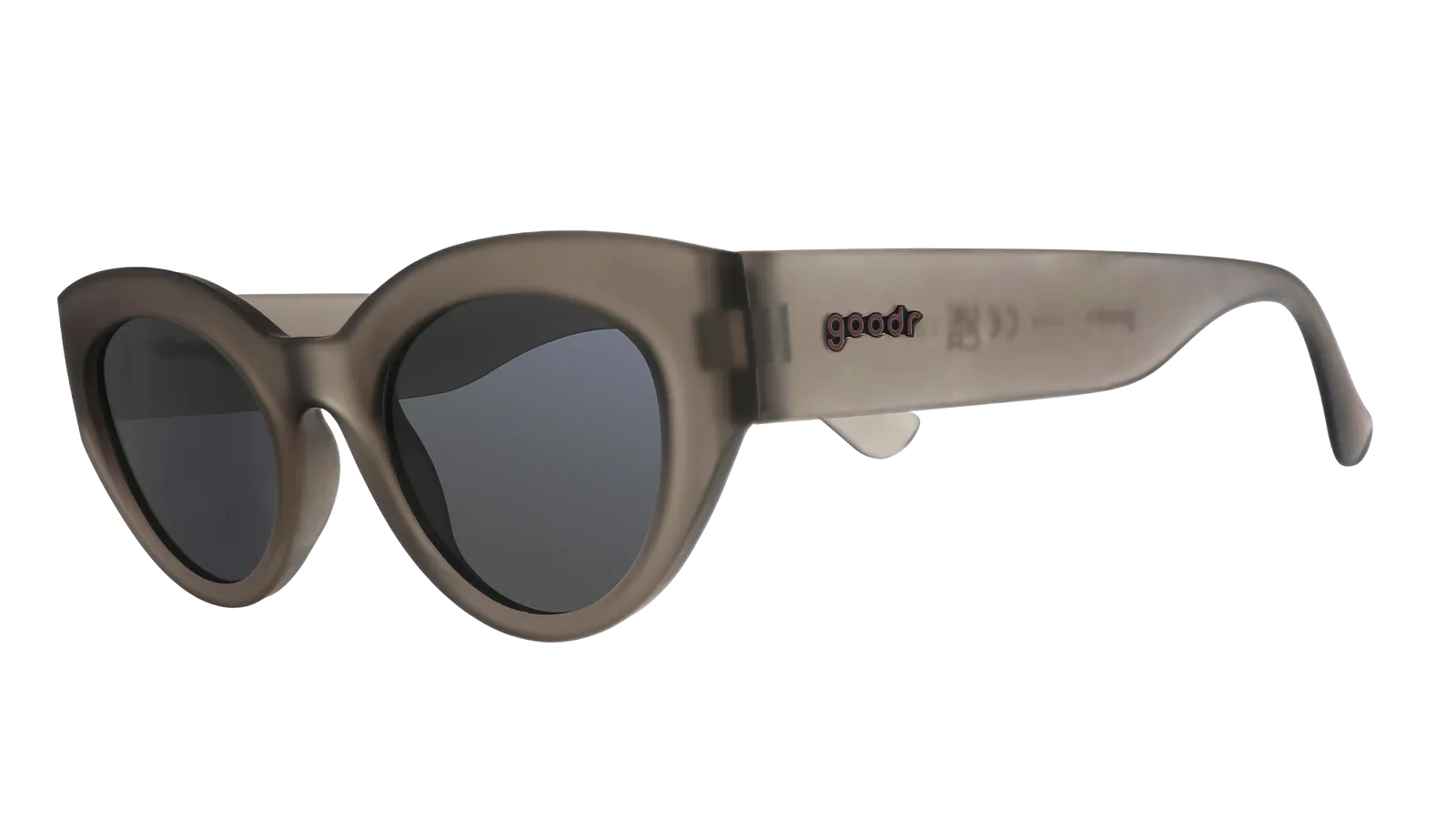
- Moonbeam Daydream: No-slip, no-bounce translucent dark gray frames with non-reflective black lenses. Non-reflective lenses are the safer pick for indoor courts where a mirror finish can hide the ball against overhead lights, and the grip construction keeps the frame stable through quick direction changes.
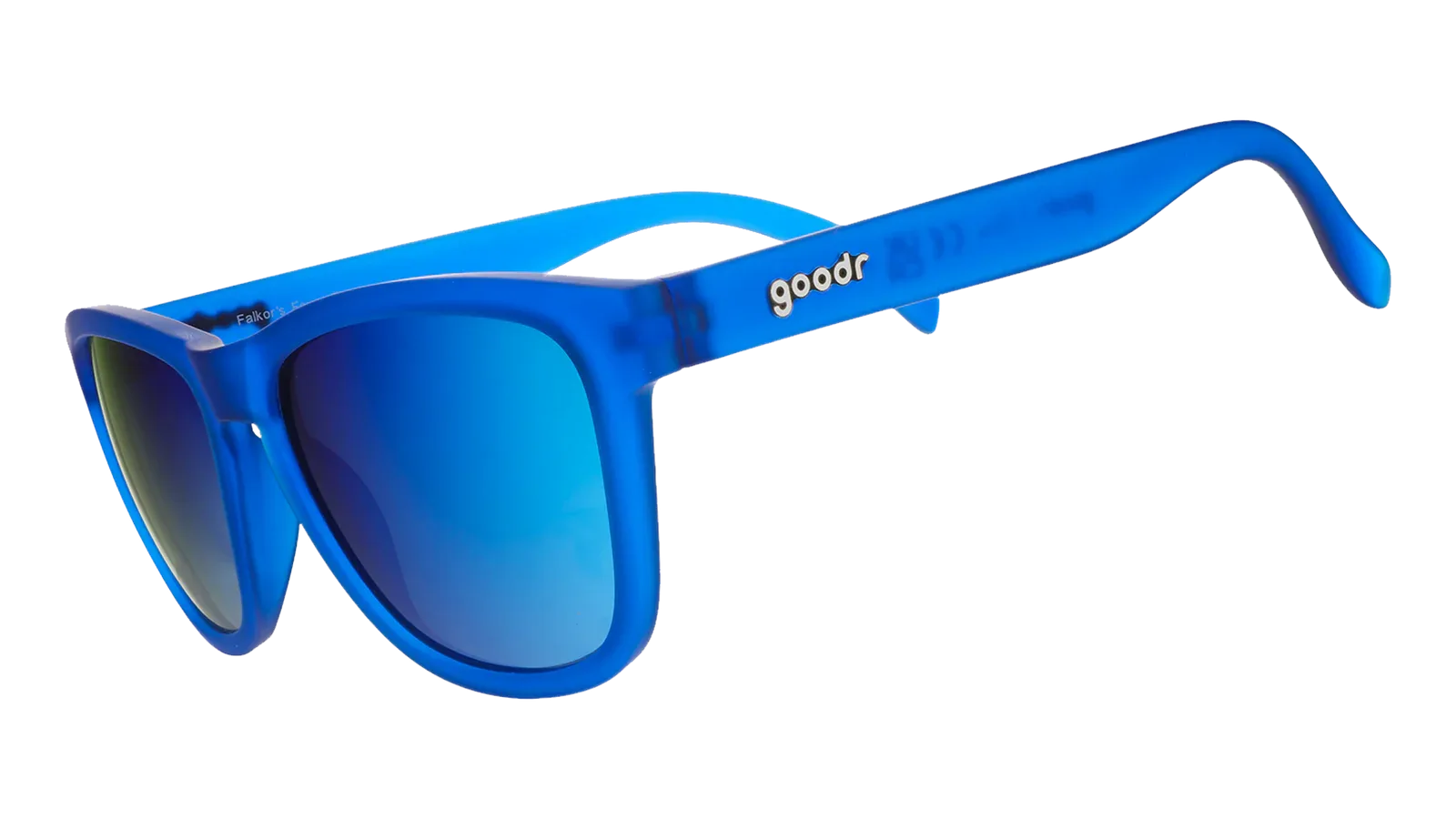
- Best Dystopia Ever: VRGs with mirrored reflective lenses in blue and purple. Mirrored lenses cut light and add a reflective layer, which helps on bright sand, but they are less ideal indoors where you need to read the ball under flat lighting.
Who these picks suit
Best for
- Beach players who need polarized or mirrored lenses and UV400 protection against sand glare
- Indoor players who need non-reflective lenses to track the ball under gym lights
- Players who want a no-slip, no-bounce frame that stays put through serves and dives
Not for
- Players who want one lens tint to perform perfectly on both sand and indoor courts
- Anyone who needs a prescription lens, since these frames are sold as non-prescription