As a new parent, you want to protect your baby from everything—including the sun. But when your little one is under six months old, the rules for sun protection are different. Pediatricians agree that a newborn’s skin is thinner, more delicate, and more absorbent than an older child’s, making it extra sensitive to both UV rays and chemical ingredients found in many sunscreens.
So what should you do when you need to take your baby outdoors? The American Academy of Pediatrics (AAP) recommends keeping infants under six months out of direct sunlight as much as possible. When shade isn’t an option, a careful, minimal approach to sunscreen is advised. In this guide, we’ll break down pediatrician-approved sun safety for babies under six months, including when and how to use sunscreen safely, and which products are best for your baby’s delicate skin.
Why Babies Under 6 Months Need Special Sun Protection
A baby’s skin is not just smaller—it’s structurally different. The outermost layer (stratum corneum) is thinner and has less melanin, meaning it offers less natural protection against UV radiation. Additionally, infants have a higher surface-area-to-body-weight ratio, so any product applied to their skin is absorbed more readily into their bloodstream. This is why pediatricians urge caution with sunscreen ingredients like oxybenzone, octinoxate, and fragrances.
The primary recommendation from the AAP is simple: avoid direct sun exposure. Keep your baby in the shade, under an umbrella, or in a stroller with a canopy. Dress them in lightweight long sleeves, pants, and a wide-brimmed hat. When these measures aren’t enough—for example, at the beach or a park with limited shade—a small amount of sunscreen can be used on exposed areas like the face, hands, and feet.
- Always test a small patch of sunscreen on your baby’s arm before full application to check for any reaction.
- Choose a mineral (physical) sunscreen with zinc oxide or titanium dioxide—these sit on top of the skin and are less likely to irritate.
What Pediatricians Look for in a Baby Sunscreen
When selecting a sunscreen for an infant under six months, pediatricians recommend mineral-based formulas with an SPF of at least 30. Mineral sunscreens create a physical barrier that reflects UV rays, rather than absorbing them into the skin. They are far less likely to cause irritation or allergic reactions, which is crucial for a baby’s sensitive skin.
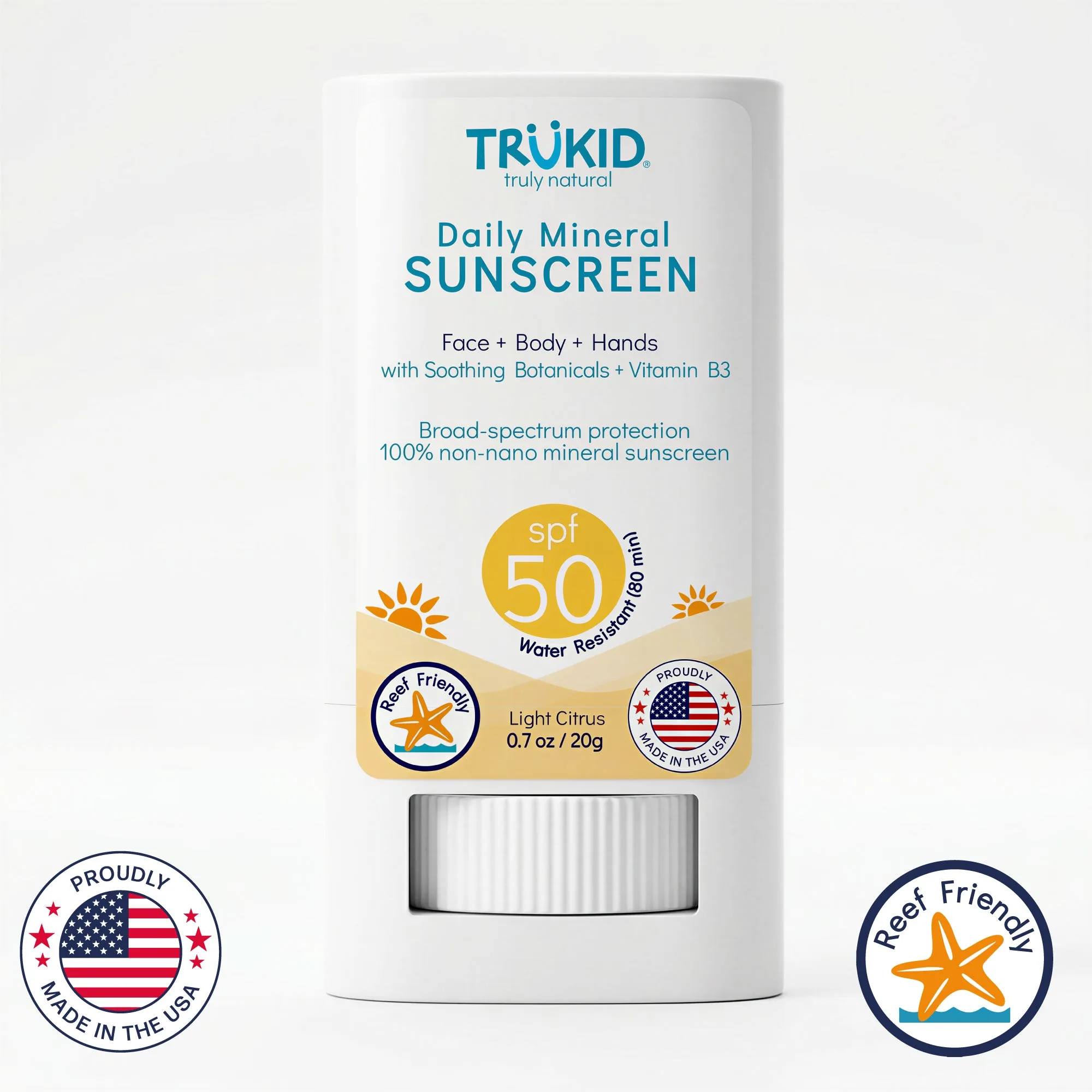
Look for products labeled “broad spectrum” (protecting against both UVA and UVB rays), water-resistant (for sweaty or splashy situations), and free of fragrances, parabens, and dyes. The TruKid Easy On SPF50 Sunscreen is a great example—it’s a mineral formula with zinc oxide, no harsh chemicals, and it’s gentle enough for daily use on sensitive skin. For babies who already have eczema or very dry skin, the TruKid Eczema (Unscented) Daily SPF30 Sunscreen offers a soothing, fragrance-free option that moisturizes while protecting.
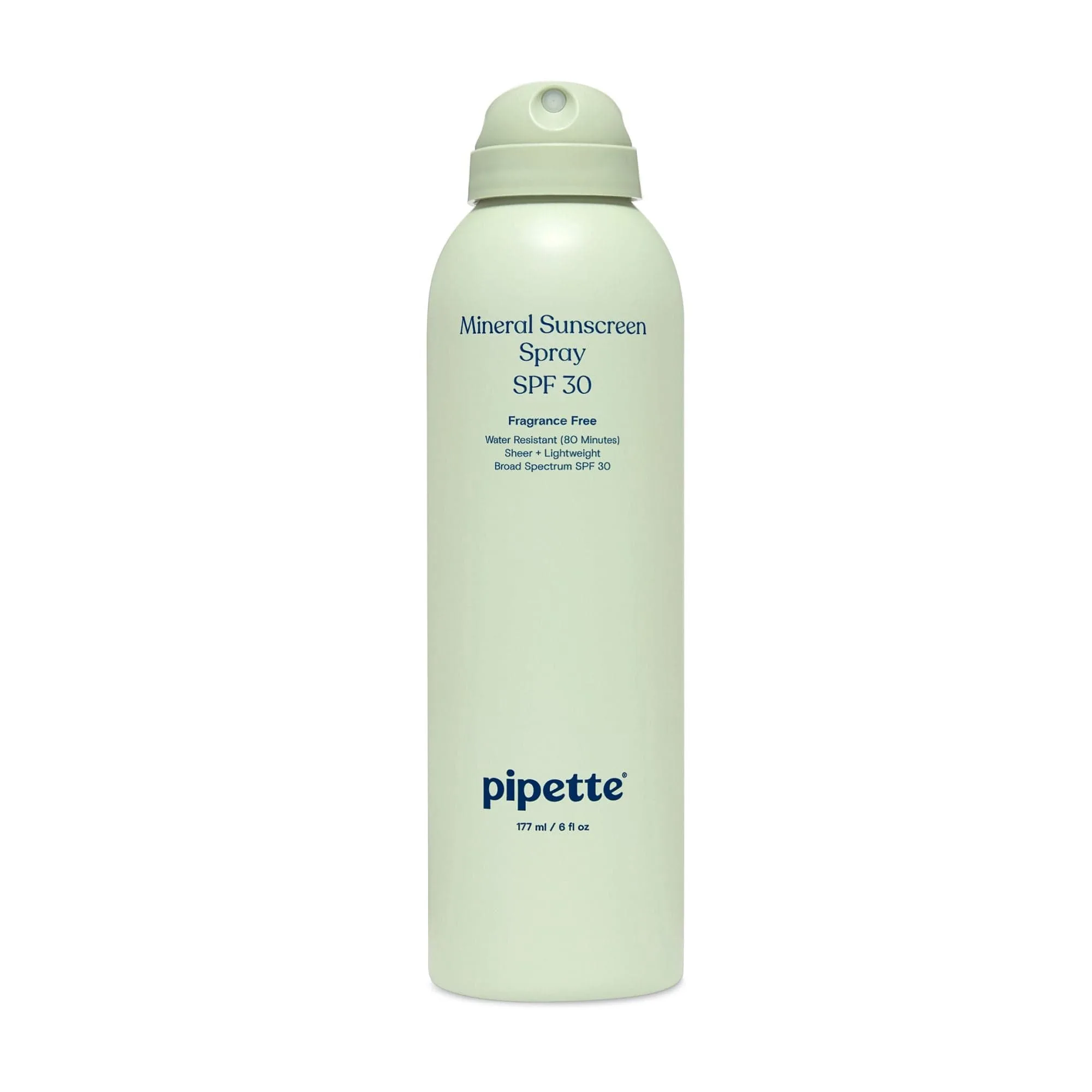
- Avoid spray sunscreens for babies—they can be inhaled and may not provide even coverage.
- Reapply sunscreen every two hours, or immediately after swimming or sweating.
How to Apply Sunscreen to a Baby Under 6 Months
Even with a pediatrician-approved sunscreen, application technique matters. Start by applying a small amount to a tiny area of your baby’s skin (like the back of the hand) to see if any redness or irritation develops. If all is well, you can use it on exposed areas that can’t be covered by clothing or shade.
Use a gentle hand—sunscreen should be spread evenly but not rubbed in aggressively. Pay special attention to the ears, nose, tops of feet, and back of the neck. Avoid the area around the eyes, and if sunscreen gets into your baby’s eyes, wipe it away with a clean, damp cloth. After coming indoors, wash off the sunscreen with a mild, fragrance-free baby cleanser and lukewarm water.
- Apply sunscreen 15–30 minutes before going outside to allow it to bind to the skin.
- Don’t forget to protect your baby’s lips with a zinc oxide-based lip balm.
Beyond Sunscreen: Other Sun Safety Tips for Newborns
Sunscreen is just one part of a complete sun safety strategy. The AAP emphasizes that for babies under six months, physical barriers are the first line of defense. Keep your baby in the shade as much as possible—use stroller shades, umbrellas, or pop-up tents. Dress them in lightweight, tightly woven clothing that covers arms and legs, and always use a wide-brimmed hat that shades the face, ears, and neck.
Plan outdoor activities for early morning or late afternoon when UV rays are less intense. The sun’s rays are strongest between 10 a.m. and 4 p.m., so try to keep your baby indoors during those hours. Also, be aware that UV rays can reflect off water, sand, and concrete, so even in the shade, your baby can be exposed. Sunglasses with UV protection are a good idea for older infants who will tolerate them.
- Never leave your baby in a parked car—temperatures can rise quickly and become dangerous.
- Check the UV index for your area daily to plan outdoor time wisely.
When Can You Start Using Regular Sunscreen on Your Baby?
Once your baby turns six months old, you can begin using sunscreen more broadly and regularly. At that point, the AAP recommends applying a broad-spectrum, water-resistant sunscreen with SPF 30 or higher to all exposed areas of skin. You can still choose mineral formulas for peace of mind, but many pediatricians consider chemical sunscreens safe for older babies as long as they are fragrance-free and formulated for sensitive skin.
Transitioning to a daily routine that includes sunscreen is a great habit to build. Products like the TruKid Easy On SPF50 Sunscreen are perfect for toddlers and older children because they offer high protection without the greasy feel or strong scent. For children with eczema-prone skin, the TruKid Eczema (Unscented) Daily SPF30 Sunscreen continues to be a gentle, effective option even after the first year.
- Keep using mineral sunscreen if your child has very sensitive skin or a history of eczema.
- Make sunscreen application a fun part of the daily routine—sing a song or use a sticker chart for cooperation.
Protecting your baby’s delicate skin from the sun doesn’t have to be complicated. By following pediatrician recommendations—staying in the shade, dressing in protective clothing, and using a mineral sunscreen when needed—you can keep your little one safe while enjoying time outdoors. For a gentle, effective option that grows with your child, explore the TruKid Easy On SPF50 Sunscreen, a pediatrician-favorite mineral formula that’s safe for babies six months and older.