Quick answer
Pack the Super Bivvy as a reusable emergency shelter, not a sleeping bag replacement. Set it up with the opening away from the wind and leave a small vent gap near your face to reduce condensation. After use, air it out completely and fold it back into its carrying case so it stays ready for the next bug-out bag check.
Why the Super Bivvy Belongs in a Bug-Out Bag
The Super Bivvy is made of waterproof, windproof, and snow proof material, so it blocks cold, wind, rain, and sun. That makes it a compact layer for a bug-out bag when you need protection from the elements but do not want to carry a tent. It is reusable and comes with a carrying case, so it can live in your bag between outings rather than being a one-time item.
A bivvy bag for bug out bag use works best as a shelter layer over your clothing or sleeping bag. It is not a substitute for insulation. In cold conditions, pair it with dry layers and a ground pad, because the bivvy blocks wind and water but does not generate heat on its own.
How to Set Up a Bivvy Sack in an Emergency
Pick a site that is level, free of sharp rocks or branches, and away from dead trees or flash-flood paths. Unfold the Super Bivvy and slide in feet-first. Position the opening so it faces away from the wind, and keep your head near the opening for airflow.
If rain is likely, angle the opening slightly downward or create a small drip lip with the fabric so water runs off instead of into the bivvy. Keep your pack and shoes outside the bivvy or in a dry stuff sack to avoid bringing moisture inside. Once you are in, close the opening as much as conditions allow while leaving a vent gap for breathing.
Fixing Condensation Inside an Emergency Bivvy
Condensation is the most common complaint with any waterproof bivvy. Your breath and sweat create warm, moist air that hits the cooler fabric and turns into droplets. The fix is airflow, not abandoning the shelter. Leave a gap near your face, avoid breathing directly into the fabric, and vent the foot end slightly if the design allows.
If condensation still builds up, sit up and wipe the inside with a dry cloth or bandana, then reopen the vent. In freezing conditions, condensation can turn to frost inside the bivvy, so shake it out before packing. If you are using the bivvy over a sleeping bag, a breathable outer layer or a small tarp overhead can reduce how much moisture reaches the bivvy fabric.
Emergency Bivvy Care and Storage Tips
After every use, turn the Super Bivvy inside out and air it out in the shade until it is completely dry. Do not pack it away damp, because trapped moisture can cause odors, mildew, and fabric damage. Wipe off dirt with a damp cloth and mild soap if needed, then rinse and air dry.
Fold or roll the bivvy loosely rather than stuffing it tightly, and return it to its carrying case. Store it in a cool, dry place away from sharp objects and prolonged direct sunlight. Check it during your regular bug-out bag inspection: look for punctures, seam separation, or a stuck zipper, and repair or replace it before you need it.
Bivvy problem diagnosis
- Symptom: You wake up wet inside the bivvy: Likely cause: condensation from breath and sweat, not a leak. Corrective action: open the face vent wider, wipe the inside with a dry cloth, and avoid breathing directly into the fabric. If the wetness is only on the inside surface and the outside is dry, it is condensation. Vent and dry the inside before you pack; if the outside is also wet, check for a puncture or seam issue.
- Symptom: The bivvy feels cold and clammy: Likely cause: you are relying on the bivvy for warmth instead of insulation. Corrective action: add dry layers and a ground pad under you, and wear a hat. The bivvy blocks wind and water but does not generate heat. If you are still cold after adding insulation, treat the bivvy as a wind and rain shell and seek better shelter.
- Symptom: The bivvy has a musty smell or sticky fabric: Likely cause: it was stored damp. Corrective action: turn it inside out, air it out fully in the shade, wipe it with a damp cloth and mild soap if needed, then let it dry completely before repacking. If the smell or stickiness remains after a full air-dry, replace the bivvy rather than risk a failed shelter.
Product facts
- Super Bivvy: The Super Bivvy is made of waterproof, windproof, and snow proof material and comes with a carrying case; it is reusable. This makes it a durable shelter layer for a bug-out bag that can be packed, used, dried, and repacked instead of treated as a single-use item.
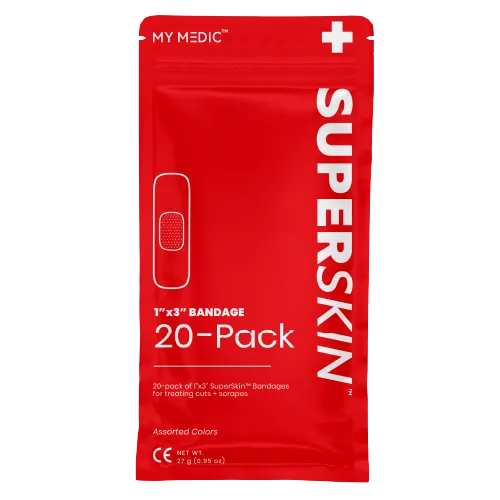
- SuperSkin® Bandage 20 Pack: SuperSkin Bandage 20 Pack includes sterile 1 in x 3 in bandages with a soothing aloe pad, latex-free adhesive, and 4-way stretch. Minor cuts and scrapes from setting up camp or handling gear are common, so keeping a small bandage supply in your kit supports basic wound care while you manage shelter.
- Mini Blister MOD: Mini Blister MOD contains blister prevention guards and is designed to restock or upgrade a My Medic First Aid Kit. If you carry the bivvy on foot, blister prevention helps you keep moving and reduces the chance of foot problems during an evacuation.