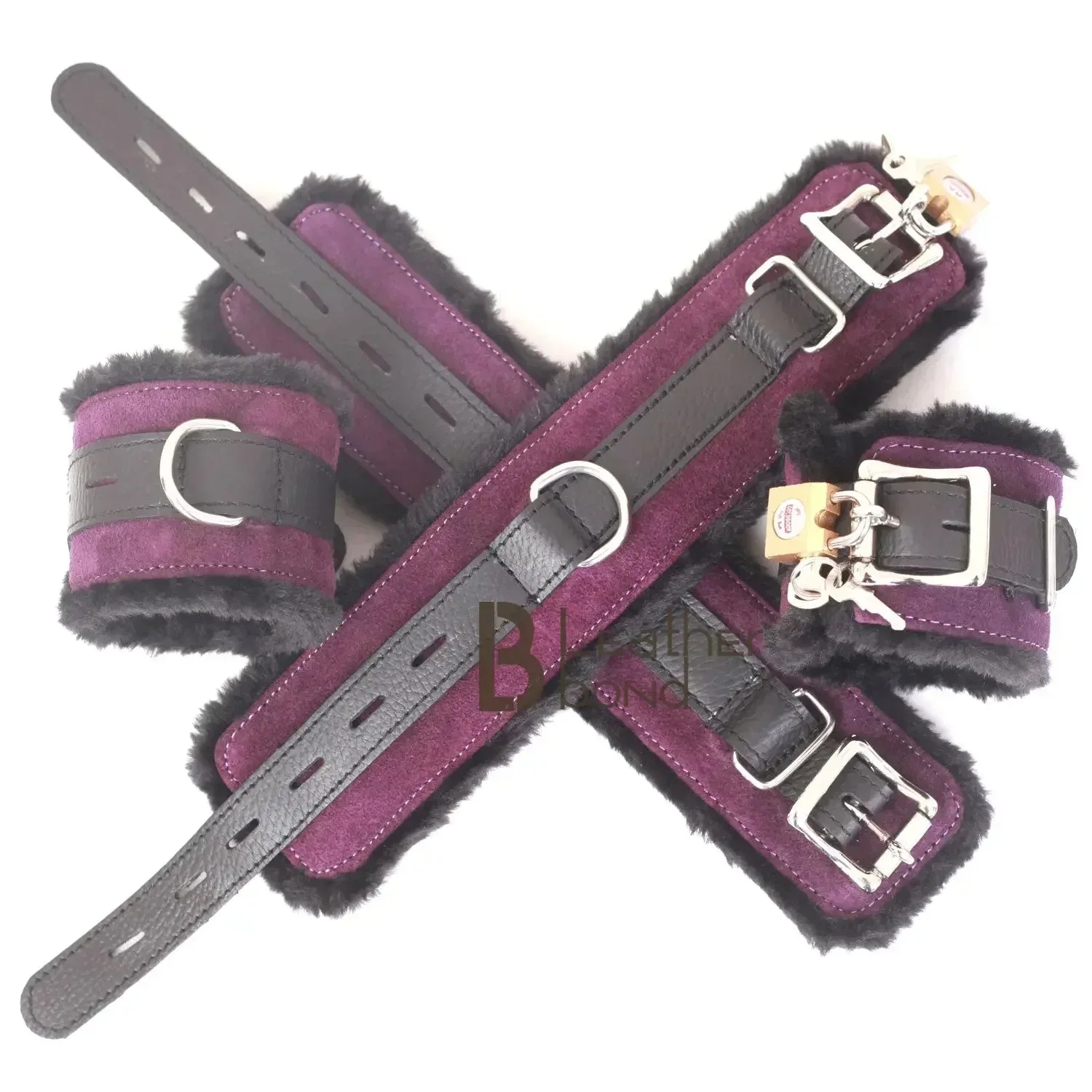
Quick answer
For any bondage suspension setup, choose purpose-built suspension cuffs with wide, padded load-bearing straps and a rated hardpoint; standard cuffs are not designed to carry body weight and should stay on the floor. If your gear is not rated for suspension, do not suspend from it. The safest comparison is not which cuff looks stronger but which cuff was made to hold a person.
Why standard cuffs are not suspension gear
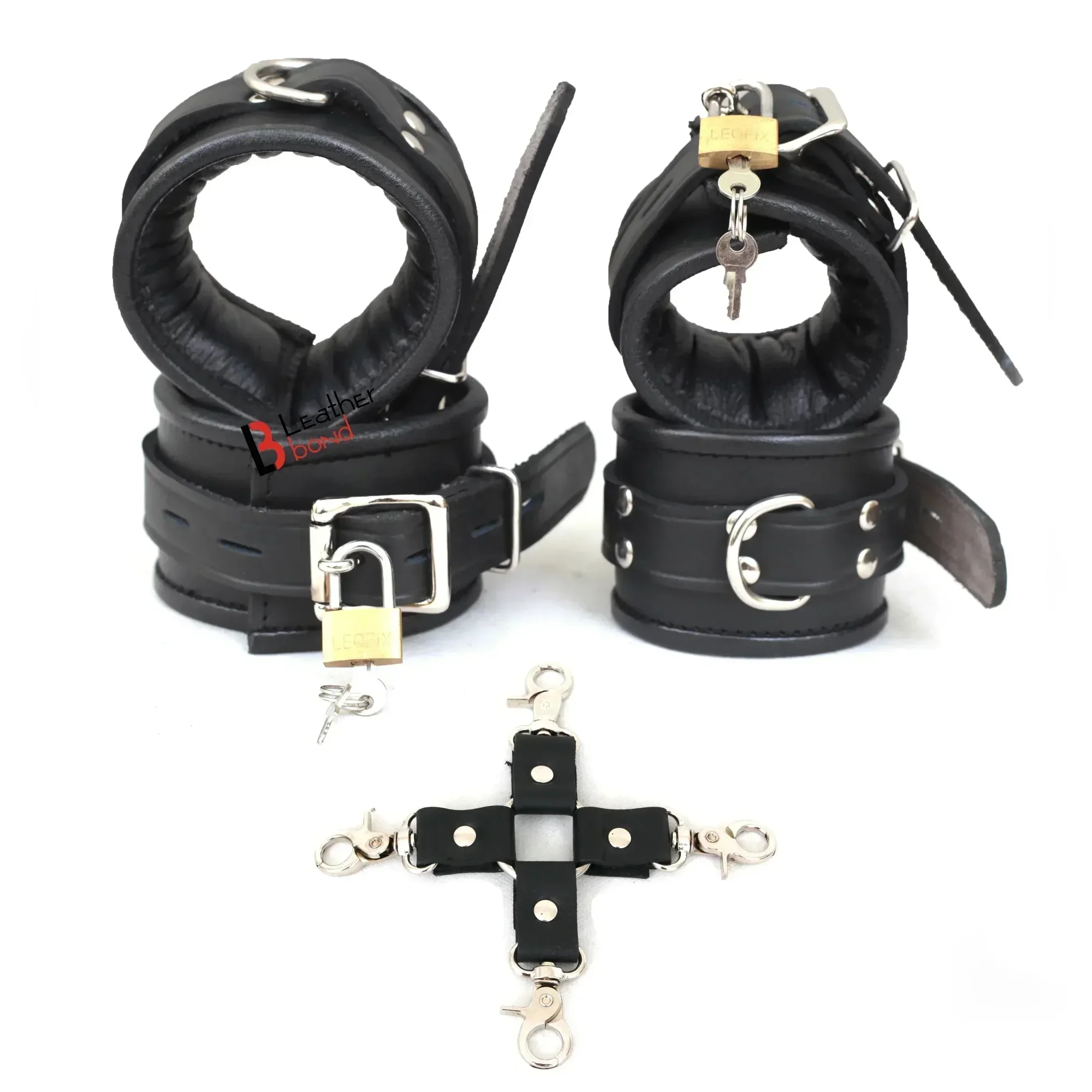
Standard cuffs are built to hold a wrist or ankle during floor play, not to bear the dynamic load of a suspended body. The Real Leather 4-Piece Padded Wrist & Ankle Cuffs Lockable Restraint Bondage Set is a clear example: it is a coordinated lockable set of four padded cuffs handcrafted from 100% genuine cowhide leather, and its padding and lockable closure make it comfortable and secure for restraint play. But the catalog does not list a suspension weight rating, a load-bearing D-ring, or a reinforced suspension point. That absence is the decision limitation: without a stated rating, you should not treat these cuffs as hardpoint suspension gear. Use them for floor restraint, furniture restraint, or as part of a non-suspended scene.
What suspension cuffs add: load path and padding
Suspension cuffs are designed around a load path. Instead of pulling on a single small ring, they spread force across a wider strap and often use a broad, padded body with a dedicated attachment point. That wider surface reduces the chance of pinching, nerve compression, or circulation loss when weight is applied. The trade-off is bulk and cost: suspension cuffs are heavier, more expensive, and less discreet than a standard set. They also require more careful fitting because a loose suspension cuff can shift under load, while an overly tight one can restrict blood flow before the scene even begins.
Rigging cuff weight rating and hardpoint suspension gear
A rigging cuff weight rating is only useful if every part of the chain matches it. The cuff, the connector, the strap, the hardpoint, and the anchor must all be rated for the load you intend. Many cuffs sold for restraint play have no published rating, which means you cannot assume they are safe for suspension. If you are building a bondage suspension setup, start with a hardpoint that is professionally installed and rated, then choose cuffs that state a working load. Never mix a rated hardpoint with unrated cuffs and assume the strongest part defines the system.
How leather suspension cuffs differ from standard leather cuffs
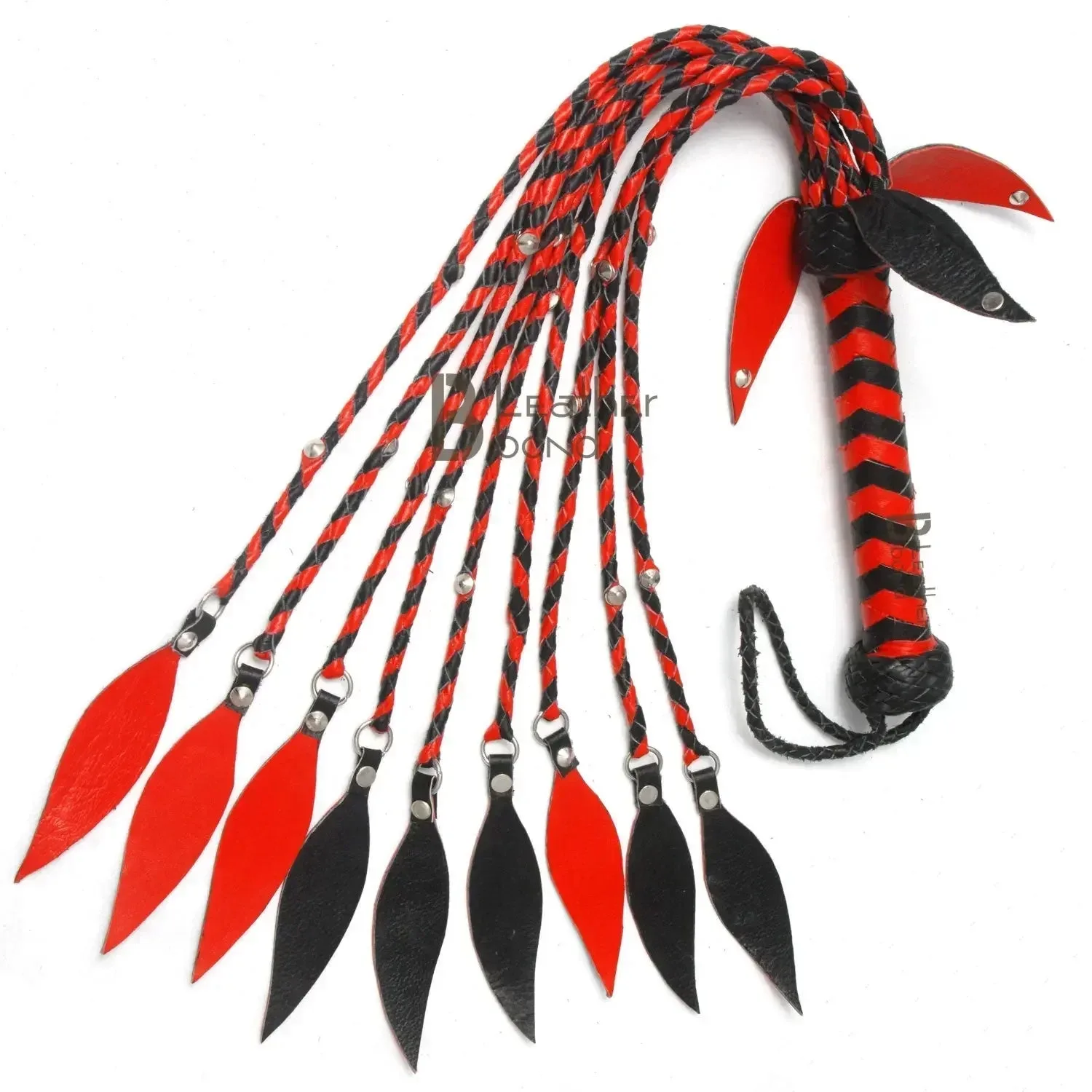
Leather suspension cuffs and standard leather cuffs can look similar, but the construction differs. Suspension cuffs usually have a wider main strap, reinforced stitching, and a load-bearing attachment that is designed to take weight. Standard cuffs, like the padded four-piece set, focus on comfort and lockability for ground-based restraint. The flogger and whip in the same catalog are impact tools, not suspension hardware, so they do not change the cuff decision. If you want to add sensation during a suspension scene, keep impact tools for the parts of the body that are not bearing load, and never attach them to the suspension point.
Fit guidance for suspension and standard cuffs
Fit is a safety feature, not a comfort extra. For standard cuffs, you should be able to slide one finger under the closed cuff, and the padded body should sit flat against the skin without digging in. For suspension cuffs, check the fit while the cuff is under light tension, because the strap will tighten as load is applied. Recheck circulation and sensation every few minutes, and have a safety release plan that does not depend on the suspended person. If you cannot inspect the fit under load before the scene, do not suspend.
Suspension cuff trade-offs
- Load capacity vs. comfort: Suspension cuffs spread weight across a wider, padded strap to reduce pinching, but they are bulkier and less discreet than standard padded cuffs. Choose suspension cuffs only when every component is rated; otherwise stay on the floor with standard cuffs.
- Rated hardware vs. unrated sets: A published rigging cuff weight rating lets you match the cuff to the hardpoint. Many standard sets, including the four-piece padded set, do not publish a suspension rating. If the rating is missing, treat the cuff as non-suspension gear.
- Leather quality vs. cost: Genuine cowhide and bull hide leather add durability and feel, but they raise the price and require more careful cleaning and storage than synthetic alternatives. Budget for care supplies and inspect stitching before every suspension session.
Gear facts that affect the comparison
- Real Leather 4-Piece Padded Wrist & Ankle Cuffs Lockable Restraint Bondage Set | Full Black: Four padded wrist and ankle cuffs handcrafted from 100% genuine cowhide leather, lockable, sold as a complete coordinated set. A practical choice for floor restraint and lockable scenes, but the catalog does not state a suspension weight rating, so it should not be used as suspension gear.
- Real Bull Hide Leather Flogger | 9 Braided Cat-O-Nine Falls | Steel Studs Red & Black – Leather Bond: Bull hide leather flogger with nine braided falls and steel studs, described as a BDSM impact tool. Useful for sensation play during a scene, but it is not a load-bearing suspension component and should never be attached to a hardpoint.
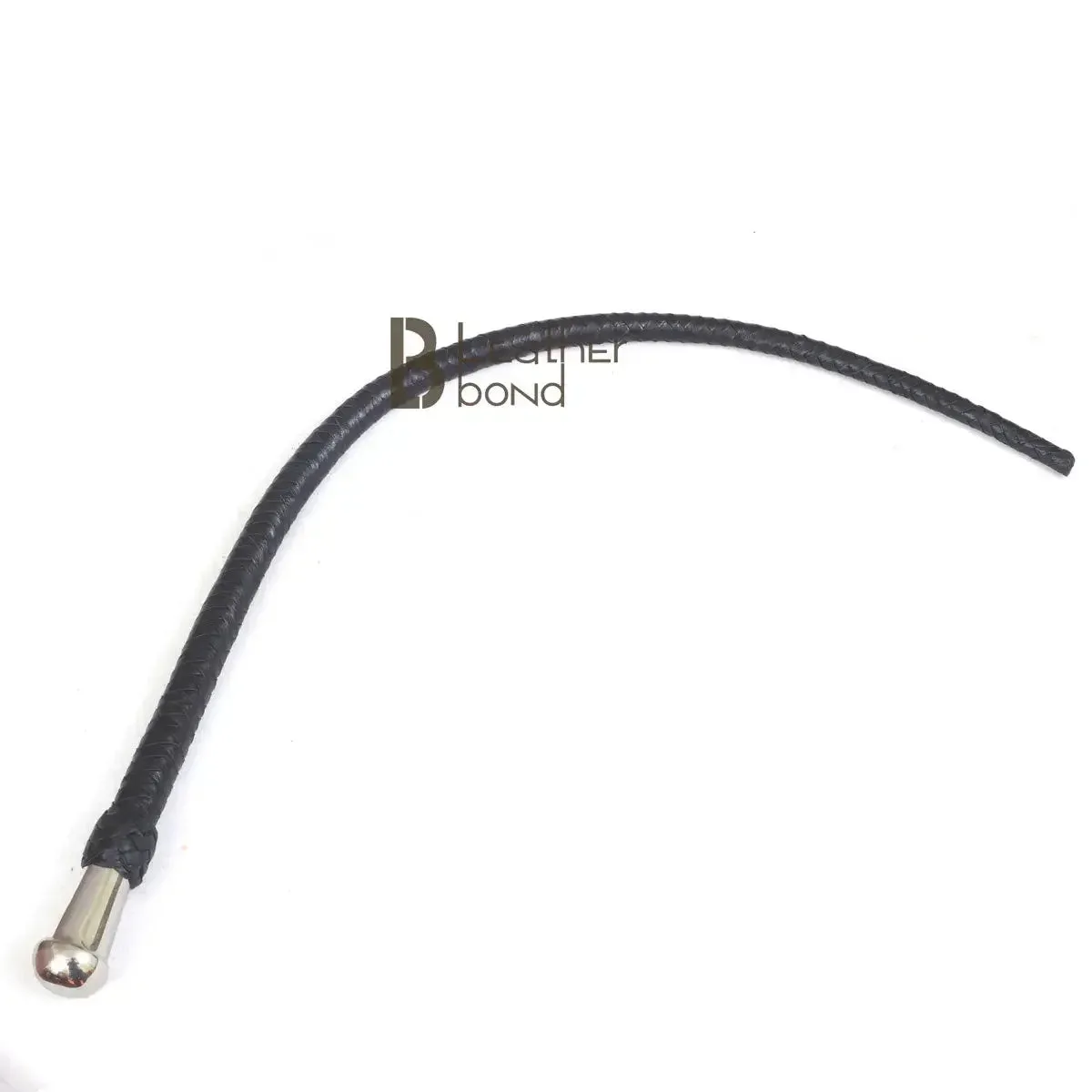
- Bull Whip 2.6 Foot 8 Plaits Cow Hide Leather Bullwhip Black Single Tail: 2.6-foot bullwhip with an 8-plait cow hide leather overlay, 12-inch fall, and 8-inch cracker, best for whip cracking sports and farming. A single-tail impact and cracking tool, not restraint hardware, so it belongs in a separate part of your kit from suspension cuffs.
Which cuff should you choose?
Best for
- Floor-based restraint, lockable scenes, and couples who want a coordinated four-cuff set
- Suspension scenes only when the cuffs, connectors, and hardpoint all carry a published load rating
Not for
- Anyone who cannot verify a suspension weight rating for the cuff and every other component
- Solo suspension or any setup without a trained spotter and a hands-on safety release plan