Quick answer
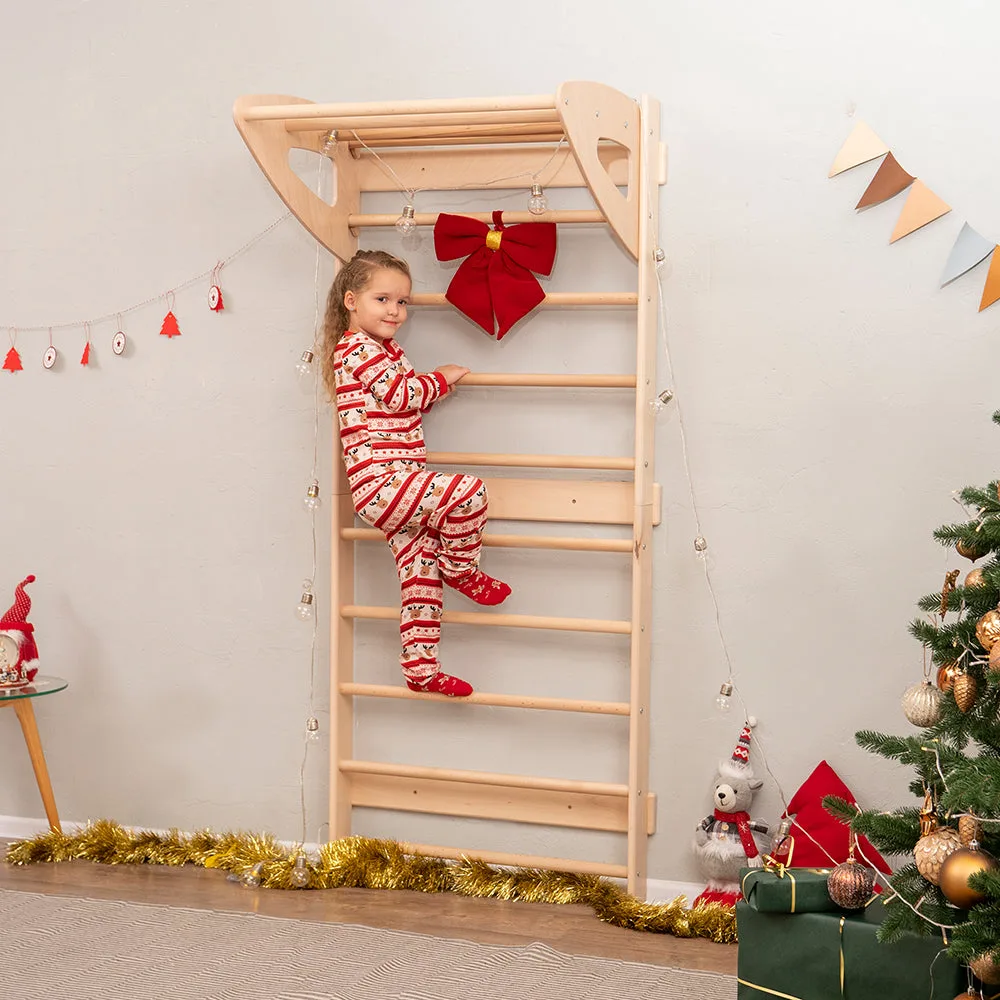
A Swedish wall fits a small apartment when you treat it as a vertical zone, not a room. Measure a clear wall about 90–120 cm wide, mount the bars at a height your child can reach from the floor, and anchor into studs or a suitable wall structure. Keep the floor strip in front clear, then add pieces like the Playground Ladder with Mat or a balance board that store flat against the wall.
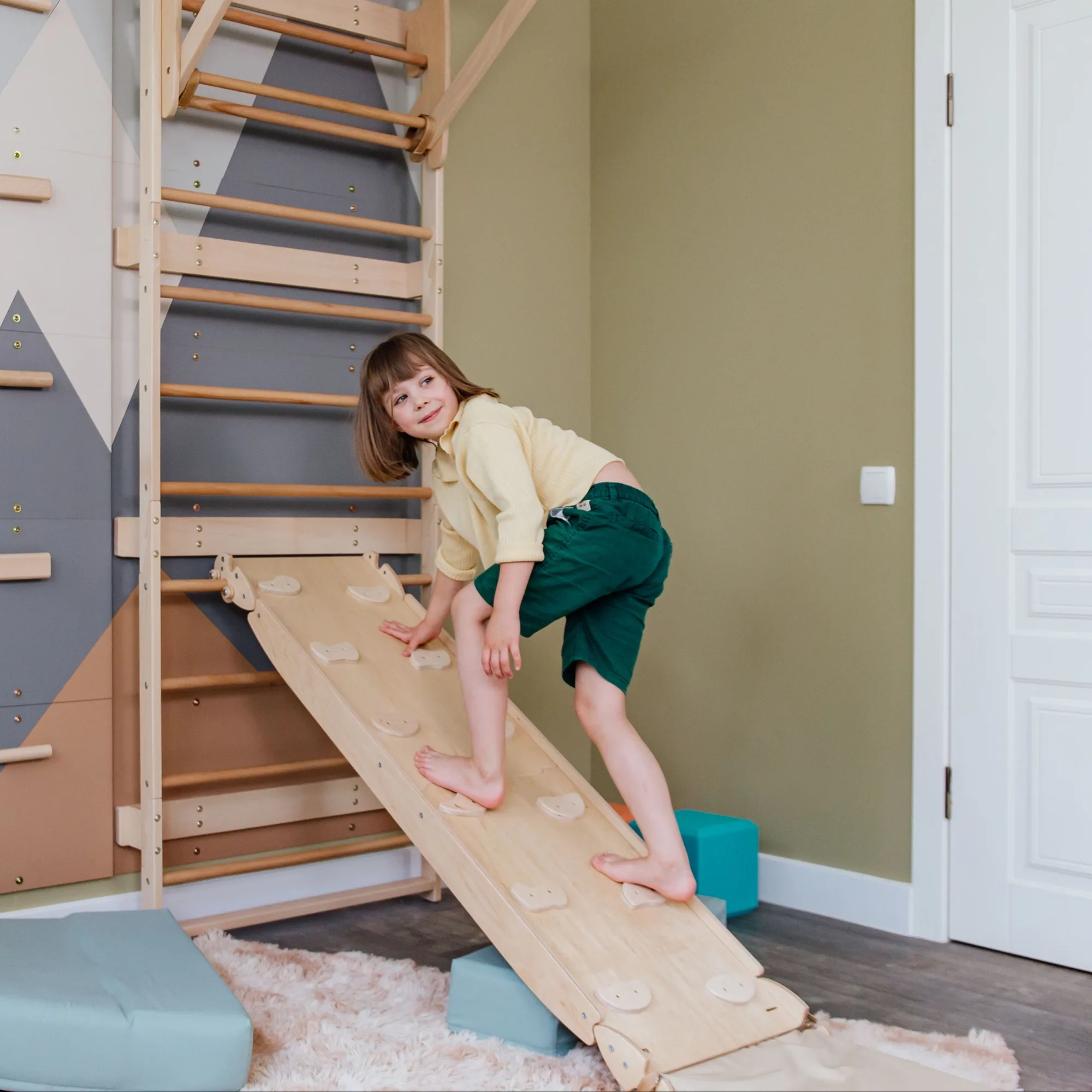
Playground Ladder
A Swedish wall can turn a narrow hallway, a bedroom corner, or the strip beside a wardrobe into daily movement space. The trick is planning the setup around your apartment's real limits: wall width, ceiling height, floor clearance, and how the room is used the rest of the day.
This guide walks through a practical order of steps, from measuring to anchoring to choosing add-ons that store flat. It also flags the common mistakes that make a small-space gym feel cramped or unsafe.
Measure the wall before you buy anything
Start with a clear wall that is at least 90 cm wide and free of doors, radiators, and light switches. Measure the width, the height from floor to ceiling, and the depth of the floor strip in front. A Swedish wall needs a landing zone where a child can step back, sit, or fall safely, so leave roughly 1 meter of open floor in front.
Check what the wall is made of. Wooden studs, solid brick, and drywall need different anchors, and a hollow drywall section may not hold a loaded ladder safely. If you are unsure, ask a handyman or your landlord before drilling.
- Sketch the wall with measurements and note where furniture currently sits.
- Check that a door or wardrobe door will not swing into the climbing zone.
Pick the right spot in a small apartment
The best spot is usually a wall at the end of a hallway, beside a bed, or in a corner that is already dead space. Avoid walls behind a door that opens inward, and avoid placing the ladder directly under a low window or shelf. In a studio or one-bedroom flat, a hallway wall often works better than a bedroom wall because it keeps the sleep area calm.
If the child's room is too tight, consider a shared living area. A Swedish wall reads as furniture when it is not in use, especially in a natural wood finish, so it can sit beside a bookshelf without dominating the room.
- Keep the climbing wall out of main walkways so adults are not stepping over it.
- Leave space to the side for a mat or cushion to live when not in use.
Choose a space-saving Swedish ladder or wall setup
For very tight walls, a narrow wall-mounted ladder is the most efficient choice because it uses vertical space and almost no floor space. If you want more variety, a compact climbing set with a triangle ladder, arch, and slide can be folded or leaned against the wall between sessions. The key is that every piece has a home against the wall when play is done.
Look at the age range before you commit. A wall setup for a 3-year-old needs lower bars and closer spacing than one for a 7-year-old, and some products are designed with a specific age band in mind.
- Measure the folded depth of any add-on before buying it.
- Choose a finish that matches your walls so the setup feels less bulky.
Anchor the wall bars safely
Follow the manufacturer's mounting instructions exactly, and use the supplied hardware or the anchor type recommended for your wall. Hit studs where possible. If you cannot find studs, use appropriate wall anchors rated for the load, and test the bars with your own body weight before a child uses them. A wobbly ladder is a sign to stop and re-check.
Place the lowest bar at a height your child can reach from standing, and make sure the top of the ladder is not so high that a child can climb above a safe point. If the ceiling is low, check that a standing child has headroom.
- Never mount a Swedish wall into plasterboard alone without proper anchors.
- Re-tighten bolts after the first week of use, then check monthly.
Add pieces that store flat and multiply play
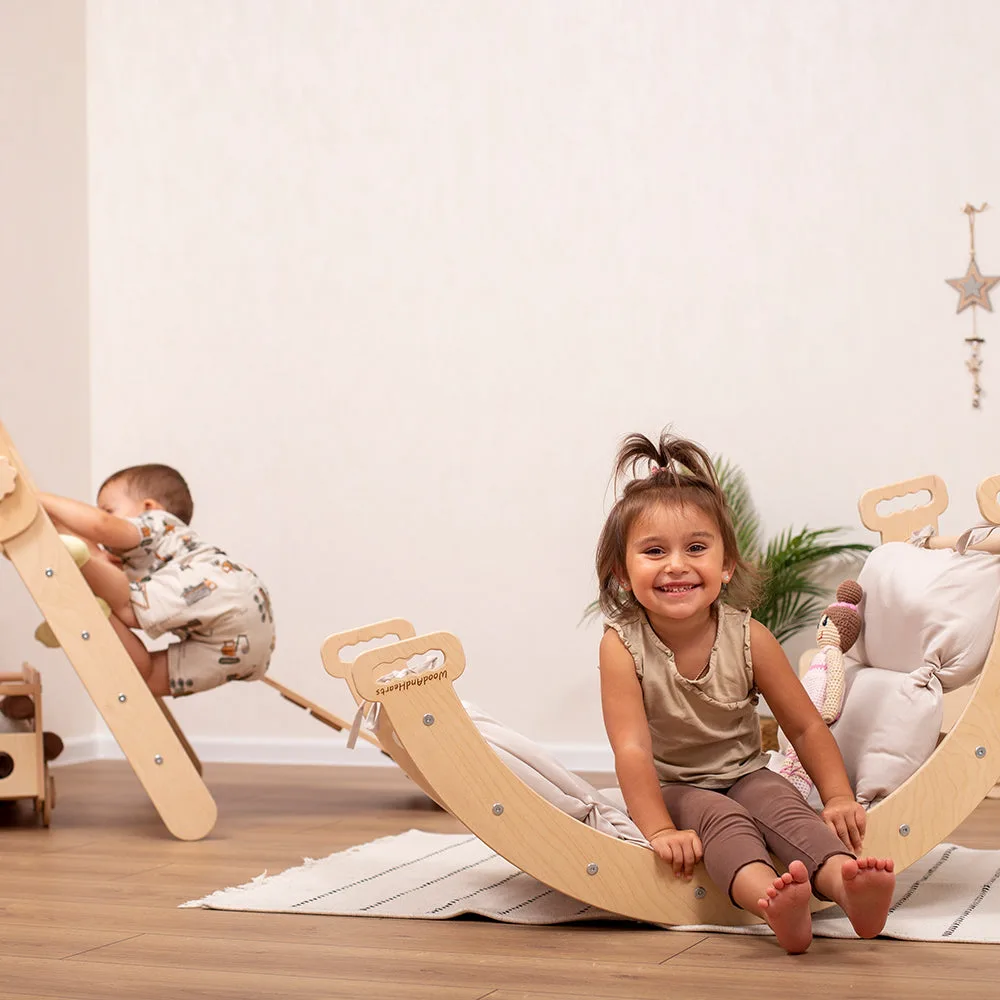
A bare ladder is a good start, but a few flat-storing add-ons make the setup worth its footprint. A playground ladder with a mat turns a basic gym into a fuller station and can lean against the wall when not in use. A balance board slides under a bed or behind a door. A cushion for an arch doubles as a reading spot.
Keep the add-ons to two or three pieces. In a small apartment, too many loose parts create clutter, and clutter is what makes families stop using the setup.
- Store the mat rolled or folded beside the wall, not across the room.
- Rotate toys weekly so the area stays tidy and interesting.
Set rules and a daily routine
Decide where shoes come off, where the mat goes, and how many children can climb at once. A simple rule like one climber at a time prevents most accidents on a narrow wall. Show your child how to get down safely rather than jump, and practice the routine together for the first few days.
Use the wall in short, regular sessions rather than one long one. Five to ten minutes of climbing before school or after nap adds up, and it keeps the habit alive in a small space.
- Put a small basket nearby for socks and a water bottle.
- Supervise children under 6 whenever they use the wall.
Your small-apartment Swedish wall setup, step by step
- Measure the wall and floor zone: Record width, height, and the open floor depth in front of the wall. Aim for at least 90 cm of wall width and about 1 meter of clear floor. Checkpoint: if the floor zone is under 80 cm, choose a narrower ladder or a different wall.
- Confirm the wall structure: Find studs or identify the wall material, and choose anchors that match. Ask a professional if you are not sure. Common mistake: mounting into drywall with the wrong anchors, which can pull out under load.
- Choose the ladder and add-ons: Pick a wall-mounted ladder sized to your child's age, then add at most two or three flat-storing pieces such as a mat, cushion, or balance board. Checkpoint: every add-on should have a defined storage spot against the wall.
- Mount and test the bars: Follow the manufacturer's instructions, tighten all hardware, and test with your own weight before letting a child climb. Common mistake: skipping the adult weight test and discovering a loose bar later.
- Set up the landing zone: Place a mat or cushion under and in front of the ladder, and remove hard toys or furniture edges from the fall zone. Checkpoint: the mat should stay in place during use, not slide.
- Teach the routine and re-check monthly: Show your child how to climb and get down safely, keep sessions short, and re-tighten bolts after the first week and once a month after that. Next step: rotate add-ons every few weeks to keep the setup interesting.
Products that work in tight spaces
- Playground Ladder: The Playground Ladder with Mat turns a basic gym into a complete sports and play station for kids aged 3 and up, and it is designed as an addition to an existing climbing gym. If you already have a wall or climbing frame, this adds climbing and coordination practice without needing a second large structure.
- Montessori Climbing Gym with Cushion: This set includes a triangle ladder, climbing arch, slide, and a cushion for the arch, made from premium birch plywood. The pieces can be used separately or together, and the cushion doubles as a soft landing or reading spot, which helps a small room work harder.
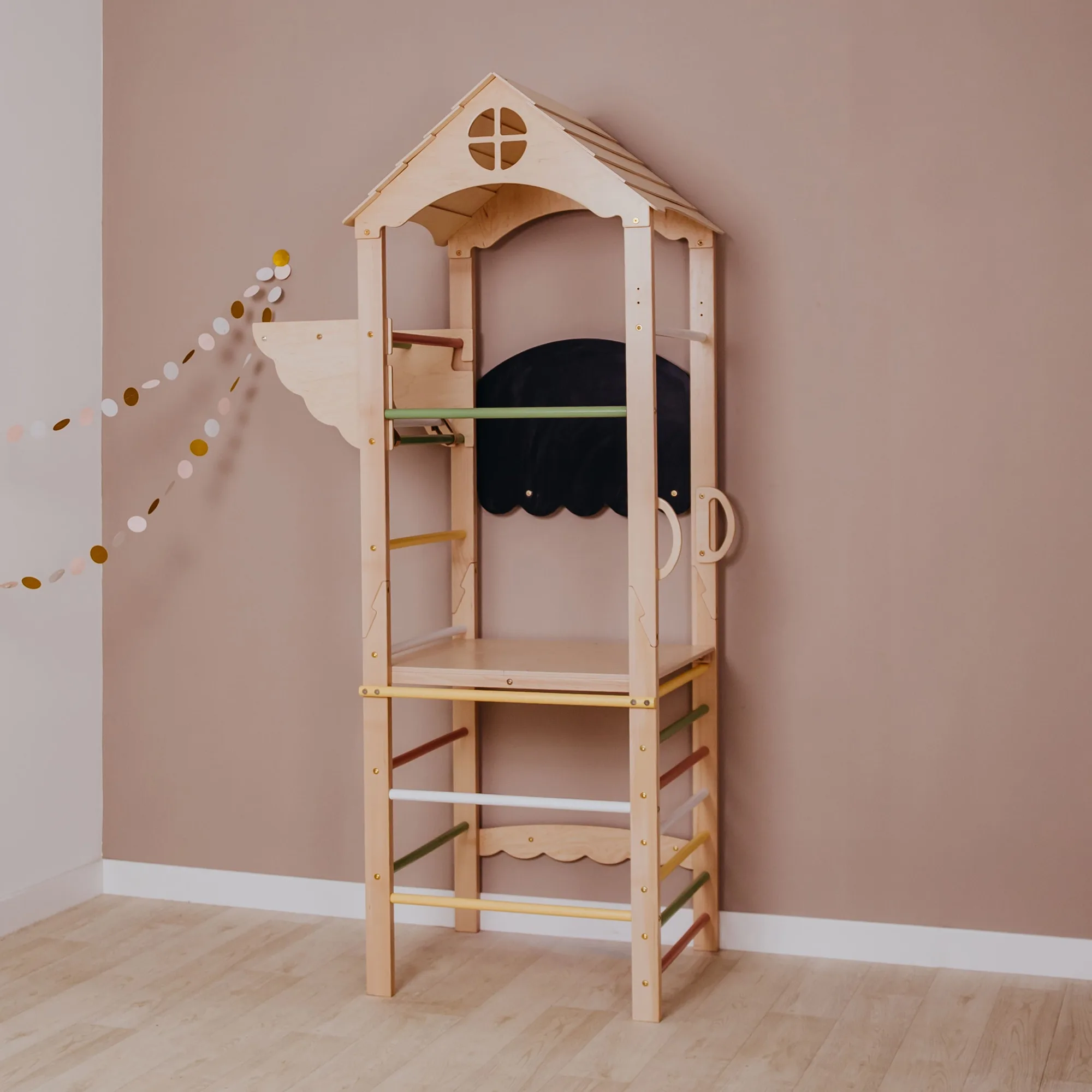
- Toddler Indoor Playground: This Montessori-inspired play gym is available in two variations, Mini Tower and Large Tower, for different ages, spaces, and developmental needs. The Mini Tower option is the more realistic fit for a small apartment, while the Large Tower suits a bigger room or a family with more floor space.
A Swedish wall does not need a spare room. Measure carefully, anchor properly, keep the floor strip clear, and choose add-ons that store flat. Done that way, a small apartment can still give a child a daily place to climb, balance, and burn energy.