Start with why stock pegs get replaced
Stock tent pegs often come with the tent because they are cheap and adequate, not because they are ideal for every campsite. If you have ever fought a peg out of hard-packed ground, bent one on a rock, or tripped over a guyline at night, you already know the two reasons to consider a swap: holding power and visibility.
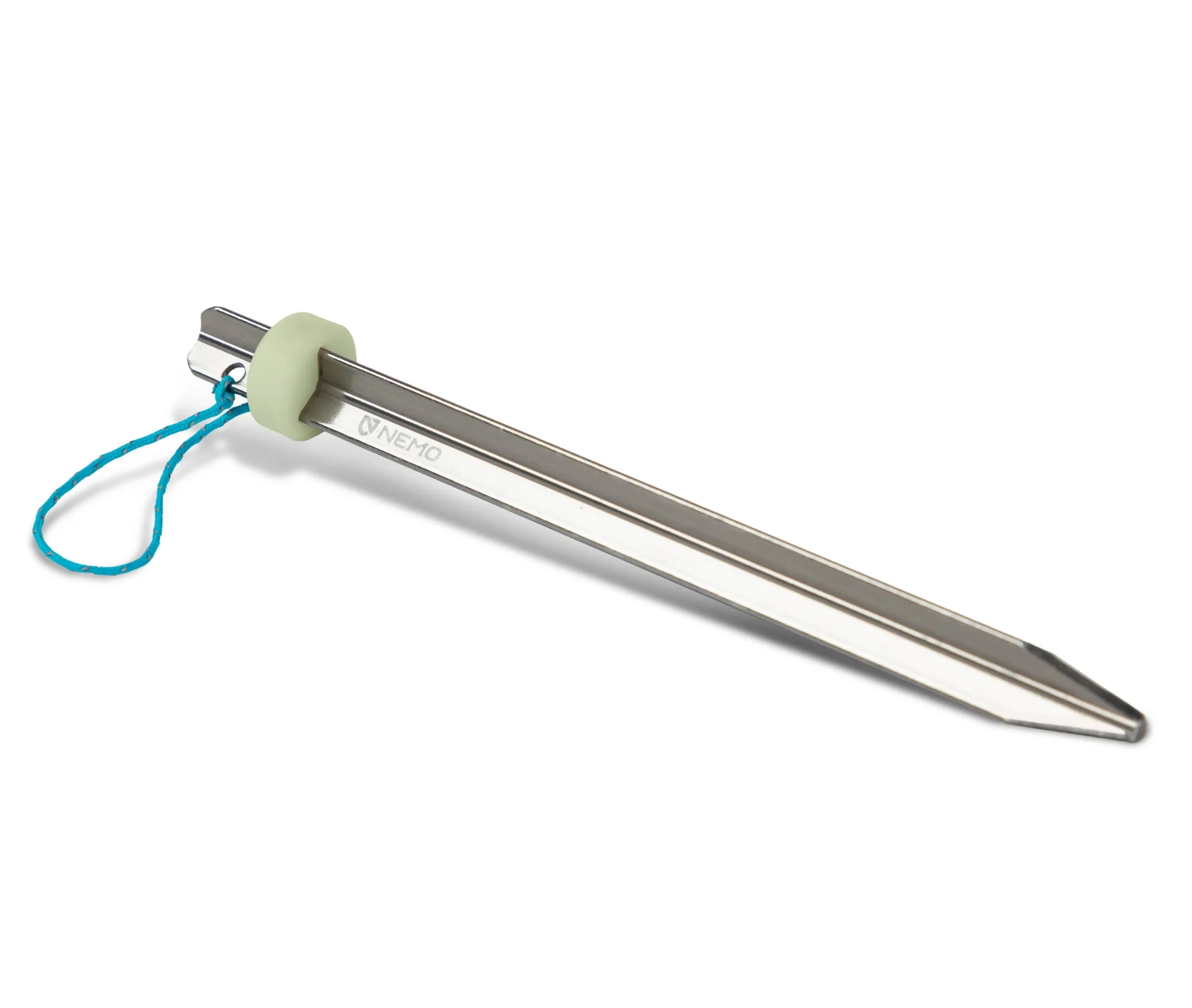
Sweepstake tent stakes address a narrower problem than a full stake upgrade. Their integrated, self-cleaning biscuit swipes dirt off the stake as you pull it, and the tethered polymer biscuit glows in the dark so you are less likely to trip on stakes and guylines at night. That makes them a useful replacement when your current pegs are functional but annoying to handle or hard to see.
Signs your current pegs are ready to be replaced
Use these checkpoints as a practical filter. They are based on the supplied product evidence and general campsite observation, not on a manufacturer inspection schedule.
- Dirt clings to the stake and slows packing: If you spend extra time wiping mud or grit off each peg before it goes back in the bag, the self-cleaning biscuit on Sweepstake stakes is designed to swipe the stake clean as it moves.
- You keep tripping over guylines after dark: The tethered polymer biscuit glows in the dark, which helps you see stake and guyline positions at night. If night-time visibility is your main frustration, this is the clearest reason to swap.
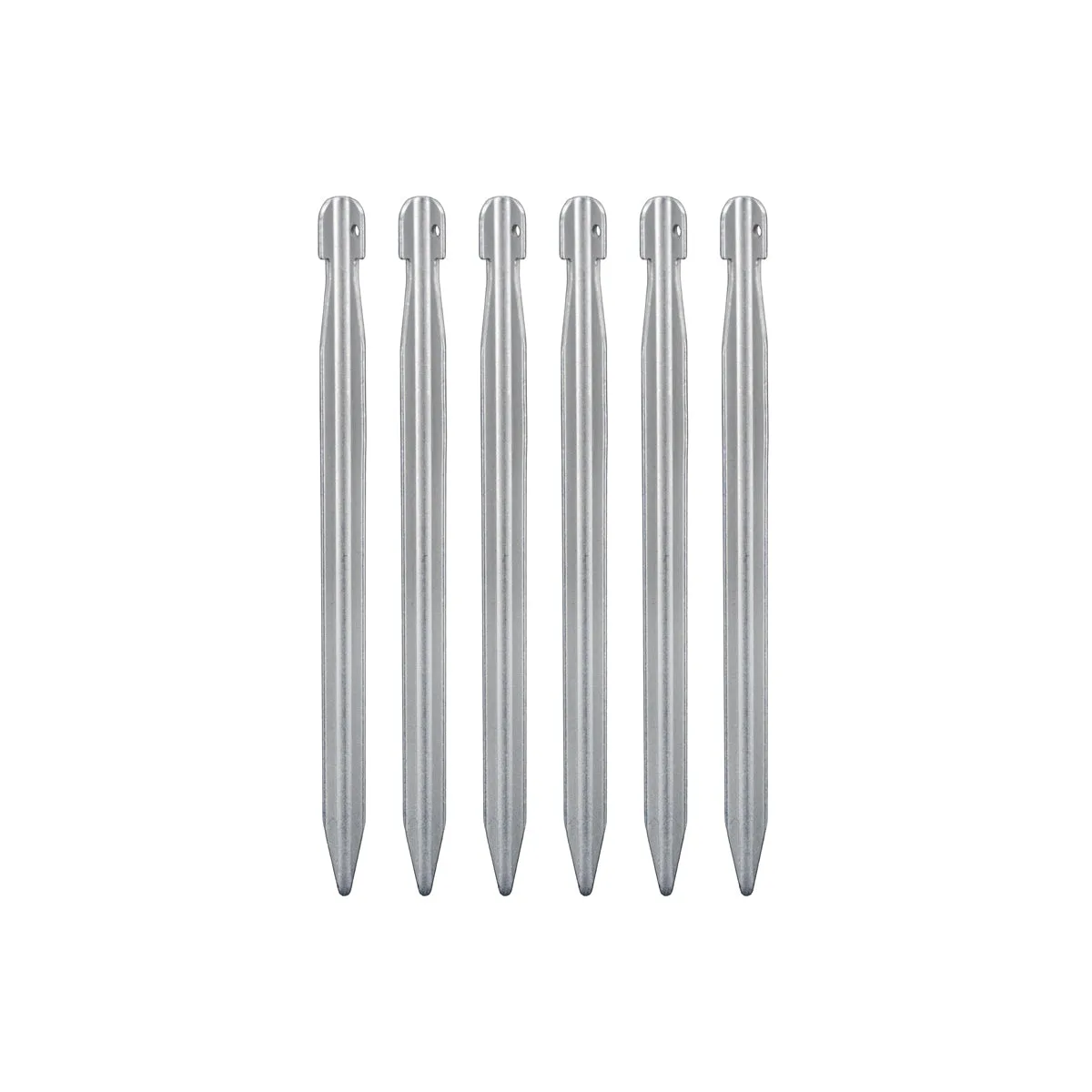
- You want a lightweight replacement without changing your whole setup: Sweepstake stakes are sold as lightweight tent stakes in packs of six. That pack size suits a small tent or a partial replacement, but check how many pegs your tent actually needs before buying.
- Your pegs are damaged or no longer holding: Bent, cracked, or blunt pegs are a straightforward reason to replace them. The supplied record does not include a holding-power rating, so treat this as a general replacement trigger rather than a measured threshold.
What the Sweepstake record confirms
-
Sweepstake™ Lightweight Tent Stakes: Sweepstake tent stakes include an integrated, self-cleaning biscuit that swipes dirt off the stake. This is the main handling benefit over plain stock pegs, especially in damp or muddy ground.
Sweepstake™ Lightweight Tent Stakes
-
Sweepstake™ Lightweight Tent Stakes: The tethered polymer biscuit glows in the dark. Visibility at night is a practical safety and convenience factor when guylines cross walking paths around the tent.
-
Sweepstake™ Lightweight Tent Stakes: 6 stakes are included per pack. Pack size determines whether you can replace a full tent set or only the most troublesome pegs.
How to decide whether to swap all pegs or just some
You do not have to replace every peg at once. Use this sequence to make a sensible partial or full swap.
- Count the pegs your tent uses: Check your tent's pitch requirements and count the pegs needed for the body, guylines, and any extras. A six-pack of Sweepstake stakes may cover a small tent or only part of a larger setup.
- Identify the pegs you handle most: Focus on pegs that are muddy, hard to pull, or placed where you walk at night. Those are the best candidates for the self-cleaning and glow-in-the-dark features.
- Check ground conditions before committing: The supplied record does not state which ground types Sweepstake stakes are designed for, so test them on your usual campsite before relying on them for a full set.
- Keep a mixed set if weight or holding power is uncertain: If you are unsure how the stakes perform in your local soil, carry a few stock pegs as spares while you test the Sweepstakes.
Backpacking stake weight: what to consider before swapping
Lightweight tent stakes are a common upgrade for backpackers counting grams. The supplied record describes Sweepstake stakes as lightweight but does not list a precise weight per stake, so compare them with your current pegs on a kitchen scale if weight is your deciding factor.
A swap is easiest to justify when the new stakes solve a problem you actually have. If your stock pegs are already light and hold well, the main gains here are cleaner handling and night-time visibility rather than a guaranteed weight saving.
Tent staking tips that apply before and after the swap
These are general campsite habits, not manufacturer instructions. The supplied record does not include a staking procedure, so follow your tent's own pitching guidance.
- Mark your walking routes around the tent: Place guylines and stakes away from the door and the path you use for night-time trips. Glow-in-the-dark biscuits help, but they do not replace careful placement.
- Clean pegs before storage: Even self-cleaning stakes benefit from a quick check before packing. Remove visible soil and let the stakes dry before storing them with the tent.
- Carry a small number of spares: A six-pack gives you a few extras if your tent uses fewer pegs. Keep one or two spare stakes in your repair kit for soft or rocky ground.
Stock pegs vs. Sweepstake stakes: a quick trade-off check
- Stock pegs: Usually included with the tent, often adequate for basic pitching, but may collect dirt and be hard to see at night.
- Sweepstake tent stakes: Add a self-cleaning biscuit and glow-in-the-dark visibility, sold in packs of six. The supplied record does not confirm weight per stake or holding-power ratings, so verify those against your needs.