Quick answer
Buy stakes by ground type, not by brand loyalty. Carry a mixed set: lightweight needle or piton-style stakes for backpacking and firm soil, a few wide-flange or sand-specific stakes for loose ground, and at least one heavy-duty option for rocky or hard-packed sites. If you only buy one set, choose a mid-weight all-around stake and add a sand stake when your hunt or trip includes dunes, beaches, or powdery soil.
Most tent failures at camp are not fabric failures. They are stake failures. A stake that holds in loam can pull straight out of sand, and a stake that drives into gravel may bend on the first rock it meets. The fix is not one perfect stake; it is a small, purpose-built kit that matches the ground you actually camp on.
This guide breaks down stake selection by ground type, explains the trade-offs between holding power and weight, and shows how to build a mixed set for backpacking, base camp, and backcountry hunting trips. You will also see where specific products fit, including the Piton Tent Stake and the Owyhee 1P Tent, so you can make a practical choice without overbuying.
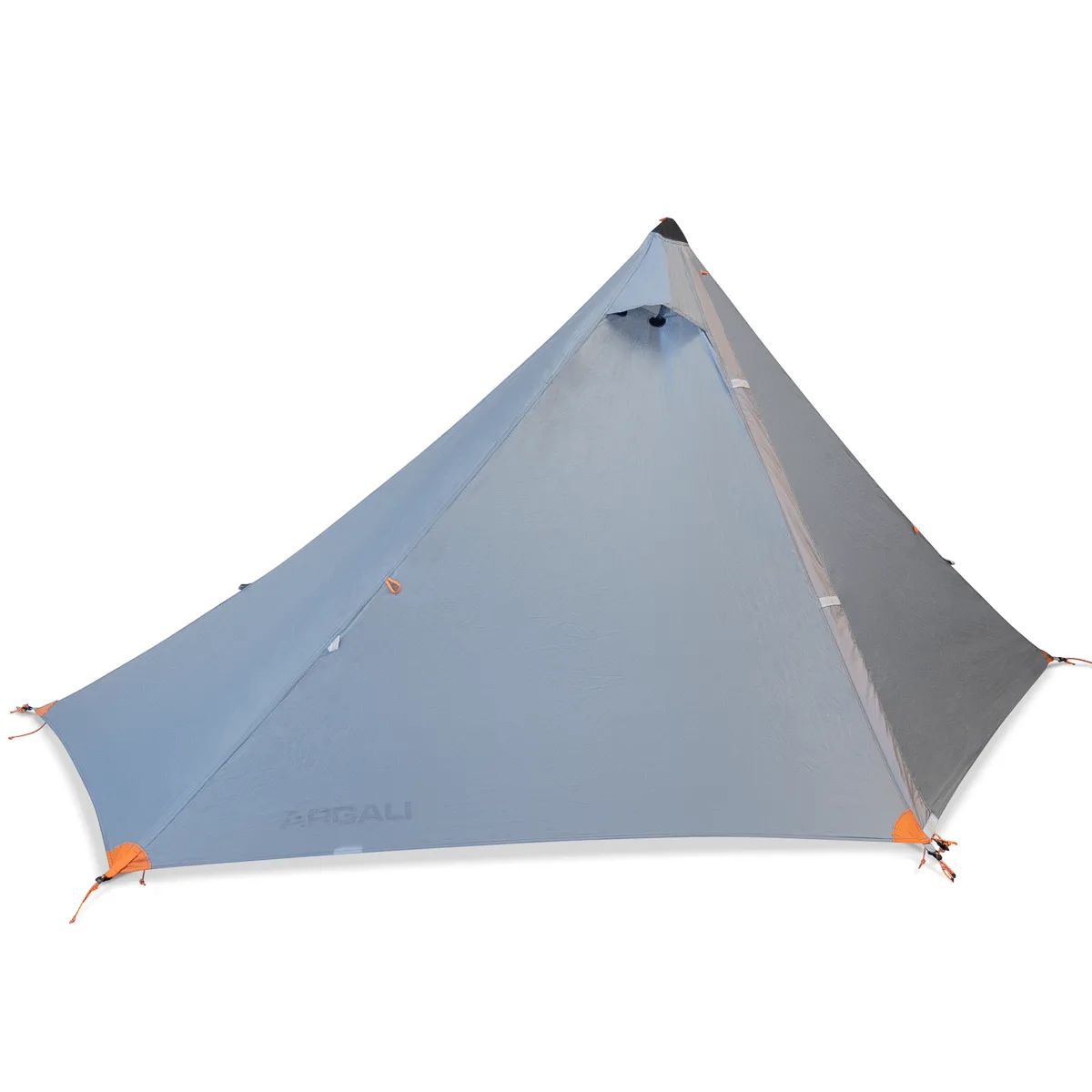
Owyhee 1P Tent
Start with ground type, not stake material
Ground type determines stake shape more than material does. Rocky ground rewards a narrow, strong shaft that can find gaps between rocks and resist bending. Sandy or powdery ground rewards surface area, because a thin stake has almost nothing to grip. Soft, deep soil rewards length, since the stake needs to reach firmer layers below the surface.
Material still matters for weight and durability, but it is secondary. A titanium stake that is too short for sand will fail no matter how light it is. A steel stake that is too wide for a rock crevice will not seat. Decide what the ground looks like first, then choose the lightest stake that still has the right shape and length for that ground.
- Rocky or hard-packed ground: narrow shaft, strong tip, moderate length
- Sandy or loose ground: wide flange or dedicated sand stake with high surface area
- Soft, deep soil: longer stake with a standard or slightly widened profile
- Mixed or unknown ground: mid-weight all-around stake as your baseline
Rocky ground: prioritize strength and a narrow profile
On rocky ground, the stake must slide into cracks and resist bending when it hits stone. A narrow shaft with a tapered, hardened tip works best. Avoid wide-flange stakes here, because they cannot fit into the gaps that actually hold. Also avoid very thin ultralight stakes if the ground is a mix of rock and hard-packed dirt, since side loads can bend them.
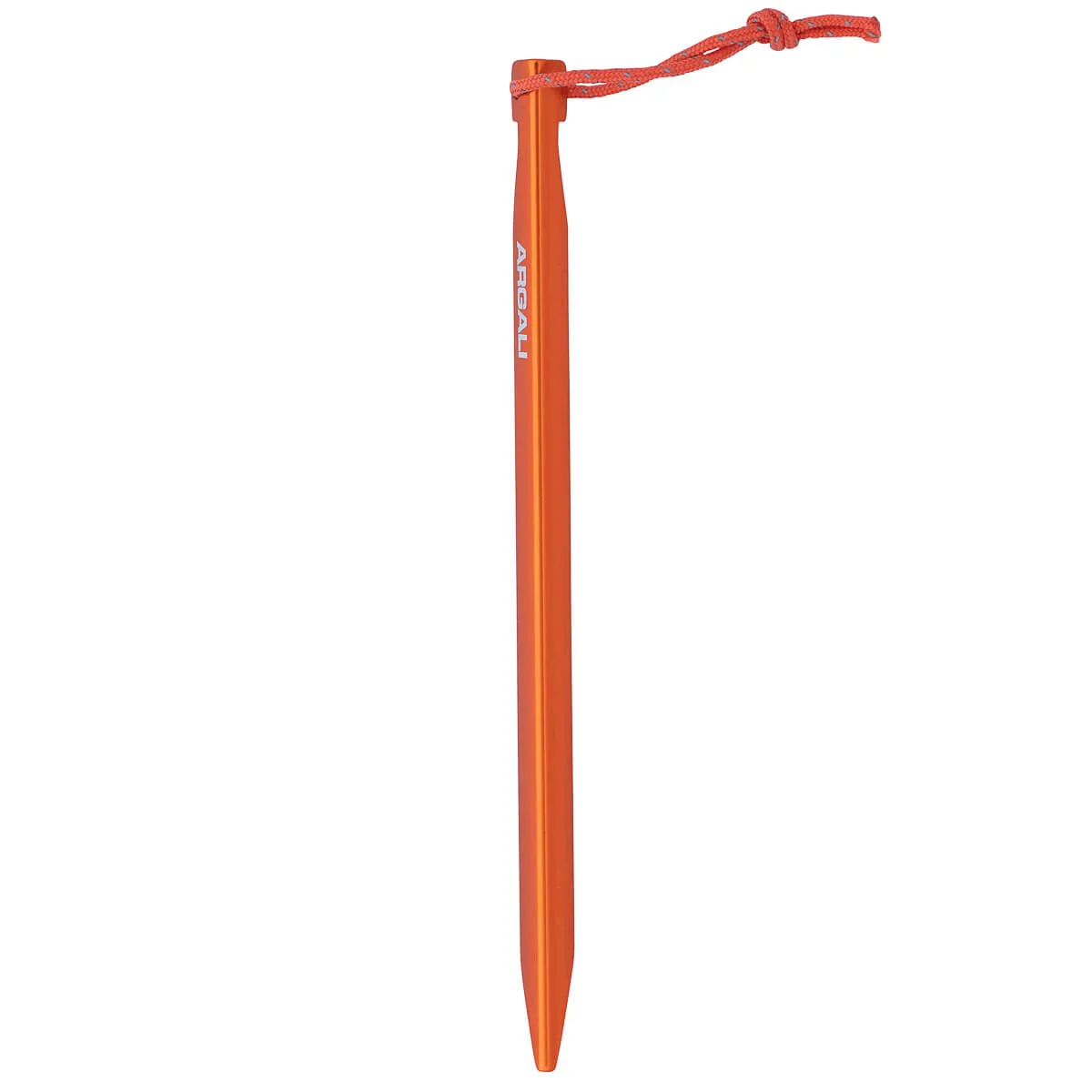
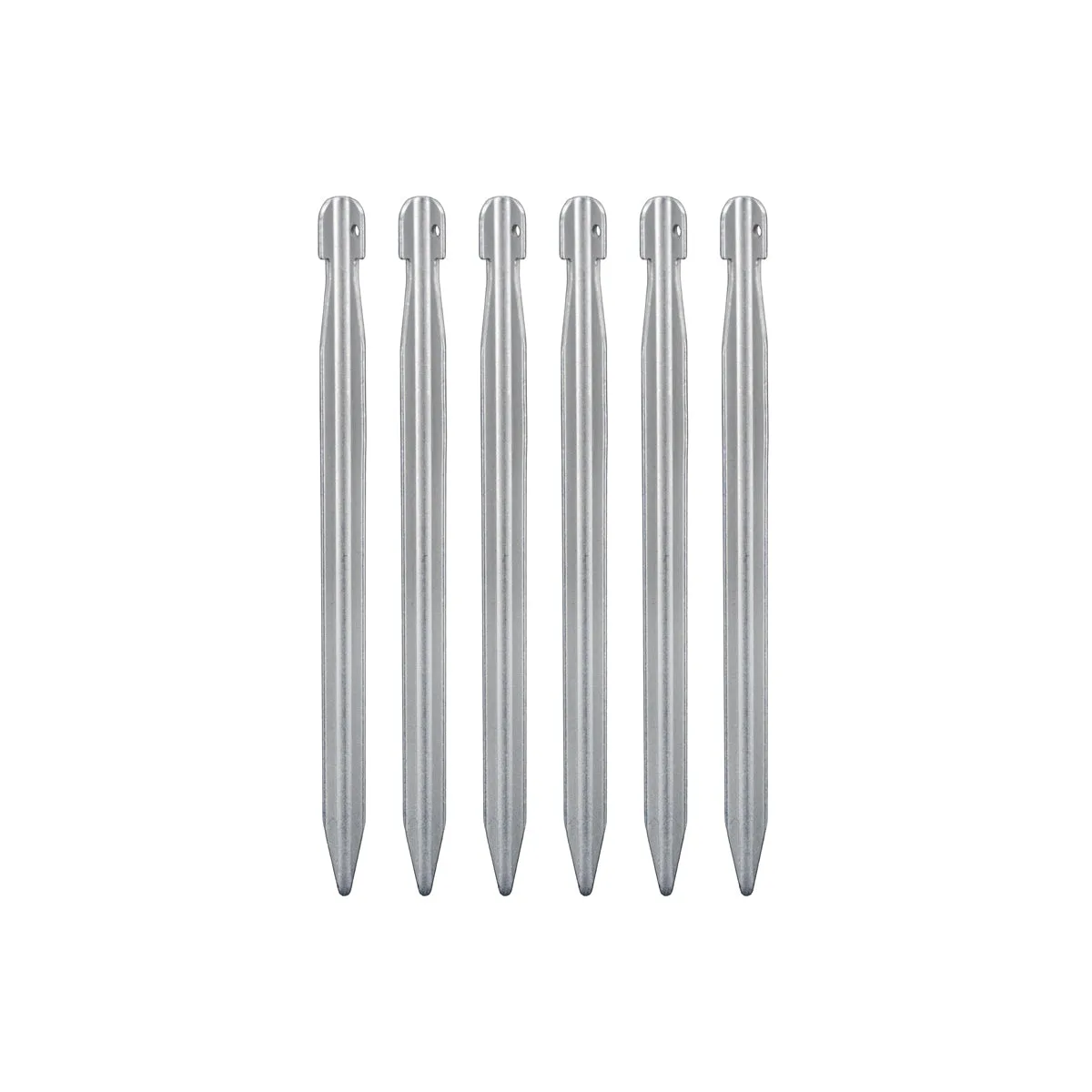
The Piton Tent Stake is a good example of a rock-friendly design. It is named after the solid iron climbing gear that revolutionized rock climbing, and it weighs about .3 ounces per stake. That combination of light weight and durability makes it a reasonable choice for rocky ground where you still want to keep pack weight down.
- Test the ground with one stake before committing to a full pitch
- If a stake stops hard, reposition rather than hammering through rock
- Carry a spare stake or two, since rocky ground is where bends happen
Sandy ground: surface area beats sharpness
Sand has almost no shear strength, so a standard stake pulls out under tension. Sand-specific stakes solve this with a much wider body or a scoop shape that compresses sand against a larger surface. The trade-off is weight and pack size. Sand stakes are heavier and bulkier than needle stakes, so most backpackers carry them only when the route includes dunes, beaches, or desert washes.
If you do not have dedicated sand stakes, you can sometimes use deadman anchors: bury a stake horizontally and pile sand or rocks on top. This works, but it is slower and less reliable in wind. For hunting camp or base camp in sandy terrain, dedicated sand stakes are worth the weight penalty because they hold in conditions where nothing else will.
- Sand stakes need at least 8 to 12 inches of burial to develop holding power
- Angle sand stakes away from the tent and set them deep
- Expect to re-set sand stakes after heavy wind or rain
Soft soil and lightweight backpacking: length and weight trade-offs
Soft, deep soil is the easiest ground for standard stakes, but it rewards length. A longer stake reaches firmer layers and resists pull-out better than a short one. For lightweight backpacking stakes, the goal is to find the shortest stake that still reaches firm ground in your typical terrain. That is usually a 6 to 8 inch stake for firm soil and a 9 inch or longer stake for loose or deep soil.
Weight savings are real but easy to overdo. Saving an ounce per stake across four stakes saves four ounces, which matters on a long approach. But if those stakes fail, you lose sleep, gear, and possibly the trip. A reasonable compromise is to carry lightweight stakes for the main pitch and one or two heavier stakes for the windward corners.
- Weigh your full stake set, not just one stake
- Use longer stakes on windward corners and shorter ones elsewhere
- If weight is critical, choose titanium or aluminum over steel
How many stakes and what mix to carry
Most tents need four to eight stakes for a basic pitch, plus more for guylines in wind. A practical mixed kit for backcountry hunting or backpacking might include four lightweight all-around stakes, two rock-friendly piton-style stakes, and two sand or wide-flange stakes if the terrain calls for them. That covers firm soil, rock, and loose ground without carrying a full set of every type.
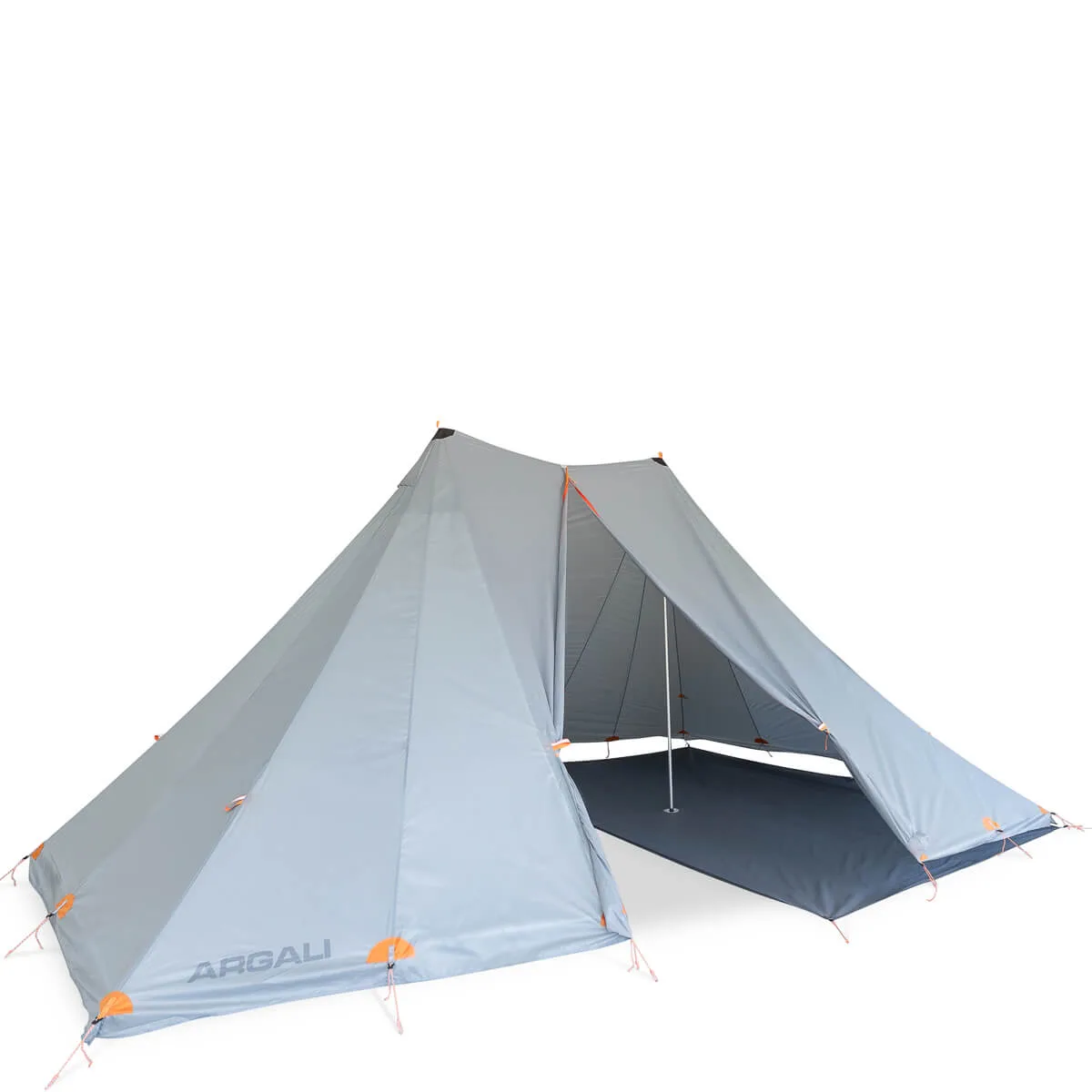
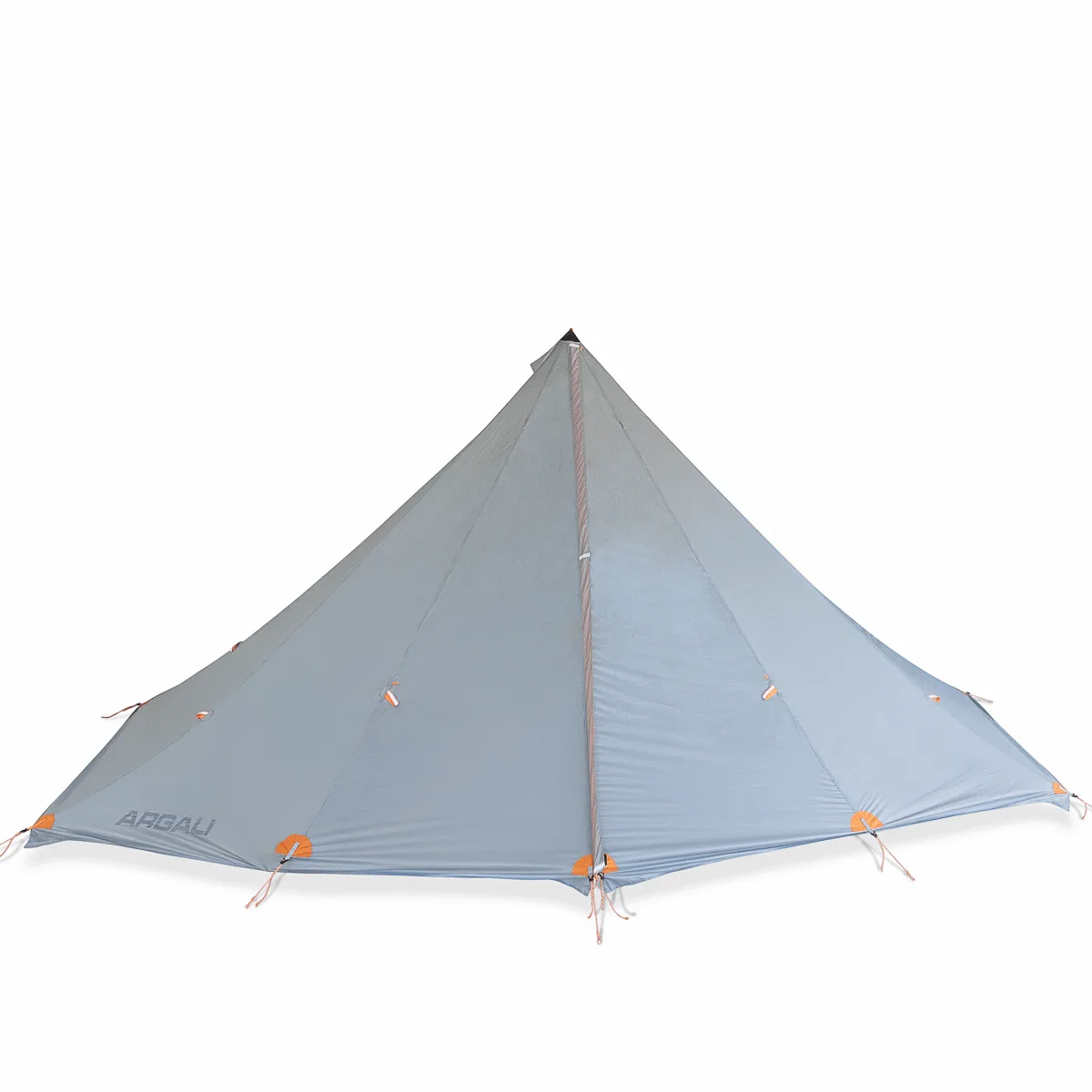
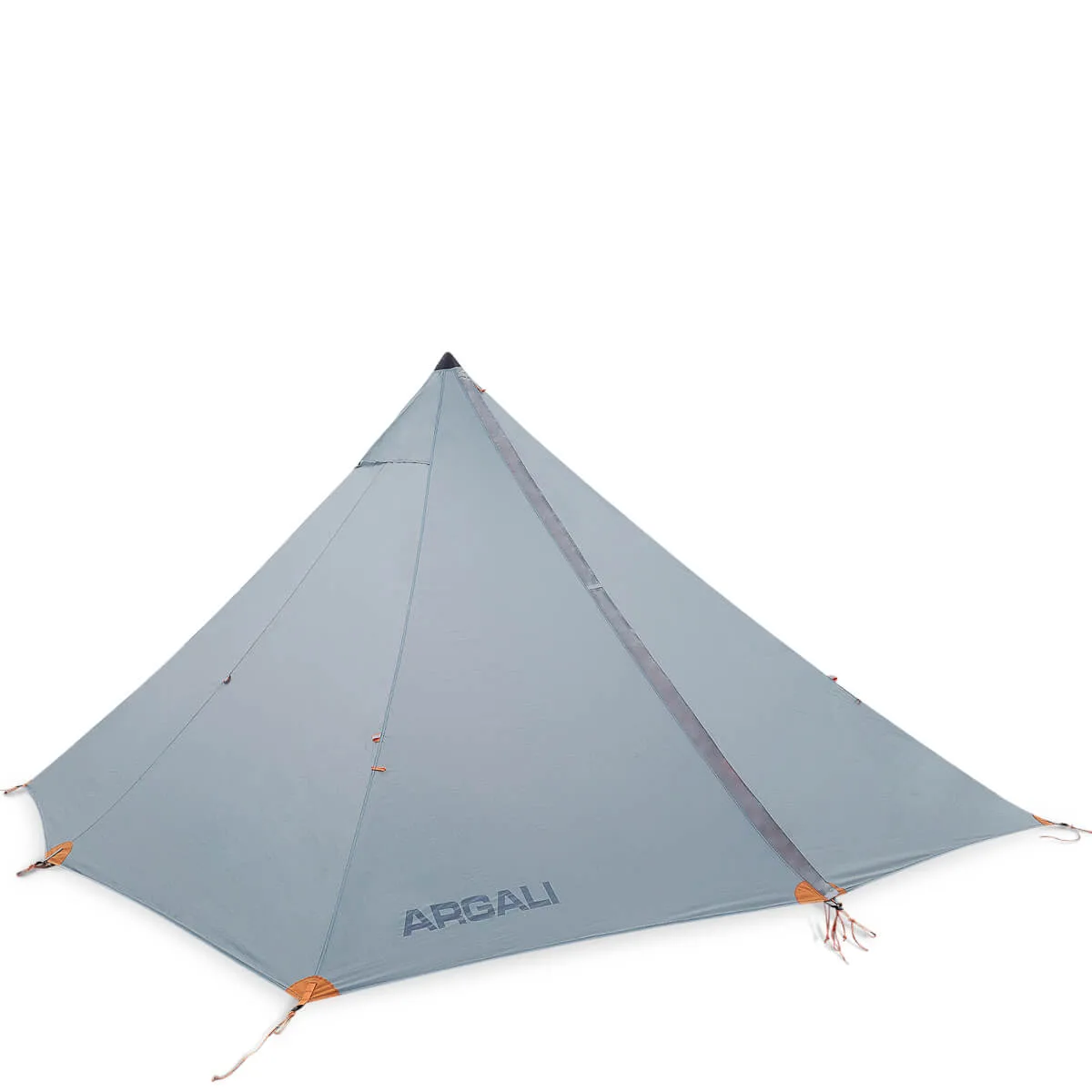
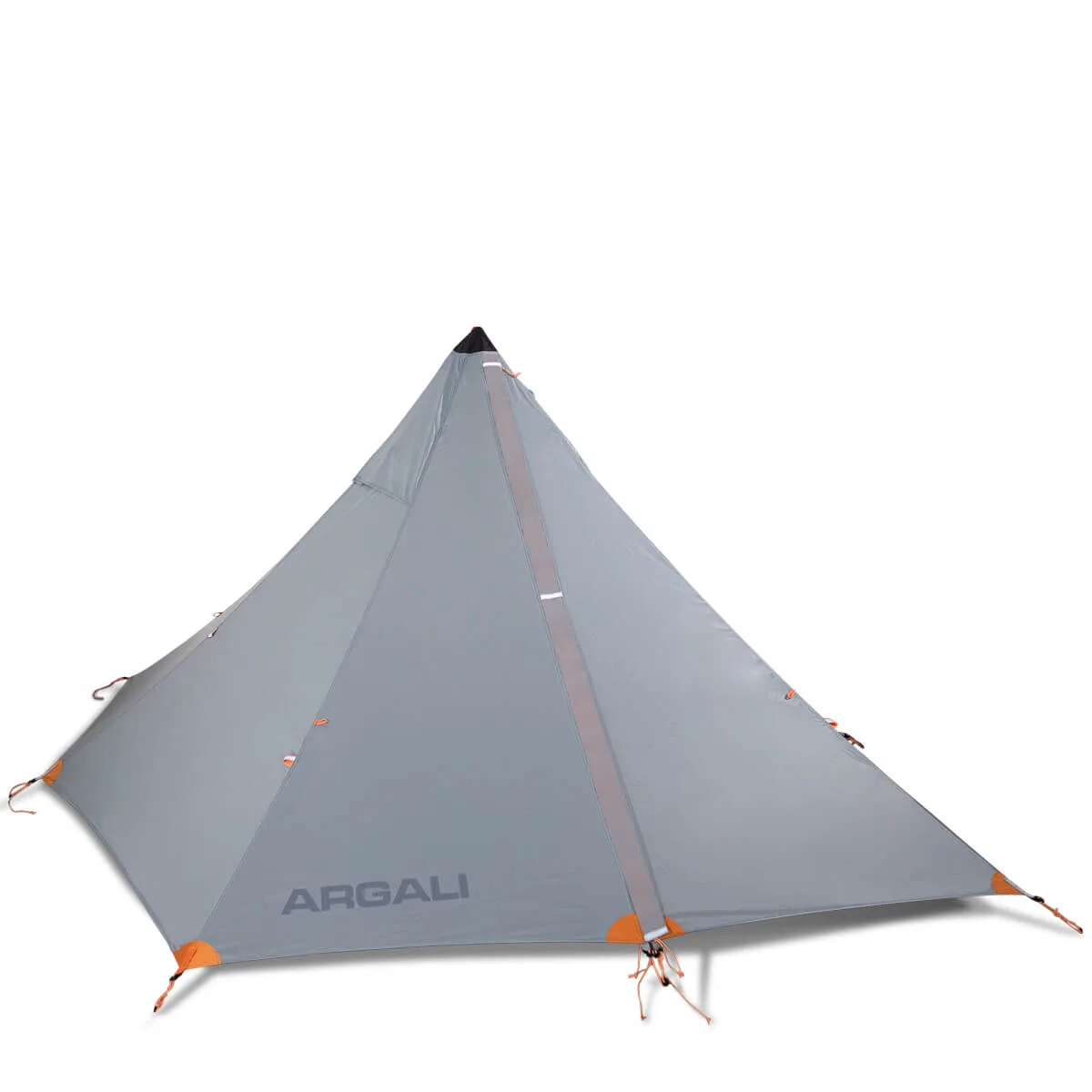
If you are using a trekking pole shelter like the Owyhee 1P Tent, stake count and placement matter even more, because the shelter depends on tension from the stakes to hold its shape. The Owyhee is an ultralight 1 person shelter that pitches quickly and easily and is designed to keep you dry in any weather. It is a single trekking pole pitch tent with enough room to sleep you and your gear, so a solid stake set is part of making the shelter perform as intended.
- Count the stake points on your tent before you buy stakes
- Add two extra stakes for guylines in exposed camps
- Store stakes in a dedicated bag so you notice a missing one
When to size up: hunting camp and base camp stakes
Hunting tent stakes often need to do more than hold a solo shelter. Base camp tents and large group shelters catch more wind and carry more tension, so they need stakes with more holding power. That usually means longer, thicker stakes, or a mix of standard stakes and heavy-duty options for the corners and guyouts.
Larger tents also change the stake math. The Selway 6P Tent is a lightweight, spacious 6 person tent designed as a large tent for backcountry hunting or as a base camp tent. It is a 4 season tent built with a tall pitch height and a modified rectangular shape, with dual doors and a built in stove jack for hot tent compatibility. A tent that size needs stakes that can handle more load, especially on exposed ridges or in fall storms.
- Base camp tents need longer and stronger stakes than solo shelters
- Use the biggest stakes on the corners and windward sides
- Check stake tension after the tent has settled for an hour
Decision rules for buying tent stakes
- Rule 1: Match shape to ground: Choose narrow, strong stakes for rocky ground; wide-flange or sand-specific stakes for sand; longer standard stakes for soft soil. If you camp in more than one ground type, carry a mixed set rather than one universal stake.
- Rule 2: Buy length before you buy weight savings: A longer stake reaches firmer ground and resists pull-out better than a short one. Ultralight stakes only work if they are long enough for your terrain. For soft or loose ground, prioritize length over saving an ounce.
- Rule 3: Size the stake to the shelter: Solo trekking pole shelters and large base camp tents put different loads on stakes. Bigger tents and exposed camps need stronger, longer stakes at corners and guyouts. If you use a large tent or camp above treeline, upgrade the corner stakes first.
- Rule 4: Carry spares and expect to re-set: Rocky ground bends stakes and sandy ground loosens them. Two spare stakes and a quick re-tension check after pitching prevent most failures. Check stakes after the first hour and again before sleep.
Stake and shelter facts that affect your choice
- Piton Tent Stake: Named after the solid iron climbing gear that revolutionized rock climbing, the Argali Piton Tent Stakes are strong and feather light, at about .3 ounces per stake. A stake this light is easy to carry as part of a mixed kit, and its rock-oriented design makes it a sensible choice for rocky or hard-packed ground where standard stakes bend.
- Owyhee 1P Tent: The Owyhee 1P Tent is an ultralight 1 person shelter that pitches quickly and easily and will keep you dry in any weather, designed as a single trekking pole pitch tent with enough room to sleep you and all your gear. Trekking pole shelters depend on stake tension to hold their shape, so stake choice directly affects how the tent performs in wind and weather.
- Selway 6P Tent: The Selway 6P is a lightweight, spacious, 6 person tent designed as a large tent for backcountry hunting or as a base camp tent, built with a tall pitch height, a modified rectangular shape, dual doors, and a built in stove jack for hot tent compatibility. A tent this size presents more surface area to the wind, so it needs stakes with more holding power than a solo shelter, especially for corners and guyouts.
- Yukon 8P Half Floor: The Argali Yukon 8P Half Floor fits inside the Yukon 8P Tent to provide a floor for half of the tent for sleeping or to keep your gear off the ground, made from durable waterproof 30D nylon fabric, and connects to the bottom guyout points along the Yukon 8P Tent. Half floors connect at the same guyout points that stakes use, so stake placement and tension affect both the floor fit and the tent structure.
Who should buy which stake setup
Best for
- Backpackers and solo hunters who need lightweight backpacking stakes for firm soil and occasional rock
- Hunters camping in sandy or loose ground who need dedicated sand tent stakes
- Base camp and group tent users who need hunting tent stakes with more holding power
Not for
- Campers who only pitch on manicured, firm campsites and never encounter rock, sand, or deep soil
- Anyone looking for a single stake that works perfectly in every ground type without compromise
The right stake is the one that matches the ground under your tent. Build a small mixed kit, size your stakes to your shelter, and check tension after pitching. That approach covers rocky, sandy, and soft ground without carrying more weight than you need.