Quick answer
Start with the stake points that offer the most solid ground, even if that means moving the tent a few feet. Use a tapered stake driven at a 45-degree angle away from the tent, and switch to rock anchors or tied-off boulders when the soil is too shallow. If the ground refuses every stake, use trekking poles or available rocks to create a freestanding pitch.
Rocky ground and hard-packed soil are the two most common reasons a tent pitch fails. The ground looks fine until you try to drive a stake, and then you hit a shelf of rock or soil that might as well be concrete. The fix is rarely brute force. It is about reading the ground, choosing the right anchor, and knowing when to change tactics.
This guide walks through a practical sequence for staking a tent when the ground fights back. It covers stake selection, angle, rock anchors, and the backup methods that keep your shelter secure without damaging your gear or your hands.
Read the ground before you unroll the tent
Walk the intended footprint and probe the corners with a stake or trekking pole tip. You are looking for soft pockets, cracks, and shallow soil over rock. If three corners hold and one does not, shift the tent a few feet rather than fighting the bad corner. A small move often turns a frustrating pitch into a solid one.
Check the wind direction while you are at it. On hard ground, you may only get a few good stakes in, so you want the strongest anchors on the windward side. If the forecast calls for gusts, plan to use rocks or tie-offs on the exposed corners first.
- Probe each corner before committing to a spot.
- Note which way the wind will push the tent.
Choose a stake that suits hard ground
Not all stakes drive equally. For hard soil and rocky ground, a tapered stake with a sharp point and a sturdy head is easier to start and less likely to bend. Thin, lightweight stakes are great for soft ground but can bend or mushroom when you hit rock. If you carry only one set, choose a middle-weight stake that can handle both.
Carry a small file or use a sharpening stone to touch up the tips before a trip. A dull stake requires more force, which leads to bent shafts and bruised palms. A few seconds of maintenance makes a noticeable difference on hard ground.
- Tapered, sharp stakes drive more easily in hard soil.
- Avoid ultra-thin stakes if you expect rocky ground.
Drive stakes at the right angle
Hold the stake at roughly a 45-degree angle, pointing away from the tent, and drive it in until the head is just above the ground. Angling away from the tent uses the soil as a wedge and gives the guy line a direct pull. Straight-down stakes pull out more easily because the line lifts them vertically.
Use a rock or the heel of your hand to start the stake, then switch to a mallet or a second rock to drive it home. Stop if the stake stops moving and feels solid underneath. That is usually rock, and continuing will bend the stake or damage the tip.
- Angle stakes away from the tent, not toward it.
- Stop driving when the stake hits an immovable object.
Use rock anchors when stakes will not hold
When soil is too shallow, tie your guy line to a rock instead of a stake. Wrap the line around a fist-sized or larger rock, then bury the rock in a shallow hole and stack more rocks on top. This creates a deadman anchor that resists upward pull far better than a loose stake.
For a quicker option, loop the guy line around a large, stable boulder and tie it off. Test the anchor with a firm tug before you rely on it. If the rock shifts, add more weight or find a larger one. The goal is an anchor that will not move when the wind gusts.
- Bury a rock with the guy line wrapped around it for a deadman anchor.
- Test every rock anchor with a hard tug before moving on.
Pitch freestanding or use trekking poles
If the ground refuses every stake, switch to a freestanding or semi-freestanding pitch. Many tents can stand with just two trekking poles and a few strategic anchors. In a pinch, you can tie guy lines to heavy gear, logs, or boulders to hold the shape until the wind passes.
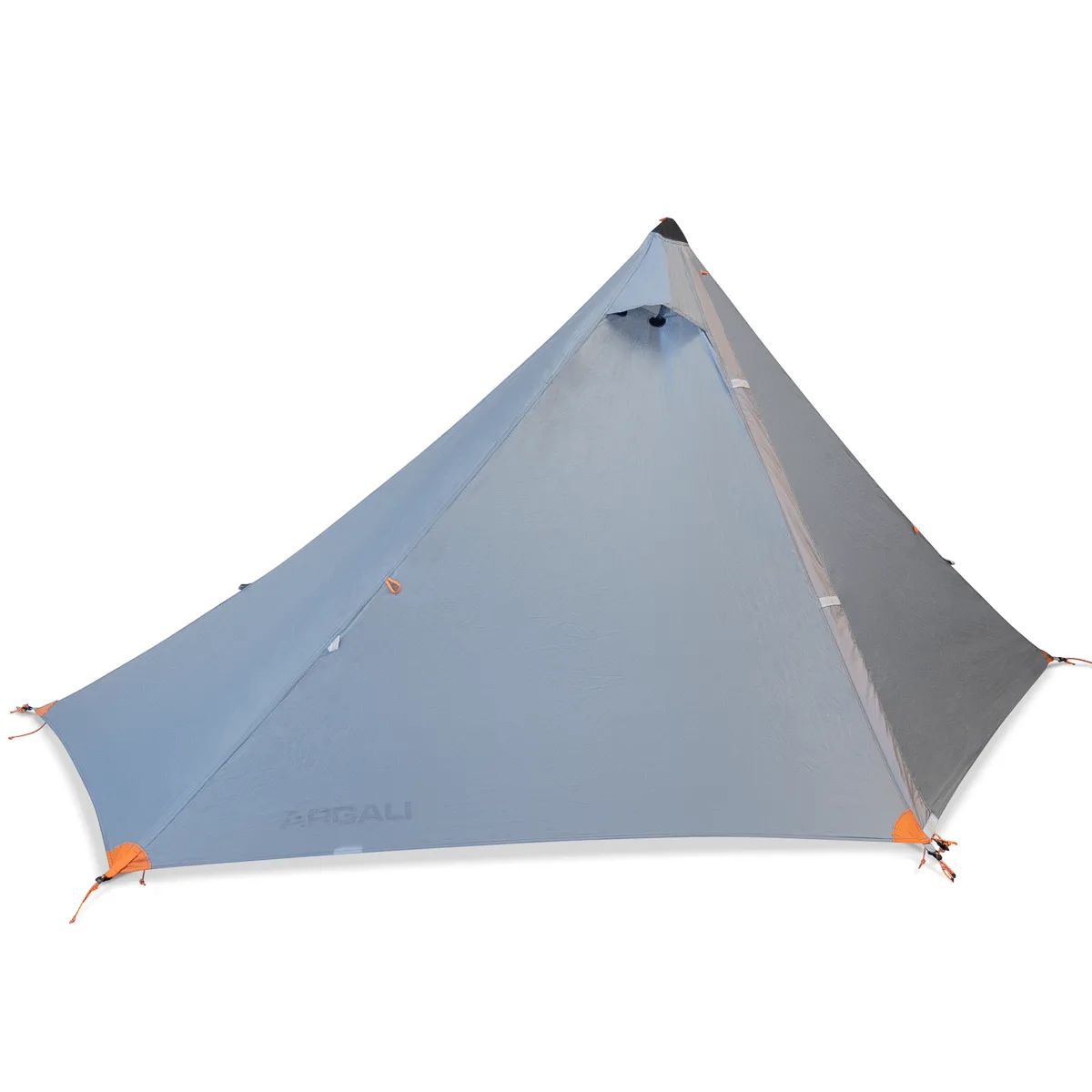
For tents that require staking, like the Rincon 2P Tent, a single trekking pole pitch and a modified rectangular shape give you a stable structure even when you can only anchor a few points. The no-sag when wet fabric also means the shelter will not droop and flap if the pitch is not perfect.
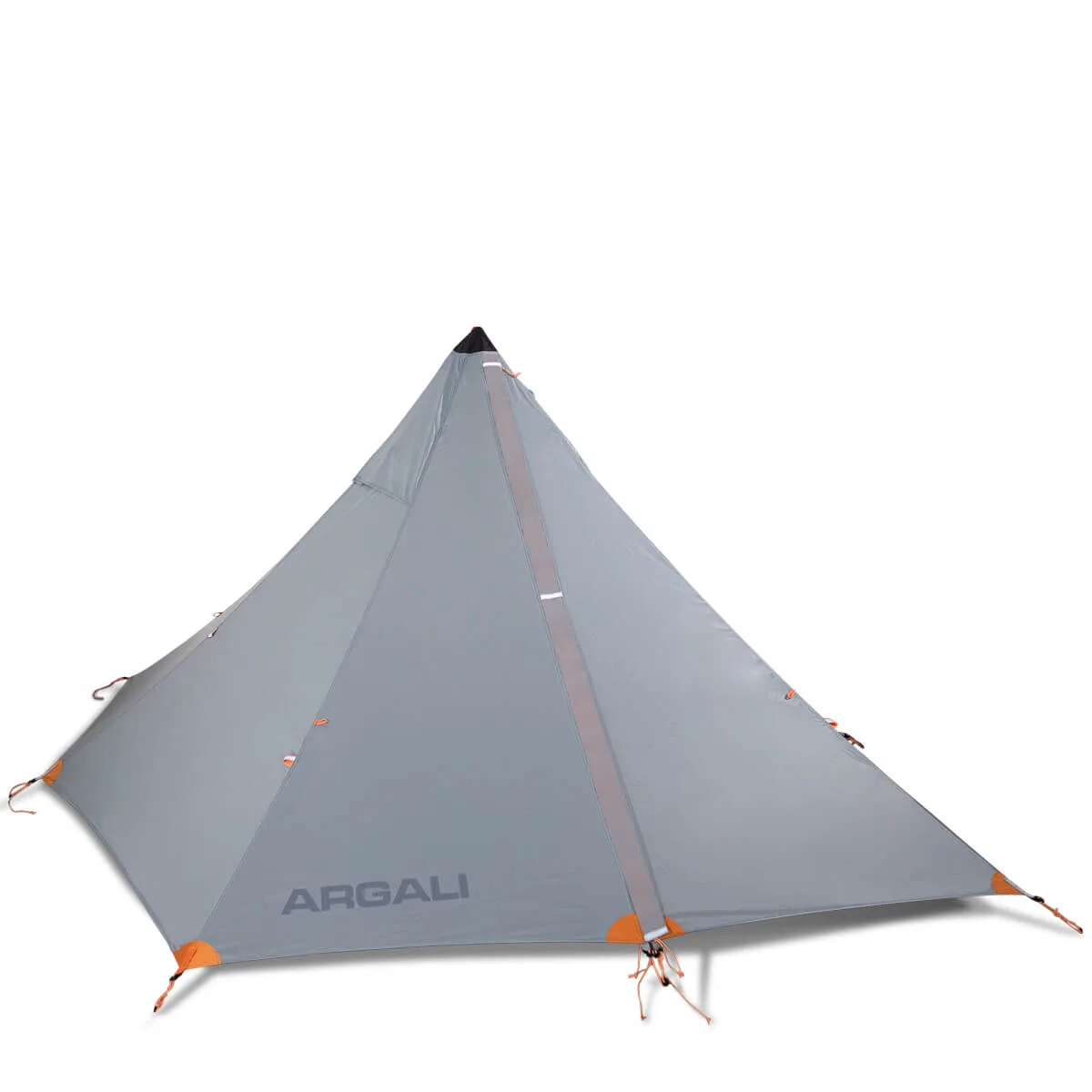
Rincon 2P Tent
- Use trekking poles to create a freestanding structure.
- Tie off to heavy objects if no stake will hold.
Step-by-step: staking a tent in hard or rocky ground
- Scout and probe the ground: Walk the footprint and push a stake or trekking pole tip into each corner. Look for soft pockets and note where rock is shallow. If one corner refuses, shift the tent a few feet before unloading everything. Checkpoint: at least three corners should accept a stake before you commit.
- Pick the right stake and angle: Use a tapered, sharp stake for hard soil. Drive it at a 45-degree angle away from the tent. Stop if it hits solid rock. Do not force a bent stake. Checkpoint: the stake should feel firm, not loose, when you tug the guy line.
- Build rock anchors for stubborn spots: Wrap the guy line around a large rock, bury it in a shallow hole, and stack more rocks on top. Test with a hard tug. If it moves, add weight or find a bigger rock. Checkpoint: the anchor should not shift when you pull firmly on the line.
- Switch to a freestanding or pole-supported pitch: If stakes will not hold, use trekking poles to create a freestanding structure. Tie off to heavy gear or boulders as a last resort. Adjust the pitch until the fabric is taut. Checkpoint: the tent should hold its shape without constant adjustment.
- Do a final wind test: Walk around the tent and push on the windward side. Tighten any loose guy lines and re-check anchors. If a corner lifts, add a rock or reset the stake at a better angle. Checkpoint: the shelter should stay put when you push on it.
Gear notes for hard-ground pitching
- Rincon 2P Tent: The Rincon 2P is a lightweight 2 person mountain tent with a single trekking pole pitch, spacious interior, removable stove jack, no-sag when wet fabric, single zipper door, and modified rectangular shape. A trekking pole pitch gives you a stable structure even when you can only anchor a few points, and the no-sag fabric keeps the shelter taut if the pitch is imperfect.
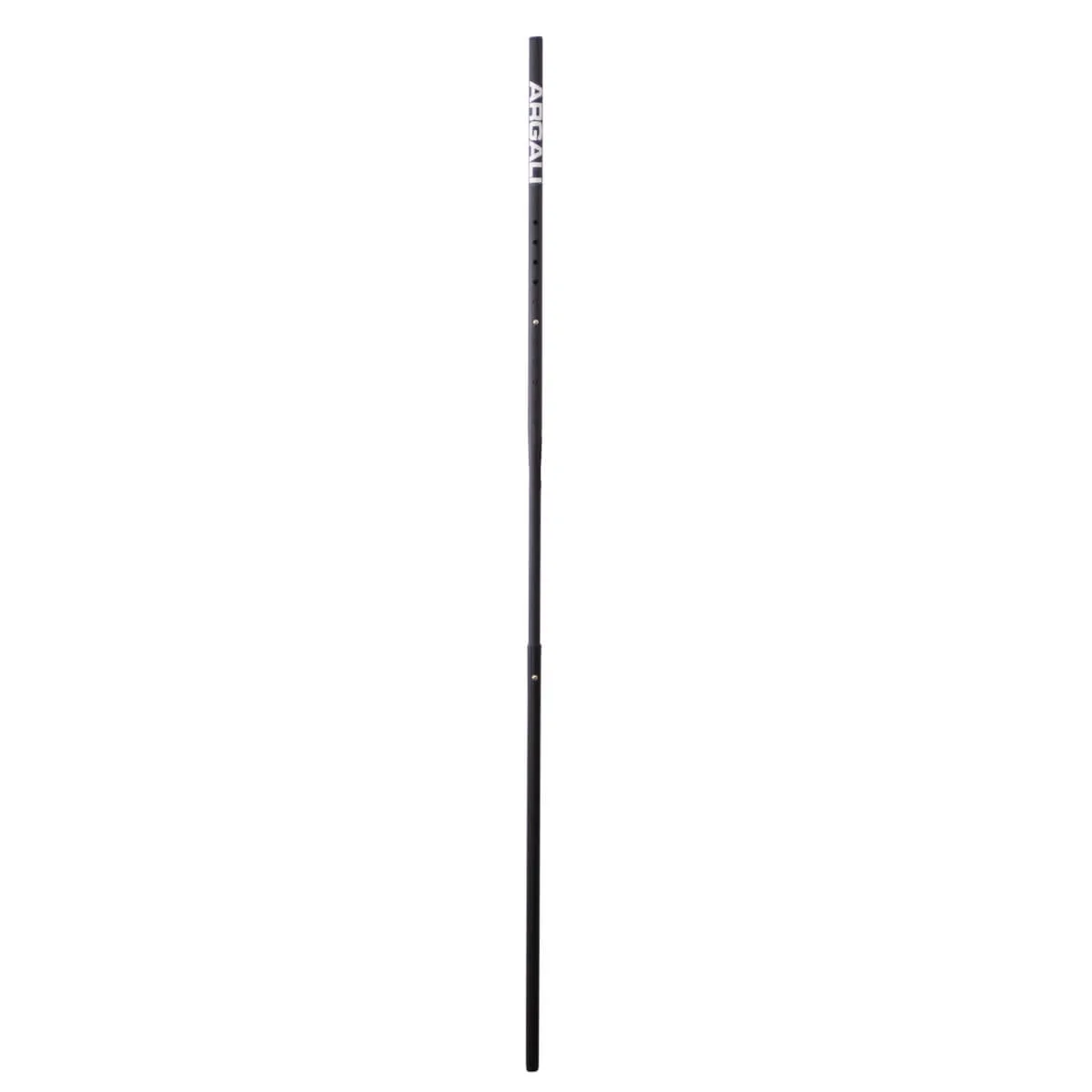
- Rincon 2P Carbon Fiber Center Pole: Designed to fit the Rincon 2P or Owyhee 1P Tent, this carbon fiber center pole is made from lightweight premium carbon fiber, is quick to set up and adjustable, and breaks down into 3 equally sized pieces. An adjustable center pole lets you fine-tune the pitch when the ground is uneven or rocky, and the compact breakdown makes it easy to pack.
Hard ground does not have to mean a bad pitch. Probe first, use the right stake angle, and switch to rock anchors or a freestanding setup when the soil will not cooperate. A few minutes of problem-solving beats a sleepless night of flapping fabric.