Quick Answer
A matching swim set usually gives you more value per dollar because the top and bottom are priced together, and it removes the guesswork of coordinating colors and hardware. Buy separates when your top and bottom sizes differ, when you swim often enough to wear out one piece first, or when you want to stretch a single top across several bottoms. If your sizes are close and you like the print, the set wins on price; if fit is uneven or you replace pieces often, separates win on cost per wear.
The price tag on a bikini set can look higher than a single top or bottom, but that comparison is misleading. A set includes both pieces, so the real question is what you pay per piece and how long each piece stays in rotation. A set that costs about the same as one separately bought top plus one separately bought bottom is not a splurge, it is the same purchase bundled.
Value in swimwear comes down to three things: how much you pay per piece, how well each piece fits, and how easily you can replace the part that wears out. Sets usually win the first, separates usually win the second and third. The right answer depends on your measurements and how often you swim.
What You Actually Pay For in a Set
A set bundles a top and bottom under one price, which is why the number looks bigger than a single piece. The fair comparison is set price against the combined price of a top and bottom you would buy anyway. When a set is discounted against its comparison price, the per-piece cost usually lands below what you would pay picking two pieces off the rack.
The trade-off is control. A set locks you into one print, one hardware finish, and one size pairing. If the top fits and the bottom does not, you either accept a compromise or you are back to shopping separately anyway. Sets reward shoppers whose top and bottom sizes match and who like the design as a whole.
- Divide the set price by two to get a rough per-piece cost before comparing it with separates.
- Check whether the top and bottom in a set are sold in the same size or can be sized independently.
Where Separates Win on Fit
Bodies rarely follow a single size from top to bottom. A triangle top and a high-coverage bottom can sit two sizes apart on the same person, and a set that only comes in one size pairing forces a compromise somewhere. Buying swim separates lets you size the top for coverage and the bottom for hip fit independently.
Adjustability narrows the gap. A top with adjustable neck and back ties can be tuned at the shoulder and ribcage, and a bottom with tie sides can be tightened or loosened at the hip. When a set offers that much adjustment, the fit advantage of separates shrinks considerably.
- If your top and bottom sizes differ by more than one, separates are usually the better buy.
- Adjustable ties buy you roughly a size of flexibility in either direction.
Replacement Cost Over Time
Swimwear does not wear out evenly. Bottoms take more abrasion from sand, seating, and repeated washing, while tops fade or lose shape from sun and chlorine. With separates, you replace only the piece that failed. With a set, a worn bottom can mean buying the whole set again, which raises the true cost per season.
That math flips if you swim rarely. Someone who wears a bikini a handful of times each summer may never wear out either piece, so the replacement advantage of separates never gets used. Frequent swimmers and people who live near water get far more value from being able to buy one replacement piece.
- Count how many times per month you actually swim before paying a premium for separability.
- Rinse swimwear after every wear to slow wear on whichever piece you own.
How to Compare Two Sets Directly
When two sets sit at similar prices, compare the construction details rather than the print. A bandeau halter top with a cowl neck effect and adjustable back ties gives you two looks from one top, which is effectively two tops for the price of one. A classic triangle top with adjustable neck and back ties and double lining offers simpler styling but dependable coverage.
Hardware and lining are the quiet value markers. Gold hardware and double lining cost more to produce and tend to hold up better across seasons. If one set has these and the other does not at the same price, the better-built set is the better value even before fit enters the picture.
- Compare lining, hardware, and strap adjustability before comparing patterns.
- A top that converts between two necklines earns its price twice over.
The Trade-Offs at a Glance
- Set: lower price per piece: A set bundles top and bottom under one price, and when it is discounted against its comparison price the per-piece cost usually beats buying a top and bottom separately. Choose the set if your top and bottom sizes match and you like the design as a whole.
- Separates: independent sizing: Buying swim separates lets you size the top for coverage and the bottom for hip fit, which matters when your measurements sit more than one size apart. Choose separates if you routinely size up in one piece and down in the other.
- Set: limited replacement options: If one piece wears out, you generally replace the whole set rather than the single piece, which raises the cost per season for frequent swimmers. Choose separates if you swim weekly and wear through bottoms faster than tops.
- Separates: coordination effort: You have to match color, hardware finish, and fabric weight yourself, and a near-match often looks worse than a deliberate contrast. Choose the set if you would rather not spend time coordinating pieces.
Two Sets, Two Different Value Propositions
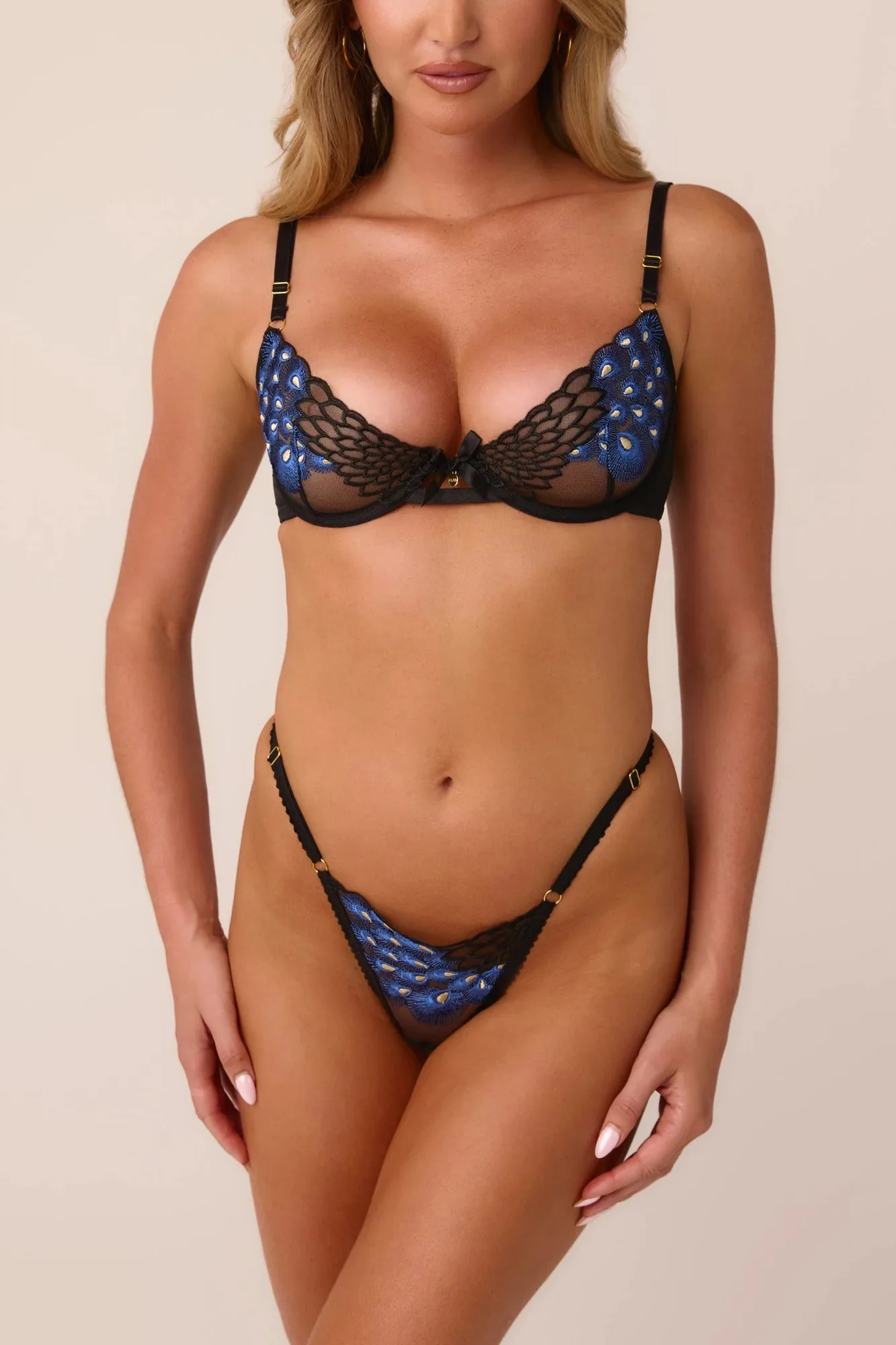
- Lydia Swim Set - Blue: Bandeau style halter bikini top with a cowl neck effect, adjustable back ties, cups you can tighten for a flat bandeau or loosen for a cowl neck, gold hardware, and a halter neck. One top covers two distinct looks, so you get styling range without buying a second top. The adjustable ties also let you tune coverage, which reduces the fit penalty of buying a set rather than separates.
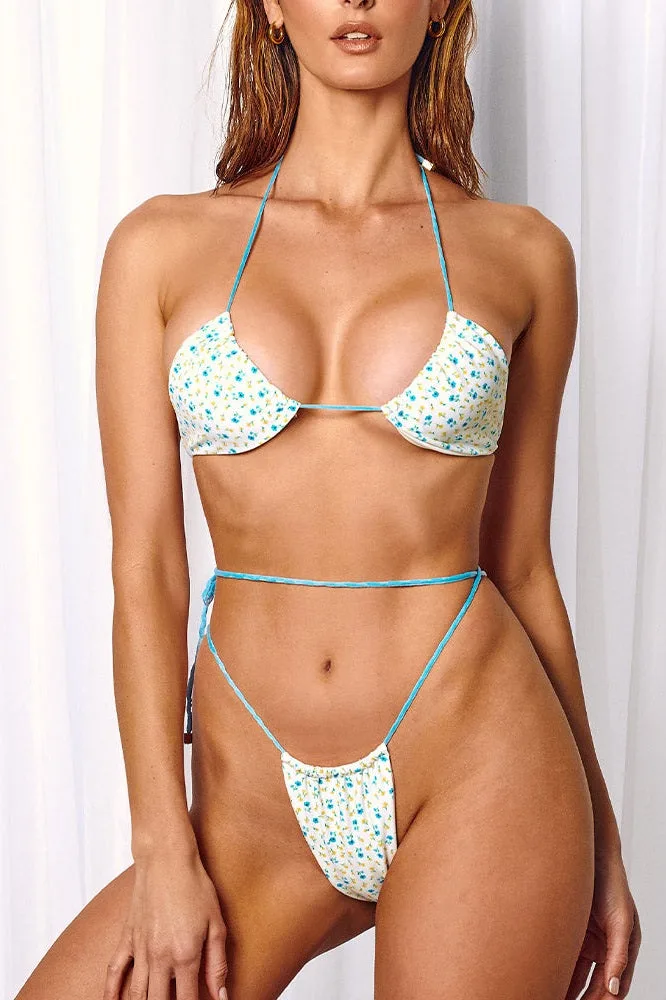
- Phoebe Swim Set - Floral Blue: Classic minimal triangle top with adjustable neck and back tie, adjustable coverage cups, gold hardware details, tie straps, and double lining. Double lining and full adjustability at the neck and back make this a strong everyday option. The triangle shape suits smaller-to-medium busts better than a structured bandeau, so it is the safer set if you want simple, reliable coverage.
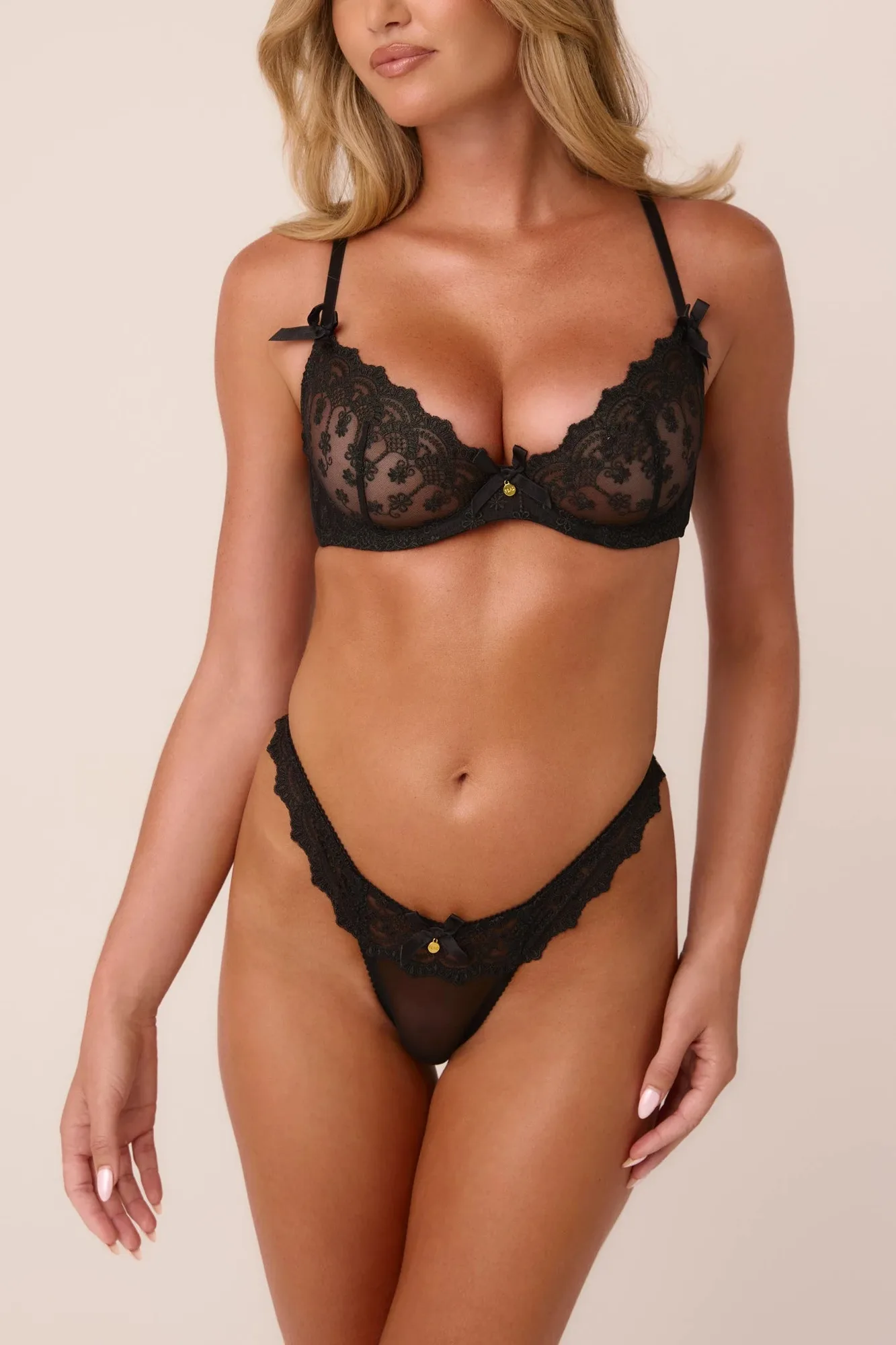
- Riley Set Black: Low cut underwired demi-bra in flower embroidery lace with adjustable back and shoulder straps, gold hardware, and a matching thong and garter. Underwire construction and a demi cup give real support, which is what separates a set you wear for an hour from one you wear all evening. The garter inclusion means the set covers more of an outfit than a standard two-piece.
- Pia Set Black: Two-piece set made with high-quality embroidered lace and intricate lace detailing, with adjustable straps for fit and a secure feel. Adjustable straps on both pieces mean you can fine-tune fit without sizing up or down, which is the main reason people avoid sets. The embroidered lace reads as a dressier set rather than an everyday one.
Which Should You Buy?
Buy the set if you are
- Someone whose top and bottom sizes match or sit within one size of each other
- A shopper who wants a coordinated look without matching pieces yourself
- Buying for occasional wear where replacement cost is unlikely to matter
Buy separates instead if you are
- Someone whose top and bottom sizes differ by more than one size
- A frequent swimmer who wears out one piece well before the other
- A shopper who wants to stretch one top across several bottoms or swap prints between seasons
Sets win when your sizes align and you want a coordinated look at a lower per-piece price. Separates win when fit is uneven or you swim often enough to replace pieces individually. Check the adjustability first, since a set with tunable ties and straps closes most of the gap that normally pushes people toward separates.