Quick answer
Most tarp fading is cosmetic and comes from UV exposure, so it rarely needs action on its own. Tears and sagging are structural: small punctures at grommets or seams can be patched, but a tarp that has stretched, torn along a seam, or lost its attachment points is usually better replaced than repaired. If your canopy is a Play-Zee-Bo, the Play-Zee-Bo Replacement Multi-Colored Tarp is the direct-fit fix.
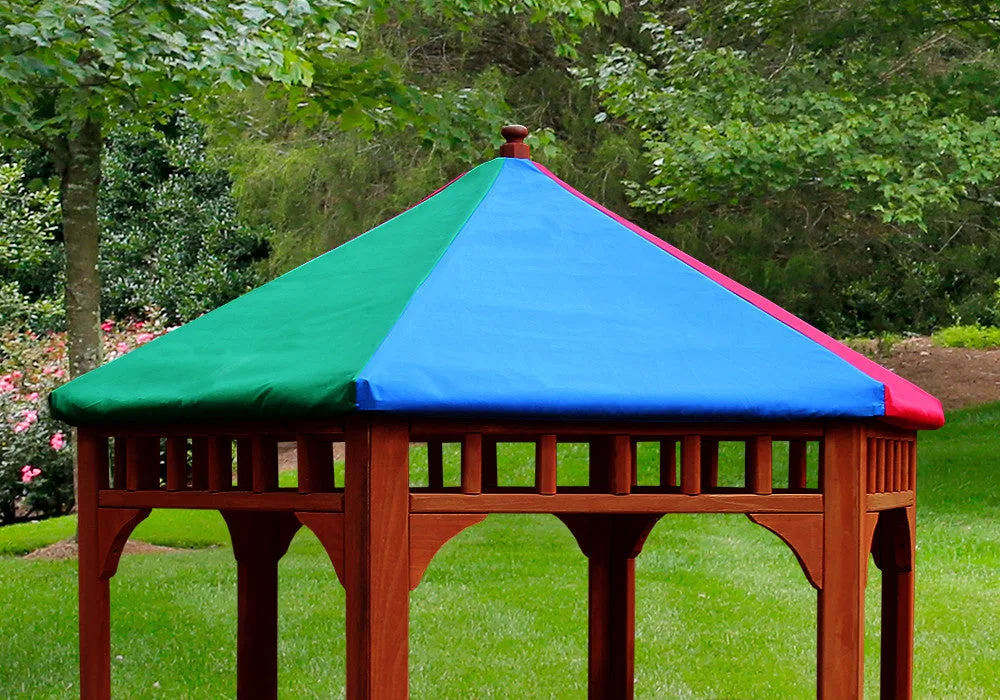
Play-Zee-Bo Replacement Multi-Colored Tarp
A canopy that looked bright in spring can look chalky, flappy, and worn by late summer. That does not automatically mean the whole playset needs work. Fading, tearing, and sagging are three different problems with three different causes, and only one of them usually justifies a replacement.
This guide walks through each symptom, what typically causes it, what you can realistically do about it, and the point where patching stops being worth your weekend. It applies to canopies on Gorilla Playsets models and to the Play-Zee-Bo replacement tarp alike.
Why swing set tarp fading happens (and when to ignore it)
Fading is almost always UV damage. Sunlight breaks down the pigments in the fabric, so the color lightens unevenly, usually on the side that faces the afternoon sun. This is normal wear, not a defect, and it does not shorten the tarp's life by itself. A faded tarp that still fits tightly and has intact grommets is doing its job.
Fading becomes a problem only when it comes with chalking, a powdery surface, or fabric that feels thin and brittle when you pinch it. That means the material is breaking down, and the next strong wind or hard rain is more likely to finish it off. If the tarp feels stiff and crackly rather than flexible, plan for replacement rather than another season of patching.
- Check the underside of the tarp: if it is still pliable and the color is closer to original, the damage is surface-level.
- Faded but intact canopies can stay up; there is no safety reason to replace them early.
Swing set canopy tear fix: what holds and what does not
Small tears, under about two inches, at a grommet or along a straight edge can often be repaired with a peel-and-stick fabric patch or a needle-and-thread repair using UV-resistant thread. Clean the area first, let it dry completely, and apply the patch on both sides if you can reach them. A repair like this can buy you a season or two.
Tears that run along a seam, radiate from a grommet, or keep reopening after a patch are a different story. Those indicate the fabric around the attachment point has lost strength, and each patch just moves the failure a few inches over. Once a tarp has two or more seam failures, replacement is usually cheaper in time and frustration than continuing to chase tears.
- Patch on a warm, dry day; adhesives bond poorly to damp or cold fabric.
- Do not use duct tape as a long-term fix. It leaves residue and fails in heat.
How to fix a sagging swing set tarp
Sagging usually comes from stretched fabric, stretched bungee or rope, or a tarp that was never tensioned evenly in the first place. Start by checking the attachment points: if the cords or straps have stretched, retensioning them can remove most of the sag without touching the tarp. Work around the perimeter in small increments so the pull stays even.
If the cords are fine and the tarp itself has stretched, you can sometimes take up slack by re-routing the attachment through a new grommet or by adding a small tensioning tie. Be careful not to over-tension, which pulls grommets out and creates the tears you were trying to avoid. A tarp that sags again within days of retensioning has lost its shape and is a replacement candidate.
- Even tension matters more than tight tension. A tarp pulled hard in one corner will sag in the opposite one.
- After heavy rain, check for water pooling. Pools stretch fabric and speed up sagging.
Replacement tarp sagging: why a new tarp can still droop
If you have already replaced the tarp and it is sagging again, the tarp is probably not the problem. The frame, the attachment hardware, or the way the tarp is mounted is more likely at fault. On roof-style canopies, a bent or twisted roof frame will make any tarp sit unevenly, no matter how new it is.
Check that the frame is square and that all mounting points are at the same height. If one side sits lower, the tarp will always look loose on that side. Also confirm you are using the correct attachment method for your model; a tarp designed for one mounting style can look saggy when forced onto another.
- Compare the old and new tarp side by side before installing. A size mismatch explains most repeat sagging.
- If the frame is bent, fix or replace the frame first. A new tarp will not correct it.
Swing set tarp care that actually extends life
The single biggest factor in tarp lifespan is how it handles wind. A tarp that flaps constantly wears at grommets and seams far faster than one that stays tensioned. If your area gets strong seasonal winds, consider taking the canopy down for the windiest months rather than letting it whip.
For routine care, rinse the tarp with a garden hose and a mild soap, then let it air dry fully before it goes back up. Avoid pressure washers, which force water into seams, and skip harsh solvents that strip the fabric's protective coating. Removing fallen leaves and debris from the top surface also prevents staining and trapped moisture.
- Clean twice a year, and after any storm that leaves debris on the canopy.
- Store a removed tarp rolled, not folded, to avoid crease lines that become tear points.
When to stop repairing and replace instead
Stop repairing when the fabric itself is failing rather than a single spot. Signs include multiple tears appearing within a season, grommets pulling out of the fabric, a chalky surface that cracks when flexed, or a tarp that will not hold tension after retensioning. At that point, patches are cosmetic and the next failure is a matter of time.
Replacement also makes sense when the repair cost in time approaches the cost of a new tarp. For a model-specific canopy like the Play-Zee-Bo, a direct replacement removes the guesswork about fit and attachment style, which is often the real reason repairs keep failing.
- One repairable tear: fix it. Three or more in a season: replace.
- If you have retensioned twice and it still sags, replace.
Tarp symptom diagnosis
- Faded color, fabric still flexible: UV exposure has lightened the pigment but the material is intact. No action needed beyond routine cleaning. Keep using it.
- Small tear at a grommet or straight edge: Localized stress or a sharp edge has cut the fabric in one spot. Patch both sides and retension evenly. Recheck after two weeks.
- Tear along a seam or multiple tears in one season: The fabric around the attachment points has lost strength. Stop patching. Replace the tarp.
- Sagging with intact cords: The tarp fabric has stretched rather than the attachment hardware. Retension once. If it sags again within days, replace.
- New tarp sagging right after install: The frame, mounting height, or attachment method is uneven. Fix the frame or mounting first. Do not buy another tarp yet.
Replacement option worth knowing
- Play-Zee-Bo Replacement Multi-Colored Tarp: This is the replacement tarp for the Play-Zee-Bo. If your Play-Zee-Bo canopy has reached the replacement stage, this is the direct-fit option rather than a generic tarp you have to adapt.
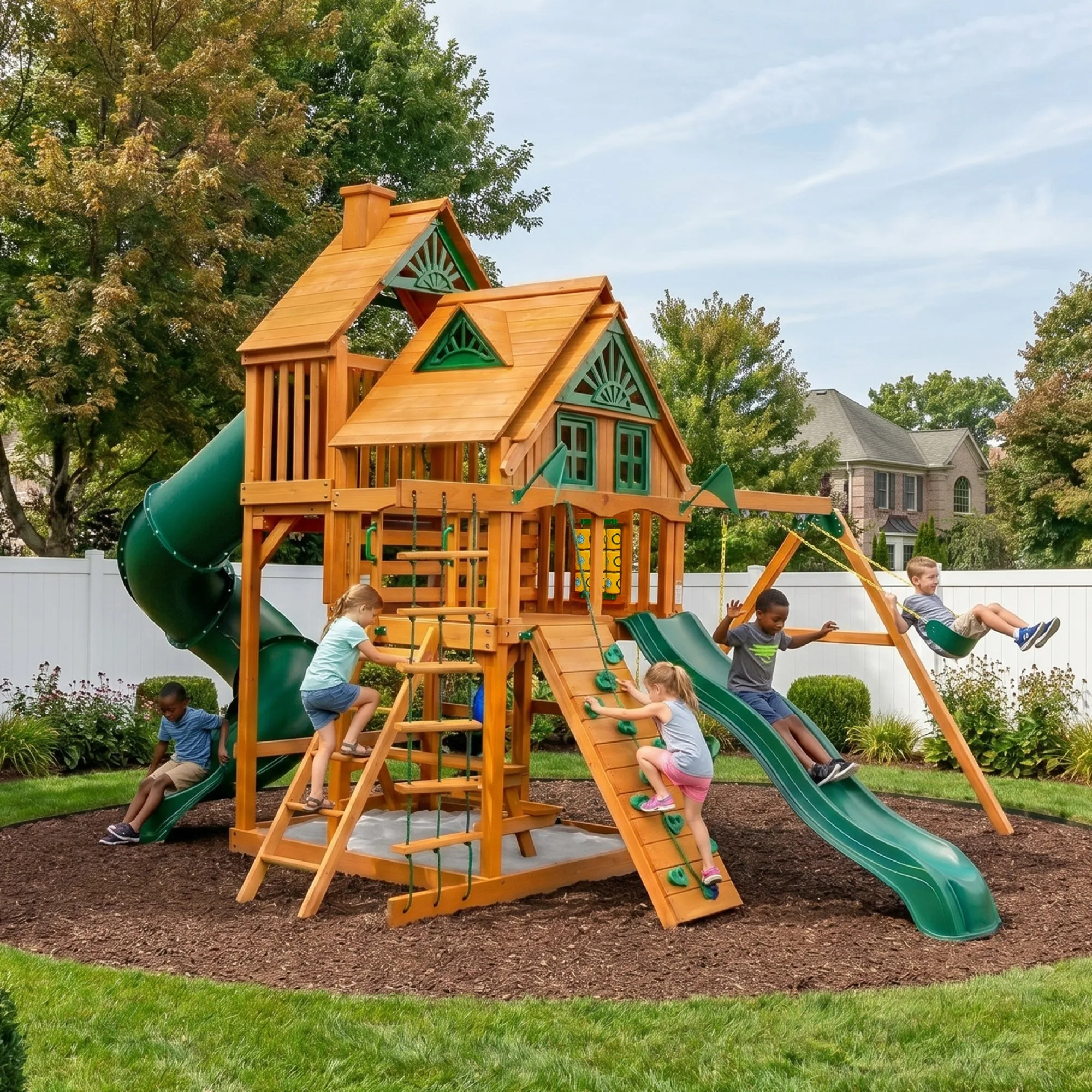
- Great Skye I Swing Set: Features two decks and accessories such as a rock wall, rope ladder, and slides. On a multi-deck set, canopy wear on one deck can be repaired while the rest of the playset stays in service, so you are not choosing between a patch and a whole new set.
Fading is usually just sun damage and can be lived with. Tears and sagging tell you whether a repair will hold or whether you are better off with a direct replacement tarp. Diagnose the symptom first, fix the cause rather than the surface, and replace when the fabric, not the attachment, is the thing failing.