Quick answer
Water resistance on a Swiss watch is measured in meters or ATM, but the rating does not equal depth capability. For daily wear, 50 meters is splash-proof; 100 meters is swim-safe. Silicone straps handle moisture better than leather, and bronze cases require rinsing after saltwater exposure.
Why water resistance ratings can be misleading
A watch marked "50 meters" is not meant for diving. That rating means it can withstand splashes, rain, and hand washing, but not submersion under pressure. The test is static, so swimming, diving, or rapid temperature changes can exceed the seal's capacity.
For swimming or snorkeling, look for at least 100 meters (10 ATM). For scuba diving, 200 meters or more with a screw-down crown is standard. Always check the manufacturer's specific guidance.
Silicone straps and water exposure
Silicone straps are naturally water-resistant and dry quickly, making them ideal for active or wet conditions. Unlike leather or fabric, silicone does not absorb moisture or degrade from sweat. However, soap and salt can leave residue, so rinse the strap with fresh water after exposure to saltwater or chlorinated pools.
Bronze watch care after water contact
Bronze develops a natural patina over time, which many owners appreciate. Saltwater can accelerate uneven discoloration. Rinse the watch with fresh water and dry it with a soft cloth after any saltwater exposure. Avoid abrasive cleaners that could scratch the case.
Frequently asked questions about Swiss watch water resistance
What does "water resistant to 50 meters" mean?
It means the watch can handle splashes, rain, and hand washing, but not swimming, diving, or showering. The test is static pressure; movement in water creates higher pressure. Treat 50 meters as splash-proof, not swim-proof.
Can I swim with a 100-meter water resistant watch?
Yes, 100 meters (10 ATM) is generally safe for swimming and snorkeling. Avoid diving or high-impact water sports. Ensure the crown is pushed in or screwed down. Check the crown position before entering water.
How do I care for a silicone strap after swimming?
Rinse the strap with fresh water to remove salt, chlorine, or dirt. Pat dry with a soft cloth. Avoid leaving it in direct sunlight for long periods, as UV can degrade silicone over time. Rinse after each swim; avoid prolonged UV exposure.
Does a bronze watch need special water care?
Bronze develops a patina naturally. Saltwater can cause uneven color changes. Rinse the watch with fresh water and dry it gently after any saltwater contact. Do not use harsh chemicals. Fresh-water rinse after saltwater use is sufficient.
What features improve water resistance on a Swiss watch?
A screw-down crown, solid case back, and gasket seals are key. The Wenger Terragraph includes a date window at 6 o'clock and a textured dial, but always verify the specific water rating on your model. Screw-down crowns and gaskets matter more than the number on the dial.
Featured product: Wenger Terragraph Swiss Watch
-
Wenger Terragraph Swiss Watch in Bronze and Black Ice with Black Dial and Black Silicone Strap: The Wenger Terragraph features a black silicone strap and a bronze case, with a Swiss-red second hand and Super-Luminova coated numerals for readability. The silicone strap is comfortable for active wear and resists water damage, while the bronze case needs only a fresh-water rinse after wet use to maintain its appearance.
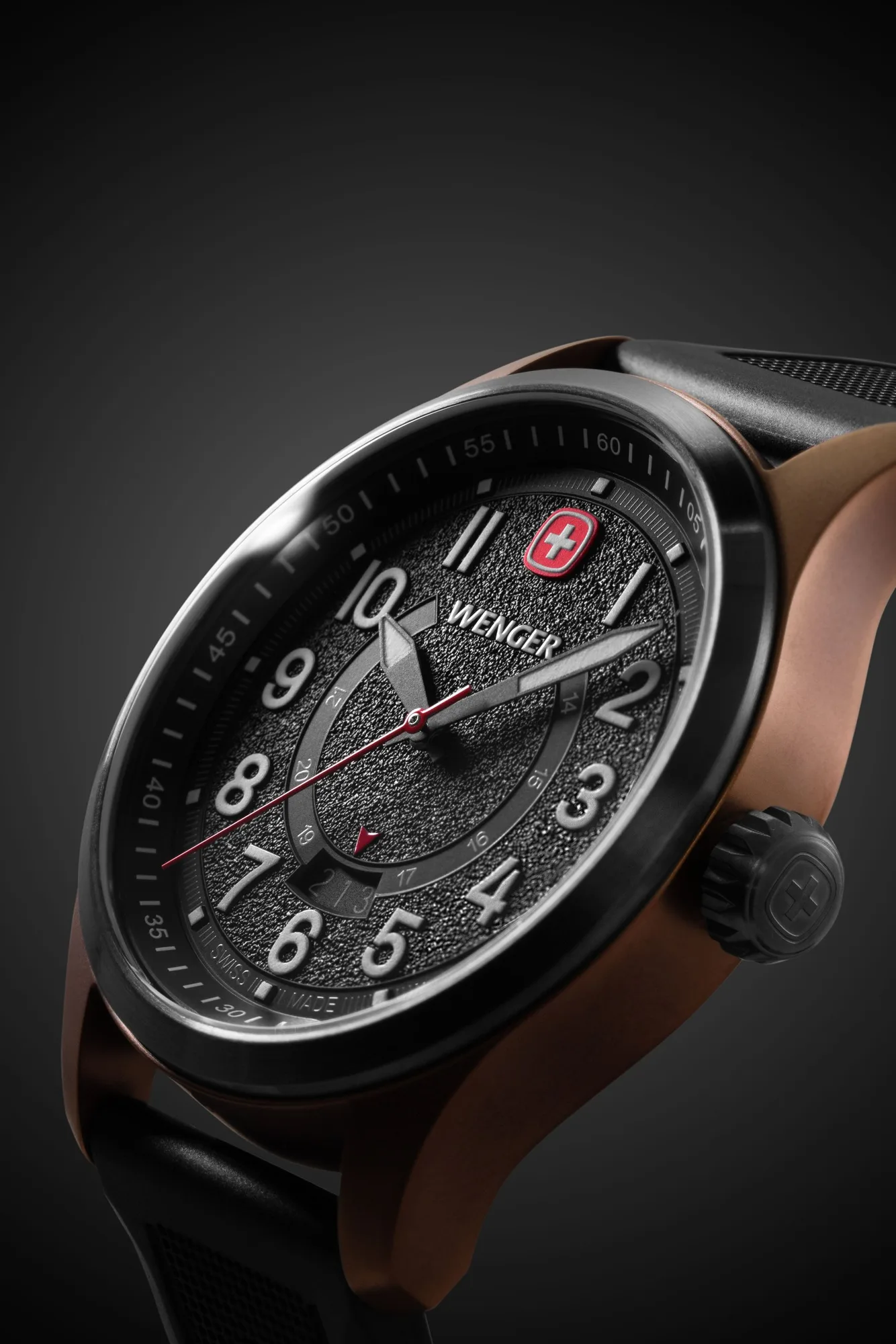
Wenger Terragraph Swiss Watch in Bronze and Black Ice with Black Dial and Black Silicone Strap