Quick Answer
For most social gatherings, physical TableTopics cards win because they keep everyone off their phones and create a more natural, engaging atmosphere. Phone apps are convenient for solo or remote use, but they can't replace the tangible, screen-free interaction that TableTopics cards encourage.
When you're hosting a dinner party or a casual get-together, the last thing you want is everyone staring at their screens. Yet, many people turn to icebreaker apps on their phones for conversation starters. But do these apps really deliver the same experience as a physical deck of TableTopics cards?
In this comparison, we'll weigh the pros and cons of using TableTopics cards versus smartphone apps for sparking conversations. We'll look at factors like engagement, screen-free interaction, variety, and ease of use, so you can decide which approach fits your next event best.
Engagement and Atmosphere
Physical TableTopics cards create a tangible, tactile experience that instantly draws people in. Passing a card around the table feels personal and encourages everyone to participate. The physical act of drawing a card and reading it aloud adds a ceremonial touch that apps can't replicate. This is especially valuable at dinner parties where you want to foster a warm, connected atmosphere.
Phone apps, on the other hand, often require someone to read from a glowing screen, which can break the flow of conversation. Even if the app is passed around, the screen creates a barrier between people. Moreover, having phones on the table can be a constant distraction, pulling attention away from the conversation and toward notifications.
- Keep phones away to maintain eye contact and genuine connection.
Screen-Free Interaction and Eye Contact
One of the biggest advantages of TableTopics is that they're 100% screen-free. In a world where we're already glued to our devices, using conversation cards encourages everyone to put their phones away and be present. This leads to better eye contact, more attentive listening, and deeper conversations.
Apps, by design, require a screen. Even if the questions are great, the mere presence of a phone can signal that it's okay to check messages or scroll. For hosts who want to create a digital detox moment, physical cards are the clear winner. They signal that this gathering is about human connection, not technology.
Variety and Customization
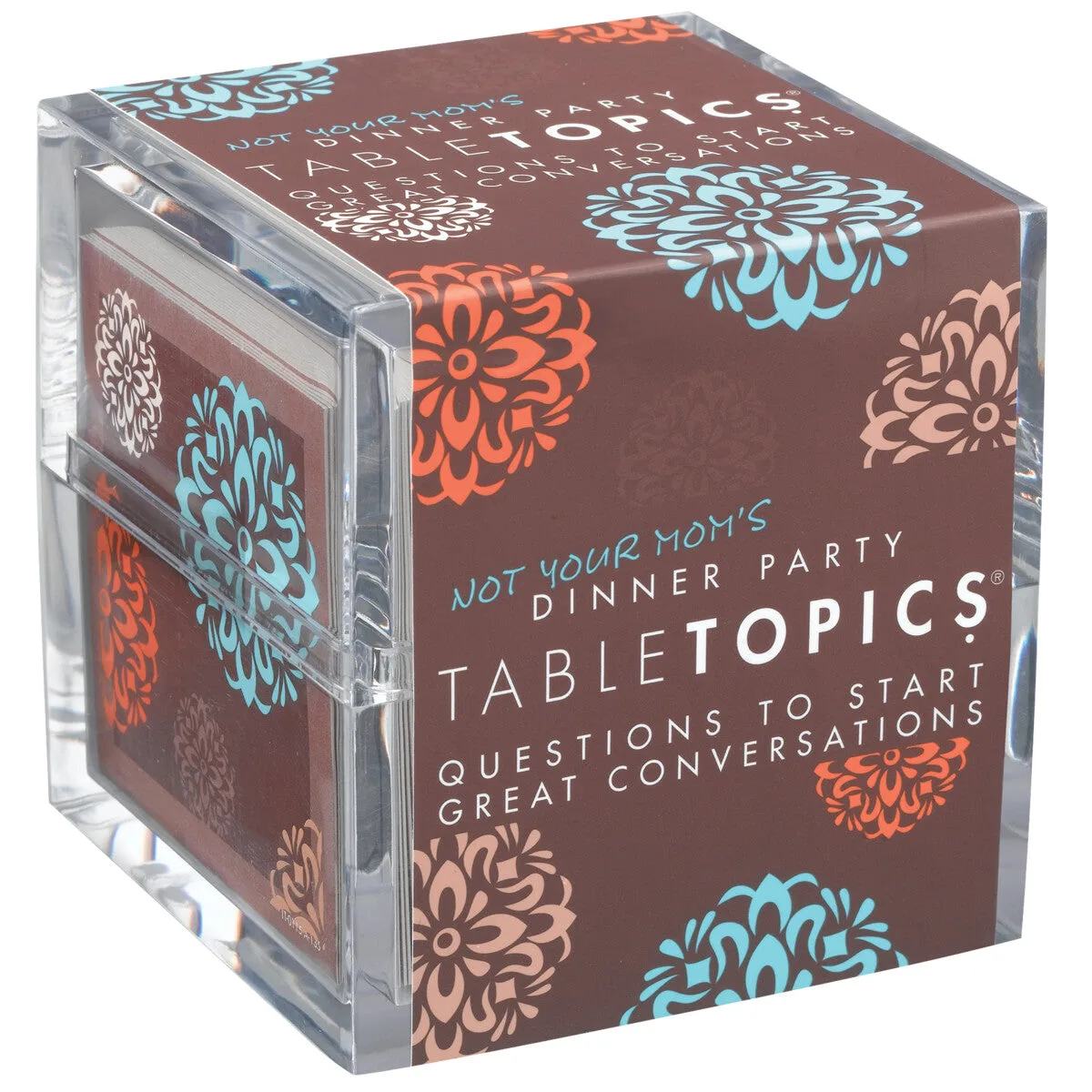
TableTopics offers a wide range of themed sets, each with 135 questions. For example, the 'Savor Conversation Cards' focus on food and cooking, while 'Not Your Mom’s Dinner Party' is designed for close friends who want to get spicy. This variety allows you to choose a set that perfectly matches your group and occasion. You can even mix and match sets for endless combinations.
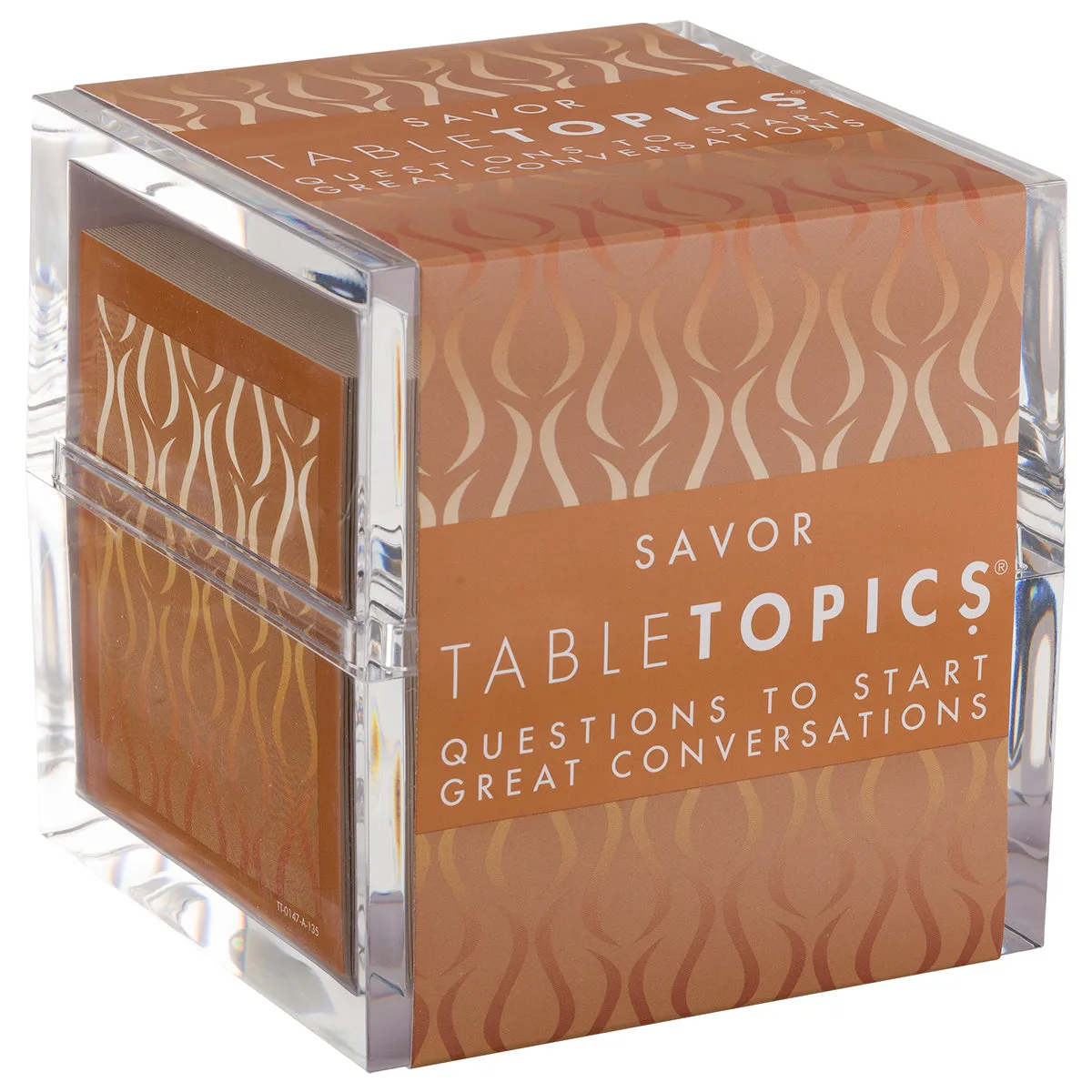
Savor Conversation Cards
Phone apps often have hundreds of questions, but they're usually generic and not tailored to specific themes or audiences. While some apps allow you to create custom questions, it takes effort, and the result still lacks the curated, thoughtful design of a professional deck. For hosts who want to impress their guests with relevant, engaging prompts, physical cards offer a more polished experience.
Ease of Use and Accessibility
TableTopics cards are incredibly easy to use: just grab the box, pull a card, and start talking. There's no need to charge a device, worry about battery life, or deal with app glitches. They're also durable and can be used anywhere—at the dinner table, in the living room, or even outdoors.
Phone apps are convenient if you already have your phone with you, and they're great for solo reflection or virtual hangouts. However, they require a charged battery, a stable internet connection (if the app is cloud-based), and a willingness to pass your personal device around—which some people aren't comfortable with. Physical cards have none of these issues.
The Trade-Off: Physical vs. Digital
- Engagement: Physical cards create a focal point that draws everyone in, while phone apps can fragment attention and create a screen barrier. For deeper connection, choose physical.
- Screen-Free Interaction: TableTopics are 100% screen-free, promoting eye contact and presence, whereas apps inherently require a screen. If you want a digital detox, go physical.
- Variety and Theming: TableTopics offers curated, themed decks for specific occasions, while apps often have generic questions with less personality. For a tailored experience, pick a themed deck.
- Convenience: Apps are always with you and work for remote gatherings, but physical cards never need charging or internet and work anywhere. For spontaneous use, an app might win.
Featured TableTopics Sets for Your Gathering
- Savor Conversation Cards: This set of 135 conversation cards is a treat for foodies and cooking enthusiasts. It offers a unique way to share your passion for food and drinks. If your gathering revolves around a meal, this themed deck keeps the conversation flowing naturally around a shared interest, making it a hit at dinner parties.
- Not Your Mom’s Dinner Party Conversation Cards: Not Your Mom’s Dinner Party is the TableTopics® conversation card set to use if you want to dig deep into what your friends really think but usually don’t say out loud! For close friends who enjoy edgier topics, this set pushes past small talk and encourages honest, memorable discussions that an app's generic questions can't match.
Which Should You Choose?
Best for
- Hosts who want to create a warm, screen-free environment at dinner parties or social gatherings.
- People who value curated, themed questions that match the occasion and audience.
Not for
- Solo users looking for a quick self-reflection tool.
- Remote or virtual hangouts where sharing a physical deck isn't possible.
While phone apps have their place, TableTopics cards offer a superior experience for most social gatherings. They foster genuine connection, keep everyone present, and provide thoughtfully designed questions that apps simply can't match. For your next party, consider leaving the phones in another room and bringing out a TableTopics deck—your guests will thank you.