Quick answer
For everyday carry, choose a tactical flashlight that balances high lumens with a compact, durable body and offers hands-free mounting options. Our Tactical Flashlight integrates directly into SEVENTY2 shoulder straps for true hands-free use.
Brightness and beam distance
Lumens measure total light output, but candela (beam intensity) matters more for distance. A 1000-lumen light with a tight beam throws farther than a 2000-lumen flood light. For EDC, look for at least 500 lumens and a beam that reaches 100 meters. Zoom dials let you adjust between flood and spot, but they add complexity and can reduce waterproofing.
Durability and water resistance
A tactical flashlight must survive drops, rain, and mud. Check the IP rating: IPX7 means submersible to 1 meter for 30 minutes, IPX8 goes deeper. Anodized aluminum bodies resist corrosion, but rubber grips can degrade over time. Our Tactical Flashlight is submersible and built for extreme conditions, though its rubber switch cover may wear faster than metal switches.
Battery life and power source
Rechargeable lithium-ion (18650 or 21700) cells offer the best balance of runtime and size. CR123A primary cells are lighter and store longer, but cost more over time. A light with multiple brightness settings lets you conserve battery for low-light tasks. Always carry a spare battery or a backup light if you rely on it for emergencies.
Size and carry method
EDC lights should fit in a pocket or attach to a pack without bulk. Look for a body length under 5 inches and a pocket clip or lanyard hole. For true hands-free use, a mounting system that integrates with your gear is a game-changer. Our Tactical Flashlight is lightweight and designed to mount directly into SEVENTY2 shoulder straps, freeing your hands for other tasks.
Decision rules for choosing your EDC tactical flashlight
- Rule 1: Match brightness to your typical environment: For urban or indoor use, 300–500 lumens is plenty. For outdoor or search tasks, aim for 800+ lumens. A zoom dial helps you adapt, but fixed-beam lights are simpler and more reliable.
- Rule 2: Prioritize water resistance for all-weather carry: If you might use the light in rain or near water, choose at least IPX7. For submersion (e.g., crossing streams), IPX8 is safer. Our Tactical Flashlight is submersible, making it a solid choice for wet conditions. Check the IP rating before buying; a light that fails in rain is useless.
- Rule 3: Choose a power source you can sustain: Rechargeable batteries save money and reduce waste, but they need access to USB power. Disposable CR123As are lighter and have longer shelf life, ideal for emergency kits. A light that accepts both gives you flexibility.
- Rule 4: Ensure hands-free mounting matches your gear: A pocket clip is standard, but for true hands-free use, look for a light that mounts to your pack, belt, or strap system. Our Tactical Flashlight integrates with SEVENTY2 shoulder straps, so you can keep both hands on your knife or tools. If you frequently need both hands, a mountable light is worth the investment.
Product spotlight
-
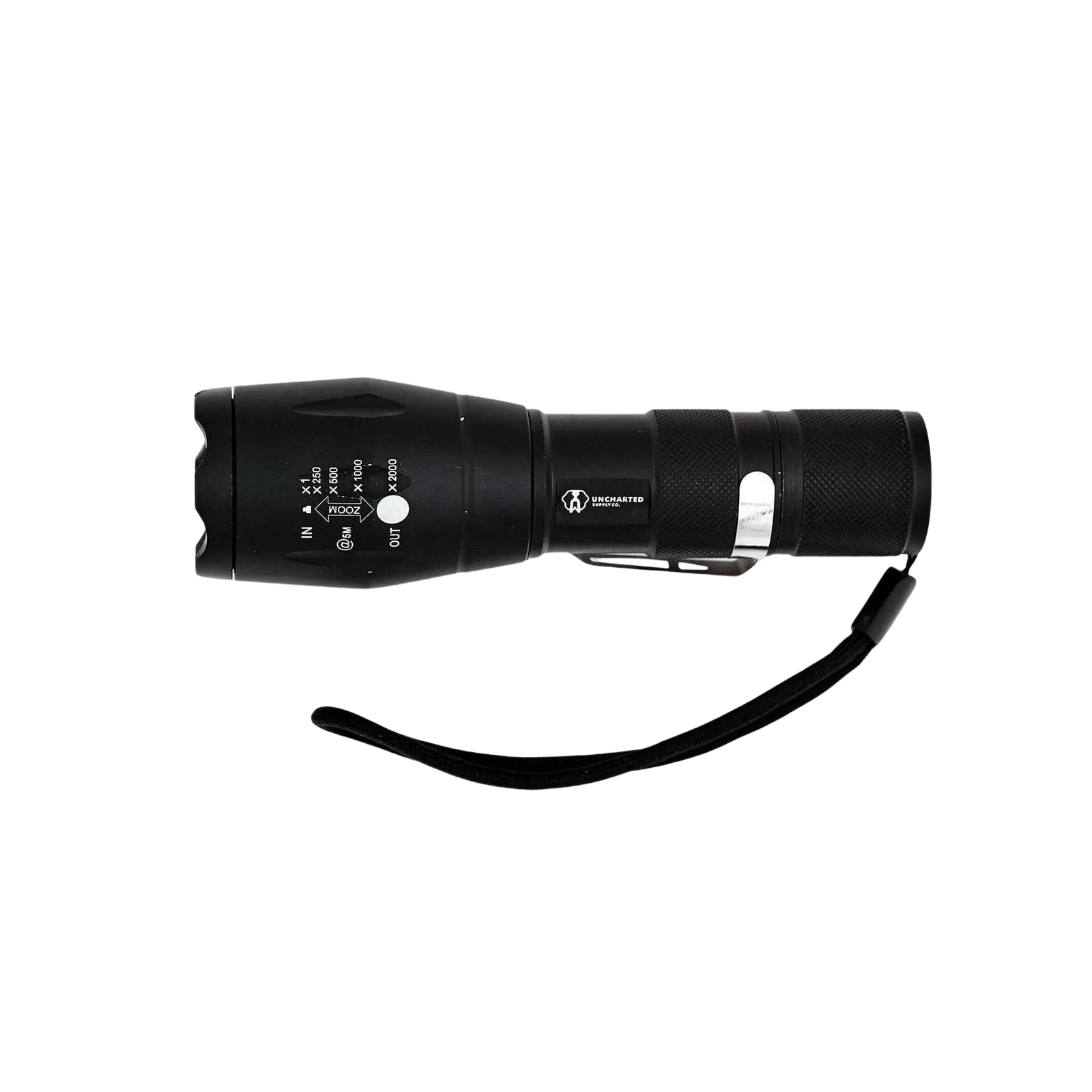
Tactical Flashlight: This ultra-bright tactical flashlight is submersible, lightweight, and built to perform in extreme conditions. Designed to integrate directly into the SEVENTY2 and SEVENTY2 Pro shoulder straps, it allows for true hands-free operation during emergencies or outdoor adventures. Featuring a zoom dial and four light settings. You get a versatile beam for close or distant tasks, plus a secure mount that keeps your hands free for cutting, climbing, or navigating.
Tactical Flashlight
Who this guide is for
Best for
- EDC users who want a compact, durable light for daily tasks and emergencies
- Outdoor enthusiasts who need hands-free operation while hiking, camping, or working
Not for
- Users who need a dedicated long-range searchlight (consider a larger spotlight instead)
- Those who prefer a simple on/off light with no adjustable beam or mounting options