Quick Answer
For daily wear, choose a tanga if you want the least risk of digging and a smoother line under fitted clothes; choose a thong if you want less fabric and are comfortable with a narrower back; choose a g-string only when you want the most minimal coverage and accept the least coverage. If you are unsure, start with a tanga from a brand that uses seamless construction, such as the Papillon Tanga, and size true to your usual underwear size.
What Tanga, Thong, and G-String Actually Mean
Tanga, thong, and g-string are often used interchangeably, but they describe different amounts of back coverage. A tanga brief has minimal back coverage but still a visible band of fabric across the back, so it sits between a classic brief and a thong. A thong has a narrow strip of fabric at the back that sits between the cheeks. A g-string goes further, with a very thin string instead of a strip. In short, tanga offers the most coverage of the three, thong is in the middle, and g-string is the most minimal.
The tanga brief meaning is simpler than it sounds: it is a cut, not a fabric or a fit. This matters because the cut decides how the underwear feels and how invisible it is under clothing. If you want minimal coverage underwear without going fully bare at the back, a tanga is usually the most practical starting point.
How the Three Cuts Compare on Coverage and Comfort
Coverage changes how the underwear sits and moves with you. A tanga has a wider back panel than a thong, which reduces the chance of the fabric shifting or creating pressure points during a long day. A thong removes most of that back panel, so the fit depends more on the waistband and the front piece staying in place. A g-string removes almost all back fabric, which can feel liberating but also means less material to distribute tension.
Comfort is personal, but the pattern is consistent: more coverage generally means fewer adjustments. If you have never worn a minimal cut, a tanga is the easiest transition. If you already wear thongs comfortably, a g-string is a small step further. If you dislike any back fabric, a thong or g-string may suit you better than a tanga, even though the tanga is technically more covered.
Visibility Under Fitted Clothing
Under fitted clothing, the goal is usually no visible panty line. A seamless tanga, like the Papillon Tanga, is designed with no lines and no digging, which makes it a strong choice under dresses, trousers, and leggings. A thong can also be invisible, but only if the back strip lies flat and the waistband does not roll. A g-string is the least visible in theory, but a thin string can still show if it twists or if the waistband sits high.
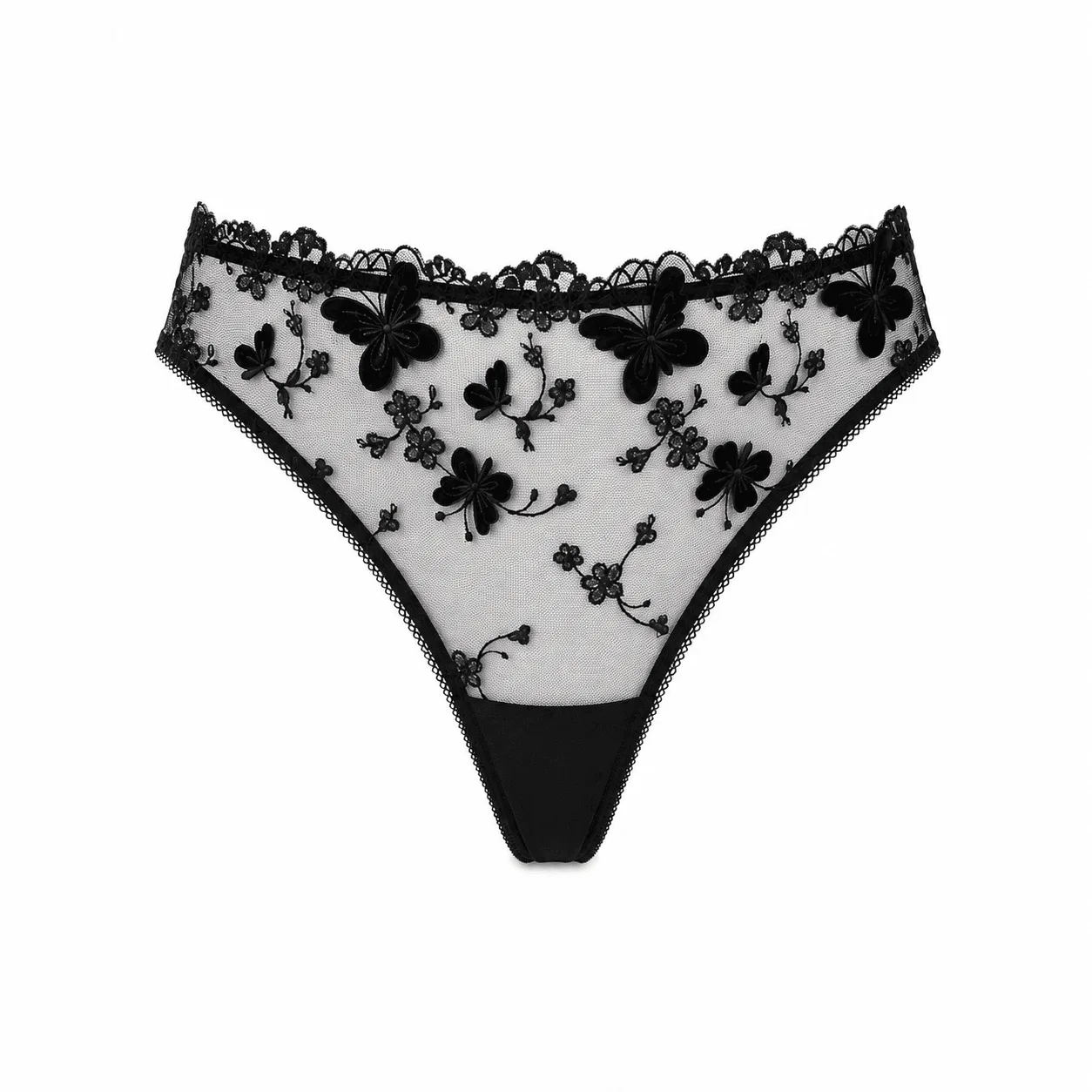
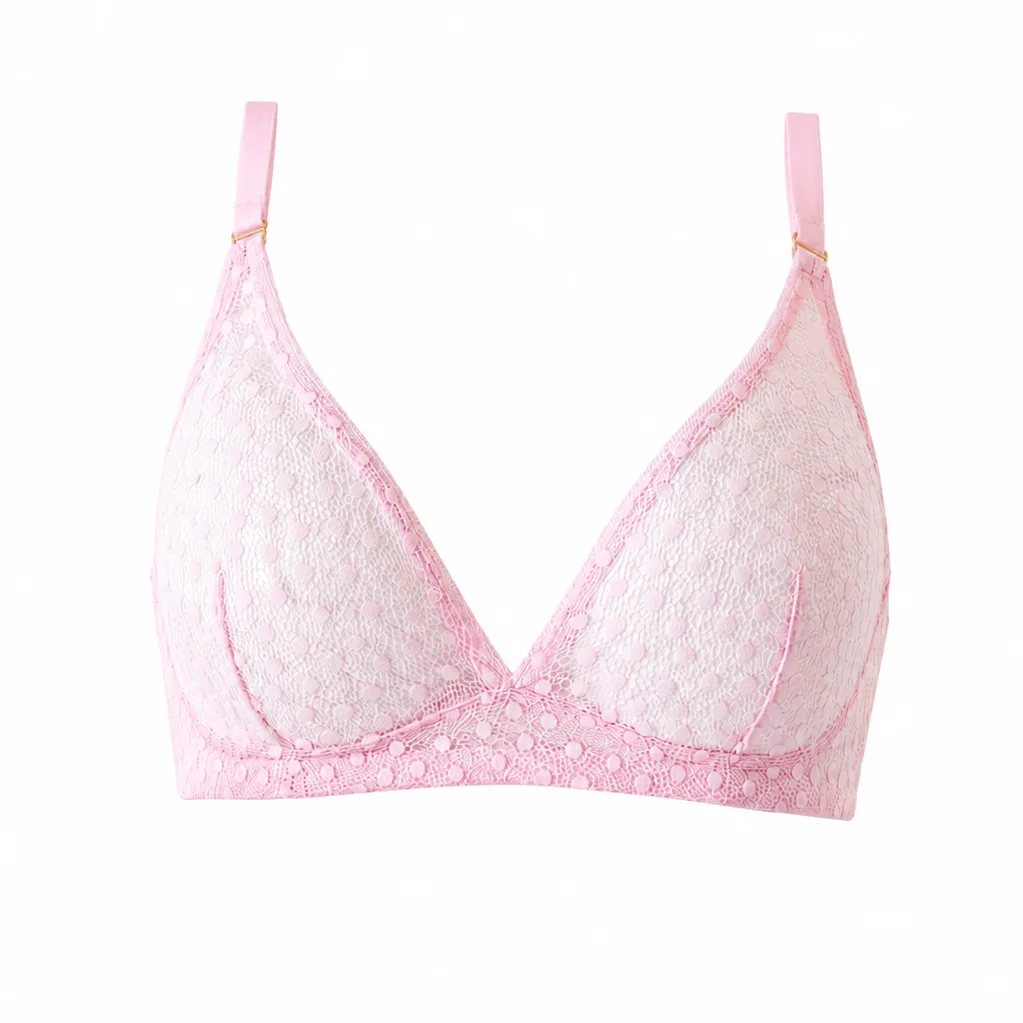
Fabric matters as much as cut. Swiss-made embroidered velvet butterfly lace on the Papillon Tanga front gives it a decorative look, while the double stretch tulle and mesh back keeps the back light. That combination is why it works as everyday lingerie: it feels like a second skin and stays discreet under fitted clothing. If your priority is total invisibility, look for seamless construction first, then choose the cut.
Fit Guidance: Sizing and Adjustment
Start with your usual underwear size. The Papillon Tanga is described as true to size, so there is no need to size up unless you prefer a looser waistband. For thongs and g-strings, the waistband does most of the work, so check that it sits flat and does not dig. If the back strip twists, the size is likely too large; if the front digs, the size is likely too small.
For daily wear, rotate between at least three pairs so the elastic recovers between wears. Wash them in a mesh bag and skip the dryer to protect the stretch. If you are between sizes, choose the smaller size for a thong or g-string and the larger size for a tanga, because the tanga has more fabric to accommodate.
Trade-Offs at a Glance
- Tanga: More back coverage than a thong or g-string, which reduces digging and shifting. The trade-off is slightly more fabric, so it may show under very sheer or very tight clothing if the seams are not flat. Best first minimal cut for daily wear; choose a seamless design like the Papillon Tanga.
- Thong: Less fabric than a tanga, so it feels lighter and can be more invisible. The trade-off is that the narrow back strip can twist or create pressure if the fit is off. Choose a thong if you already like minimal coverage and want a middle ground.
- G-String: The most minimal coverage of the three, with a thin string instead of a strip. The trade-off is the least coverage and the least room for fit error, so sizing and waistband placement matter most. Choose a g-string only if you want the most minimal feel and are comfortable with very little back fabric.
Huit Options That Show the Difference
- Papillon Tanga: Papillon Tanga: no lines, no digging, perfect under fitted clothing; flattering, second skin feel; lightweight, everyday lingerie; true to size; minimal back coverage; Swiss-made embroidered velvet butterfly lace front; double stretch tulle and mesh back; seamless, invisible underwear design; matching lingerie set available. This is the most covered of the three cuts and the easiest daily-wear starting point if you want a seamless look without going fully minimal.
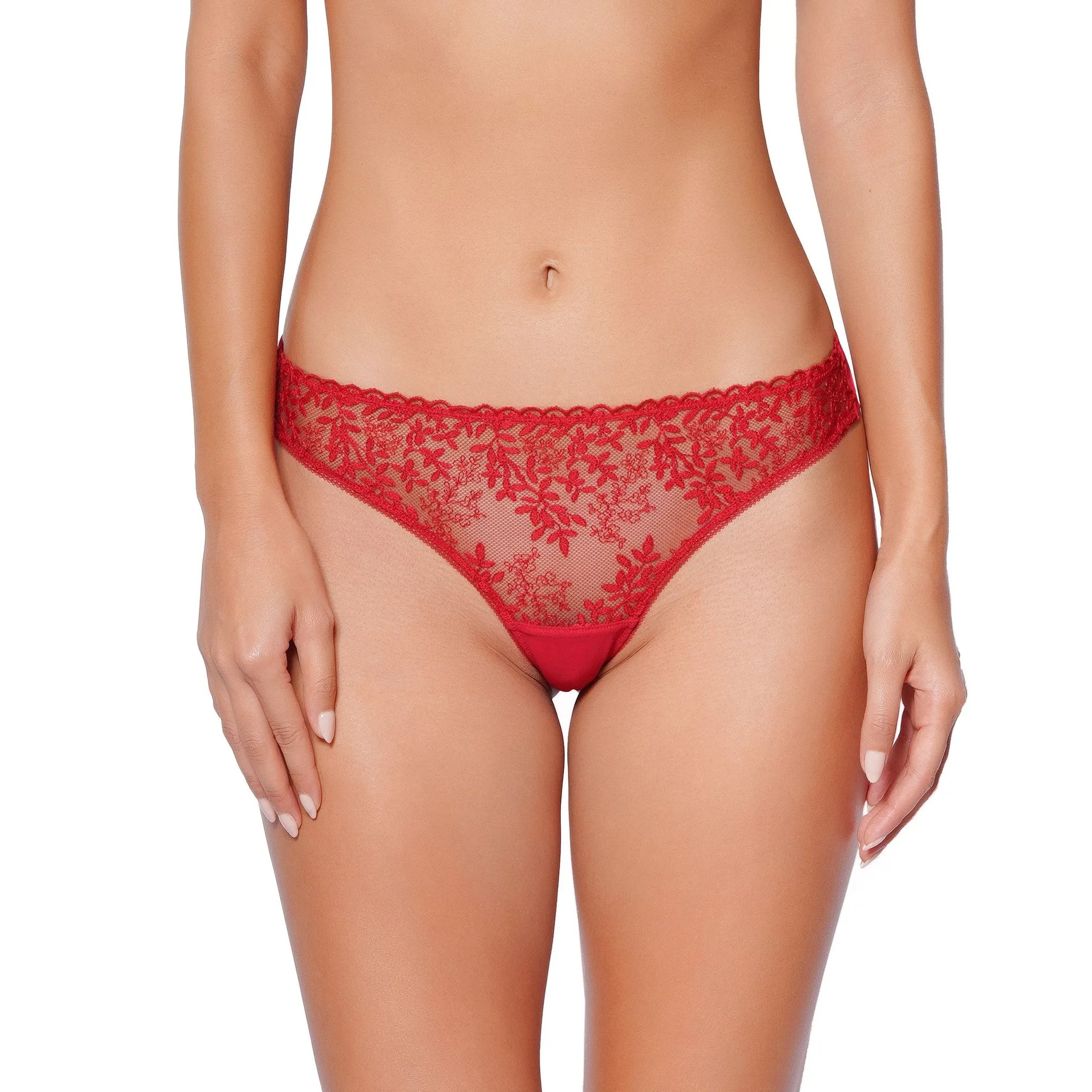
- HUIT - Eglantine - Tanga: HUIT - Eglantine - Tanga: a Parisian-style tanga with intricate lace details and a modern silhouette, designed to embrace and accentuate natural curves while balancing elegance and ease. A tanga with decorative lace is a good choice if you want minimal coverage but still want the piece to feel special rather than purely functional.
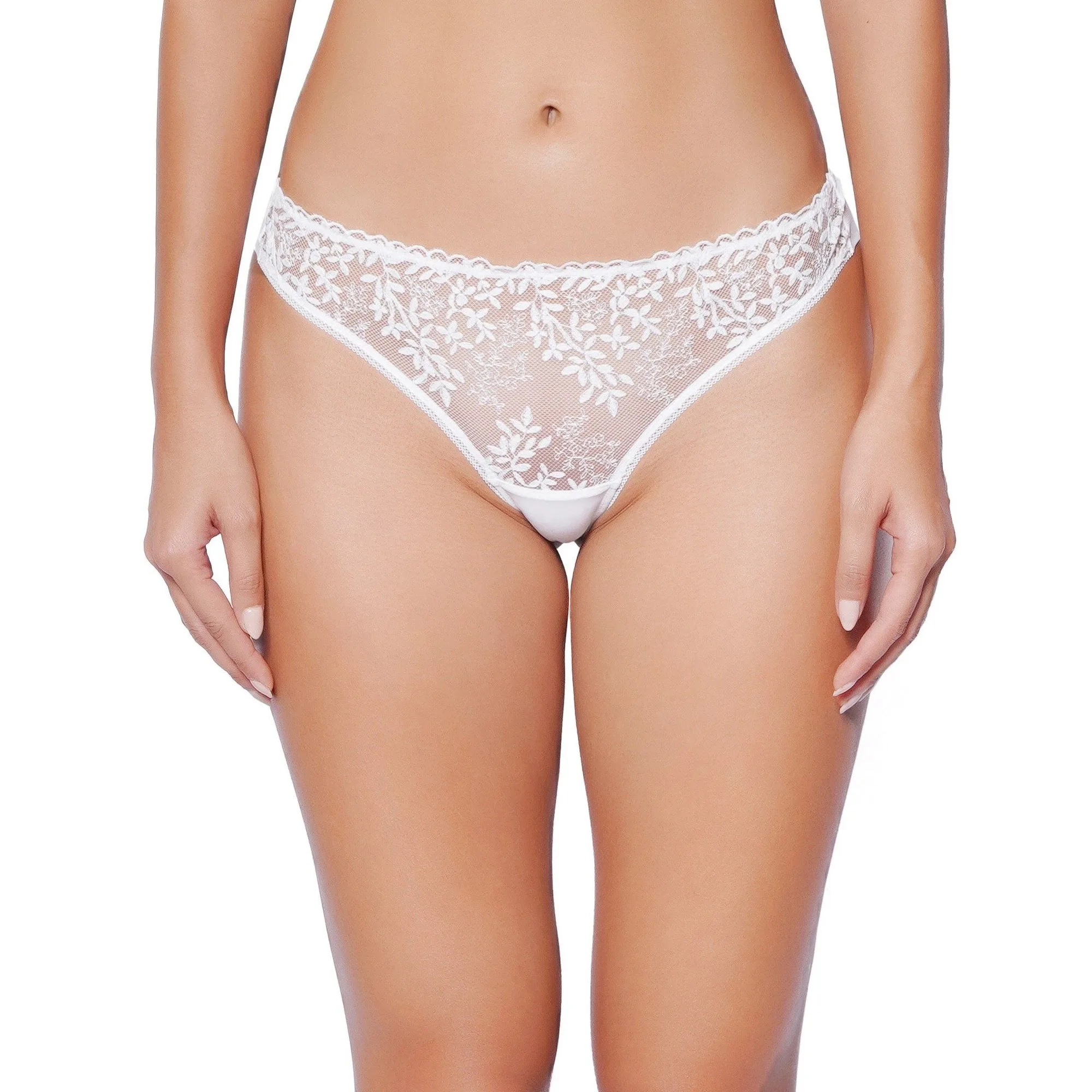
- HUIT - Amoureuse - Tanga: HUIT - Amoureuse - Tanga: a Parisian-style tanga with intricate lace details, a silk accent, and a modern silhouette, designed for romance and everyday comfort. The silk accent and lace make this a tanga that works for both everyday wear and occasions when you want a more refined look.
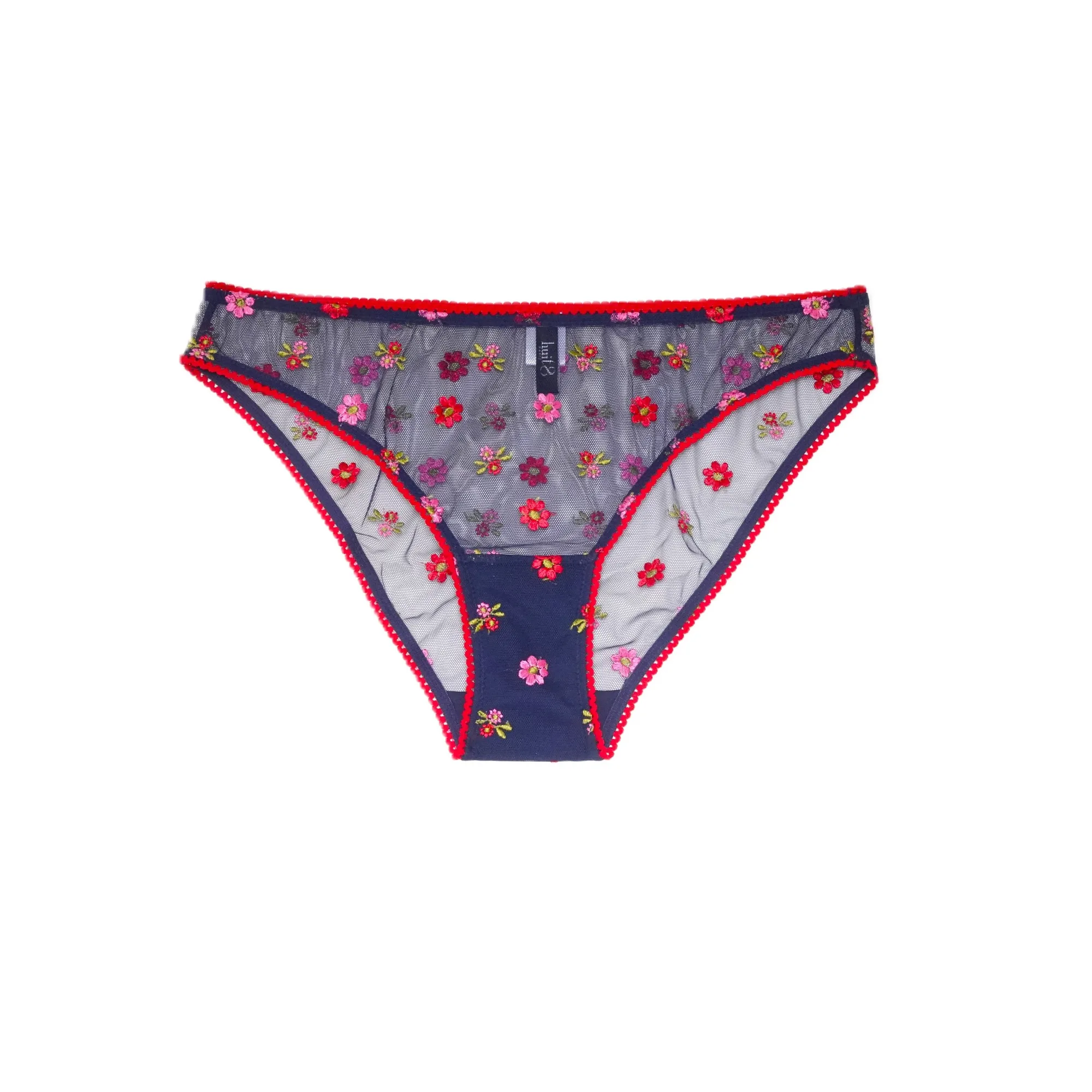
- HUIT - Bisou - Bikini: HUIT - Bisou - Bikini: a bikini cut in contrasting navy and red with floral embroidery over sheer navy mesh, described as romantic, refined, and sensual. This is a bikini cut, not a tanga or thong, so it offers more back coverage than the three cuts compared here and is a useful reference point if you decide minimal coverage is not for you.
Which Cut Should You Choose?
Best for
- Daily wear when you want minimal coverage without constant adjusting
- Fitted clothing where you want a seamless, no-line look
- First-time buyers of minimal cuts who want an easier transition
Not for
- Anyone who prefers full back coverage and a classic brief shape
- Wearers who dislike any fabric between the cheeks and want a bikini or brief instead
- Those who want the absolute least coverage and are already comfortable with a g-string