Quick answer
For most sewing and body-measurement tasks, choose a 60-inch non-stretch tape measure with 1/16-inch markings on one side and metric on the reverse. That length covers full body measurements, garment lengths, and most quilting needs without being bulky. If you mostly measure small craft pieces, a shorter 36-inch tape is lighter and easier to control, but a 60-inch tape is the safer single-tape choice.
Why tape material matters more than length
A tape measure only helps if it stays the same length every time you use it. Fiberglass tape with reinforcement resists stretching, so your measurements stay consistent from one project to the next. Cloth or flimsy plastic tapes can stretch over time, especially if you pull them tight around curves or store them hanging. Look for wording like non-stretch or reinforced when you compare options. Steel tips on the ends also protect the first and last inch from fraying, which is where tape measures often wear out first.
Reading tape measure markings without second-guessing
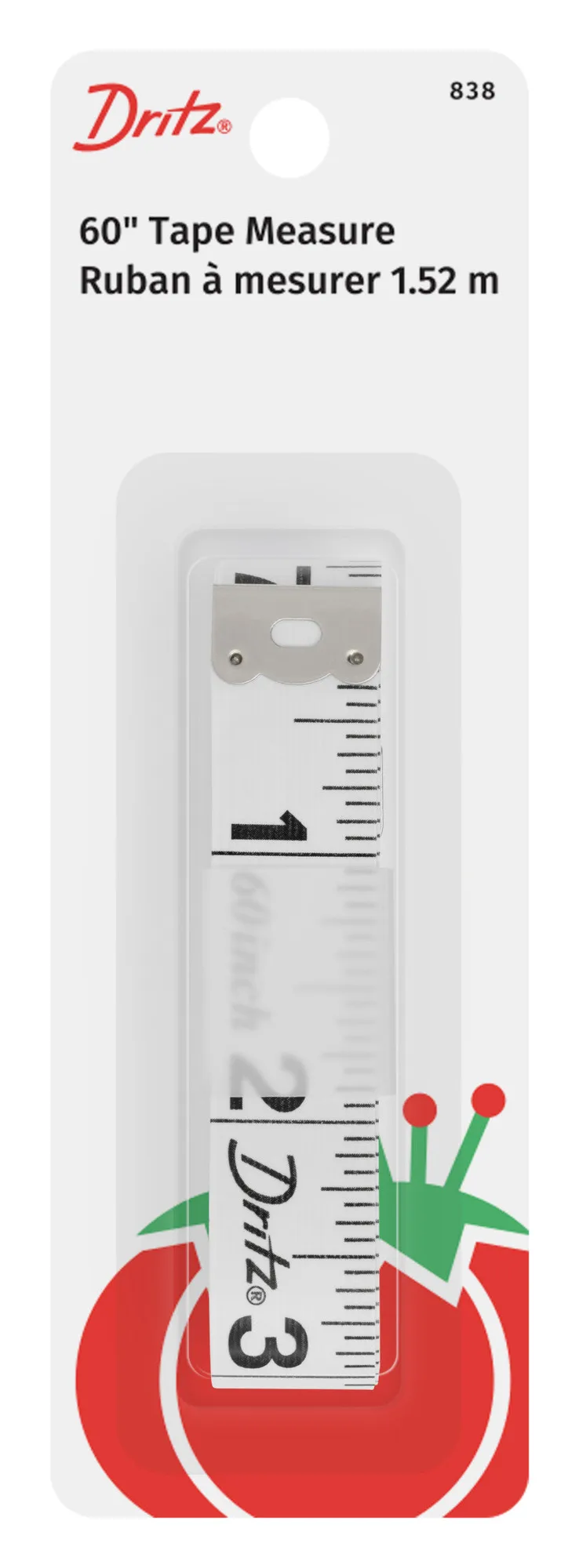
Most sewing tape measures mark inches in 1/16-inch increments, with longer lines at the 1/2-inch and 1-inch points. That level of detail lets you measure seam allowances, hems, and small adjustments accurately. A high-contrast color scheme, such as black markings on a white background, reduces eye strain when you measure dark fabric. If you also sew with metric patterns, a tape with metric on the reverse side saves you from converting numbers in your head.
Tape width and length: how they affect control
A 5/8-inch wide tape is the standard for sewing because it lies flat against fabric and curves smoothly around a body. Wider tapes can feel stiff when you measure around an arm or waist. Narrow tapes are compact but may twist more easily. For length, 60 inches handles nearly every garment and body measurement, including full bust, hip, and inseam. A 120-inch tape is useful for quilting large layouts or measuring furniture, but the extra length adds bulk. A 36-inch tape is fine for small craft projects and children's garments, yet it falls short for adult body measurements.
Retractable tape measures for sewing: when they help
A retractable tape measure for sewing works best for quick, straight measurements like checking a hem or measuring a piece of fabric on a table. The locking mechanism holds the tape extended so you can read it without help. However, retractable tapes are usually stiffer and may not curve as smoothly around a body, so they are a supplement to, not a replacement for, a flexible tape. If you sew mostly at a machine and measure flat pieces, a retractable tape can save time. If you fit garments on a dress form or a person, keep a flexible tape as your primary tool.
Decision rules for buying a tape measure
- If you sew garments for adults: Choose a 60-inch flexible tape with 1/16-inch markings and non-stretch fiberglass. Check that the tape has metric on the reverse if you use metric patterns. A 60-inch tape covers bust, waist, hip, and inseam measurements without needing a second tool.
- If you quilt or measure large layouts: A 120-inch tape gives you reach for wide backing and borders. Keep a separate 60-inch tape for body measurements so you are not dragging a long tape around curves. Long tapes are for flat work; short flexible tapes are for fitting.
- If you mostly make small crafts or children's clothes: A 36-inch tape is lighter and easier to store, but it will not measure an adult's full body. Check that the markings are clear and the tape does not twist. Shorter tapes are fine for small projects, but they limit body measurement.
- If you want a retractable tape for sewing: Use it for flat, straight measurements like hems and fabric pieces. Do not rely on it for curved body measurements because the tape is stiffer and may not lie flat. Retractable tapes complement, but do not replace, a flexible tape.
Product facts to know
- 60" Tape Measure: This Dritz Tape Measure is made of non-stretch, reinforced fiberglass with 1/16-inch markings for accuracy. It has metric and inches on the reverse side and is a classic lightweight 5/8-inch wide tape. The non-stretch fiberglass keeps measurements consistent, the 1/16-inch markings support precise sewing, and the dual-sided metric and inch markings reduce conversion errors. The 5/8-inch width curves comfortably around a body.
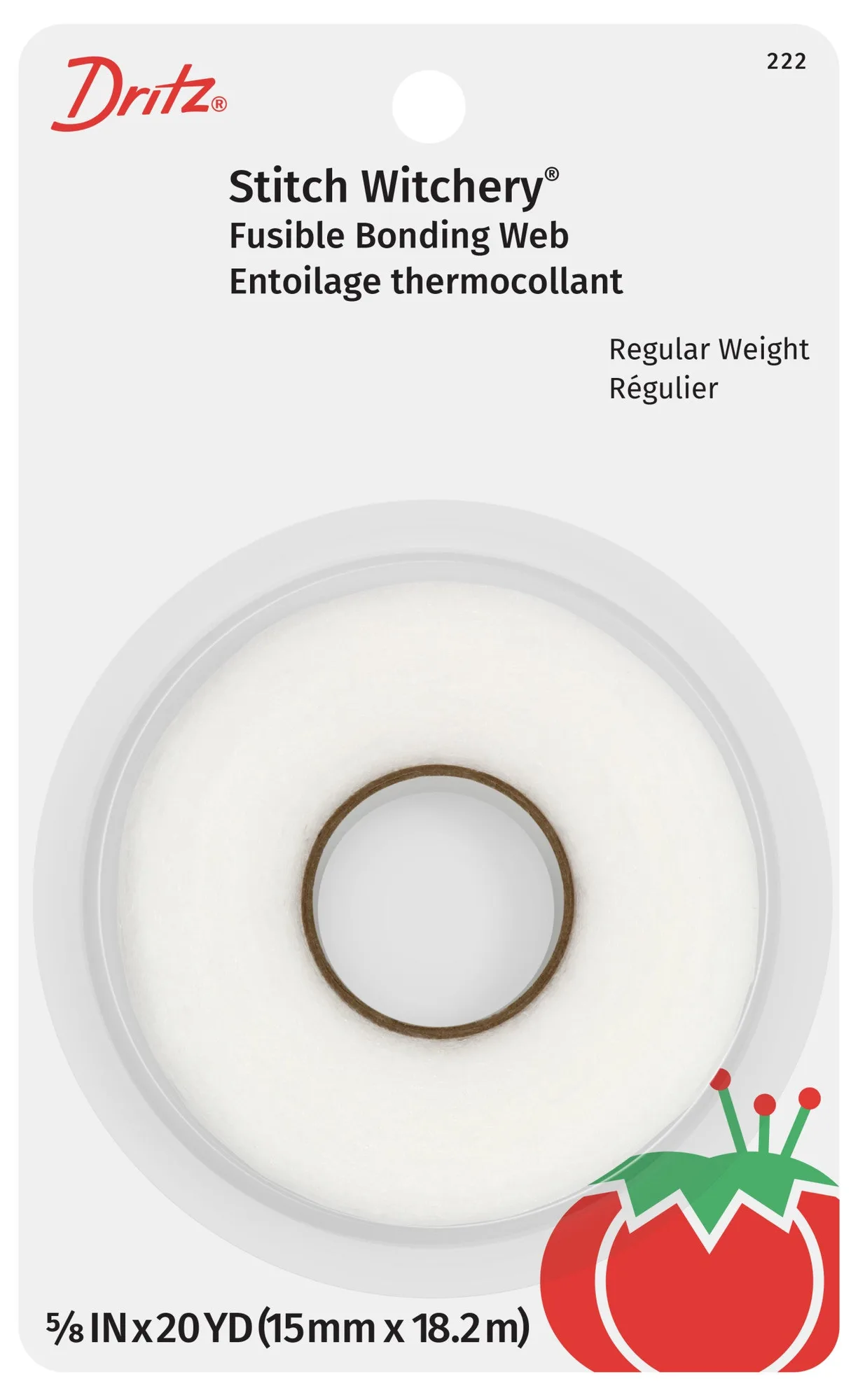
- Stitch Witchery Fusible Bonding Web, Regular Weight, White: Dritz Stitch Witchery Fusible Bonding Web is a fusible web that bonds two layers of fabric together when activated by a steam iron. It is great for hems, trims, and belts, and is machine washable and dry cleanable. When you measure a hem or trim before bonding, an accurate tape measure helps you cut the web to the right length. This product is a reminder that measuring tools support no-sew projects too, not just traditional stitching.
Is this tape measure right for you?
Best for
- Sewists who need one accurate tape for body measurements, alterations, and general sewing
- Quilters who want a flexible tape for measuring curved edges and binding
- Crafters who need clear 1/16-inch markings and dual metric/inch readings
Not for
- Anyone who needs a rigid ruler for straight-line drafting or cutting
- Users who only measure small flat pieces and prefer a compact retractable tape