Quick answer
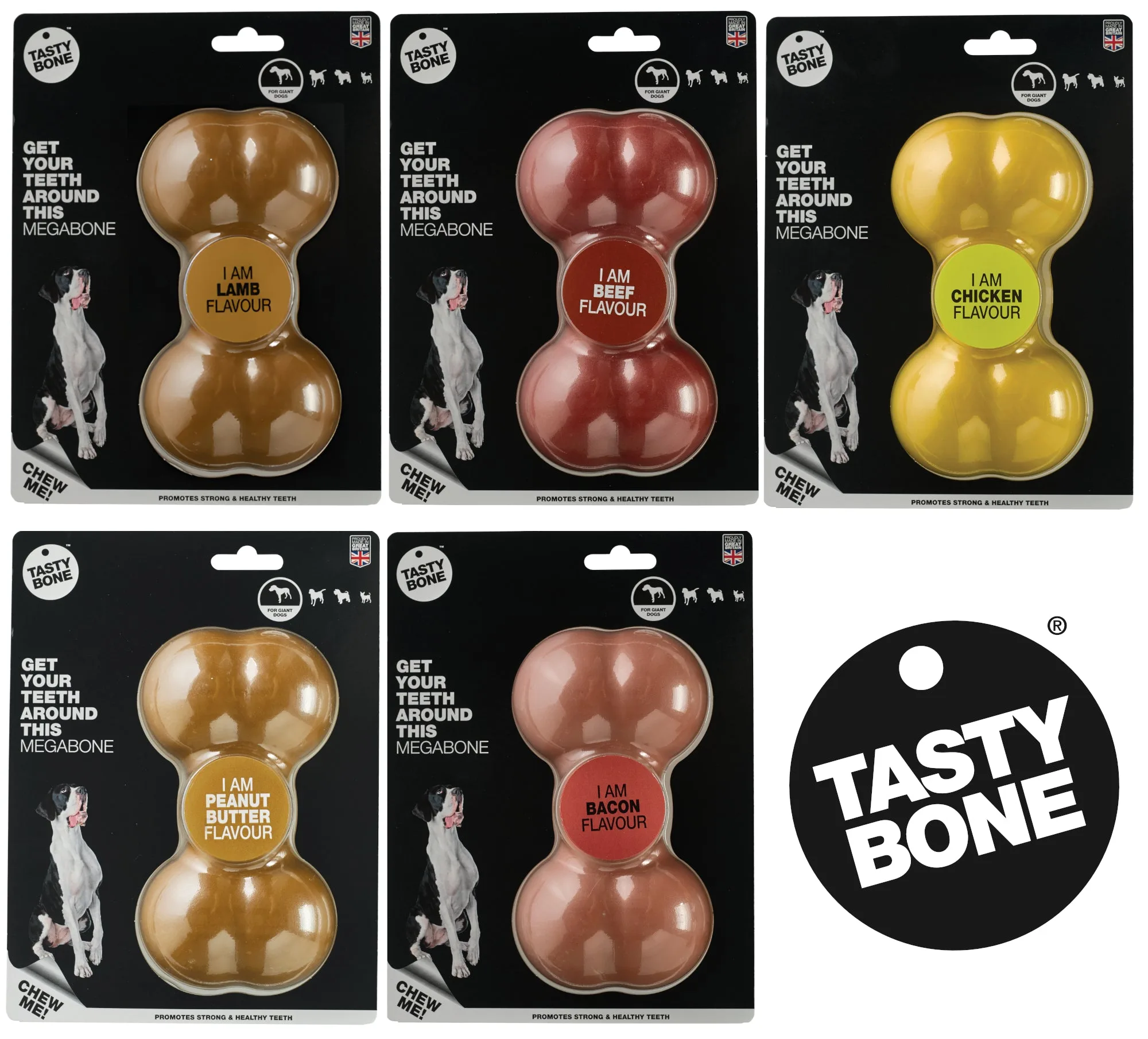
For a mega dog, choose a chew that is long enough to extend past the muzzle and thick enough that the dog cannot swallow it. The TastyBone Super Tough Nylon Chew for MEGA Dogs is 18cm long and made from 100% virgin nylon, which is a practical starting point for very large breeds. Always match the chew to your dog's actual chewing strength, not just its weight.
Why mega dogs need a different approach to chew size
Mega dogs—great Danes, mastiffs, and similar giant breeds—bring two things to a chew: a wide muzzle and serious jaw power. A chew that a Labrador finds challenging may be gone in minutes. The key is to look for a chew that is both long enough to be held safely and tough enough to resist fast destruction. Nylon chews like TastyBone are designed to be long-lasting, but only if the size matches the dog. A chew that is too small can become a choking hazard; one that is too hard for the individual dog can damage teeth.
Step 1: Measure your dog's muzzle and jaw
Use a soft tape measure to find the distance from the tip of your dog's nose to just behind the eye. For most mega dogs, this is 12–18cm. The chew should be at least as long as this measurement so the dog can hold it with a paw without the end disappearing into the mouth. Also check the width of the lower jaw: a chew that is too narrow can slip to the back of the throat. The TastyBone MEGA Dog chew is 18cm, which suits many giant breeds, but always verify with your own dog's measurements.
Step 2: Assess your dog's chewing style
Not all mega dogs chew the same way. Some are methodical gnawers, while others are power chompers that try to break off chunks. Watch your dog with a current chew: if it leaves deep gouges quickly, you need a tougher material. TastyBone Super Tough chews are tested on vigorous chewers and made from 100% virgin nylon, which is harder than many rubber or rawhide alternatives. If your dog has cracked a chew before, choose the toughest option available and supervise closely.
Step 3: Match the chew to the right toughness level
Toughness is not one-size-fits-all. TastyBone rates this chew as Super Tough, meaning it is intended for dogs that destroy standard chews. However, no chew is indestructible. If your dog is a senior or has worn teeth, a super tough nylon chew may be too hard. In that case, consider a softer textured chew or a different style. The goal is to find a chew that lasts long enough to be enriching but still allows the dog to make progress—otherwise interest fades.
Step 4: Check safety features and condition regularly
A safe chew should not splinter. TastyBone nylon chews are designed to be non-splintering, which reduces the risk of sharp fragments. Still, inspect the chew before each use. If it becomes small enough to swallow, or develops rough edges, replace it. For mega dogs, a chew that starts at 18cm may eventually wear down; once it is shorter than your dog's muzzle, it is no longer safe. Always supervise and provide fresh water.
Your step-by-step chew size checklist
- Measure your dog's muzzle length: Use a soft tape from nose tip to behind the eye. Choose a chew at least that long. For many mega dogs, 18cm is a good starting point. Checkpoint: If the chew is shorter than the muzzle, it is too small.
- Observe chewing intensity: Give a test chew and watch for rapid damage. If your dog breaks pieces off quickly, move to a tougher material like Super Tough nylon. Checkpoint: A chew that lasts less than 10 minutes is not tough enough.
- Inspect the chew before and after each use: Look for cracks, rough edges, or a size that could be swallowed. Replace when worn down. Checkpoint: If it fits entirely in the mouth, it is a choking risk—discard it.
Product facts that matter for sizing
- TastyBone Super Tough Nylon Dog Chews for MEGA Dogs 5 Flavours: TastyBone Super Tough Nylon Dog Chews for MEGA Dogs are 18cm long and made from 100% virgin nylon. The 18cm length gives large dogs a safe grip, while virgin nylon offers durability for powerful chewers.
- TastyBone Super Tough Nylon Dog Chews for MEGA Dogs 5 Flavours: The chew is guaranteed to last and has been tested on the most vigorous chewers. This indicates it can withstand heavy chewing, but it still requires size matching and supervision.
- TastyBone Super Tough Nylon Dog Chews for MEGA Dogs 5 Flavours: It promotes strong and healthy teeth and helps reduce anxiety and stress, with no splintering. Beyond entertainment, the chew supports dental health and calm behavior, and the non-splintering design adds a safety margin.