A sampler add-on is a tasting tool, not a shelf ornament
The problem with most tea sampler add-ons is not the tea. It is that the packets arrive with no obvious job. You open the box, see three small teas, and put them aside for a vague future tasting. Weeks later they are still there, and the sampler has taught you nothing.
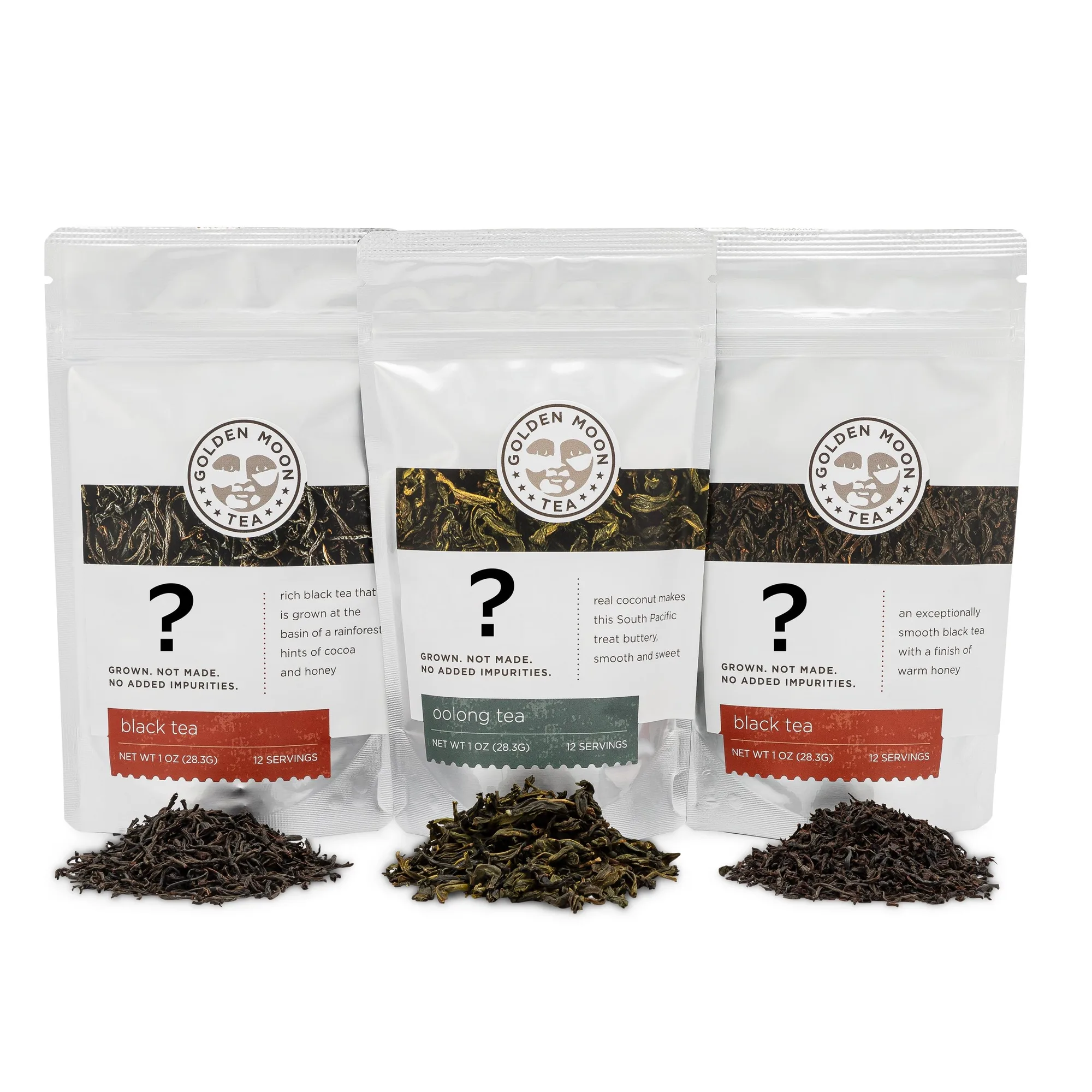
The fix is to give each packet a specific role before you brew. The 3 Tea Add On Sampler makes this easy because it contains three clearly different teas: Coconut pouchong, Traditional Tippy Earl Grey, and South African Rooibos. Treat them as a comparison set, not as three random extras.
What the sampler actually contains
-
3 Tea Add On Sampler: The 3 Tea Add On Sampler includes Coconut pouchong, Traditional Tippy Earl Grey, and South African Rooibos. Three distinct teas give you a real contrast in flavor and style, which is the whole point of a tasting add-on.
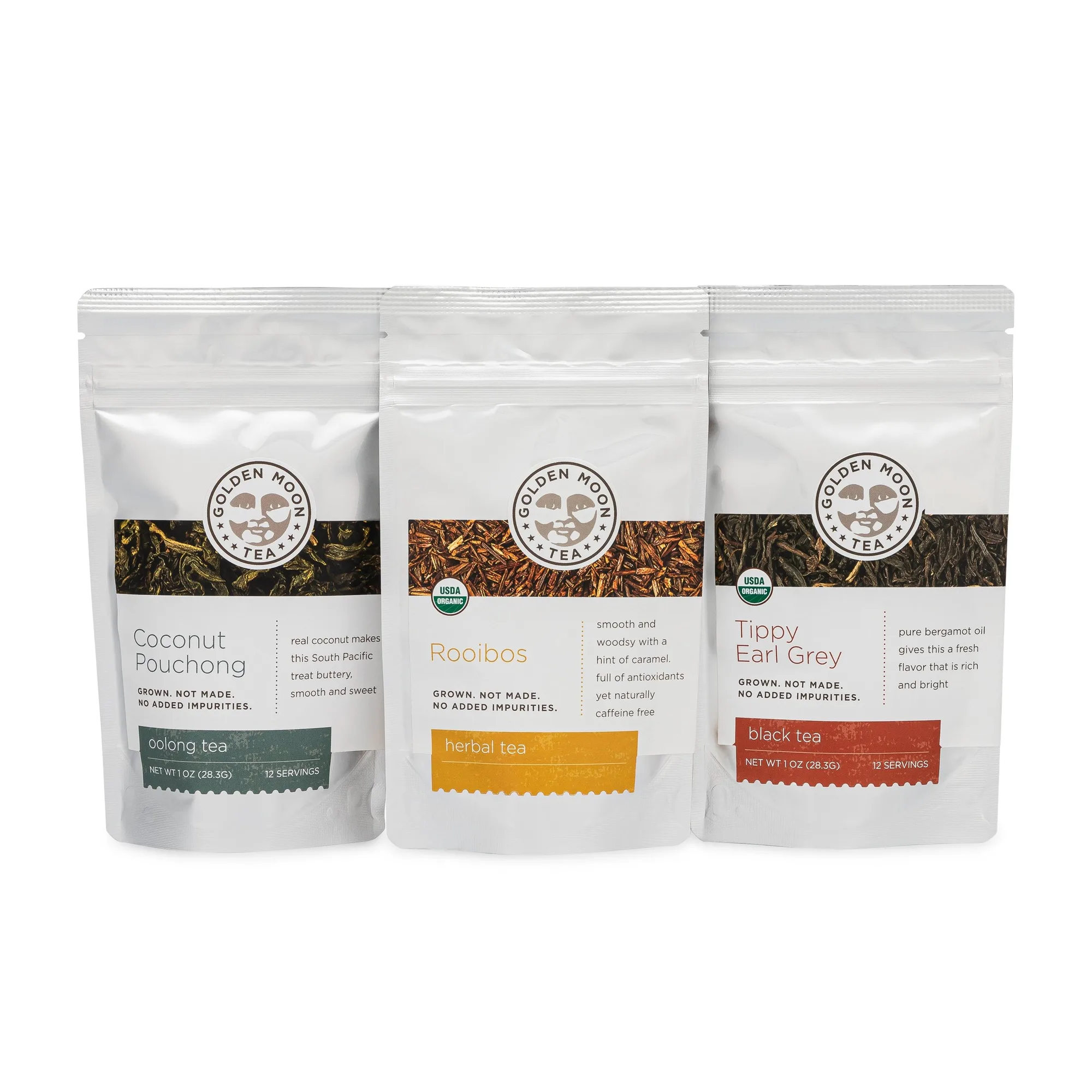
3 Tea Add On Sampler
-
3 Tea Add On Sampler: The sampler is described as a way to try three best-selling teas when you are not sure which teas to try. It is designed as a low-commitment introduction, so you can decide what to reorder rather than guessing from descriptions.
How to use the sampler in three brewing sessions
- Session 1: Brew the Earl Grey on its own: Start with the Traditional Tippy Earl Grey. Drink it plain first so you can notice the bergamot and the base tea without milk or sweetener. This gives you a reference point for the other two.
- Session 2: Brew the Coconut pouchong on its own: The next day, brew the Coconut pouchong by itself. Pay attention to whether the coconut reads as a top note or blends into the tea. Drinking it separately keeps the comparison honest.
- Session 3: Brew the Rooibos on its own: Finish with the South African Rooibos. Because it is a different kind of tea, brew it last so its distinct character does not get muddled with the others.
What to do when you want to blend the teas
Blending tea add-ons is tempting, but the sampler does not include blending instructions. The safest approach is to blend only after you have tasted each tea alone. That way you know what each one contributes.
A simple starting point is to combine a small amount of the Coconut pouchong with the Rooibos. The coconut can soften the rooibos, and the rooibos adds body. Keep the ratio modest at first, and adjust based on what you taste rather than following a fixed recipe.
The Earl Grey is more assertive. Blending it with either of the other two will likely dominate the cup, so use it sparingly if you experiment. There is no supplied guidance on proportions, so treat any blend as your own trial rather than a manufacturer recommendation.
Tea add-on sampler ideas beyond the mug
- Use the sampler as a reorder decision tool: After three separate tastings, note which tea you reached for first. That is the one to buy in a larger size. The sampler exists so you do not commit to a full pouch of the wrong tea.
- Keep the packets separate: Store each tea in its own wrapper or tin. Mixing them together makes it harder to taste one clearly, and you lose the comparison value of the sampler.
- Share the sampler as a guided tasting: Brew all three for a friend and taste them side by side. The sampler is small enough to use in one sitting, and the contrast makes the differences obvious.
What the sampler does not tell you
The supplied information does not include brewing temperatures, steeping times, or storage instructions for these three teas. That is a real limitation, not a reason to avoid the sampler. Use the brewing method you normally use for similar teas, and adjust by taste.
The sampler also does not confirm allergen or dietary information. If you have specific concerns, check the packaging or contact the store before brewing. Do not assume the teas are free of anything just because they are tea.
A note on the catalog price
- 3 Tea Add On Sampler: The catalog lists the 3 Tea Add On Sampler at USD 8.31, with a comparison price of USD 12.99. At the lower catalog price, the sampler is a low-risk way to test three teas before buying a full size.
The bottom line for using tea sampler extras
The best way to use a tea add-on sampler is to give it a job: taste each tea alone, compare them, then decide what to reorder. Blending is optional and should come after you know the teas. That approach turns three small packets into a useful decision instead of another item on the shelf.