Quick answer
Tea tree eyelid wipes can help reduce Demodex mite overgrowth and soothe blepharitis symptoms when used consistently as part of a daily eyelid hygiene routine.
Why tea tree oil works on Demodex mites
Demodex mites naturally live on human skin, including eyelash follicles. When their population grows too large, they can trigger inflammation, itching, and crusting along the eyelid margin — a common contributor to blepharitis. Tea tree oil has demonstrated antimicrobial and anti-mite properties in clinical settings. Wipes formulated with tea tree oil offer a convenient way to apply this active ingredient directly to the lash line without diluting or mixing solutions yourself.
Limitations and when these wipes are not enough
Tea tree eyelid wipes are a supportive hygiene tool, not a standalone cure. Severe blepharitis may require prescription antibiotics, steroid drops, or in-office treatments like lid debridement. If your symptoms include significant eye pain, vision changes, or persistent redness despite daily wiping, see an eye care professional. Also, some people are sensitive to tea tree oil; if stinging or irritation occurs, discontinue use and try a milder lid wipe alternative.
How to tell if tea tree eyelid wipes are right for you
- Symptom check: Persistent eyelid itching, crusty lashes upon waking, redness along the lid margin, or a gritty feeling that doesn't resolve with artificial tears.
- Likely cause: Demodex mite overgrowth or bacterial biofilm on the eyelid margin, often linked to blepharitis or meibomian gland dysfunction (MGD).
- Corrective action: Use one tea tree eyelid wipe per eye each evening. Gently rub the closed lid and lash base for 15–20 seconds per eye, then let the area air dry. Do not rinse. Continue daily for at least 4–6 weeks to see a reduction in mite population. Consistency matters more than intensity — daily use over a month is key.
- When to stop and choose another option: Stop if you experience burning, stinging, or worsening redness after use. Also stop if symptoms do not improve after 6 weeks of daily use. In both cases, consult an eye doctor for alternative treatments like prescription lid scrubs or in-office mite removal. Tea tree wipes are a hygiene aid, not a substitute for medical care when inflammation persists.
Product spotlight
-
The Eye Doctor Tea Tree Eyelid Wipes: The Eye Doctor Tea Tree Eyelid Wipes contain tea tree oil, coconut oil, and argan oil, and are biodegradable and individually wrapped. The combination of tea tree oil for mite control and moisturizing oils helps prevent over-drying the delicate eyelid skin during daily cleansing.
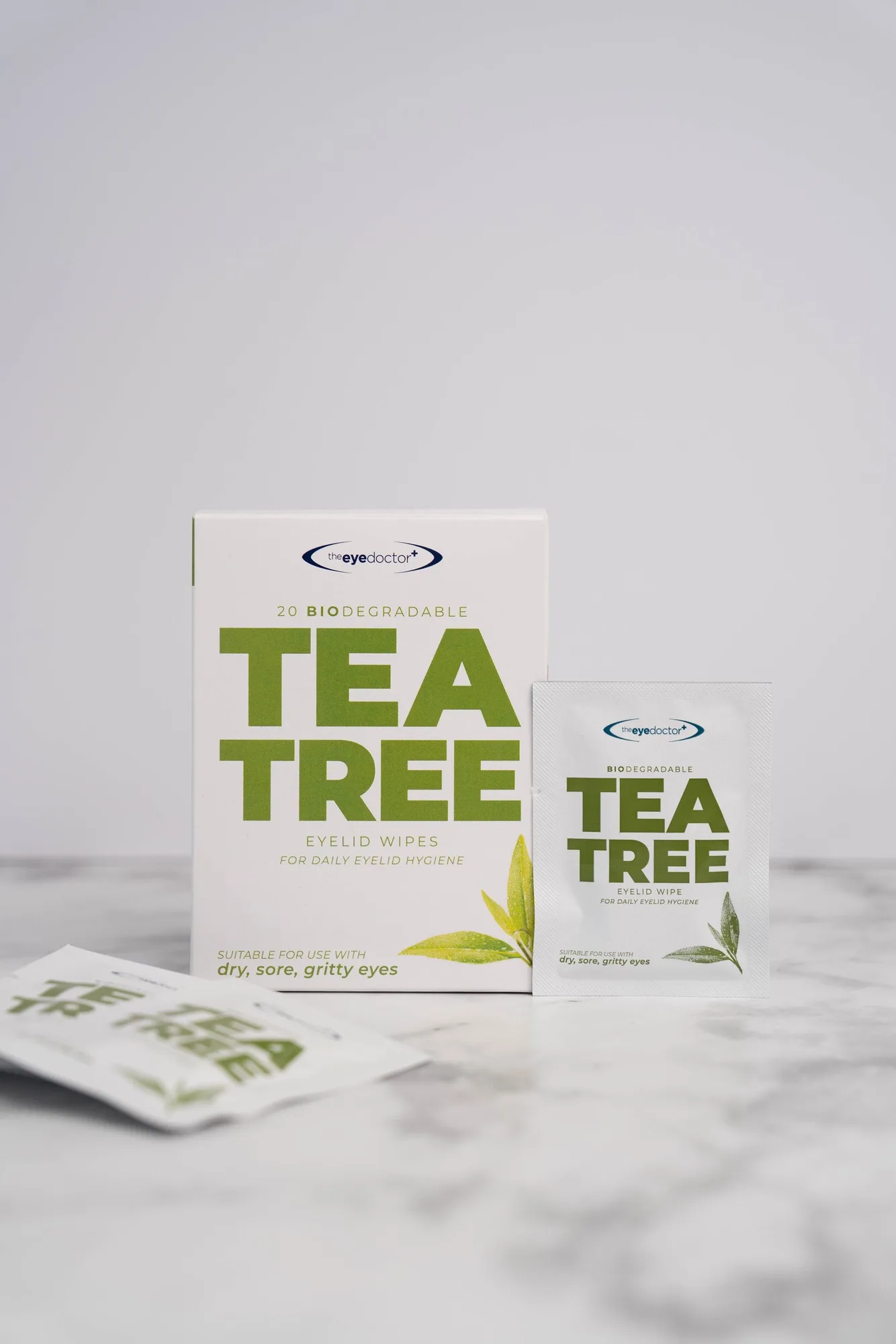
The Eye Doctor Tea Tree Eyelid Wipes