Quick answer
Start with a story your child already enjoys, then connect the plot to a simple money idea. Read The Tuttle Twins and the Leviathan Crisis aloud, pause when characters react out of fear, and ask what they gave up for a promise of safety. Follow with a hands-on activity that shows how prices rise when money loses value. One book plus one conversation beats a lecture every time.
Why stories work better than a lecture on inflation
Children remember characters and choices, not definitions. When a story shows a character trading freedom for safety or watching prices climb, the economic idea attaches to an emotion and a face. That is why teaching economics through stories works: your child feels the consequence before they can name it.
Inflation is abstract. A story makes it concrete by showing what happens to a family, a town, or a plan when money buys less. You do not need a whiteboard. You need a plot your child cares about and two or three questions that connect the plot to real life.
Pick the right book for your child's age
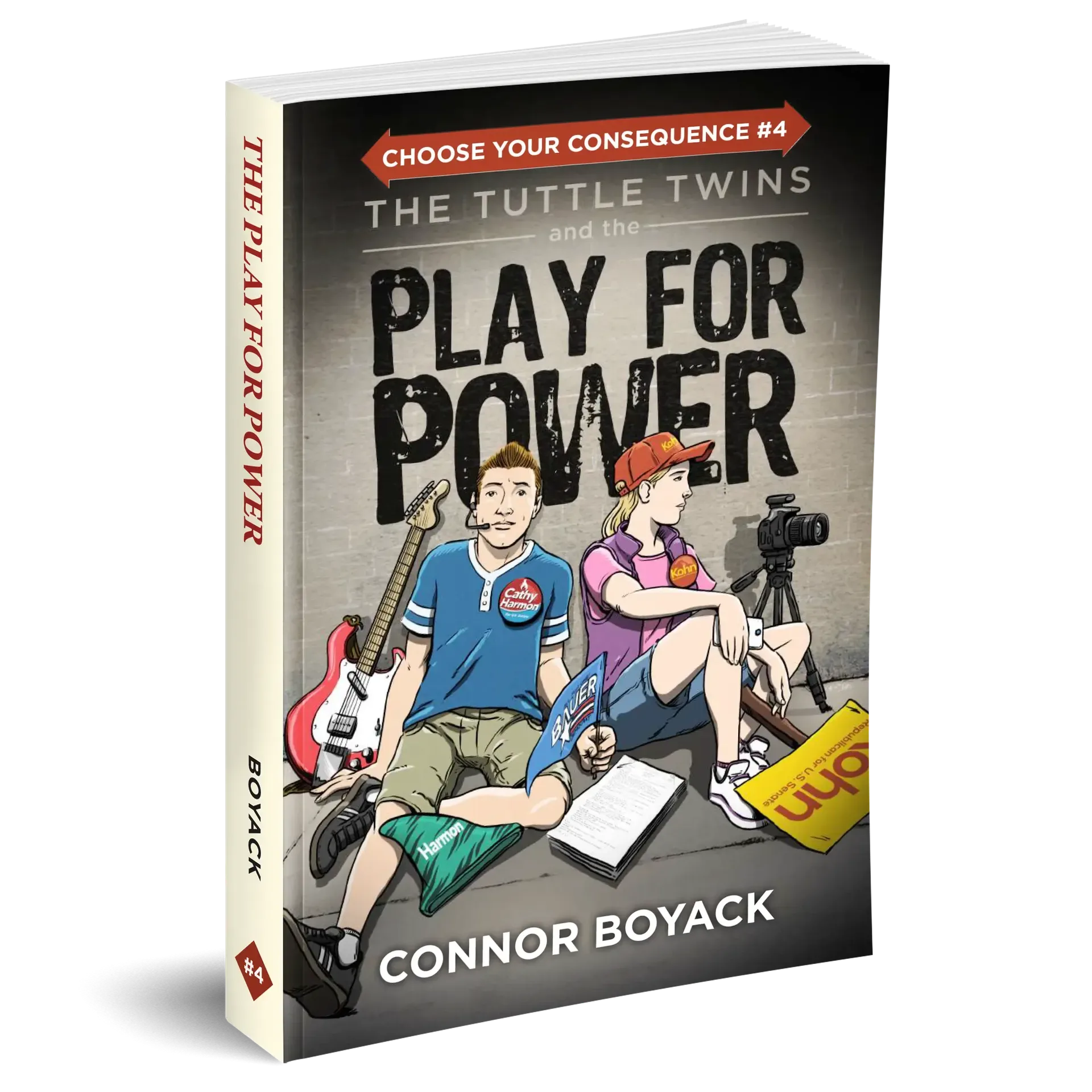
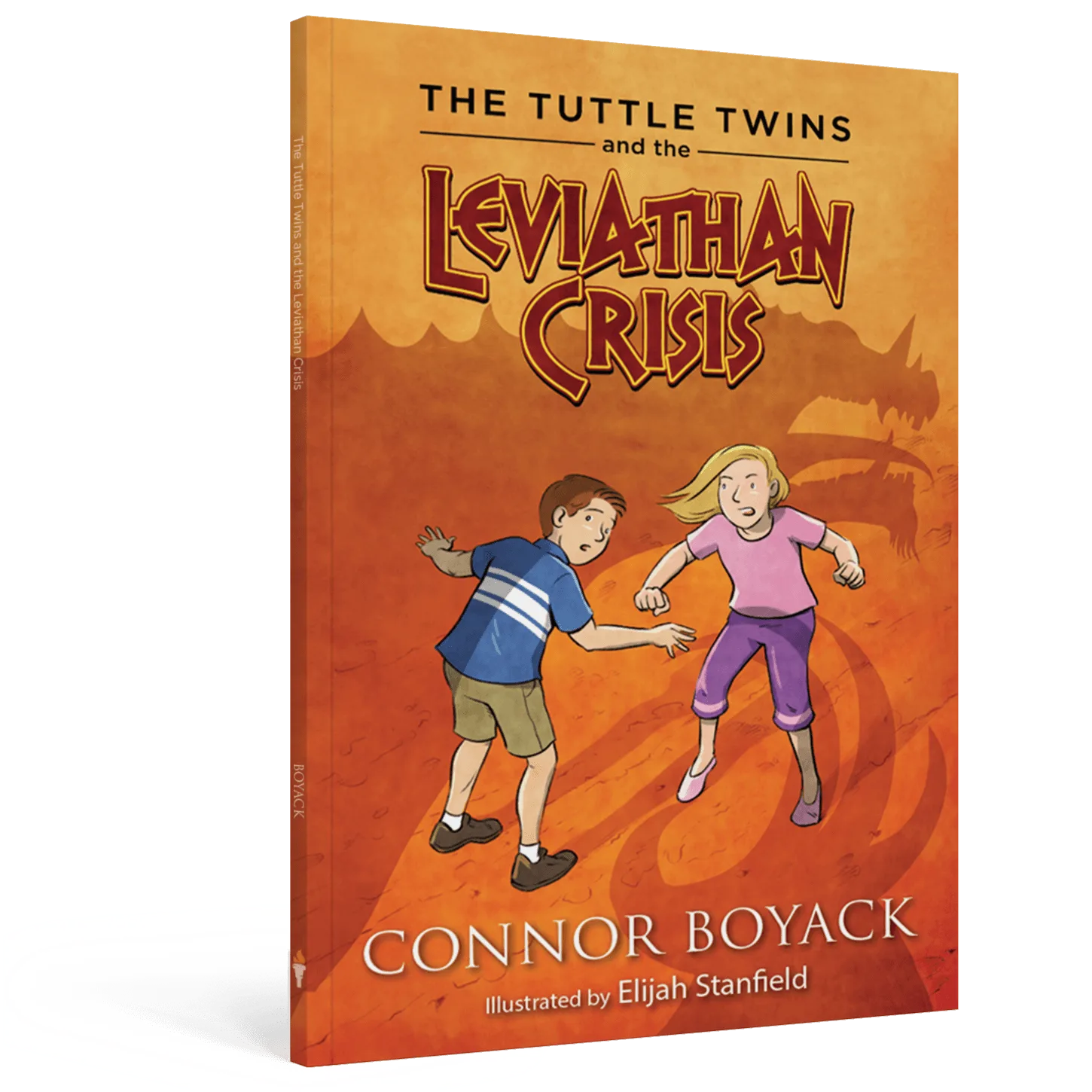
The Tuttle Twins line spans picture-book readers through teens, so match the story to attention span. Younger children follow the twins' adventure in The Tuttle Twins and the Leviathan Crisis, where fear and the promise of safety drive decisions. Older readers can handle The Tuttle Twins and the Play for Power, a 359-page teen novel with shark-fin car toppers, stolen campaign materials, music festivals, fundraising, spying, and nine possible endings.
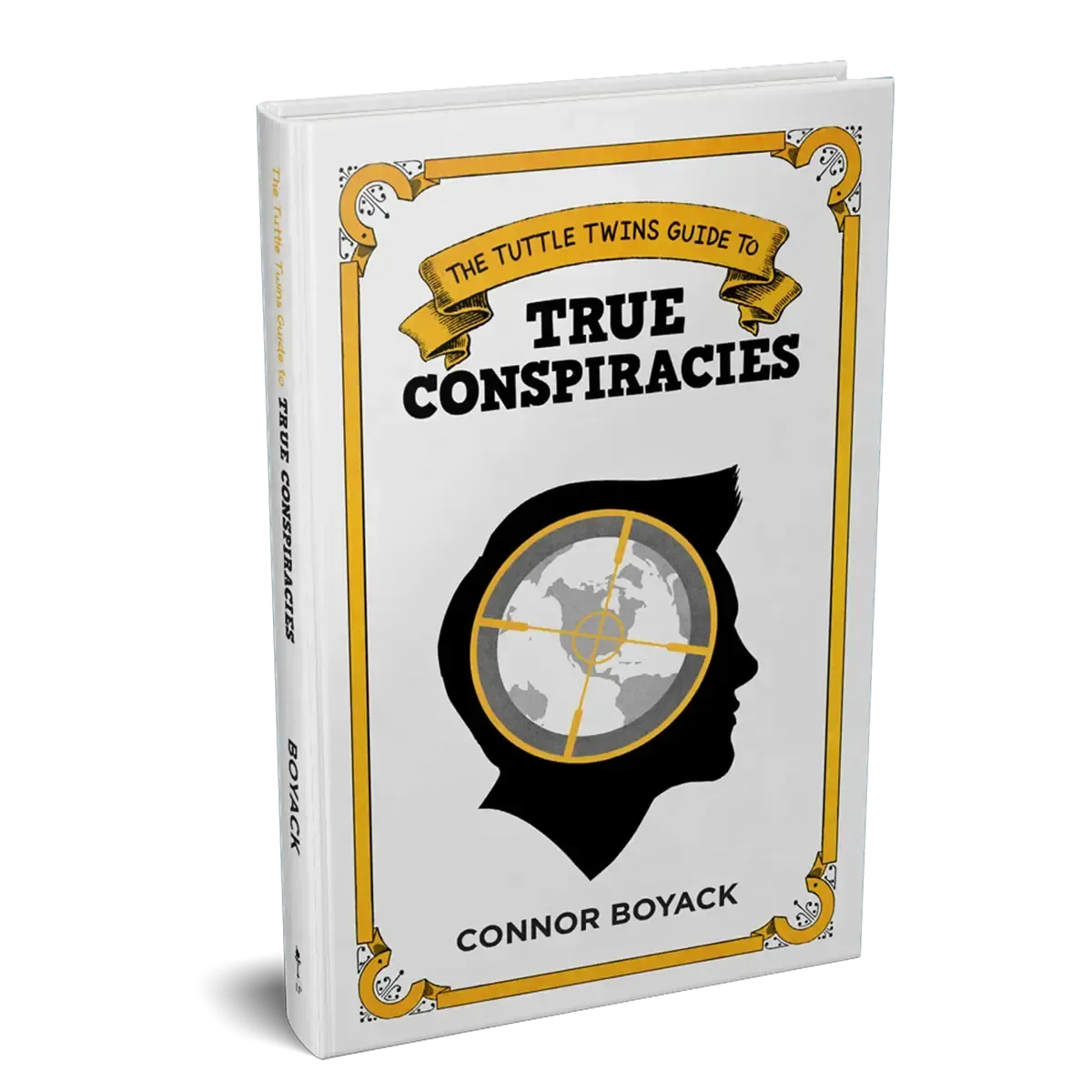
If your child asks hard questions about power and deception, The Tuttle Twins Guide to True Conspiracies is a 233-page hardback that challenges readers to question, seek truth, and stay skeptical of those in power. It is not a light read, so save it for mature middle schoolers and teens.
Set up a 20-minute inflation lesson
You do not need a unit study. Block 20 minutes, read one chapter aloud, and stop at the moment a character makes a trade-off. Ask: What did they give up? What did they hope to get? Did it work? Then name the money idea in one sentence.
Keep a small notebook for 'money words' your child meets in the story, such as price, savings, or value. Add one word per session. By the end of the book, your child has a personal glossary built from a story they remember.
Your step-by-step inflation lesson plan
- Step 1: Choose one story and one money idea: Pick a single Tuttle Twins title and one concept, such as 'prices rise when money buys less.' Do not try to cover inflation, banking, and trade in one sitting. Checkpoint: your child can repeat the money idea in their own words before you move on.
- Step 2: Read aloud and pause at a fear-based choice: In The Tuttle Twins and the Leviathan Crisis, stop when a character trades freedom for a promise of safety. Ask what they gave up and what they got. Common mistake: rushing past the pause. The pause is the lesson.
- Step 3: Run a 10-minute price experiment: Give your child ten tokens and five small items. Raise prices each round while keeping tokens the same. Ask how many items they can buy now versus before. Checkpoint: your child connects fewer items per token to the story's money problem.
- Step 4: Add a teen-level twist with Play for Power: For ages 12 and up, read a chapter of The Tuttle Twins and the Play for Power and let your teen choose a path. Discuss how a decision made early changes the ending. Common mistake: treating the branching endings as a game only. Ask what each ending costs the characters.
- Step 5: Connect to real receipts and savings: Show two grocery receipts from different months or a savings jar that buys less than before. Let your child find one price that changed. Checkpoint: your child names one real price that went up and one way your family responds.
- Step 6: Close with a truth-check habit: Ask: who told us this, and how do they know? Use The Tuttle Twins Guide to True Conspiracies with older readers to practice questioning powerful claims. Common mistake: ending on a scary note. End with one action your child can take, such as checking a price or asking a question.
Product facts that support this lesson
- The Tuttle Twins and the Leviathan Crisis: The Tuttle Twins and the Leviathan Crisis helps children understand that making decisions out of fear can have unintended consequences, and that when they hear fear mongering they should stop and find the truth before making decisions that could affect their lives. This gives you a ready-made conversation about why people accept rising prices or lost freedoms when they are scared, which is the emotional core of many inflation stories.
- The Tuttle Twins and the Play for Power: The Tuttle Twins and the Play for Power is a 359-page teen novel with 9 possible endings, following Ethan and Emily through shark-fin car toppers, stolen campaign materials, music festivals, fundraising, spying, and new friends. The branching endings let teens test decisions and see consequences, which mirrors how inflation choices play out over time rather than in a single moment.
- The Tuttle Twins Guide to True Conspiracies: The Tuttle Twins Guide to True Conspiracies is a 233-page hardback that shares disturbing episodes of history as reminders of how powerful people can shape world events through deception and lawless corruption, and it challenges readers to question, seek the truth, and be skeptical of those in power. Use it with older students to discuss how money and power interact, and why verifying claims matters before accepting a simple explanation for rising prices.