Quick answer
Use lowercase alphabet stamping stones in dough, sand, or paint to give children a tactile way to recognize letters and hear their sounds.
Why tactile letter learning works
Young children learn best when multiple senses are involved. Pressing a stone into a soft surface combines touch, sight, and movement, which helps the brain form stronger letter memories. This approach is especially useful for children who struggle with traditional flashcards or worksheets.
The engraved design on each stone creates a clear, consistent imprint every time. This repeatability lets children focus on the letter shape rather than the tool, building confidence as they practice.
What to expect from this activity
These activities work for children ages 2 and up. Younger children will enjoy the sensory experience of stamping and sorting, while older preschoolers can begin building simple words. The stones are durable and easy to clean, making them suitable for repeated classroom use.
Step-by-step letter recognition activities
- Introduce one letter at a time: Choose a single stone and say the letter name and its most common sound. Let the child stamp it in play dough or sand while repeating the sound. Keep the session to 3–5 minutes to maintain focus. Common mistake: introducing too many letters at once. Stick to one or two per session.
- Sort letters by shape or sound: Place a small selection of stones in a tray. Ask the child to group letters that look similar (like 'b' and 'd') or letters that start with the same sound. Sorting reinforces visual discrimination and phonemic awareness. Checkpoint: if the child confuses mirror-image letters, slow down and compare them side by side in the dough.
- Build simple words: Once the child knows several letters, show them how to stamp a short word like 'cat' or 'dog'. Say each sound as you stamp, then blend them together. Start with consonant-vowel-consonant words. Common mistake: expecting perfect spelling. Accept invented spellings like 'kat' and praise the effort.
- Play letter hunt: Hide 5–8 stones in a sensory bin filled with rice, beans, or sand. The child digs to find a stone, identifies the letter, and stamps it on paper or dough. This adds a game element to letter practice. Checkpoint: if the child struggles to find letters, reduce the number of hidden stones or use a smaller bin.
Product used in this guide
-
Lowercase Alphabet Stamping Stones - 26 Pieces: Each stone is engraved for clear and consistent stamping in dough, sand, paint, and more. The engraved design ensures every imprint is readable, so children can focus on letter shapes rather than uneven stamps.
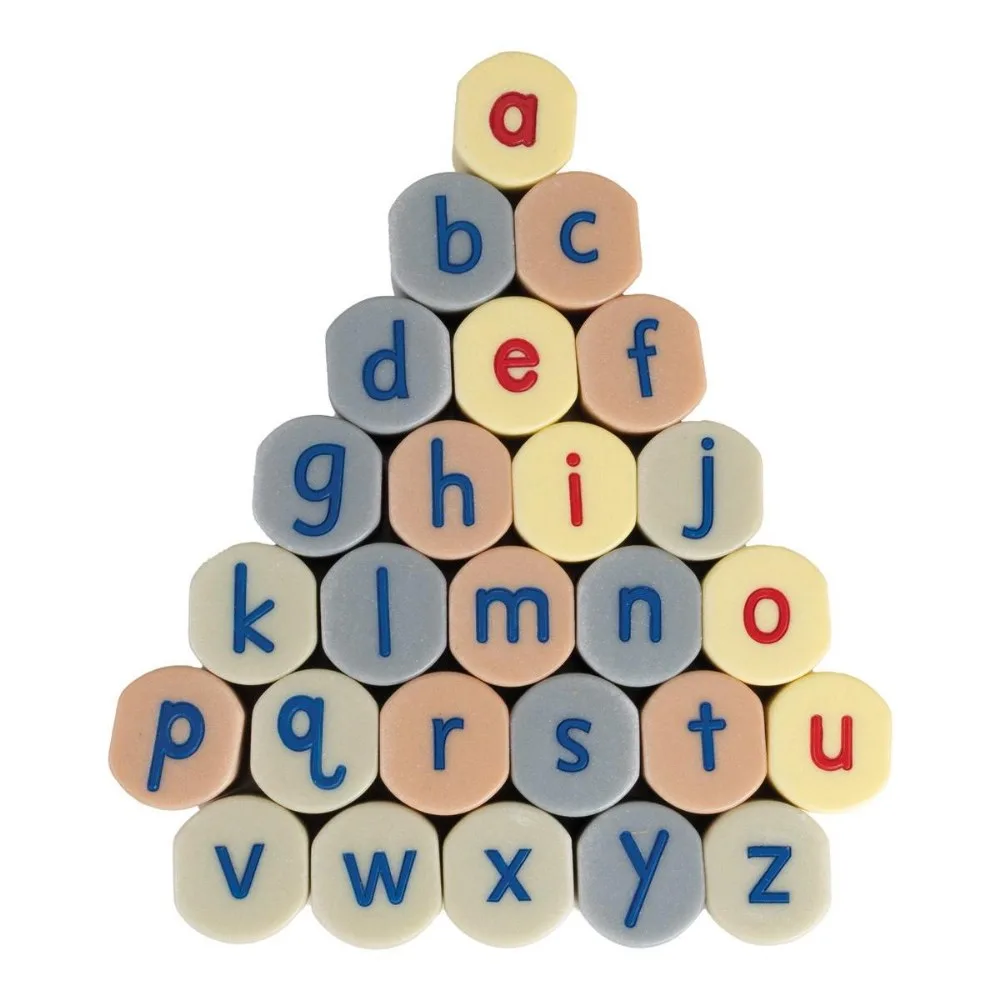
Lowercase Alphabet Stamping Stones - 26 Pieces