Quick answer
Use conversation cards from the Skills for Life deck to turn everyday family moments into structured life skills lessons. Each card prompts discussion around empathy, resilience, and decision-making, helping kids learn without a formal curriculum.
Why conversation cards work for life skills
Life skills like active listening, emotional regulation, and problem-solving are best learned through practice, not lectures. Conversation cards create a low-pressure setting where family members can share experiences and reflect together. The Skills for Life deck is designed specifically for this, with prompts that target emotional growth and connection in an age-appropriate way.
Choosing the right edition for your family
The Skills for Life deck comes in three editions: All Age Family, Young Family, and Teen Family. The All Age edition works well for households with a wide age range, while the Young Family edition uses simpler language for younger children. The Teen Family edition addresses more complex topics like peer pressure and identity. Pick the one that matches your kids' developmental stage to keep discussions relevant and engaging.
Steps to teach life skills with conversation cards
- Set a regular time for card conversations: Choose a consistent time, like Sunday evening dinner or Saturday morning breakfast. Consistency helps family members see this as a habit, not a one-off activity. Keep sessions short—15 to 20 minutes is enough to stay focused. Common mistake: skipping weeks or holding sessions too long (over 30 minutes) can cause boredom and reduce participation.
- Pick one skill to focus on per session: Before drawing a card, name the skill you want to practice, such as empathy, problem-solving, or patience. Then draw a card and read the prompt aloud. Ask follow-up questions like 'What would you do in that situation?' to deepen the discussion. Checkpoint: if the conversation wanders, gently steer it back by asking how the card relates to the skill you named at the start.
- Model the skill in your response: Share your own experiences and thought process first. For example, if the prompt is about handling disappointment, describe a time you felt disappointed and what you did. This shows kids that life skills are learned through real-life practice, not just theory. Common mistake: jumping to correct your child's answer too quickly. Let them finish, then discuss alternative approaches together.
Product facts
-
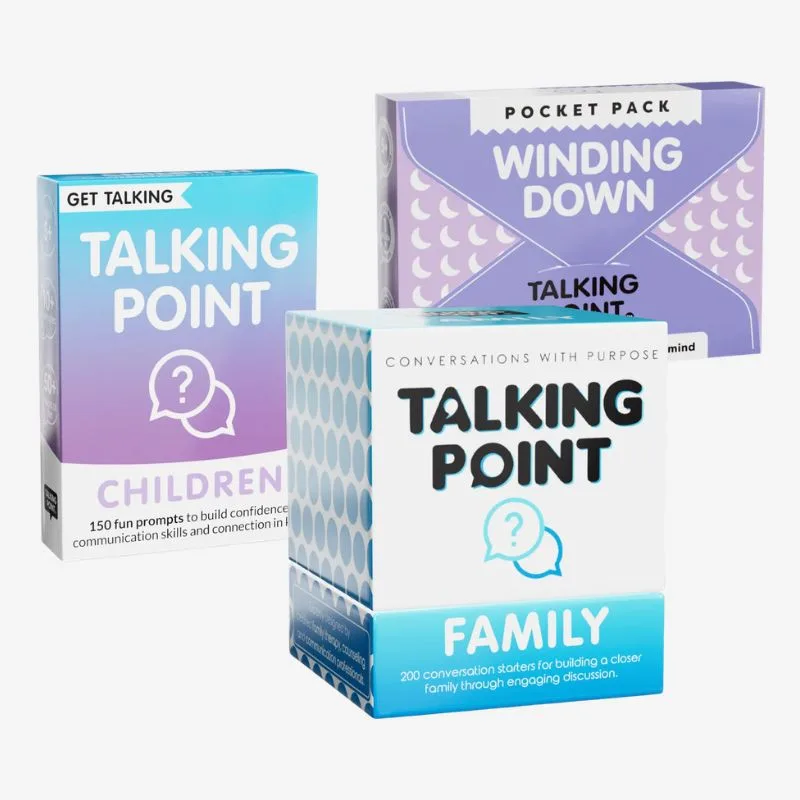
Skills for Life: Skills for Life is a family talk bundle designed to support deep connection and emotional growth in everyday conversation. This means you don't need to plan lessons or buy separate workbooks; the cards do the heavy lifting by prompting natural, skill-building dialogue.
Skills for Life
-
Skills for Life: Available in three editions: All Age Family, Young Family, and Teen Family. You can tailor the conversations to your child's age, ensuring the skills discussed are both understandable and relevant to their daily life.