Quick answer
Use soft plush toys like the Nibble Vampire Penguin to introduce Arctic animals through imaginative play, storytime, and simple sorting activities.
Why plush toys work for teaching
Young children learn best when they can see, touch, and interact with a subject. Plush toys make abstract concepts like animal habitats and adaptations tangible. A penguin with a removable cape, for example, can spark conversations about how real penguins stay warm in icy climates.
Plush toys also encourage role-play, which helps kids retain information. When a child pretends to feed or care for a plush Arctic animal, they naturally absorb facts about its diet and environment.
Choosing the right plush for learning
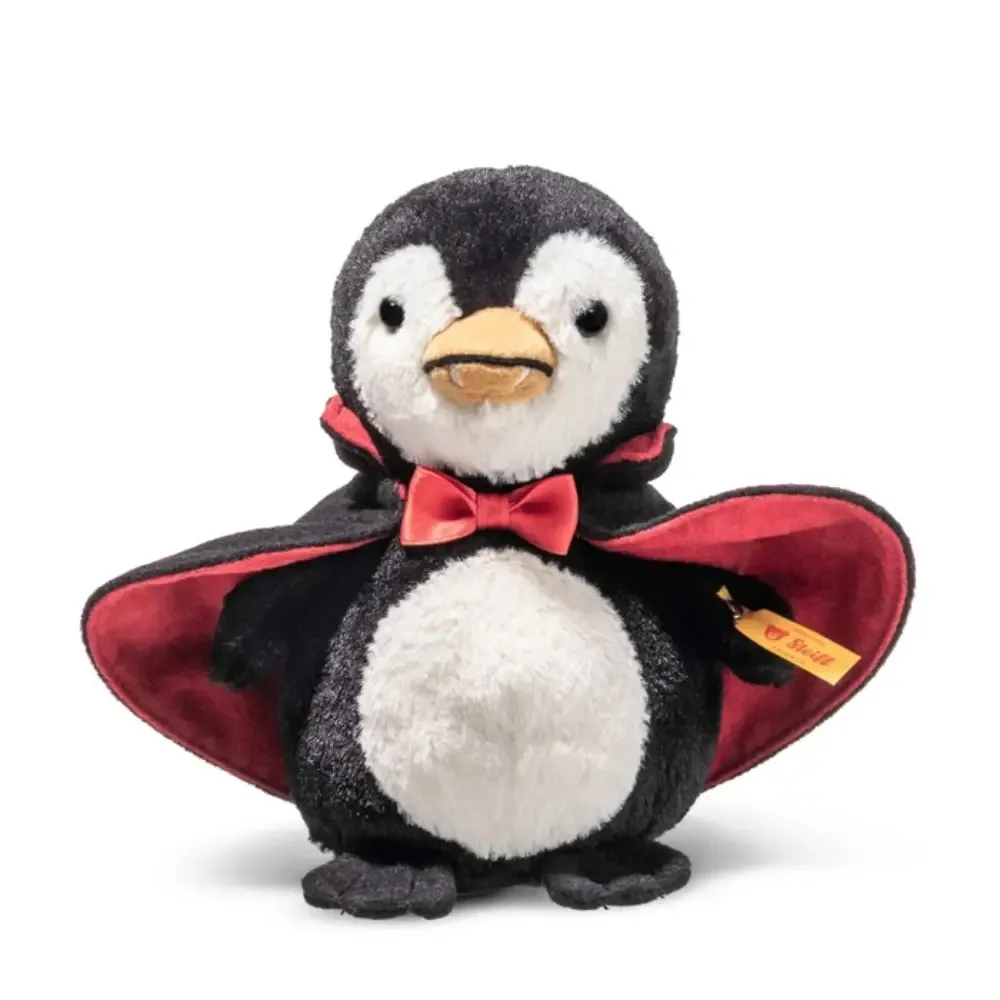
Look for plush toys that have distinctive features you can connect to real animal traits. The Nibble Vampire Penguin has a soft black-and-white body, a golden-yellow beak, and embroidered fangs that are more cute than scary. While its vampire cape is fantasy, the plush still offers a chance to talk about penguin anatomy and behavior.
Avoid toys with too many fantasy elements if you want to keep the lesson focused on real Arctic animals. Balance imaginative play with factual books or videos.
Step-by-step lesson plan
- Introduce the animal with a story: Show the plush toy and read a short, age-appropriate book about penguins or Arctic animals. Let the child hold the toy while you read. Common mistake: Skipping the story and just naming facts. Kids connect better when facts are woven into a narrative. Use one plush per session to avoid overwhelming the child.
- Explore the toy's features together: Point out the plush's beak, wings, and color patterns. Ask open-ended questions like 'Why do you think penguins have black and white feathers?' Then explain camouflage in the water. Common mistake: Lecturing instead of letting the child discover. Let them touch and describe what they see first. Let the child remove and reattach any removable accessories to build fine motor skills.
- Create a simple habitat activity: Use a shallow bin with ice cubes, blue fabric for water, and cotton balls for snow. Place the plush penguin in the bin and talk about where real penguins live. Common mistake: Making the habitat too complex. Keep it simple so the child can set it up themselves. Ask the child to name one thing the penguin needs to survive in the Arctic.
- Compare with other Arctic animals: If you have multiple Arctic plush toys, help the child sort them by size, color, or habitat. For example, compare the penguin with a polar bear plush. Common mistake: Forcing comparisons without context. First let the child play freely with each toy, then guide the comparison. Use a simple chart or drawing to record differences the child notices.
- End with a creative recap: Ask the child to draw a picture of the plush toy in its Arctic home or to act out a short scene. This reinforces what they learned. Common mistake: Treating this as a test. Keep it playful and praise their ideas. Display the drawing next to the plush toy to extend the learning.
Product facts
-
Nibble Vampire Penguin: Nibble the Vampire Penguin is made from soft black and white plush with a golden-yellow beak and delicately embroidered fangs. The realistic coloring and beak shape help children identify real penguin features, while the playful design keeps them engaged.
Nibble Vampire Penguin