Quick answer
Teach sharing as a concrete turn-taking routine, not an abstract value. Name whose turn it is, use a visual timer, and practice during calm play so the skill is automatic before a conflict starts. Most families see fewer tears within two weeks when they rehearse turns daily and keep the first sessions short.
Why sharing feels like a loss to a young child
To a preschooler, a toy in their hand is part of their plan. Handing it over feels like losing the game, not like being generous. That is why lectures about kindness rarely change behavior in the moment. The child needs a predictable script they can follow when their brain is already flooded.
Turn-taking works because it replaces an open-ended demand with a clear sequence: my turn, your turn, my turn again. The child is not giving the toy away; they are pausing a loop they trust will come back. That predictability is what lowers the emotional temperature.
Set up the environment before you teach the skill
You cannot teach turn-taking in the middle of a tug-of-war. Before you start, choose one or two high-value toys and one low-stakes toy for practice. Put the most contested items on a shelf for structured play only, and keep a basket of duplicates available for free play.
A visual timer matters more than a verbal countdown. Young children cannot track time in their heads, so a sand timer or a simple kitchen timer gives them something to watch instead of something to argue about. Keep the first turns very short, sometimes as short as 20 seconds.
- Pick one practice toy that is not the child's absolute favorite.
- Use a timer the child can see and hear.
- Keep duplicate toys nearby so free play does not become a test.
Use a script that works in the moment
The script should be short enough for you to say while you are also managing feelings. Try: 'It is Sam's turn. When the timer rings, it is your turn.' Then narrate what you see: 'You are waiting. That is hard. Your turn is coming.'
Avoid asking the child to decide when they are done. That question invites negotiation. Instead, let the timer be the authority. If the child protests, repeat the same two sentences and hold the boundary calmly. Consistency is what makes the script believable.
Practice when nobody wants the toy
The best turn taking activities for kids happen when the stakes are zero. During calm play, hand a toy back and forth and say 'my turn, your turn' as a game. Do this for two minutes, several times a day. You are building the routine into muscle memory.
Once the game is easy, add a third person or a stuffed animal as a 'player.' This prepares children for group settings where turns involve more than two people. If the child loses interest, stop. Short and successful beats long and forced.
- Practice with a toy nobody is fighting over.
- Keep sessions under three minutes.
- Add a third player only after two-person turns are calm.
Coach the waiting side, not just the sharing side
Most advice focuses on the child who has to give up the toy. The child who is waiting needs just as much coaching. Give them a job: hold the timer, count the clicks, or keep a hand on your arm. A waiting child with a task is far less likely to grab.
Name the feeling without fixing it: 'Waiting is boring. You are doing it.' This builds the identity of someone who can wait, which is the foundation of social skills for preschoolers. Praise the wait specifically, not the child's character.
Handle the meltdown without abandoning the routine
When tears come, pause the turn-taking but do not cancel it. Comfort the child, then return to the same script: 'The timer is still going. Your turn is still coming.' If the child cannot rejoin, end the activity and try again later. That is not failure; it is data about how long they can currently manage.
Do not force a child to say sorry or to share as a punishment. Forced sharing teaches that adults can take things away at any time, which makes children more possessive, not less. The goal is a routine they trust, not compliance in the moment.
A 6-step turn-taking routine to use this week
- Choose one practice toy and one timer: Pick a toy that is not the child's most prized possession. Set a visual timer for 20 to 30 seconds for the first sessions. Checkpoint: if the child grabs before the timer rings, shorten the turn next time.
- Announce the turn before it starts: Say, 'It is your turn now. When the timer rings, it is my turn.' Use names, not pronouns, so the sequence is clear. Mistake to avoid: asking 'Can you share?' That turns a routine into a negotiation.
- Narrate the waiting without rescuing it: While the child waits, describe what you see: 'You are watching the timer. Waiting is hard.' Do not distract them with a different toy unless they are about to melt down. Checkpoint: if waiting lasts more than 30 seconds at first, the turn is too long.
- Trade back on the timer, not on a feeling: When the timer rings, say 'My turn' and take the toy calmly. Then give it back after the same interval. The timer, not the child's mood, controls the swap. Mistake to avoid: extending a turn because the child is happily playing. That teaches that the timer is optional.
- Practice the same script with a third player: Once two-person turns are calm, add a sibling or a stuffed animal. Say 'my turn, your turn, bear's turn' and pass the toy around the circle. Checkpoint: if the third player causes grabbing, go back to two-person turns for a few days.
- Debrief in one sentence, later: After the play is over and everyone is calm, name what worked: 'You waited while the timer was red. That was turn-taking.' Keep it to one sentence and move on. Next step: repeat the same routine tomorrow with the same toy before introducing a new one.
Tools that support turn-taking practice
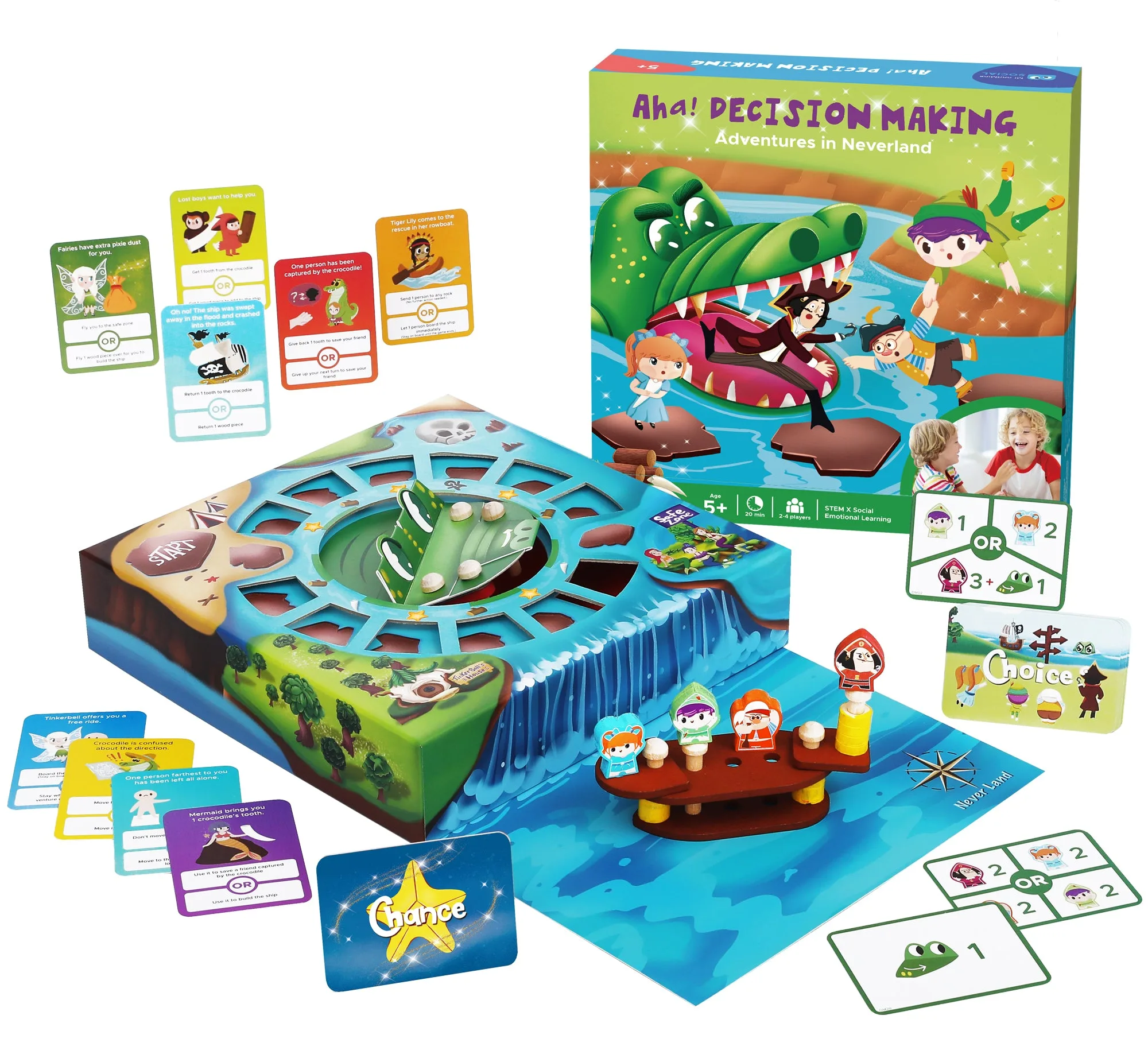
- Aha! Decision Making: Aha! Decision Making is a strategy game where players join Peter Pan's quest to save Neverland from a giant flood and outsmart crocodiles. It includes a Neverland storybook and a 3D crocodile game board. Because the game is built around making choices under a story, it gives children a low-stakes way to practice waiting, choosing, and seeing consequences before they have to do it with a real toy a sibling wants.
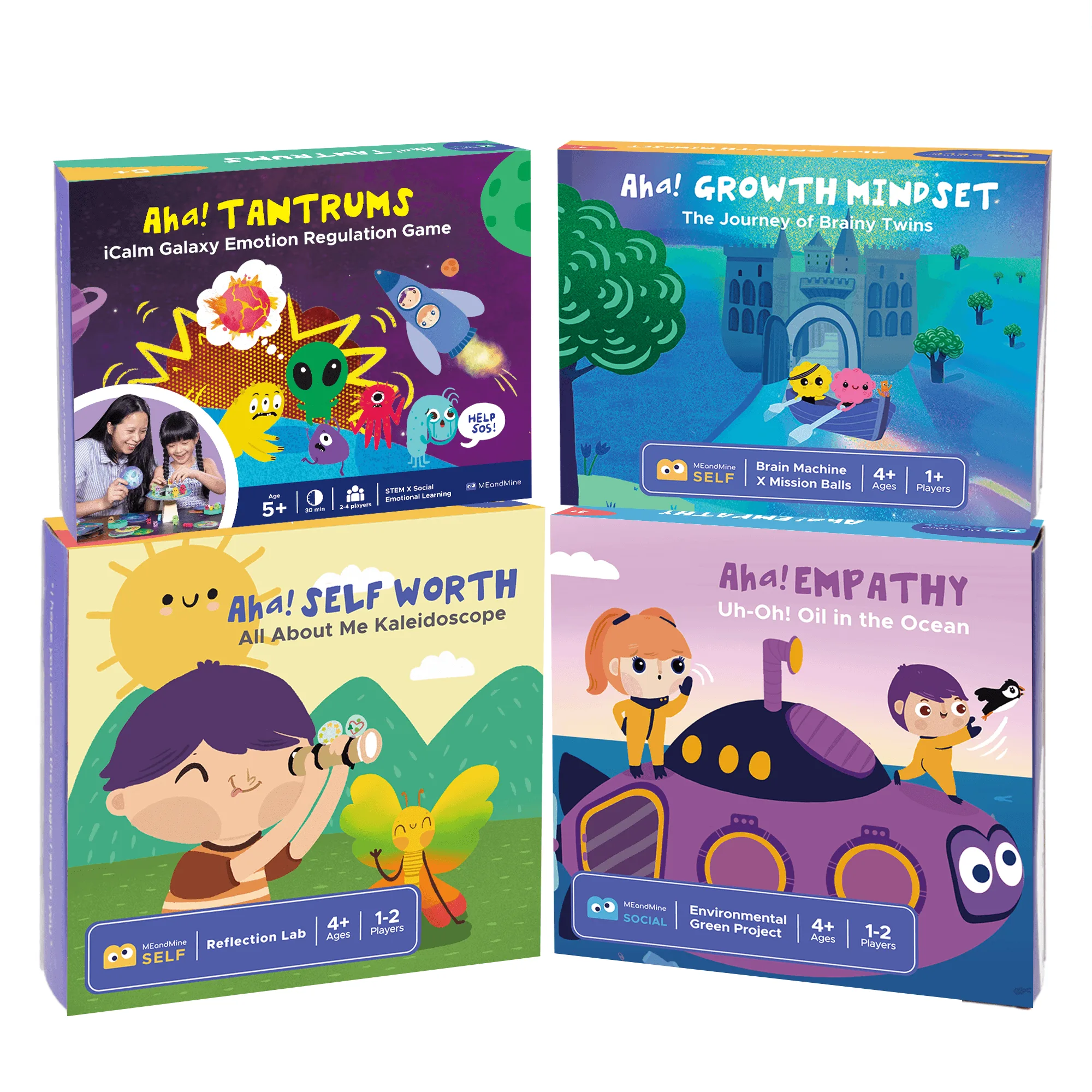
- Back To School Toolkit: Back To School Toolkit includes four play kits: Self Worth, Growth Mindset, Tantrum, and Empathy, and is designed to ease back to school anxiety. The Tantrum and Empathy kits give you concrete language and activities for the moments when turn-taking collapses, so you are not improvising a lesson while your child is crying.