Quick answer
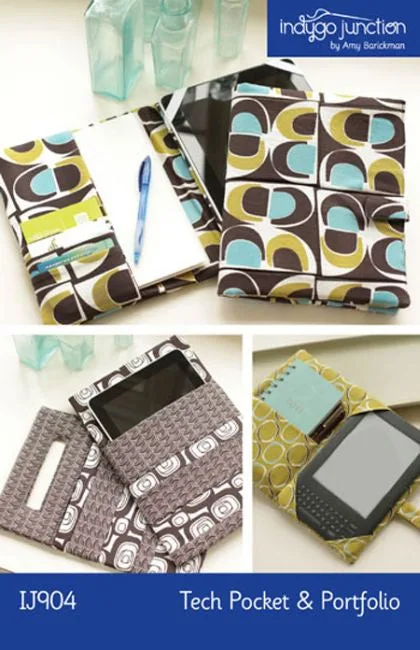
For the Tech Pocket & Portfolio by Indygo Junction, use a tightly woven quilting cotton for the outer and lining, and add a layer of sew-in foam stabilizer such as ByAnnie's Soft and Stable for real drop protection. If you want a lighter sleeve you can fold into a tote, skip the foam and use fusible fleece instead. Buy the pattern first, then match fabric to the size you plan to make: tablet sleeve, eReader cover, or tablet portfolio.
Start with the size you are sewing, not the fabric
The Tech Pocket & Portfolio pattern gives three finished sizes: a 9 1/4 x 13 1/2 inch tablet sleeve, a 5 1/4 x 8 inch eReader cover, and an 8 x 9 3/4 inch tablet portfolio. Those numbers change your fabric math more than any print choice. A fat quarter covers the eReader cover and usually the portfolio, but the tablet sleeve needs a longer cut, so buy by the half-yard unless you already have a wide scrap.
Measure your device with its case on before you cut. A sleeve cut to the exact device width will fight you at the opening, and the pattern's padding takes up space inside. Add a little breathing room at the sides, not the top, so the flap or closure still meets.
- eReader cover: one fat quarter is often enough for outer and lining.
- Tablet portfolio: half-yard gives you matching outer and lining without piecing.
- Tablet sleeve: buy half-yard or more to avoid a seam across the front.
Best fabric for a tech organizer: tight weave beats soft hand
Quilting cotton is the default because it presses flat, comes in every print, and holds a crisp edge around pockets. The trade-off is abrasion: a cotton sleeve carried loose in a backpack will show wear at the corners before a canvas one does. If you expect hard daily use, choose a midweight cotton canvas or a cotton-linen blend for the outer and keep quilting cotton for the lining, where softness matters more than durability.
For the Folky Floral print in Cobalt from the Folky Chicken collection by Natalie Briscoe for Windham Fabrics, the 100% cotton, 44/45 inch width behaves exactly like standard quilting cotton: easy to press, easy to topstitch, and predictable under a needle. That predictability is why a printed quilting cotton is a smart pick for a first tech organizer, even if it is not the toughest option long term.
Interfacing for bag making: what each option actually does
Interfacing is where most tech organizers succeed or fail. Fusible fleece gives a soft, slightly puffy hand and light cushioning, but it compresses over time and does not insulate. Sew-in foam stabilizer, like ByAnnie's Soft and Stable, gives structure, insulation, and a stable base that survives repeated use and laundering. The trade-off is bulk: foam adds thickness at seam allowances, so trim it out of the seam after stitching or your corners will be lumpy.
Do not stack fusible fleece and foam in the same panel unless the pattern tells you to. Doubling up makes the flap too stiff to close and can stress the closure. If you want a firm front panel and a soft back, interface them differently and note which side faces the device.
- Light protection, foldable sleeve: fusible fleece.
- Drop protection and shape retention: sew-in foam stabilizer.
- Firm flap without bulk: one layer of fusible woven interfacing only.
Pockets, padding, and hardware choices
The pattern includes pockets for notes or business cards, and those pockets are where thin fabric helps. Use quilting cotton or a lightweight canvas for pocket pieces so they do not add bulk at the top edge. If you use foam in the body, skip it in the pocket panel or the card slots will be too tight to use.
Padding is listed in the pattern instructions, and it is worth following rather than improvising. Extra padding beyond the pattern changes the finished dimensions and can make the sleeve too tight for the device it was sized for. If you want more protection, add a separate padded divider rather than stuffing the outer panel.
Decision rules for fabric and interfacing
- If the device travels in a bag: Use a canvas or cotton-linen outer and add sew-in foam stabilizer. Trim foam from seam allowances before turning. Prioritize abrasion resistance and shape retention.
- If the sleeve must fold flat: Choose quilting cotton for both layers and fusible fleece for light cushioning only. Skip foam; it will not crease the way you want.
- If you are sewing your first tech organizer: Buy one quilting cotton print and one solid lining, then follow the pattern's padding exactly. Do not add extra layers until you have sewn the size once.
- If you are unsure about yardage: Buy a half-yard of the outer and a half-yard of the lining for the tablet sleeve or portfolio; a fat quarter is enough for the eReader cover. Leftover fabric is cheaper than a second shipping wait.
Patterns and fabric that fit this project
- Tech Pocket & Portfolio by Indygo Junction: Tech Pocket & Portfolio by Indygo Junction includes a tablet sleeve at 9 1/4 x 13 1/2 inches, an eReader cover at 5 1/4 x 8 inches, and a tablet portfolio at 8 x 9 3/4 inches, with padding and pockets for notes or business cards. Three finished sizes let you match the pattern to your device and decide fabric yardage before you buy.
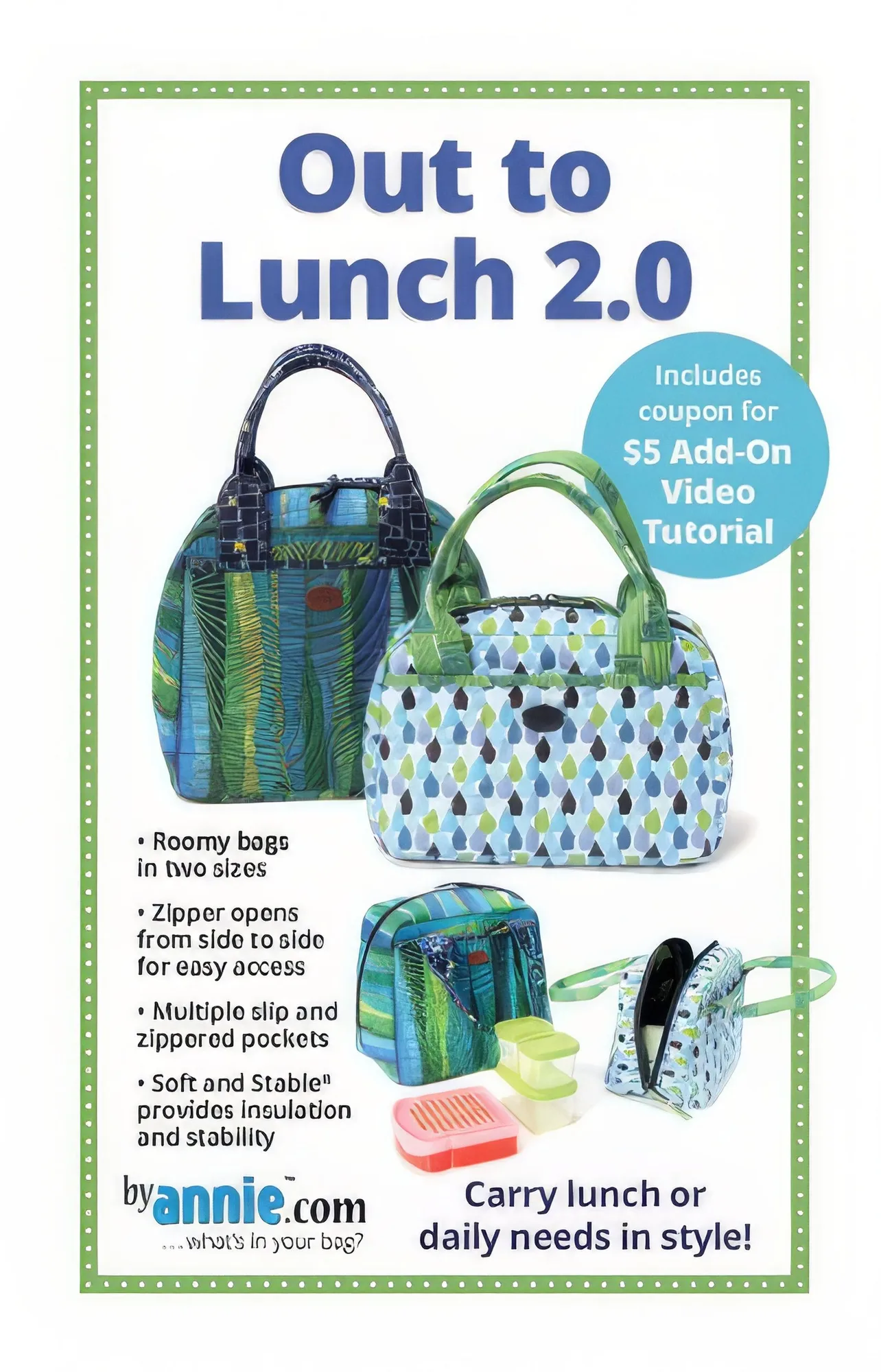
- Out to Lunch 2.0 Bag Pattern by Annie: Out to Lunch 2.0 Bag Pattern by Annie uses ByAnnie's Soft and Stable, which provides stability, insulation, and durability through repeated use and laundering. If you want to test foam stabilizer before committing to it in a tech sleeve, this pattern is a practical way to learn how it handles.
- WINDHAM - Folky Chicken By Natalie Briscoe - Folky Floral - Cobalt: Folky Floral by Natalie Briscoe for Windham Fabrics is 100% cotton quilting fabric, 44/45 inches wide, in the Cobalt colorway. A standard-width quilting cotton presses flat and topstitches cleanly, which makes it a low-risk choice for a first tech organizer.
Who this pattern and supply list suits
Best for
- Sewists who want a padded, pocketed case sized to a specific tablet or eReader
- Quilters comfortable with straight seams, topstitching, and basic bag construction
- Makers who want to use a printed quilting cotton and learn foam stabilizer on a small project
Not for
- Anyone who needs a waterproof or fully rigid hard-shell case
- Sewists who want a no-interfacing, quick-sew project with no bulk at the seams
- Makers who cannot measure their device with its case on before cutting