Quick Answer
Choose teetering towers if your child enjoys solving puzzles and testing balance; choose classic wooden blocks for open-ended creativity and foundational building skills. Both develop fine motor and spatial skills, but they offer different play experiences.
When it comes to stacking toys, parents often debate between teetering towers and classic wooden blocks. Both have their merits, but they serve different purposes in a child's development. Teetering towers focus on precision and balance, while classic blocks encourage imagination and structural experimentation.
In this comparison, we'll break down the key differences, highlight the trade-offs, and help you decide which type of stacking toy is the best fit for your child's age, interests, and skill level.
What Are Teetering Towers?
Teetering towers are stacking toys designed to wobble and challenge balance. Unlike standard blocks, they often feature curved or irregular pieces that require careful placement to stay upright. This adds an extra layer of difficulty and excitement, making them ideal for children who enjoy a puzzle-like challenge.
For example, the HABA Animal Parade Blocks offer a unique twist: animals like giraffes and lions can be assembled from different-colored shapes. While not a traditional teetering tower, it shares the concept of creating stable structures with creative pieces. This type of toy encourages experimentation and problem-solving.
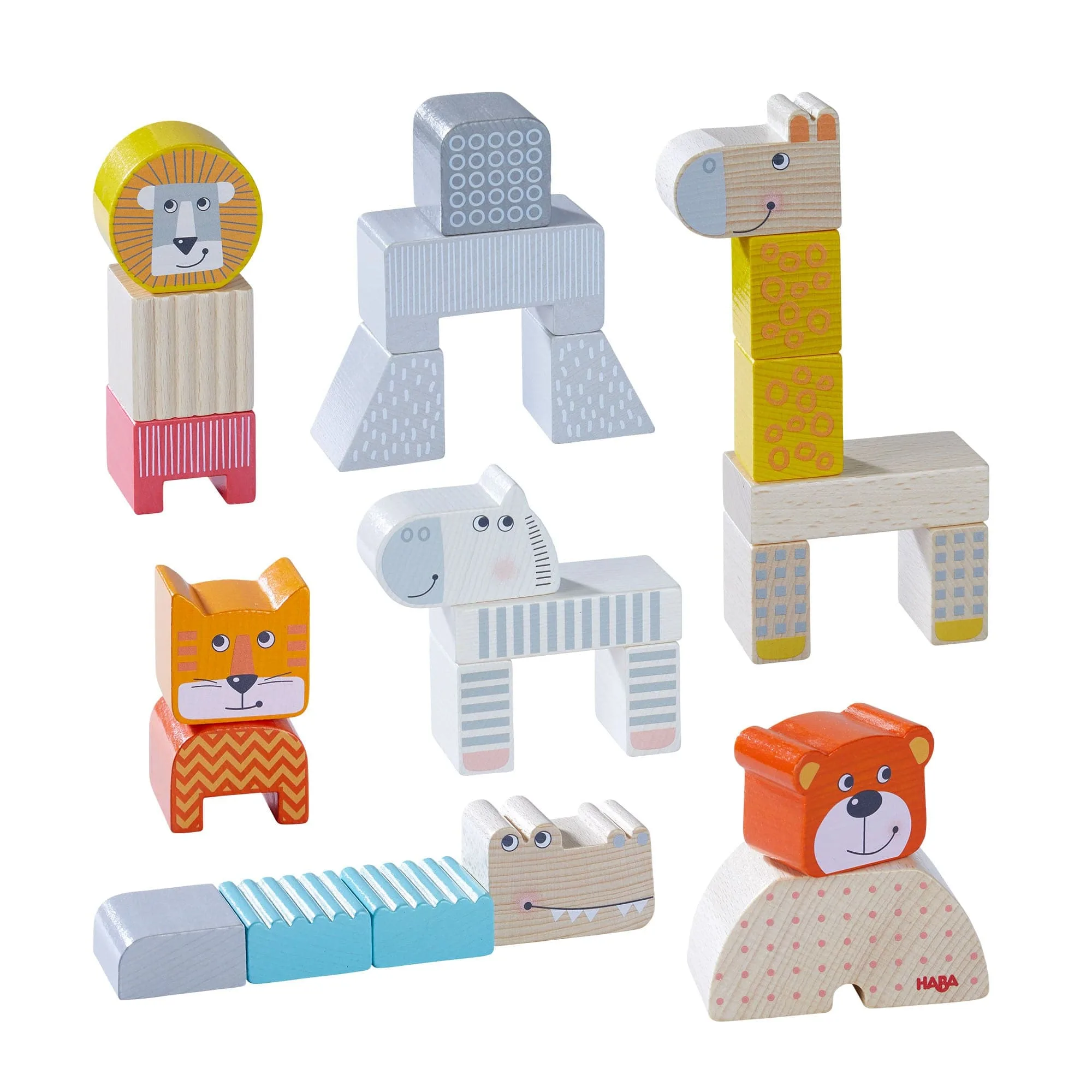
Animal Parade Blocks
What Are Classic Wooden Blocks?
Classic wooden blocks are the timeless building toys that come in various shapes and sizes. They are typically rectangular, square, or cylindrical, allowing for stable stacking and a wide range of constructions. They are perfect for open-ended play, where children can build towers, houses, or anything they imagine.
Classic blocks are excellent for developing fine motor skills, hand-eye coordination, and spatial awareness. They also foster creativity and independent play, as there are no set rules or goals. Children can build and rebuild as often as they like, making them a versatile addition to any toy collection.
Key Differences at a Glance
The main difference lies in the play style. Teetering towers often come with specific challenges or goals, such as balancing pieces in a certain order, which can be more engaging for older toddlers and preschoolers. Classic blocks, on the other hand, are more open-ended and can be used by children as young as one year old.
Another difference is the level of difficulty. Teetering towers can be more frustrating for younger children because they require more precise placement. Classic blocks are more forgiving and allow for trial and error without immediate collapse. This makes classic blocks a better choice for younger toddlers who are still developing their motor skills.
Trade-Offs to Consider
- Challenge vs. Freedom: Teetering towers provide a built-in challenge that can be satisfying to solve, while classic blocks offer complete freedom to build without rules. If your child enjoys puzzles, choose teetering towers; if they prefer imaginative play, classic blocks are better.
- Age Appropriateness: Classic blocks are suitable for younger toddlers (1+), while teetering towers may be better for ages 3 and up due to the precision required. For a 1-2 year old, start with classic blocks; introduce teetering towers around age 3.
- Longevity and Versatility: Classic blocks can be used in countless ways and grow with the child, while teetering towers might have a narrower play pattern once the challenges are mastered. If you want a toy that lasts for years, invest in classic blocks; if you want a focused skill-building toy, teetering towers are a good choice.
Product Facts
- Animal Parade Blocks: Giraffes, lions, zebras and other exotic creatures are lining up for the big animal parade, and junior builders can play their part. The animals can be assembled and reassembled using the different-colored shapes. Little builders can even create their own new species by mixing and matching the blocks. This toy blends the creativity of classic blocks with the challenge of assembling specific animal shapes, making it a great middle ground for kids who enjoy both open-ended and guided play.
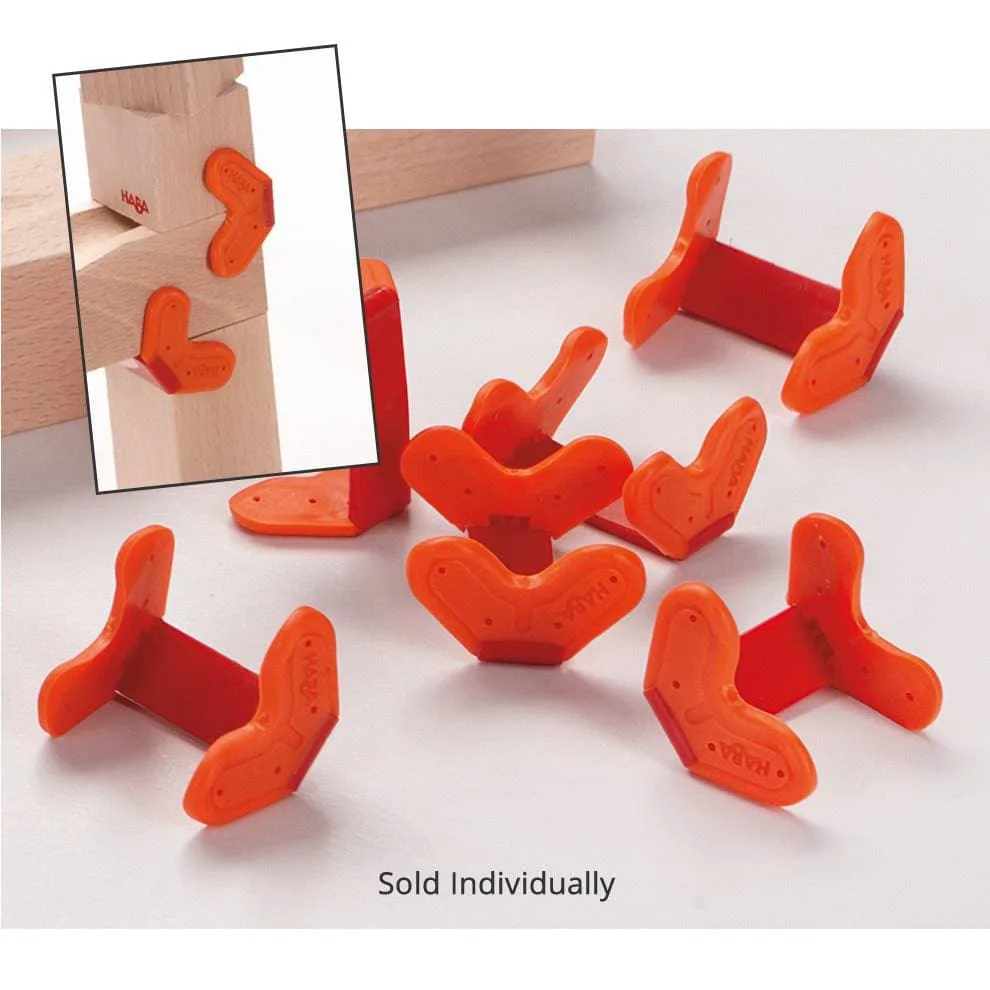
- Marble Run and Building Block Single Clamp: Take your marble run building to the next level with the HABA Marble Run Clamps! Designed to add extra stability and structural support, these durable, easy-to-use clamps help keep wooden marble run tracks, towers, and block structures securely in place—perfect for little engineers who love big builds. If your child loves building tall towers, these clamps can add stability to any block structure, reducing frustration and allowing for more ambitious creations.
Which One Fits Your Child?
Best For
- Children who love solving puzzles and enjoy a challenge
- Kids aged 3 and up who have developed fine motor skills
Not For
- Younger toddlers (under 3) who may get frustrated
- Children who prefer open-ended, imaginative play without rules
Both teetering towers and classic wooden blocks have their place in a child's toy collection. Teetering towers offer a thrilling challenge, while classic blocks provide endless creative possibilities. Consider your child's age, personality, and play preferences to make the best choice. And remember, you can always combine both for a well-rounded building experience.