Quick answer
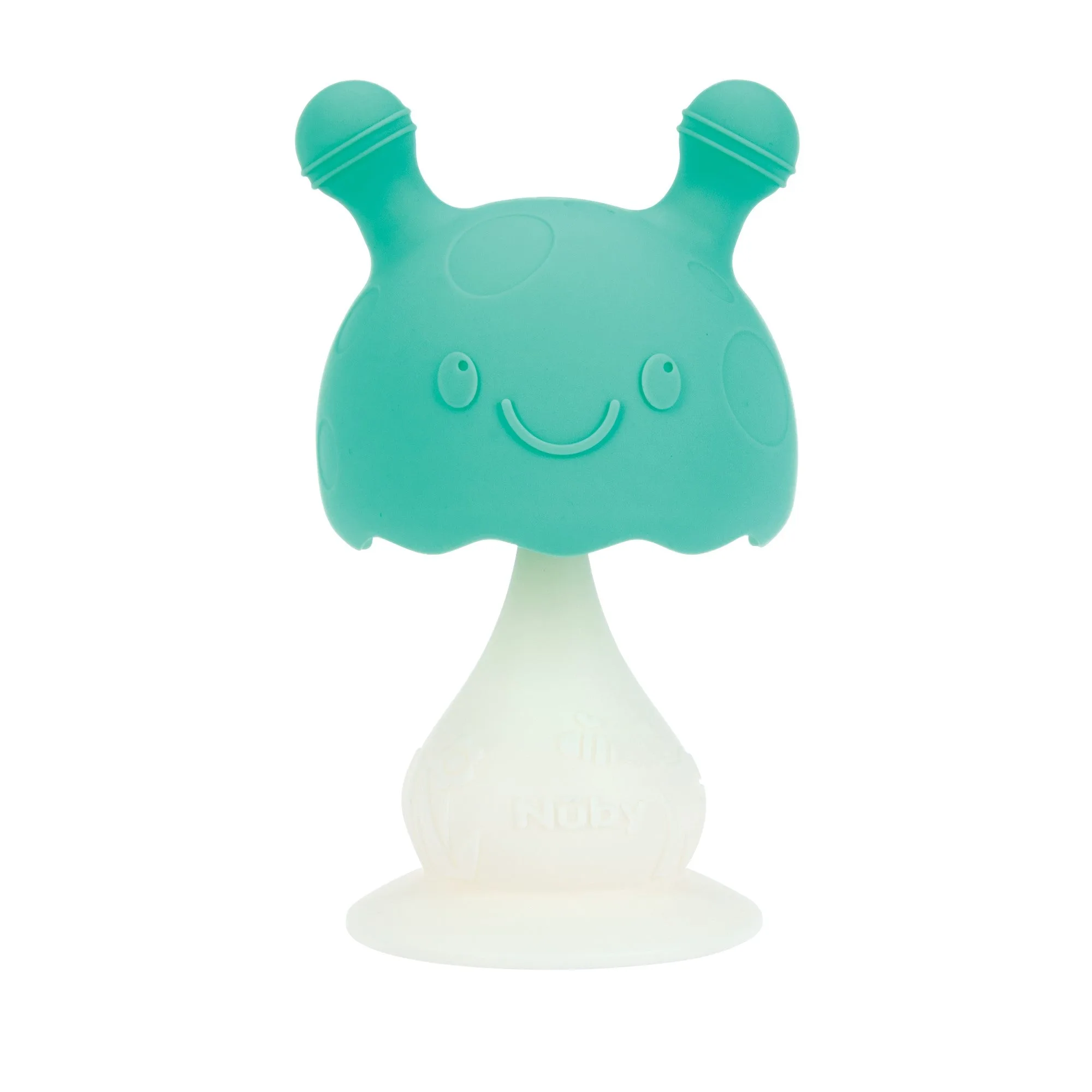
Match the texture to the moment: smooth silicone for babies who are just starting to gnaw, bumpy or bobble textures for babies who press hard on sore gums, and gripper-style shapes for babies who want to hold and shake the teether themselves. If you only buy one, choose a soft silicone teether with a mix of smooth and textured areas, like the Mushroom Bobble Head Teether Toy, because it covers more than one teething phase.
What do the main teether textures actually feel like?
Smooth silicone glides along the gums and is the gentlest option for a baby whose teeth are just breaking through. Bumpy or nubby textures add friction, which many babies prefer when they are actively pressing down. Bobble-style textures combine a rounded, flexible head with smaller raised details, so your baby gets both a soft surface and something to chew against. Gripper textures are less about the surface and more about the shape: they are designed so small hands can wrap around and hold on.
How do I choose a teether shape for my baby's grip?
Watch how your baby holds things. A young baby who mostly swipes and mouths will do better with a lightweight teether that has a suction base or a shape you can hold for them. Once your baby can pass an object hand to hand, a ball or ring shape with an open area to grab becomes more useful. A gripper teether for babies is simply one with a handle, loop, or narrow section that a fist can close around.
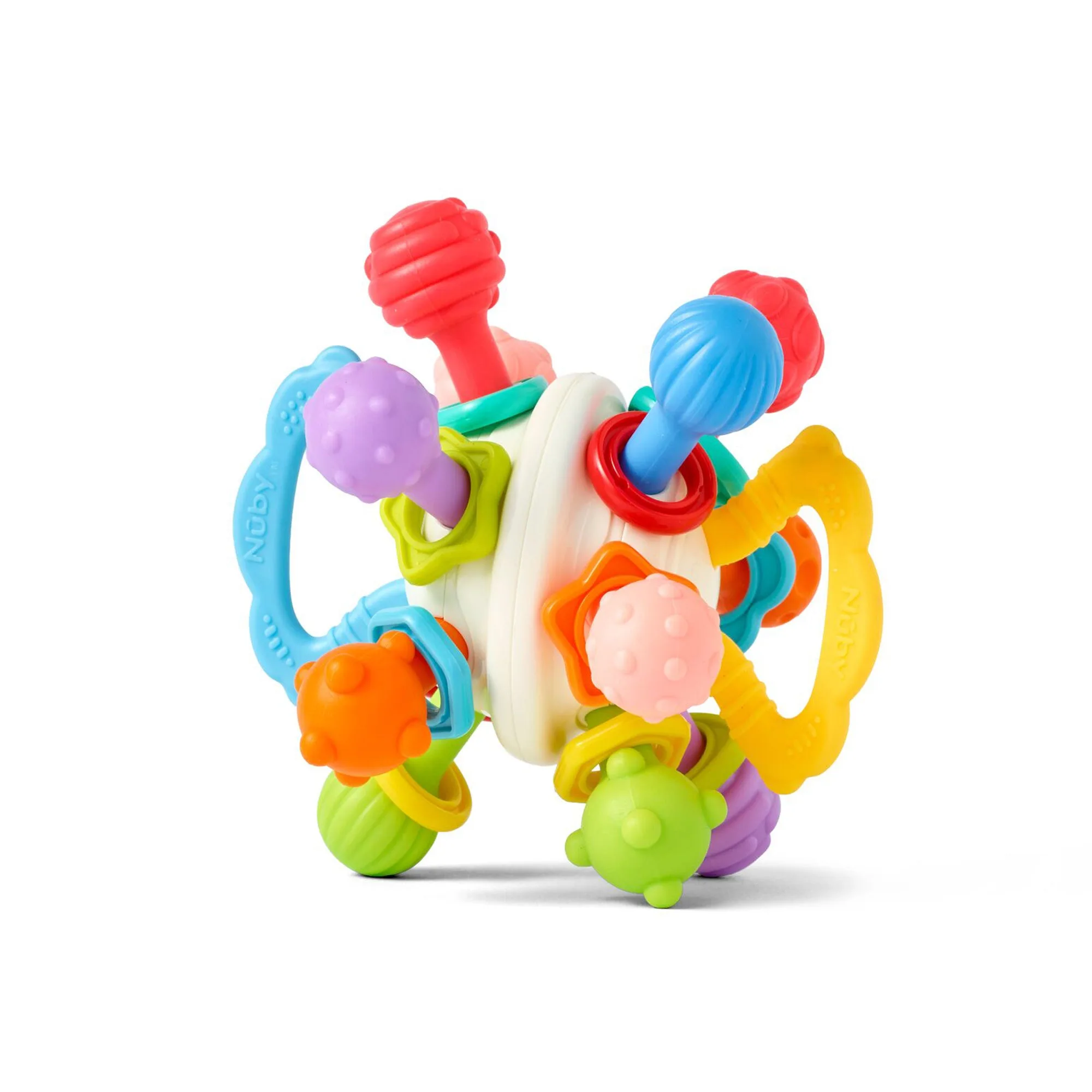
The Twist Ball Teether is a good example of a shape that encourages holding and shaking, while the Mushroom Bobble Head Teether Toy works well when you want the teether to stay put on a tray or table.
Should a teether be soft, firm, or both?
Most babies do best with soft silicone for the main chewing surface, because it gives slightly under pressure and is gentle on sensitive gums. Firm plastic parts are better for the handle or the frame, not for the part that goes in the mouth. A teether that mixes soft silicone with a firm base gives your baby something safe to bite and something solid to hold. If a teether is entirely firm, it may be too harsh during the early days of teething.
When should I switch from one texture to another?
Switch when your baby's behavior changes, not on a calendar. If your baby is drooling and gnawing on your knuckle, a smooth silicone teether is a good first step. If they are pressing down hard and seem frustrated, offer a textured or bobble style. If they keep dropping the teether or trying to grab it from you, move to a gripper or ball shape. Keep two or three textures on hand so you can rotate them as your baby's needs shift.
How do I clean and check textured teethers?
Wash silicone teethers with warm water and mild soap, then air dry. Check textured areas, seams, and any suction base for tears or stickiness before each use. If a teether has a suction base, press it onto a clean, smooth surface and test that it holds before handing it to your baby. Replace any teether that shows cracks, holes, or loose parts, because texture can hide small damage.
Teether texture FAQ
Is a bobble head teether better than a flat teether?
A bobble head teether gives your baby a rounded, flexible surface plus smaller raised details, so it can soothe both light and hard chewing. A flat teether is simpler and easier to wipe clean, but it offers less texture variety. Choose bobble if your baby presses hard on their gums; choose flat if you want the simplest option.
What is the best teether shape for babies who drop everything?
Look for a shape with a suction base or a wide loop. A suction base holds the teether on a highchair tray or table, and a loop is easy to hook onto a strap or your finger. A suction base reduces the drop-and-cry cycle during meals and play.
Can a gripper teether help with motor skills?
Yes. A gripper teether for babies is designed to be held, shaken, and passed between hands, which builds dexterity and hand-eye coordination. The Twist Ball Teether is one example with a graspable shape and textured surfaces. Pick a gripper style once your baby can hold and shake objects on purpose.
How many textures does a baby need?
Two or three is plenty. Keep one smooth silicone teether, one textured or bobble style, and one gripper or ball shape. Rotating them keeps the experience fresh and covers different teething stages. A small rotation beats a drawer full of identical teethers.
Product facts that matter for texture and grip
- Mushroom Bobble Head Teether Toy: Made of super soft silicone, with antennae that resemble mom's nipple and a suction base that sticks to most surfaces. The soft silicone is gentle on sensitive gums, while the suction base keeps the teether steady on a tray or table so your baby can chew without holding it.
- Twist Ball Teether: Features bright colors, fun sounds, and textured surfaces, and is easy for baby to grasp. The textured surfaces provide relief during tough teething times, and the graspable shape supports hand-eye coordination and dexterity as your baby shakes and mouths it.
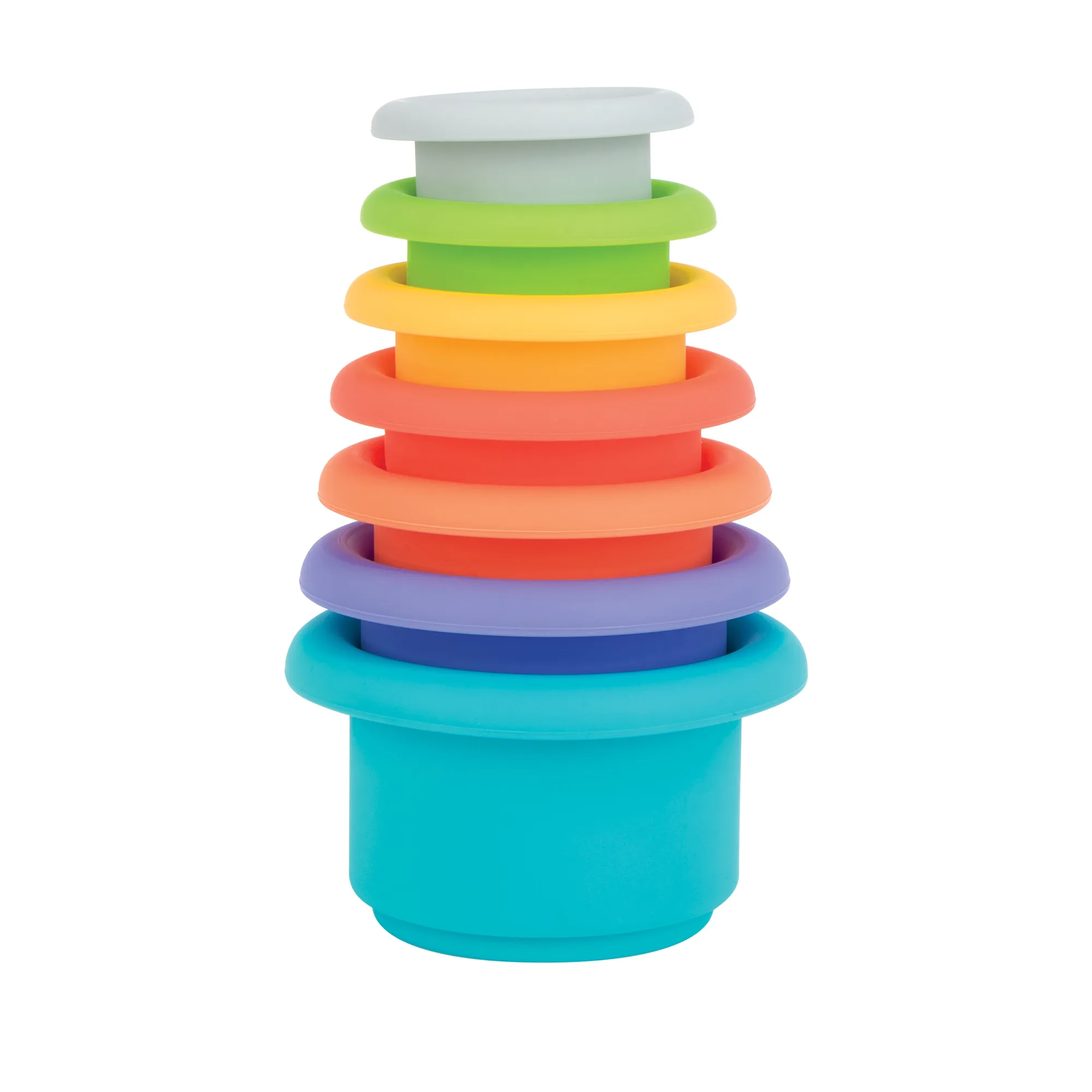
- Silicone Stacking Cups: Silicone Stacking Cups come in various sizes and engaging colors to help with color recognition and size sequencing. They are not a teether, but they are a useful next step for babies who have moved past constant chewing and need a toy that builds fine motor skills.