Quick answer
For most nature photographers, a 100-400mm zoom offers the best balance of reach and versatility. If you shoot birds or distant wildlife, step up to a 150-600mm or consider a fixed super-telephoto like a 500mm f/4 for maximum sharpness and light.
Focal length determines your subject reach
The first decision is how much reach you need. A 70-200mm lens works well for large mammals and environmental portraits, but for small birds or skittish wildlife, 400mm or more is often necessary. Longer focal lengths also compress perspective, making distant backgrounds appear closer to your subject.
Aperture affects light and background blur
A wider maximum aperture (like f/2.8 or f/4) lets in more light, enabling faster shutter speeds in low light and creating softer backgrounds. However, these lenses are heavier and more expensive. Variable-aperture zooms (e.g., f/5.6-6.3) are lighter and more affordable but struggle in dim conditions.
Image stabilization matters at long focal lengths
Handholding a long lens at slow shutter speeds is challenging. Built-in stabilization (VR/IS) can give you 3-4 stops of shutter speed advantage. If you plan to shoot from a tripod most of the time, stabilization is less critical.
Decision rules for choosing a telephoto lens
- Rule 1: Match focal length to your typical subject: Birds and small mammals: 400-600mm minimum. Large mammals or landscapes: 200-400mm is sufficient. If you photograph a mix, consider a zoom like 100-400mm or 150-600mm. A zoom lens gives you flexibility to adapt to different subjects without swapping gear.
- Rule 2: Choose aperture based on light and budget: If you shoot in early morning or late evening, a constant f/4 or f/2.8 lens is worth the extra cost and weight. For midday or well-lit scenes, a variable-aperture lens saves money and weight. Test your typical shooting conditions before deciding on aperture.
- Rule 3: Decide between zoom and prime: Zooms offer versatility and are ideal for travel or changing subjects. Primes (fixed focal length) are sharper, lighter for their aperture, and often have faster autofocus. Use a prime when you know exactly what distance you'll shoot from. If you can only own one lens, a zoom is more practical. Add a prime later for specialized use.
- Rule 4: Factor in stabilization and support: Lenses with built-in stabilization allow handheld shooting at slower shutter speeds. Without it, plan to use a monopod or tripod for sharp results at 400mm and above. Stabilization is a convenience, not a substitute for good technique.
Product facts
-
Telephoto Lenses for Nature Photography: The Telephoto Lenses for Nature Photography course teaches you to freeze motion, eliminate blur, catch wildlife in action, be creative, and capture awe-inspiring photos. Even the best lens won't help if you don't know how to use it. This course covers the techniques that turn a good lens into great wildlife images.
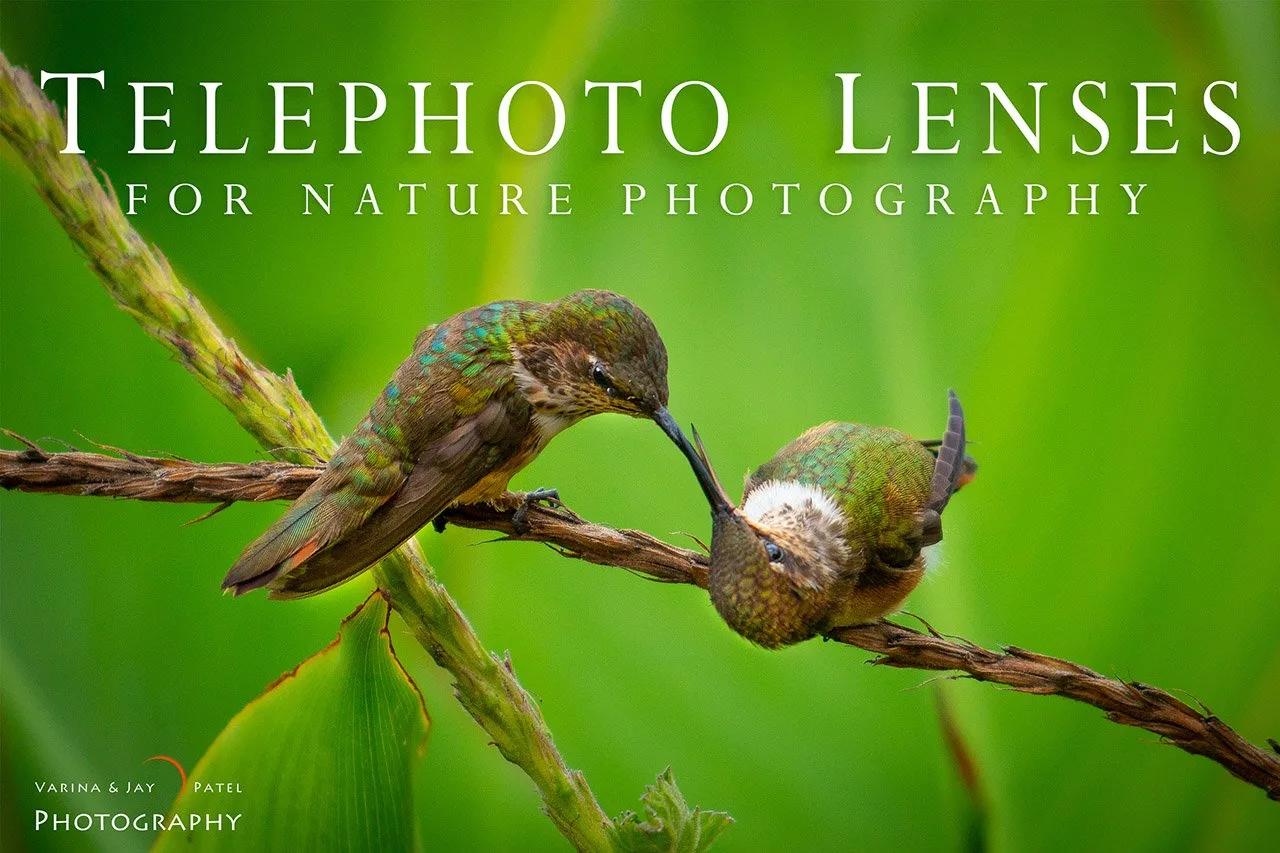
Telephoto Lenses for Nature Photography
Who should buy what
Best for
- Nature photographers who shoot a variety of wildlife and want one lens for travel and everyday use
- Bird photographers who need maximum reach and are willing to trade weight for focal length
Not for
- Macro or close-up nature photography where a dedicated macro lens performs better
- Low-light indoor or night wildlife photography where a fast prime f/2.8 or faster is essential