Quick Answer
Choose LRGB filters for bright galaxies and star clusters under dark skies; choose narrowband filters for emission nebulae, especially from light-polluted areas.
Why the Choice Matters
The filter you pick changes what light reaches your camera. LRGB filters split starlight into luminance, red, green, and blue channels, giving natural color for broadband targets like galaxies. Narrowband filters isolate specific emission lines, such as hydrogen-alpha and oxygen-III, which makes faint nebulae pop even from a city backyard.
Your sky conditions and target type are the main factors. If you mostly shoot galaxies, LRGB is the workhorse. If you chase nebulae or live under heavy light pollution, narrowband is more forgiving.
Trade-offs to Keep in Mind
Narrowband filters block most of the visible spectrum, so they require longer exposures and are not suitable for broadband targets like galaxies. LRGB filters do not block light pollution, so they are less effective from urban skies.
Some filters combine narrowband and broadband benefits. For example, a dual-narrowband filter can capture both emission lines and some broadband signal, which is useful for galaxy-nebula hybrids.
Frequently Asked Questions
What is the difference between LRGB and narrowband filters?
LRGB filters pass broad red, green, blue, and luminance bands to capture natural color from broadband sources like stars and galaxies. Narrowband filters pass only very narrow wavelength ranges around emission lines like H-alpha and OIII, which are emitted by glowing nebulae.
Which filter type is better for galaxies?
LRGB filters are generally better for galaxies because they preserve the full spectrum of starlight, giving natural colors and detail. Narrowband filters block most of that light, so galaxies appear very dim or invisible. If galaxies are your primary target, invest in a quality LRGB set.
Which filter type is better for nebulae?
Narrowband filters are ideal for emission nebulae because they isolate the specific wavelengths these objects emit, increasing contrast and revealing faint structure. This works even from light-polluted skies. For nebulae, consider a dual-narrowband filter like the IDAS NB12-DR if you use a Canon drop-in adapter.
Can I use a narrowband filter from a city?
Yes. Narrowband filters block most artificial light, so they are the best choice for urban astrophotography. However, they require longer exposures and are not suitable for broadband targets like galaxies. If you shoot from a city, prioritize narrowband filters for nebulae and accept that galaxy imaging will be limited.
What is a full spectrum filter used for?
A full spectrum filter allows all wavelengths from UV to IR to pass through, which is useful for astrophotography with a modified camera. It can also be used for solar imaging when paired with a proper solar filter. A full spectrum filter is versatile but requires additional filters for specific uses, such as UV/IR cut for regular color imaging.
How do I choose between LRGB and narrowband?
Consider your main targets and sky conditions. For galaxies and star clusters under dark skies, choose LRGB. For nebulae or light-polluted skies, choose narrowband. If you want a compromise, a galaxy and nebula filter like the IDAS GNB can handle both. Match your filter to your most common imaging scenario; you can always add a second filter later.
Filter Options at Cloud Break Optics
-
GNB (Galaxy & Nebula) Filter: The IDAS GNB (Galaxy & Nebula) filter captures Ha and OIII emission lines as well as the galaxy's broadband signal in NIR at the same time. This makes it a versatile choice if you want to image galaxies and nebulae without switching filters.
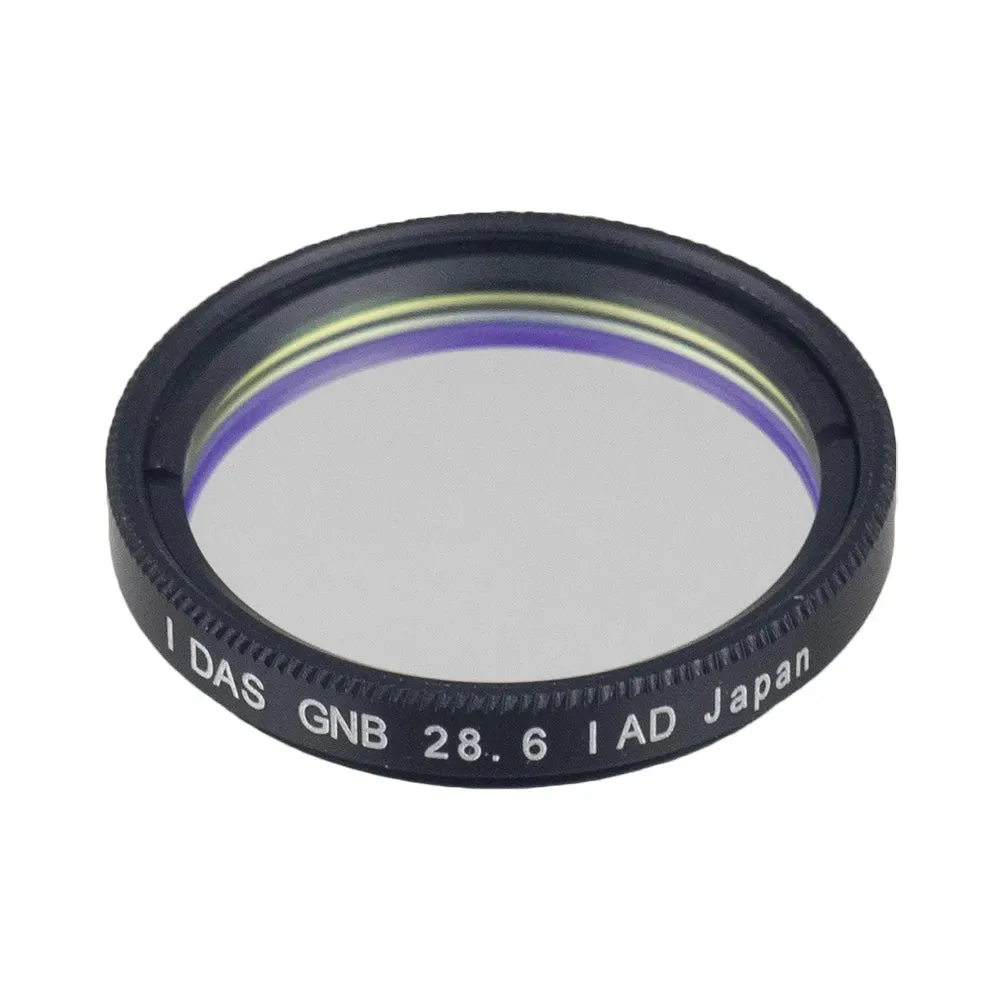
GNB (Galaxy & Nebula) Filter
-
NB12-DR Filter: The IDAS NB12-DR is a dual-narrowband filter designed to fit a Canon drop-in filter adapter and requires an in-camera IR blocker. It is a convenient option for Canon mirrorless users who want narrowband capability without a filter wheel.
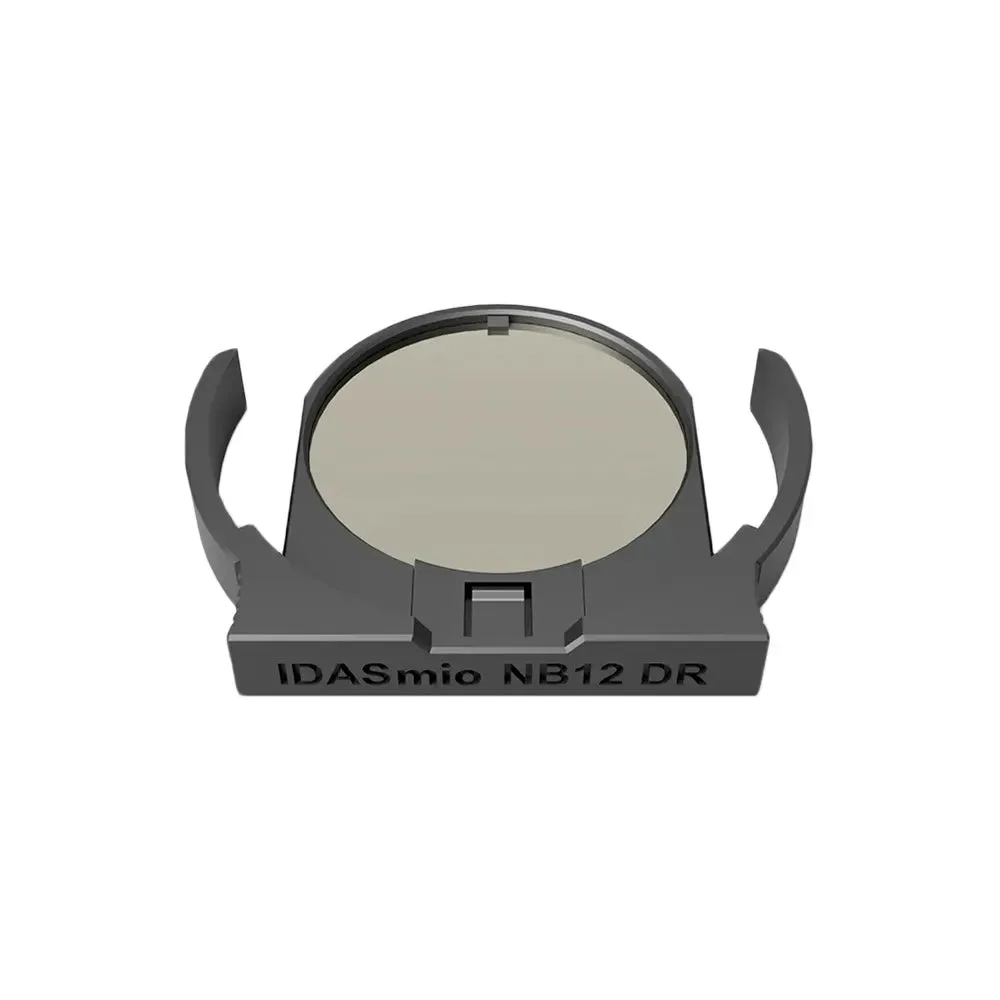
NB12-DR Filter
-
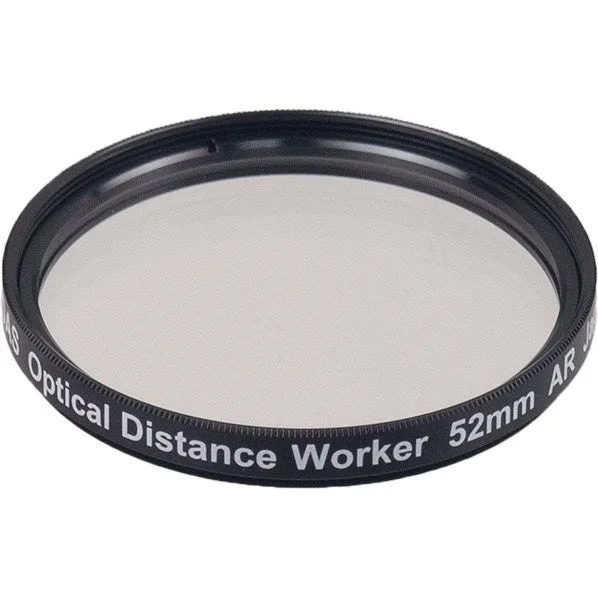
AR-Coated Full Spectrum Filter (ODW): The AR-Coated Full Spectrum Filter (ODW) is par-focal with all IDAS 48mm and 52mm filters and comes with a Canon EF-R(P) drop-in adapter. This full spectrum filter lets you capture UV, visible, and IR light, which is useful for modified cameras and solar work.