Quick answer
Most modular terrain comes apart because of debris in the joint, a weak or missing magnet, slight warping, or a mismatch between how the pieces were designed to connect. Clean and reseat the joint first, then check magnet polarity and alignment, then address warp with gentle heat or a shim. If the pieces still won't hold after those steps, stop forcing them and switch to a different connection method or piece type.
You set up a corridor, turn to grab a mini, and the wall has already leaned away from the floor. Loose terrain is one of the most common frustrations in modular tabletop building, and it almost always has a specific, findable cause. The good news is that the fix is usually physical, not permanent.
This guide walks through the symptoms you are most likely to see, the causes behind them, and the corrective actions that work on Dwarvenite and similar modular systems. It also tells you when to stop troubleshooting and change your approach, so you do not damage pieces trying to solve a problem that is really about layout or material.
Start with the joint, not the piece
Before you blame the sculpt, inspect the connection point. Dirt, paint buildup, stray flock, or a tiny bit of resin flash can hold two pieces apart just enough that they never seat fully. A joint that is 90 percent closed feels loose even though the geometry is fine. Clean both mating surfaces with a soft brush and a dry cloth, then press them together again.
If the pieces are painted, check whether paint has bridged the peg or the socket. Paint thickness is small, but on a tight tolerance joint it is enough to prevent a firm fit. You can carefully scrape the mating surface with a fingernail or a dull hobby knife, but do not remove material from the structural part of the joint.
- Work over a tray so small magnets or pins do not disappear into the carpet.
- Test the joint dry, with no force, before you decide it is defective.
Magnets, polarity, and missing hardware
Many modular terrain systems use magnets to hold walls, floors, and accessories together. If a connection feels weak but the pieces are clean, the magnet is the next suspect. A magnet that has been pushed too deep, installed backward, or replaced with the wrong polarity will repel instead of attract. You can test polarity by bringing a known magnet near the joint and feeling whether it pulls or pushes.
If a magnet is missing entirely, the joint may still work through friction and gravity, but it will not survive a bump. Replacement magnets are widely available, but match the size and depth of the original recess. Oversized magnets can crack the surrounding material when you press them in, especially in resin pieces.
- Mark the correct polarity on a spare magnet so you can check future pieces quickly.
- Never hammer or force a magnet into a recess; widen the recess slightly instead.
Warping and how to correct it safely
Warping is the most misunderstood cause of loose terrain. A piece that has been stored in a hot car, stacked under weight, or left in direct sun can bend just enough that its mating edges no longer meet. The fix is gentle heat and gentle pressure, not brute force. Warm the piece evenly with a hair dryer on low, flex it slightly past where it needs to go, and hold it until it cools.
Do not use boiling water on painted pieces, and do not microwave anything. Resin and Dwarvenite respond differently to heat, and a piece that is too hot can deform permanently or lose paint adhesion. If you are not comfortable applying heat, a thin shim under a corner can level a floor for a single session without changing the piece at all.
- Heat the whole piece, not one spot, to avoid a kink.
- Let the piece cool completely before testing the fit again.
When the problem is the layout, not the piece
Sometimes the pieces are fine and the build is asking them to do something they were not designed to do. A long unsupported wall span will sag or drift, no matter how strong the magnets are. A floor tile placed on an uneven surface will rock and pull at its neighbors. If the same pieces hold well in a small test build but fail in your full layout, the issue is structural.
Add support at the ends of long spans, keep the build on a flat surface, and avoid mixing connection systems that were not meant to interlock. If you are using a set with specialized connection pieces, such as corner walls or diagonal walls, check that you are using the intended orientation. Forcing a piece into the wrong slot is a common cause of a joint that never feels right.
- Build a small test layout with the suspect pieces before rebuilding the whole table.
- Keep a flat mat or board under the build to reduce rocking.
The point where you should stop
If you have cleaned the joint, checked the magnets, corrected warp, and supported the layout, and the pieces still will not stay together, stop. Continuing to force the connection can crack the material, chip paint, or loosen the magnet recess permanently. At that point, the honest options are to use the piece as scatter terrain rather than a structural connection, to replace the specific connector, or to switch to a different connection method for that part of the build.
It is also worth checking whether the pieces were ever designed to connect in the way you are using them. Some sets include pieces that look similar but serve different roles, and mixing them can create a joint that feels loose even though both pieces are in good condition. If you are unsure, test the pieces against a known-good reference build.
- Do not sand or cut a joint to force a fit unless you are prepared to retire the piece.
- If a piece is cracked at the joint, stop using it structurally.
Diagnosis: match the symptom to the fix
- Symptom: pieces feel loose but look flush: Debris, paint bridging, or a shallow magnet recess is holding the joint open. Clean both surfaces, check that the magnet is seated at the correct depth, and test again. If cleaning fixes it, stop here. Do not apply heat.
- Symptom: pieces push apart or feel repelled: A magnet is installed backward or the polarity is mismatched. Confirm with a known magnet and reverse or replace the magnet only if the recess allows it safely. If the magnet is sealed in place, use the piece as scatter terrain instead.
- Symptom: a wall or floor rocks and pulls at its neighbors: The piece is warped or the build surface is uneven. Warm the piece gently and flatten it, or add a shim under the low corner for a session-level fix. If the piece returns to its warp after cooling, retire it from structural use.
- Symptom: the same pieces hold in a small build but fail in the full layout: The layout is asking too much of the connections. Add support at long spans, keep the build on a flat surface, and check that you are using the intended orientation for corner and diagonal pieces. If the layout still fails, change the layout rather than the pieces.
Pieces that show how connections are supposed to work
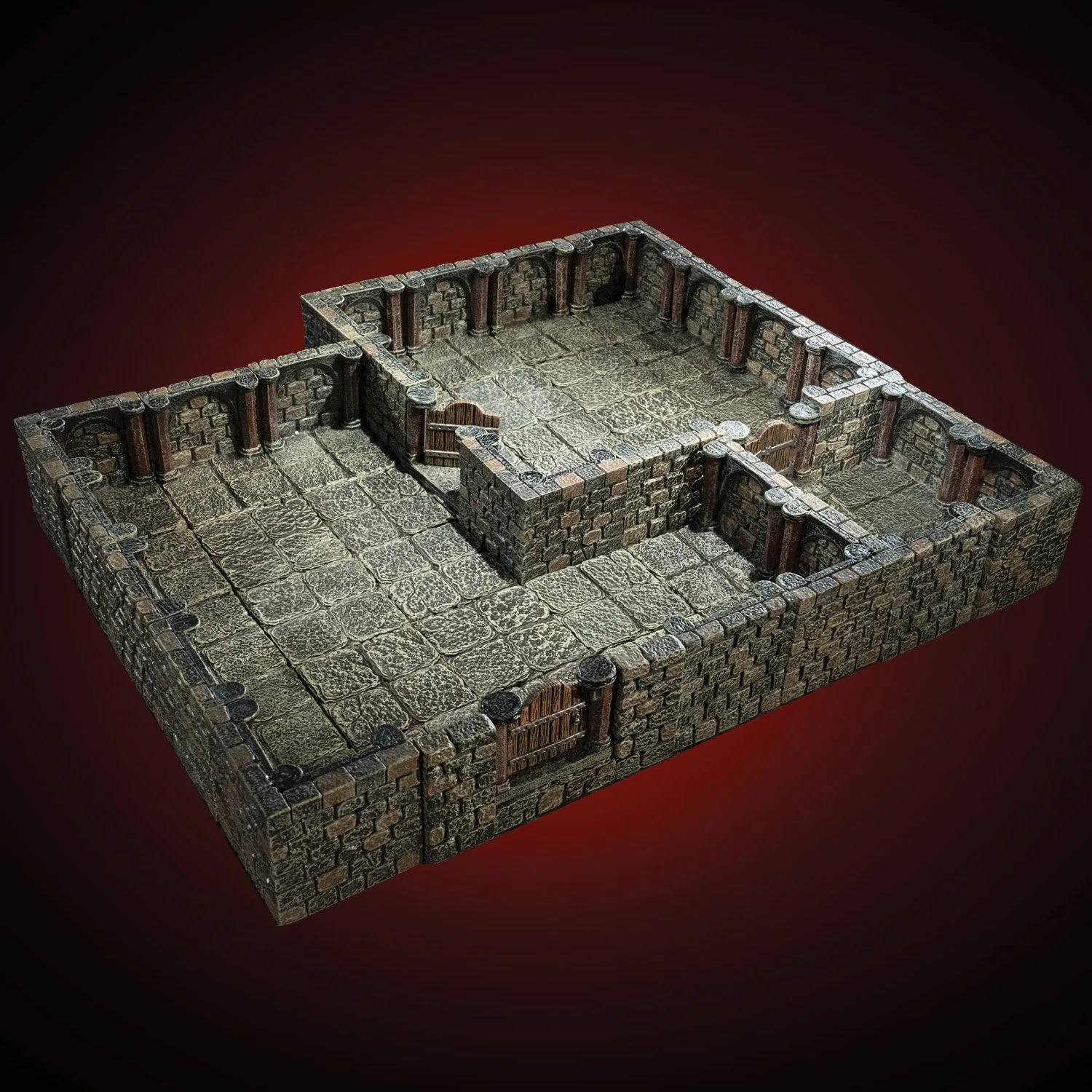
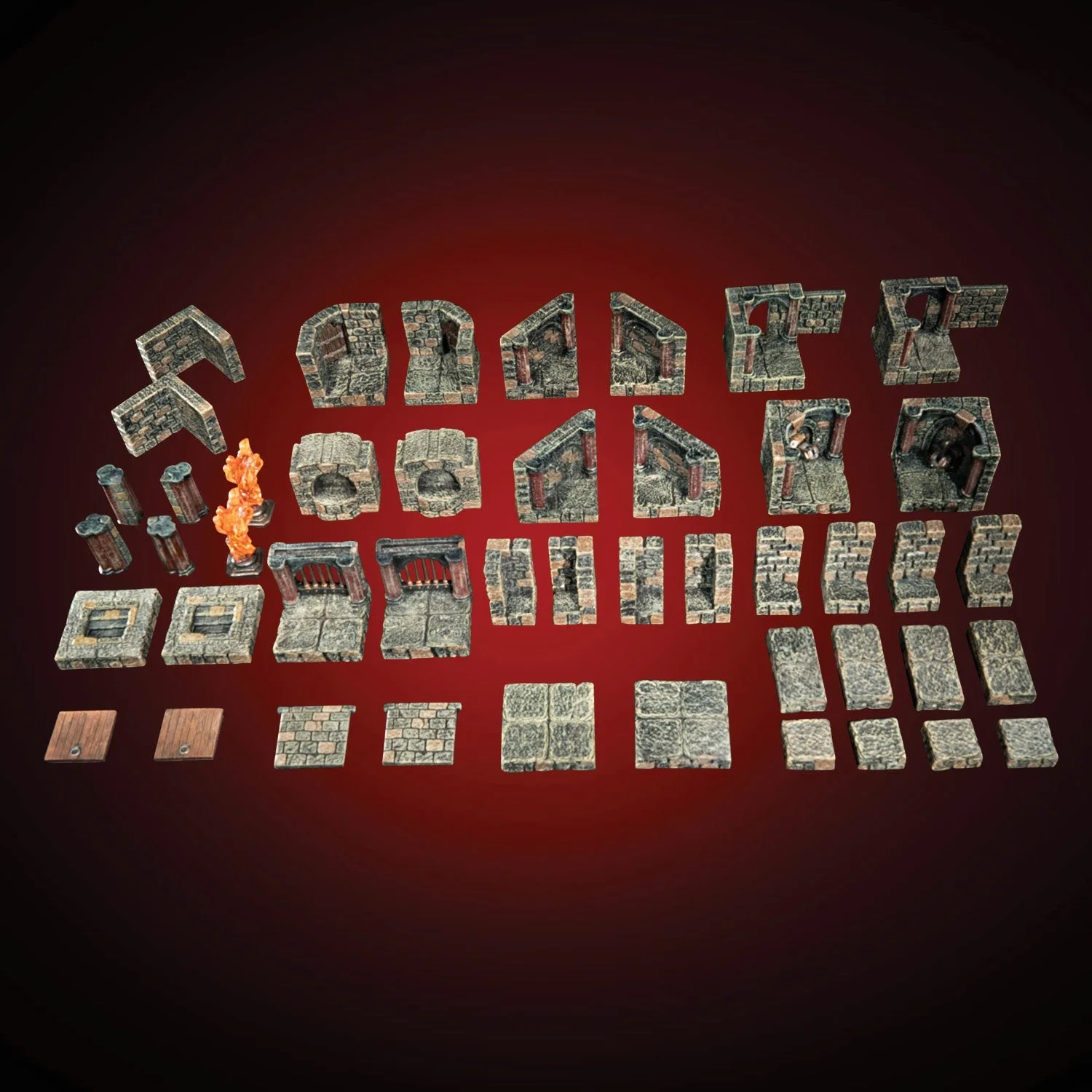
- Advanced Dungeon Core Set - Vaulted (Unpainted): Includes Diagonal and Door Corner Walls for new room and corridor shapes, small pieces for technical building, and various magnetic walls with accessories, plus a pair of fully-functional Secret Door Corners and an Open Arch wall with two types of inserts. This set is a useful reference for how magnetic walls, corner pieces, and inserts are meant to seat. If your loose pieces are from a different set, comparing them against these connection types can reveal whether you are mixing incompatible roles.
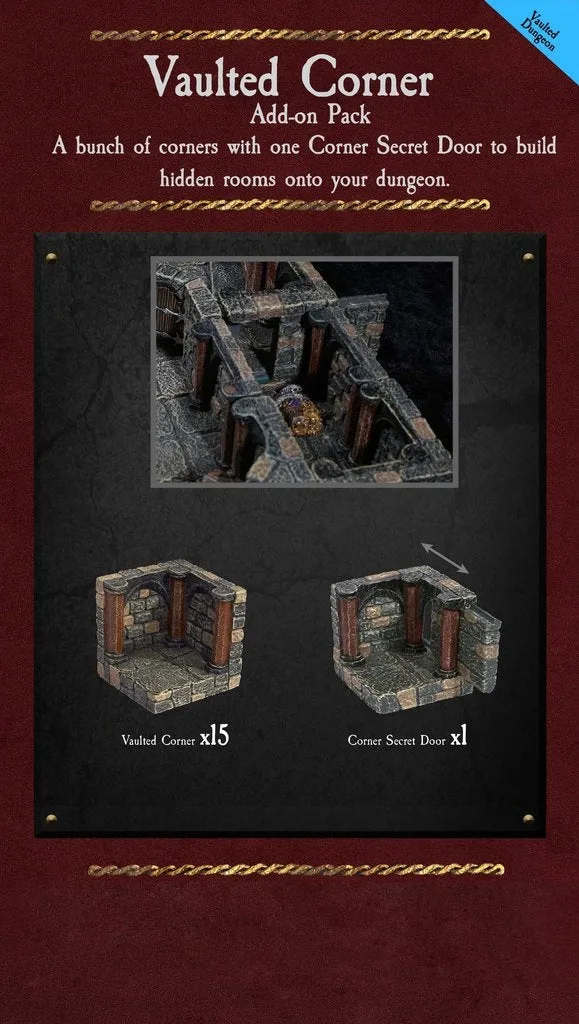
- Vaulted Corners (Painted): A set of corners with one Corner Secret Door to build hidden rooms onto your dungeon. Corner pieces carry more leverage than straight walls, so a weak magnet or a slightly warped corner shows up as a leaning wall. Testing a corner in isolation helps you tell a piece problem from a layout problem.
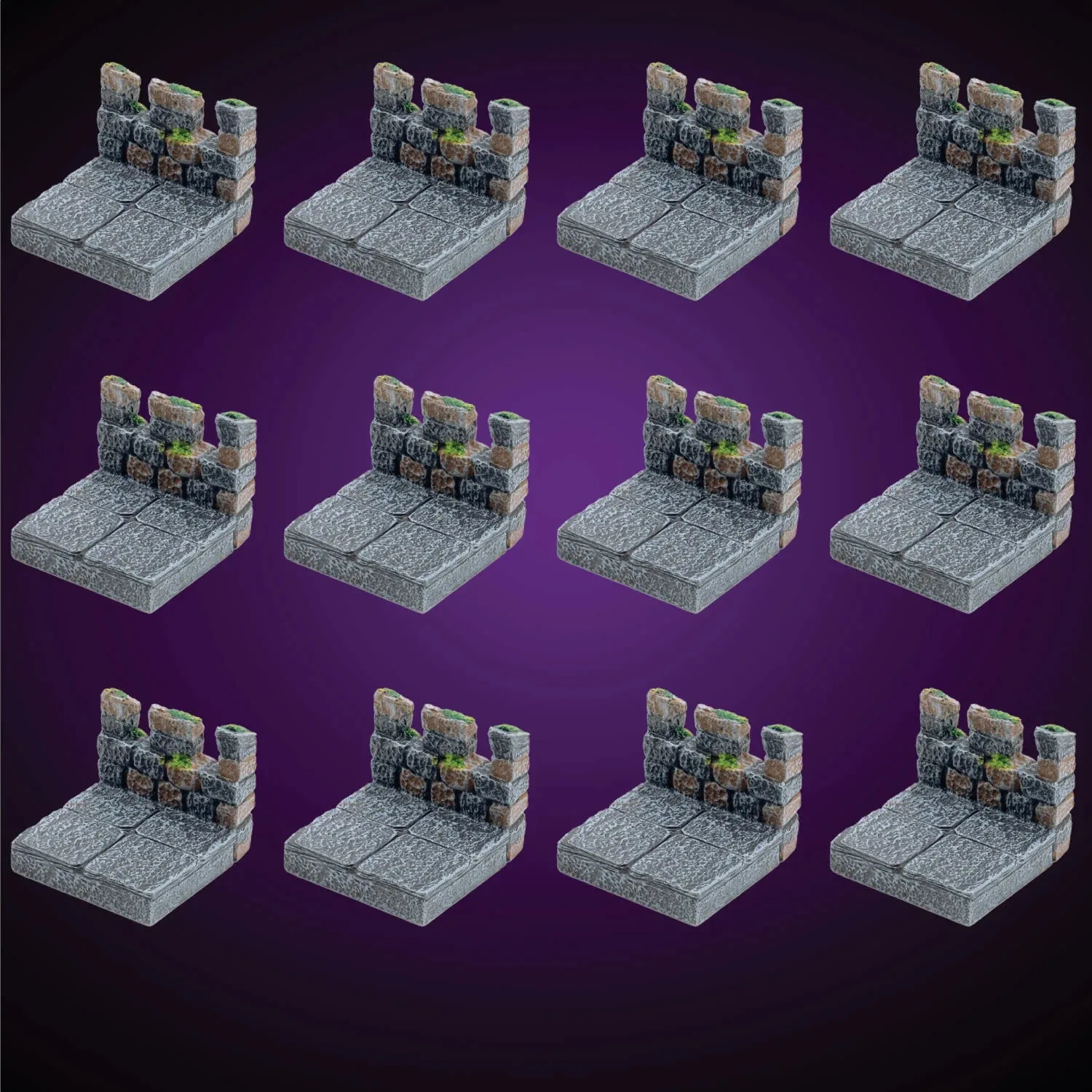
- Wall Crenellations Pack (Unpainted): Contains 12 pieces, previously labeled Wall Battlements Add-On Pack, and the manufacturer recommends Pokorny Paint Colors for painting Dungeon Gray Dwarvenite. Top-mounted pieces like crenellations are especially sensitive to fit at the wall joint. If they sit loose, the cause is usually the wall connection below them, not the crenellations themselves.
Loose terrain is usually a joint problem, a magnet problem, or a layout problem, and each has a different fix. Work through the diagnosis in order, stop before you force anything, and treat the pieces as a system rather than a collection of stubborn parts.