Quick answer
Choose the Bridger size that gives you the extra room you actually want, then pick the temperature rating for your coldest expected night. Because this bag is intentionally wider than a standard rectangle, your usual sleeping bag length is a starting point, not a strict rule.
Why the Bridger's oversized cut changes the sizing decision
Most sleeping bag length guides assume a tapered mummy bag where every inch of girth matters. The Bridger is built the other way: it is significantly wider than standard rectangle bags, with flannel lining and a cinchable mummy hood. That extra width means the bag feels roomier at any given size, so the trade-off shifts from 'can I move?' to 'how much bulk and packed size will I accept?'
If you roll over at night or sleep in layers, the added girth is the main reason to pick this bag. If you prioritize a small pack and low weight, the same width works against you.
Length, temperature rating, and hood fit are separate choices
The Bridger comes in multiple sizes, temperature ratings, and colors, so treat those as independent decisions. Length controls whether your feet press the bottom and whether the hood can sit over your head without pulling. Temperature rating controls how much insulation you carry. Color is cosmetic and should not drive fit.
A bag that is too short forces you to curl up, which compresses insulation and feels colder. A bag that is far too long adds dead space that your body has to warm. The oversized width softens the second problem, but it does not eliminate it.
The honest trade-off: comfort versus packed size
The Bridger's canvas shell and flannel lining are chosen for durability and a soft, home-like feel, not for ultralight packing. That is a fair trade for car camping, base camps, and cold-weather trips where you are not carrying the bag far. It is a poor trade for fast-and-light backpacking, where a tighter mummy bag saves space and weight.
Decision rules for picking your Bridger size
- Start with your standing height: Use your height as the baseline, then add a few inches of clearance so your feet do not press the bag's end. If you are between sizes, lean toward the larger size because the Bridger's width already gives you room to move. Check foot clearance first; it is the fit failure you will feel every night.
- Match the temperature rating to your coldest night: Pick the rating for the lowest temperature you realistically expect, not the average. If you sleep cold or plan shoulder-season trips, choose the warmer rating rather than relying on extra layers. A warmer rating is easier to vent than a cold bag is to stretch.
- Test the hood with your sleeping position: The cinchable mummy hood only helps if it can close around your head without pulling the bag tight across your shoulders. If you sleep on your side with an arm out, size up so the hood still drapes rather than binds. Cinch the hood before you commit; if it tugs at your shoulders, the size is wrong.
- Decide how you will carry it: If the bag lives in a car or a base camp, choose the roomiest size you like. If you will carry it on your back, weigh the comfort gain against the packed bulk of an oversized canvas bag. Car camping favors room; backpacking favors a tighter bag.
Bridger at a glance
-
Bridger: Oversized canvas sleeping bag with flannel lining and a cinchable mummy hood, described as the biggest and warmest bag in the line. The extra width and hood let you size for comfort rather than squeezing into the smallest shell that fits.
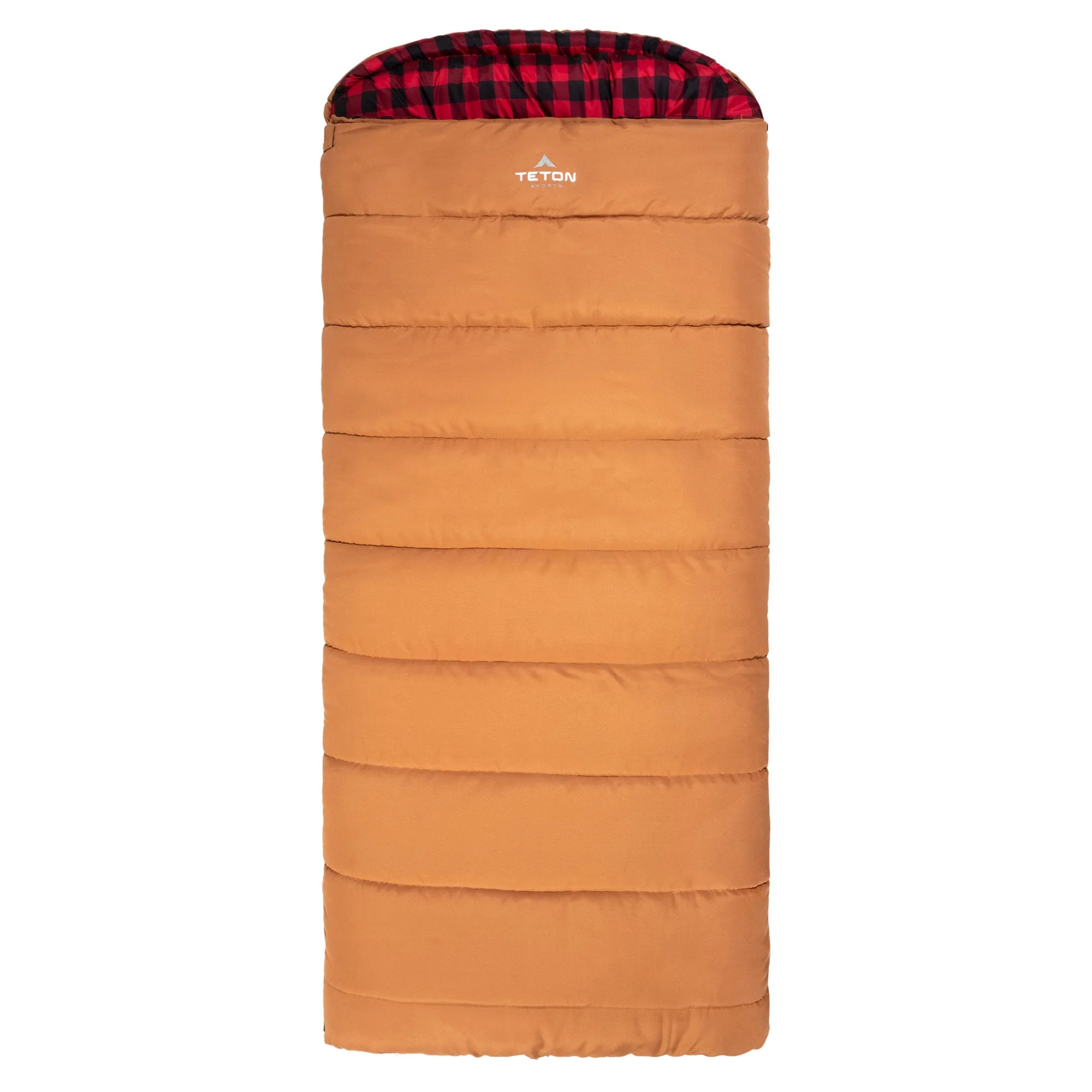
Bridger
Who the Bridger fits
Best for
- Campers who want extra room to roll over or sleep in layers
- Car campers and base-camp users who value durability and a flannel feel over packed size
- Cold sleepers who want a cinchable hood and a warm rating in one bag
Not for
- Ultralight backpackers counting every ounce and liter
- Sleepers who prefer a close-fitting mummy bag
- Warm-weather campers who do not need a warm-rated bag