Quick Answer
Choose a thong when you want all-day comfort and a bit of coverage; pick a G-string when you need the absolute minimum fabric and a truly invisible line under tight clothing.
Coverage and Comfort Trade-Off
The main difference comes down to how much fabric sits at the back. A thong typically has a wider center strip (about 1 to 2 inches) that provides more coverage and a more secure feel. A G-string uses a thin string—often just a few millimeters wide—that disappears between the cheeks, offering the least visible panty line but also the least fabric to move with you.
That extra fabric in a thong can feel more comfortable for extended wear, especially if you're not used to minimal styles. The G-string's minimal design can be ideal for special occasions or outfits where any line would ruin the look, but some people find the string less comfortable for all-day activities.
Fabric and Construction Differences
Thongs are often made with softer, stretchier fabrics like lace blends that include elastane for flexibility. The Amelia Thong from Kat The Label, for example, uses a nylon-polyester-elastane blend with a cotton gusset, making it breathable and comfortable for daily wear. G-strings, by contrast, are usually constructed with even less material, sometimes just a thin elastic band and a small triangular front panel.
The adjustability of a waistband—like the one on the Amelia Thong—can also affect fit. An adjustable waistband lets you customize the pressure around your waist, which is a feature you rarely find on G-strings. This can be a deciding factor if you're between sizes or prefer a looser or snugger fit.
When to Choose Each Style
If you're wearing high-waisted jeans, leggings, or any outfit with a lot of movement, a thong's wider back provides more stability and prevents shifting. For ultra-tight dresses or skirts where even a seam might show, a G-string is the safest bet for a completely invisible look.
Consider your daily activities too. If you're on your feet all day or exercising, the thong's coverage can reduce chafing. If you're heading out for a short evening event, the G-string's minimalism might be all you need.
Thong vs G-String: Trade-Offs at a Glance
- Coverage: Thongs offer more rear coverage (1-2 inches of fabric) for a secure feel; G-strings have a thin string that offers minimal coverage. If you value modesty or a more substantial feel, thong wins.
- Comfort for All-Day Wear: Thongs with soft lace and elastane blends, like the Amelia, are designed for daily comfort; G-strings can be less comfortable for prolonged sitting or active days. For long workdays or travel, choose a thong with breathable fabric.
- Invisibility Under Clothing: Both styles eliminate visible panty lines, but G-strings have the thinnest back, making them the most invisible under ultra-tight garments. For sheer or bodycon dresses, G-string is the safest no-show option.
Product Spotlight
-
Amelia Thong Limoncello: The Amelia Thong in Limoncello features custom floral embroidered lace and an adjustable waistband for a personalised fit. This means you can tweak the waist to your preferred tightness, and the lace adds a touch of style without compromising everyday comfort.
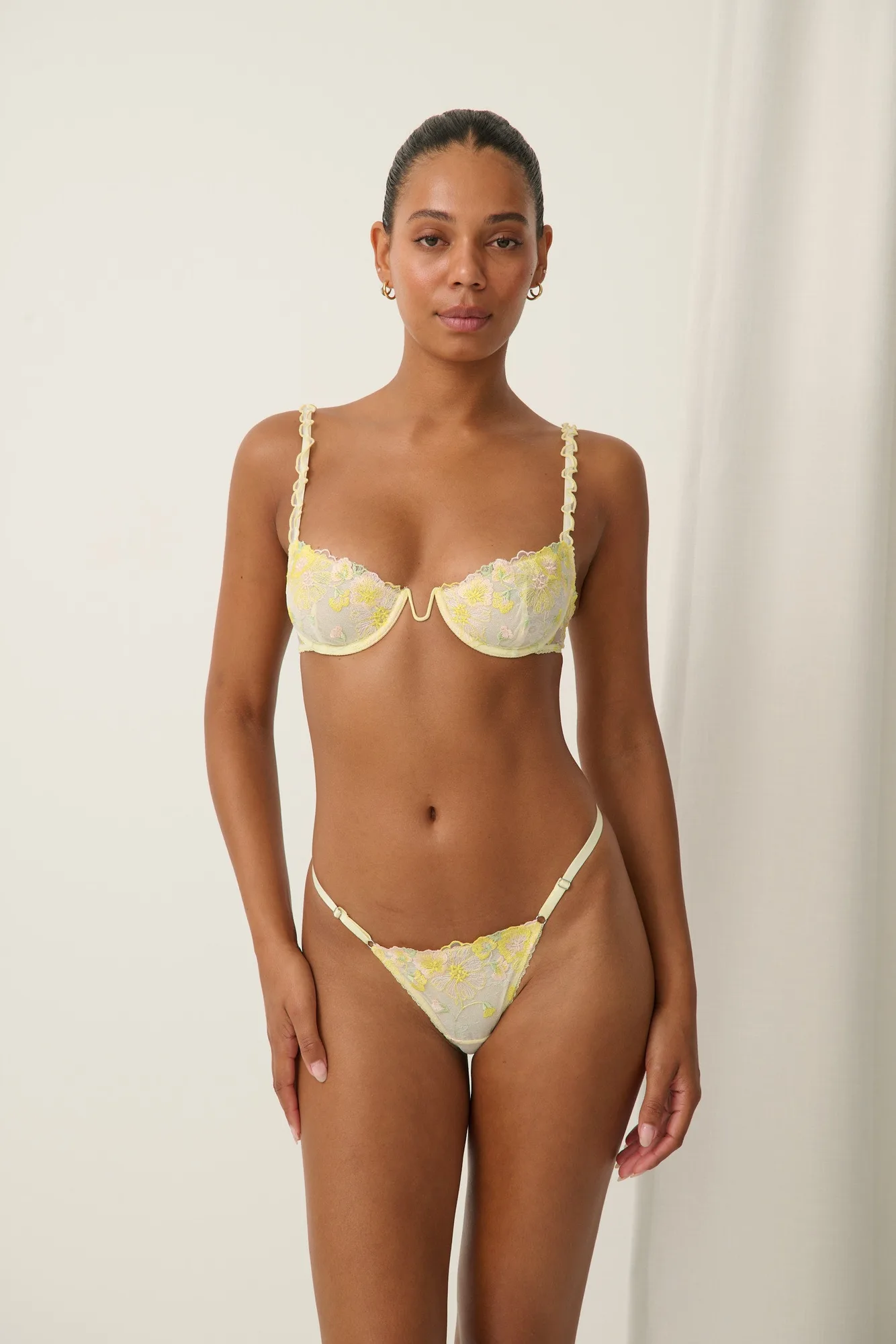
Amelia Thong Limoncello
How to Decide
Best For
- Everyday wear and all-day comfort
- Outfits that need a no-show line but allow a little more fabric
Not For
- Ultra-tight or sheer clothing where even a thin seam might show
- Anyone who prefers the absolute minimum fabric and barely-there feel