Quick answer
A pre-assembled needlepoint thread kit wins when the canvas uses a curated mix of silk and wool fibers, because it removes the guesswork of matching colors and buying skeins one by one. Buying threads separately makes more sense when you already own a thread stash, want to swap fibers, or plan to stitch a canvas-only design with colors you choose yourself.
The real question behind a thread kit value comparison is not whether kits cost more, but whether the time and mistakes you avoid are worth the difference. A kit bundles the canvas, the fibers, and often the tools into one purchase. Buying separately spreads that cost across multiple orders and decisions.
Wheelhaus canvases come in two forms: canvas only and thread kit. The thread kit includes the hand painted, stitch painted canvas, a curation of all the silk and wool fibers needed for the piece, a thread ring, a tapestry needle, and a stitch brochure. Knowing what is inside each option is the fastest way to decide which path fits your project.
What each option actually includes
A canvas-only purchase gives you the design and a starting point. Wheelhaus canvas-only listings include the hand painted, stitch painted canvas, one of seven stitch pamphlets, a WIP Project Card, and a reusable PVC protective project baggy. You supply every thread, which means you control fiber type, dye lot, and quantity.
A thread kit adds the fiber curation, a thread ring, and a tapestry needle on top of the canvas and its stitch materials. That matters because the kit fibers are chosen for that specific painted canvas, so silk and wool are already balanced for the design. You are paying for a decision that has already been made well.
- Count the fibers you already own before assuming a kit is redundant.
- Check whether the canvas-only listing includes a stitch pamphlet; Wheelhaus canvas-only items do.
The cost picture: kit price versus separate purchases
Thread kit cost is easiest to judge against the canvas-only price plus the retail cost of comparable silk and wool. A kit concentrates the fiber spend into one line item, while buying separately spreads it across however many skeins and dye lots you need. For a small design, the gap is narrow; for a large one, the kit often saves both money and shipping.
The trade-off is flexibility. A kit locks you into the designer's fiber choices. Buying separately lets you substitute a cheaper wool for silk in background areas or reuse leftovers. If you stitch often, your stash can absorb part of a project's thread needs and tilt the math toward separate buying.
- Estimate thread quantity from the canvas size before comparing prices.
- Factor in shipping when buying separately; multiple small orders add up.
Convenience and color matching
Convenience is where pre-assembled thread kit pros clearly outweigh the alternative. The colors arrive matched to the painted canvas, so you skip the trial-and-error of holding skeins against the design. For stitch painted canvases, that matching is more important than it sounds, because the paint already indicates where each color belongs.
Buying needlepoint thread separately is not hard, but it is slower. You need to identify each color area, choose a fiber, and confirm you have enough. On a design like Blue and Black Watch, a 4-inch round on 18 mesh, the color count is small enough that separate buying stays manageable. On a larger tote, the decision load grows quickly.
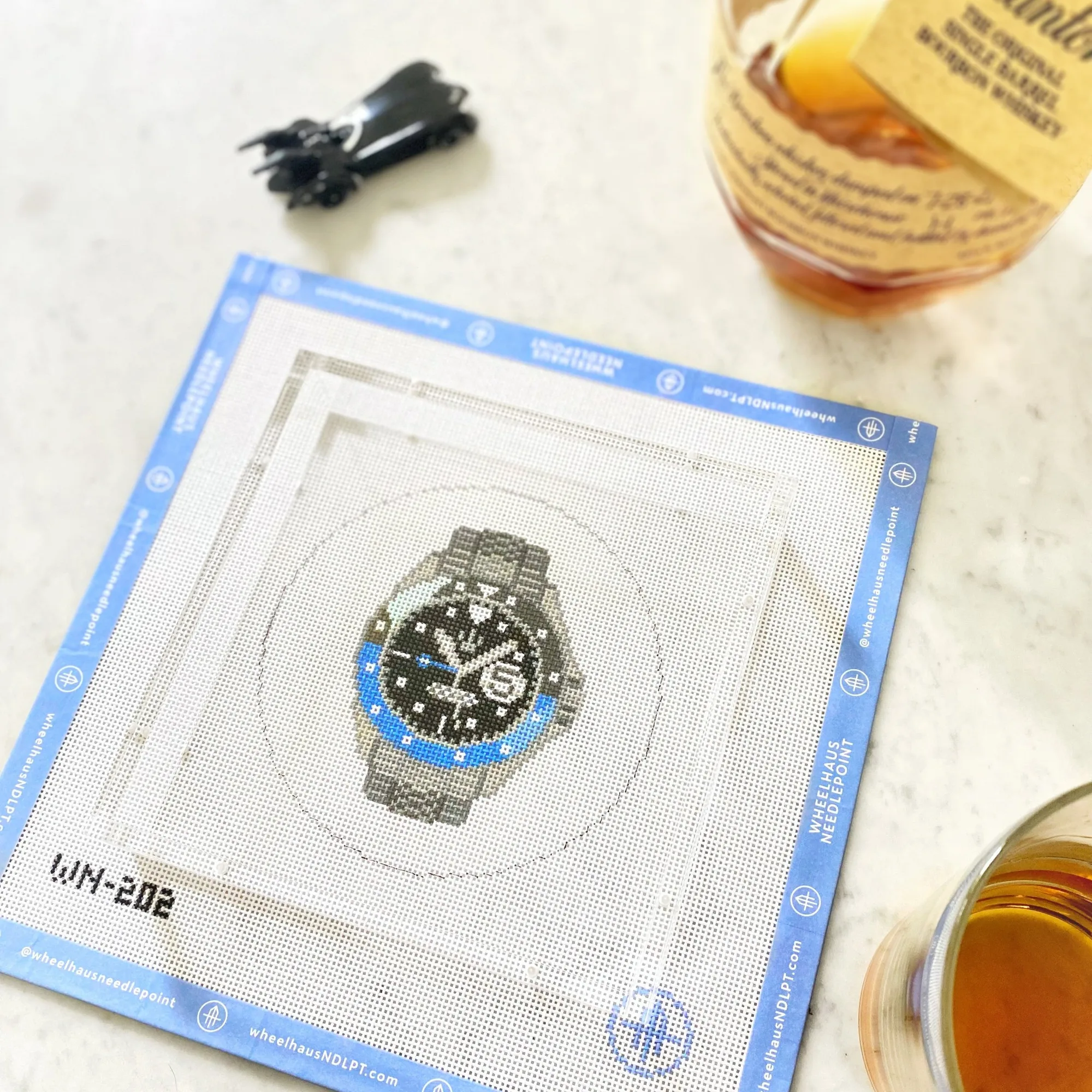
Blue and Black Watch
- Photograph your canvas in daylight before shopping for separate threads.
- Buy one extra skein of any color used in large areas.
When canvas-only plus your own threads wins
Canvas-only plus your own threads is the better route when you enjoy choosing fibers or want to stitch with a specific silk or wool you already trust. It also suits stitchers who keep a working stash and dislike paying for threads they may not need in full.
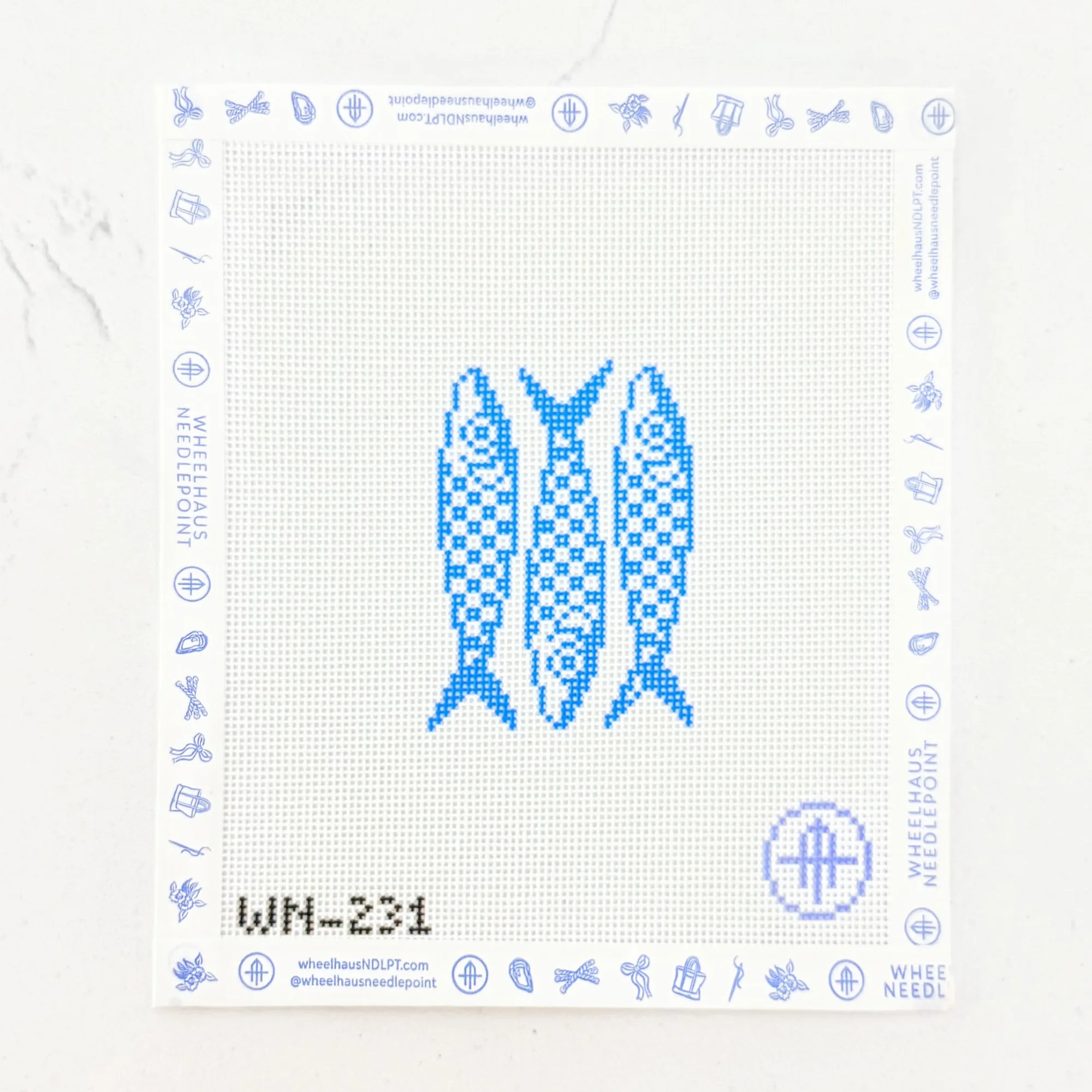
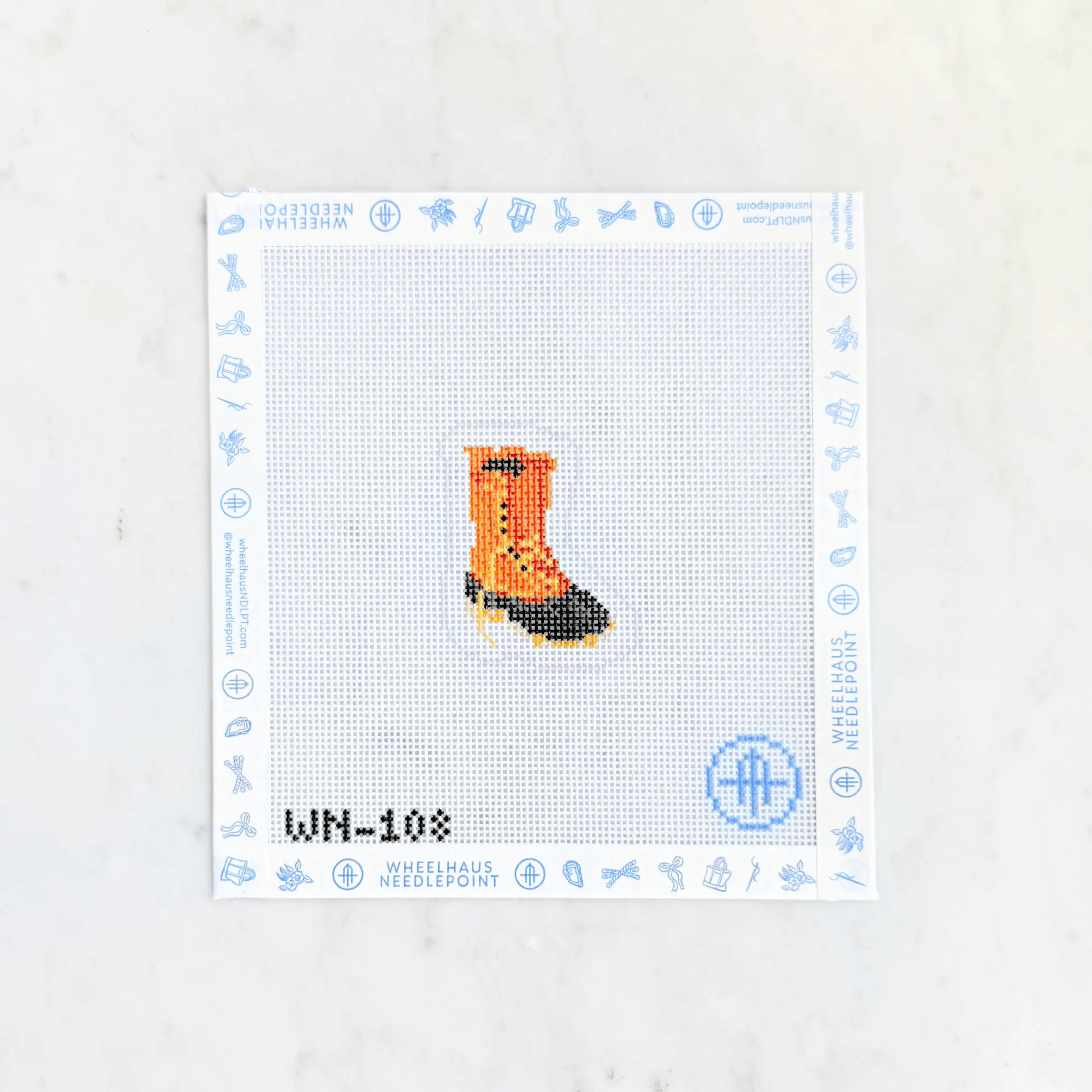
Small charms and minis are a good example. The Preorder - Mini Duck Boot Charm is a 2x3 design on 18 mesh, and the Preorder - Euro Summer Mini - Checkered Sardines is 2.5x3 on 18 mesh. At that size, a few skeins from your stash can cover the project, making the separate-buying path genuinely efficient.
- Keep a written inventory of thread colors you own to avoid duplicate buys.
- Reserve kits for designs with many color areas or blended fibers.
Trade-offs to weigh before you buy
- Cost certainty vs fiber flexibility: A kit concentrates fiber cost into one purchase and removes the risk of running short. Buying separately can cost less if your stash covers part of the project, but requires estimating quantities yourself. Choose the kit when you want a fixed, predictable spend.
- Color matching vs personal palette: Kit fibers are curated for the painted canvas, so colors arrive coordinated. Separate buying lets you substitute fibers or shift the palette, but you own the matching work. Choose separate threads when you want to control the final look.
- Time saved vs money saved: A kit removes shopping, dye-lot checking, and quantity math. Buying separately takes more time but can trim cost, especially on small designs like the mini charms. Value your stitching time honestly before deciding.
Wheelhaus examples that show the difference
- Blue and Black Watch: 18 mesh, stitch painted, 4-inch round design with a recommended stretcher bar size of 8x8; available as canvas only or as a thread kit that includes the curated silk and wool fibers, a thread ring, a tapestry needle, and a stitch brochure. A compact round design with a defined color palette is a strong candidate for a kit, because the fiber curation removes color-matching work on a small canvas.
- Camo NDLPT Tote: 18 mesh, 3.75 x 3.25 design; canvas only includes the hand painted, stitch painted canvas, one of seven stitch pamphlets, a WIP Project Card, and a reusable PVC protective project baggy; the thread kit adds the curated silk and wool fibers, a thread ring, a tapestry needle, and a stitch brochure. The tote shows the full kit-versus-canvas-only split in one listing, so you can compare what you gain before paying for fibers.
- Preorder - Mini Duck Boot Charm: 18 mesh, 2x3 design, StitchPerfect Painted. A small charm uses little thread, so buying separately from a stash is often the more economical choice than a full kit.
Which option fits your project
Best for
- Stitchers who want matched silk and wool fibers without shopping for each color
- Larger canvases with many color areas where running short mid-project is a real risk
- Gift stitchers who want one purchase that includes canvas, threads, needle, and stitch brochure
Not for
- Stitchers with a deep thread stash who prefer to use what they already own
- Small charms and minis where a few skeins cover the design
- Anyone who wants to swap fibers or adjust the designer's color choices
Compare the kit price against the canvas-only price plus the threads you would actually buy, then decide based on how much matching work you want to do. For a design like Blue and Black Watch, the kit's curated fibers and included tools usually justify the difference; for a 2x3 charm, your own stash may be the smarter spend.