Quick answer
The Lansinoh Thrive 2-in-1 Breast Pump combines the flexibility of a wearable pump with hospital-strength suction, letting you pump hands-free with or without cords. Follow the steps below to get the most comfortable and efficient session every time.
Why the 2-in-1 design matters
Most electric pumps lock you into one mode: either a traditional plugged-in pump or a fully wearable one. The Thrive 2-in-1 gives you both options in a single device, which is useful if your pumping needs change throughout the day—maybe you want maximum suction at home and quiet portability when you're out.
Because it's lightweight and has no cords or tubes in wearable mode, you can move around, multitask, or even lie back while pumping. The LED display keeps the controls simple, so you can adjust settings without fumbling in low light.
Hospital-strength suction: what it means for you
Hospital-strength suction refers to the pump's ability to maintain effective vacuum levels that mimic a hospital-grade pump. This is important for maintaining milk supply and emptying the breast efficiently, especially for moms who pump frequently or exclusively.
Keep in mind that stronger suction isn't automatically better—comfort is key. Start at a lower setting and gradually increase until you feel a gentle tug, not pain. The Thrive's adjustable settings let you find your personal sweet spot.
How to use the Thrive 2-in-1 Breast Pump: step-by-step
- Prepare your parts and breast: Wash your hands and ensure all pump parts that contact milk are clean and dry. Position the flange comfortably over your breast, making sure your nipple is centered. A quick warm compress or gentle massage can help stimulate let-down. Check that the flange size fits properly—your nipple should move freely without rubbing the sides.
- Choose your mode: wearable or corded: For hands-free pumping, use the wearable setup with no cords or tubes. If you prefer traditional pumping or need to plug in, attach the cord and connect to a power source. Both modes use the same pump motor. Test both modes at home first so you know which one works best for different situations.
- Start with a low suction level: Turn on the pump and select the lowest suction setting. Gradually increase the suction until you feel a comfortable tugging sensation—it should never hurt. Use the LED display to monitor the level and adjust as needed. If you feel pain, decrease the suction immediately. Pain can inhibit let-down and reduce output.
- Pump until flow slows or stops: Continue pumping for about 15–20 minutes per session, or until the milk flow slows to a trickle. Switch to the other breast if you're pumping one side at a time, or use both flanges for double pumping to save time. Empty breasts signal the end of a session—don't over-pump beyond comfort.
- Store milk and clean parts promptly: Pour expressed milk into storage bags or bottles, label with the date and time, and refrigerate or freeze according to guidelines. Disassemble all parts and wash them with warm soapy water or in a dishwasher (if top-rack safe) right after use. Never leave milk at room temperature for more than 4 hours—clean parts prevent bacterial growth.
Key features at a glance
-
Thrive 2-in-1 Breast Pump™: The Lansinoh Thrive 2-in-1 Breast Pump offers lightweight, hands-free pumping freedom with no cords or tubes, plus hospital-strength suction and a convenient LED display. This means you can pump discreetly while moving around, without sacrificing the suction power needed for efficient milk expression.
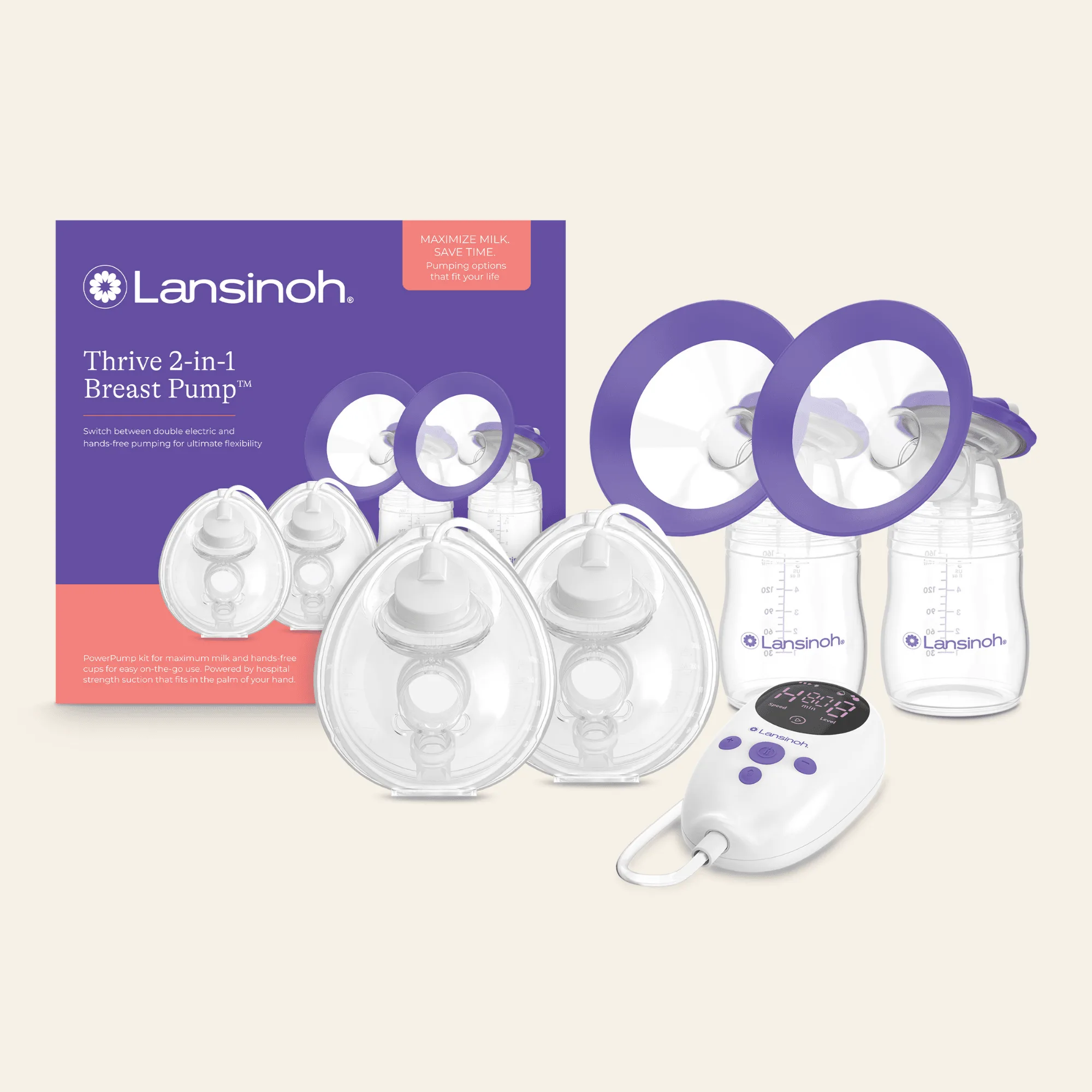
Thrive 2-in-1 Breast Pump™