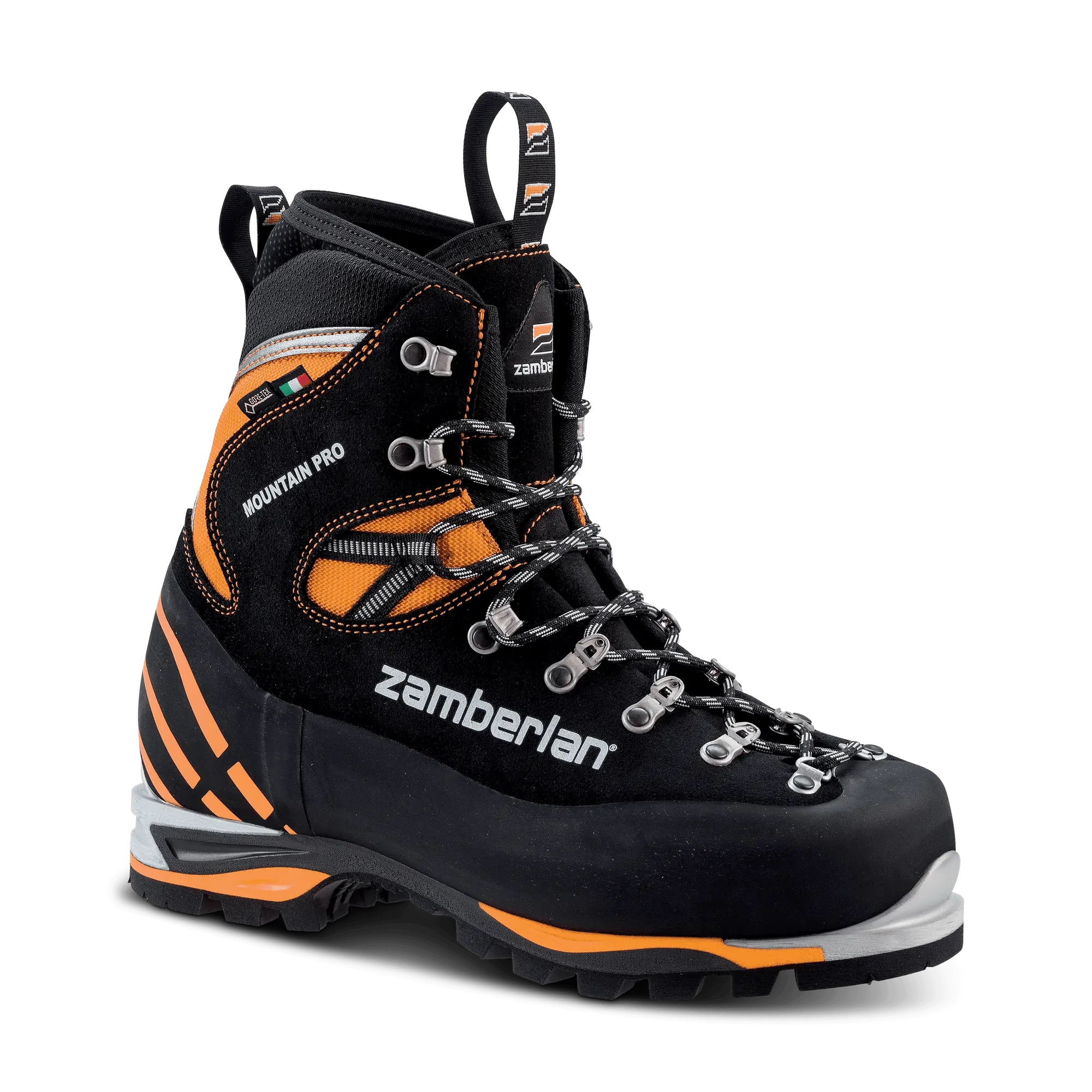
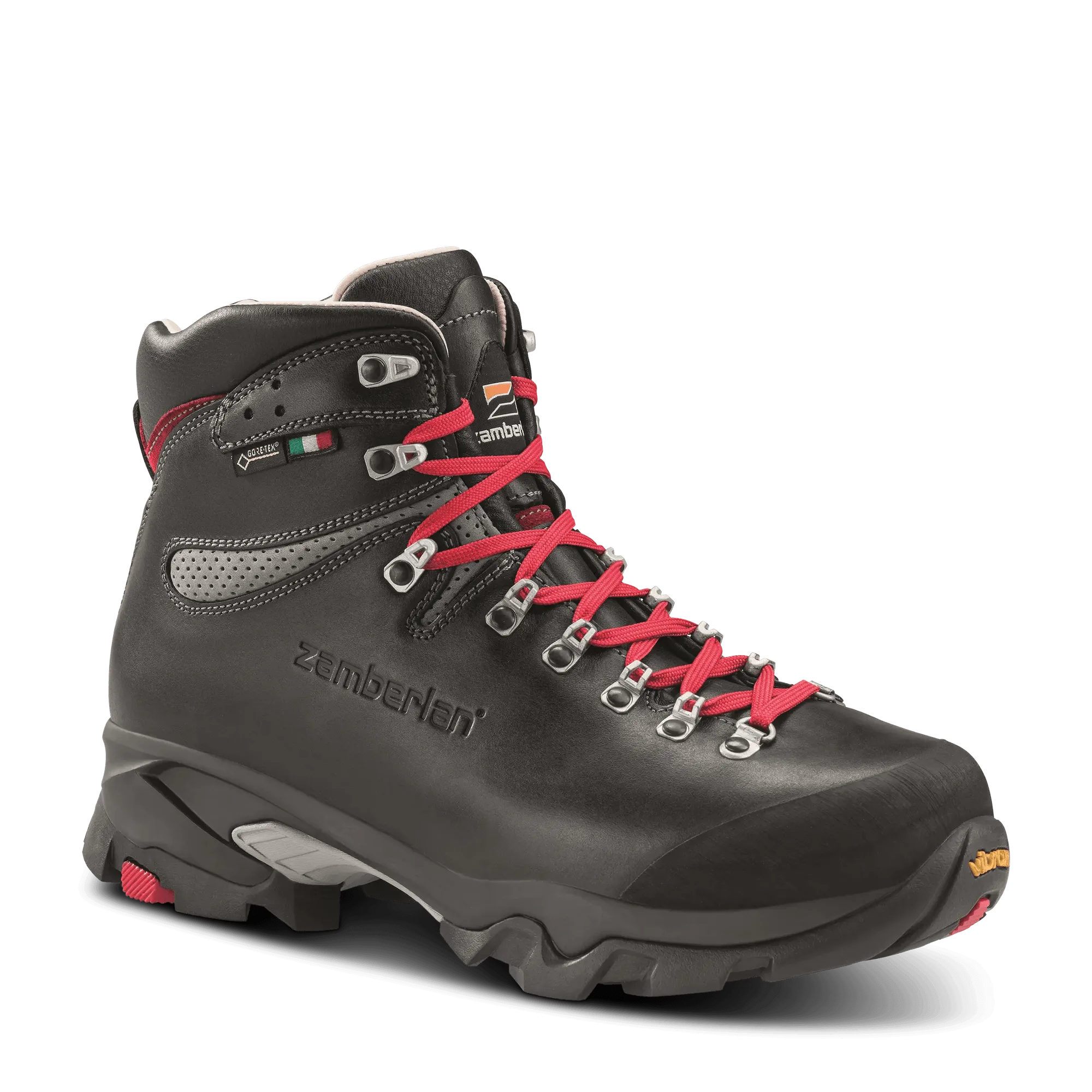
Two boots, two starting points
If you are choosing between the Zamberlan THUNDER PRO GTX and the MOUNTAIN TREK GTX, you are looking at two GORE-TEX-lined boots designed for serious outdoor work. But they approach the same broad activity—backpacking and hunting—from opposite ends of the weight and stability spectrum. The THUNDER PRO GTX is built for fast, stable movement over rough terrain with a heavy pack. The MOUNTAIN TREK GTX is made to transition from technical climbing to hiking on glacial or high-altitude routes. Which one suits you depends on how much of your day involves scrambling versus covering ground.
What the catalog says about each boot
-
THUNDER PRO GTX - Musk: The Thunder Pro GTX excels for fast, stable movement over rough terrain and multi-day outings with heavy packs. This tells you the THUNDER PRO is optimized for speed and load carriage on uneven ground, not for vertical climbing.
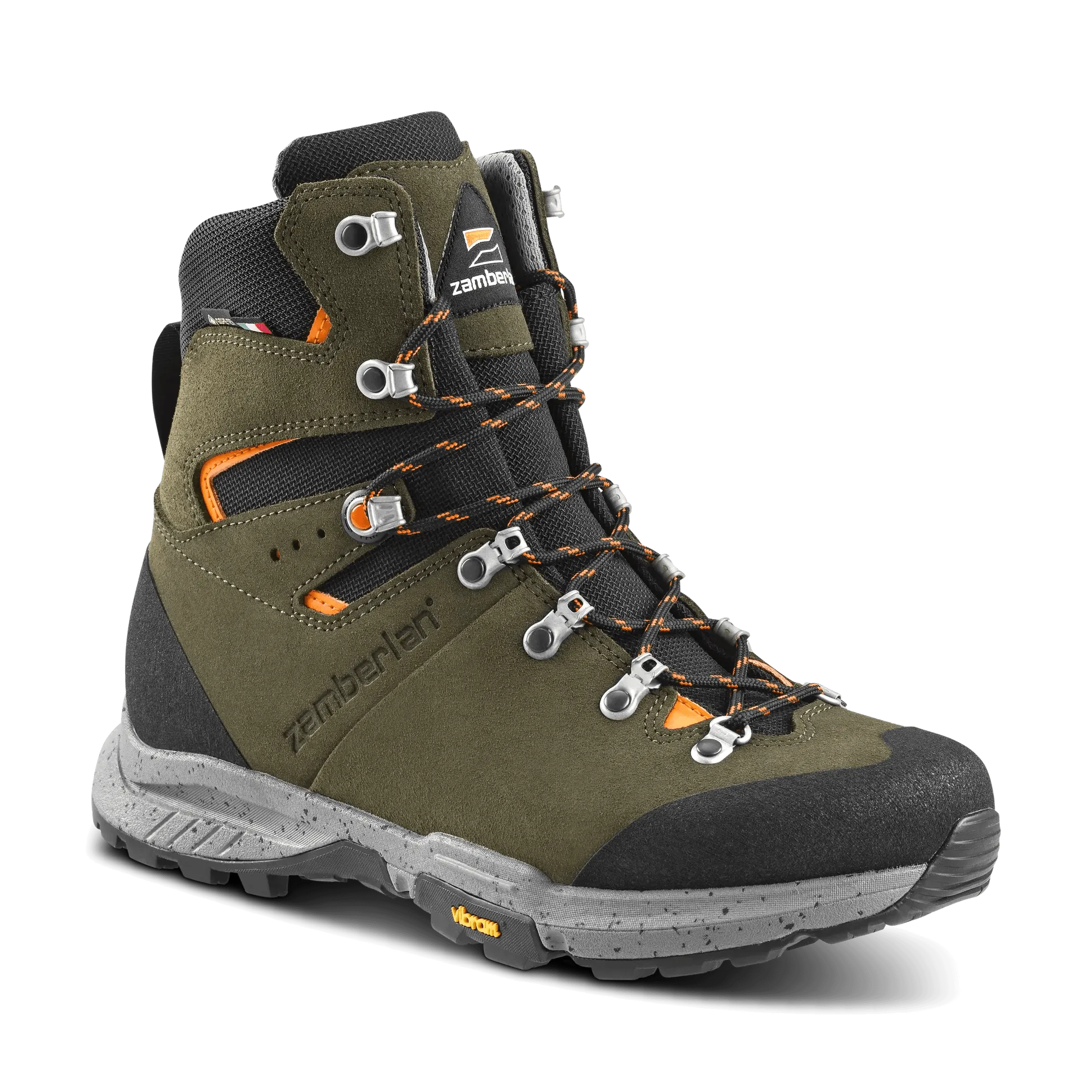
THUNDER PRO GTX - Musk
-
MOUNTAIN TREK GTX - Graphite/Orange: Made for increased 'hikability' the Mountain Trek was made to more easily transition from climbing to hiking with a hike-friendly midsole. Designed for high-level mountaineering and glacial routes as well as high-altitude big game hunting. The MOUNTAIN TREK keeps technical climbing DNA but softens the midsole for walking, making it a crossover for mixed alpine days.
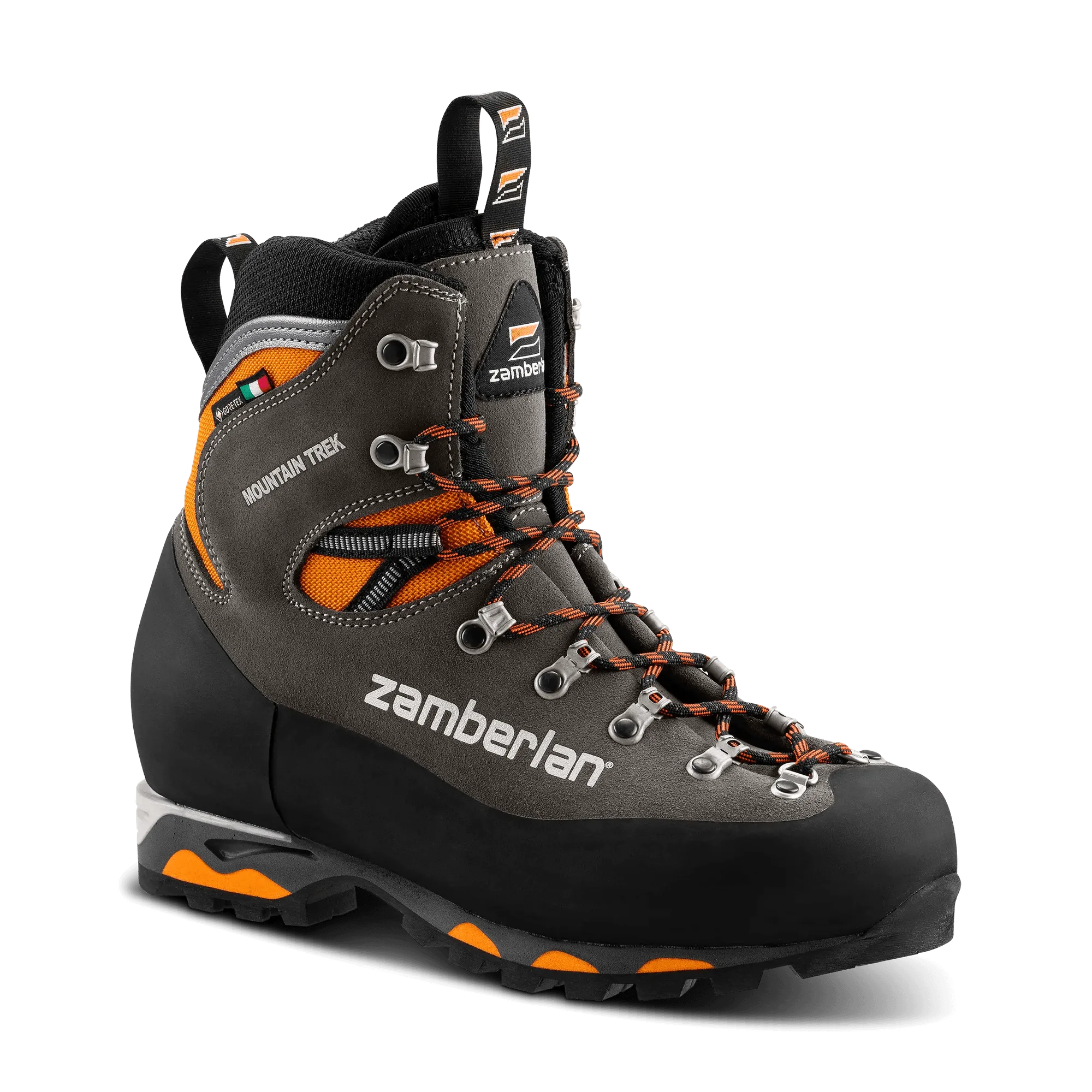
MOUNTAIN TREK GTX - Graphite/Orange
Construction and cushioning differences
The THUNDER PRO GTX uses Zamberlan's Active Heel Pad (AHP) construction, a low-density PU insert inside the heel of the insole. This transfers heel-strike impact directly to the sole for continuous cushioning, reducing joint wear over long miles. The boot also features a soft collar for ankle protection and PU toe and heel rands to shrug off rocks and brush. Its upper is Hydrobloc-treated Perwanger leather with a GORE-TEX membrane.
The MOUNTAIN TREK GTX, by contrast, does not mention AHP or a specific cushioning system in its supplied facts. Its priority is technical route capability: it is designed for climbing with or without gear and for glacial travel. The hike-friendly midsole suggests a compromise between the stiffness needed for edging and the flex needed for walking.
Outsole and traction
The THUNDER PRO GTX uses a lightweight Vibram Junko Lite outsole with Megagrip, which maximizes traction while minimizing weight. This makes sense for backpackers who want to cover distance without extra ounces on their feet.
The supplied information for the MOUNTAIN TREK GTX does not specify an outsole model or compound. That absence does not mean the boot has poor traction—only that the catalog does not confirm a particular Vibram pattern or rubber formula. If technical climbing on rock or ice is your primary activity, you may want to verify the outsole details directly.
How to choose between them
- Choose the THUNDER PRO GTX if...: Your trips are multi-day backpacking or hunting outings with heavy packs over rough, rocky terrain. You value lightweight cushioning and stability for fast movement. The AHP heel pad and Vibram Junko Lite outsole support long days with less joint fatigue.
- Choose the MOUNTAIN TREK GTX if...: Your route includes technical climbing sections, glacial travel, or high-altitude big game hunting. You need a boot that can edge on rock and still walk comfortably. The hike-friendly midsole helps transition between climbing and hiking.
Size availability and fit
Both boots are available in a range of sizes. The THUNDER PRO GTX comes in sizes 8 through 13 (no size 10 or 10.5 listed in the supplied data, so check availability). The MOUNTAIN TREK GTX covers sizes 8 through 13, including size 10 and 10.5. Neither boot's catalog evidence includes width options, so if you have a wide or narrow foot, plan to try them with your typical hiking sock.
Because the two boots have different construction—the THUNDER PRO with AHP cushioning and a soft collar, the MOUNTAIN TREK with a stiffer technical last—fit will feel different even in the same labeled size. A proper try-on with your intended pack weight is recommended.
Price and value
The THUNDER PRO GTX has a catalog price of USD 284.70 (compared to USD 390.00). The MOUNTAIN TREK GTX is priced at USD 320.25 (compared to USD 525.00). The MOUNTAIN TREK carries a higher price, consistent with its more specialized mountaineering capability. For a backpacker who does not need technical climbing features, the THUNDER PRO offers substantial savings and a lighter package.