Quick answer
Choose a toddler carrier when your child has outgrown the standard carrier’s weight or height limits, or when you need more leg and seat support for longer carries. Standard carriers work well for younger babies who still fit comfortably.
When size matters most
A standard carrier is designed for infants and younger babies, typically up to 25–30 pounds. Once your child approaches that limit or their legs hang well below the carrier’s seat, it’s time to consider a toddler carrier. The extra panel height and seat width in a toddler carrier provide proper hip and thigh support, preventing the carrier from riding up under the knees.
Toddler carriers also offer a longer back panel, which helps keep the child’s weight higher on your torso for better posture and comfort. If you frequently carry your child for walks, hikes, or errands, the additional support can make a noticeable difference in your shoulders and lower back.
Material and construction differences
Standard carriers often use lighter fabrics and less padding because they carry less weight. Toddler carriers may use thicker, more structured fabrics or additional padding in the shoulder straps and waist belt to distribute the heavier load. Handwoven or premium cotton carriers, like those in the Signature Toddler category, offer a soft but sturdy feel that molds to your body over time.
However, the trade-off is that a toddler carrier is bulkier to store and pack. If you need a compact carrier for quick trips, a standard size might still be more convenient, even if your child is on the edge of the weight range.
Trade-offs at a glance
- Standard carrier: Best for babies up to 25–30 pounds. Compact and lightweight. May lack sufficient seat depth and back height for toddlers. Switch when your child’s legs hang below the seat edge or they exceed the weight limit.
- Toddler carrier: Designed for children roughly 25–45 pounds. Offers a taller back panel and wider seat for proper hip positioning. Bulkier to carry and store. Ideal for frequent carrying of older babies and toddlers who still want to be worn.
- Comfort trade-off: Toddler carriers usually have more padding and structured fabric, which can feel heavier in the closet but much more comfortable on long walks. If you wear your child daily, the extra padding is worth the storage space.
Product comparison
-
Sailing Away - Signature Handwoven Toddler Carrier: Carry Om Sailing Away - intricately woven baby wrap fabric beautifully crafted into a soft, structured carrier. Handmade. Luxuriously Soft. This is Tula Signature. 100% ringspun cotton Half Signature Carrier. The handwoven fabric and structured design provide both softness and support for heavier toddlers, making it a good choice for extended wear.
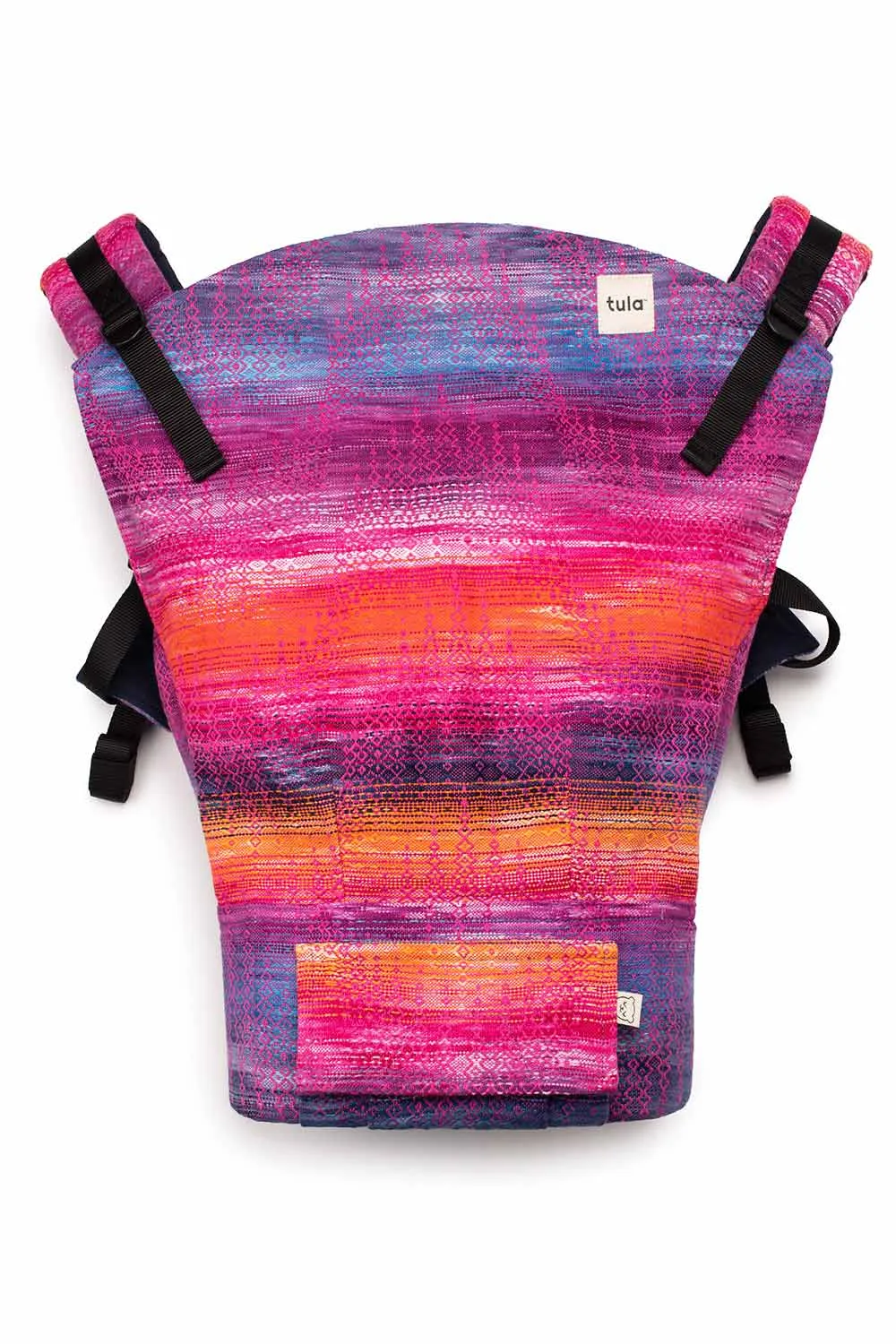
Sailing Away - Signature Handwoven Toddler Carrier
-
Play - Tula Toddler Carrier: ‘Play’ celebrates how babies express joy and happiness giving us their first laugh. A repeating design of tiny white hearts flutter across a mustard yellow background cover the carrier and detachable hood. The playful print and detachable hood add style and sun protection, while the standard toddler size offers a practical upgrade for growing children.
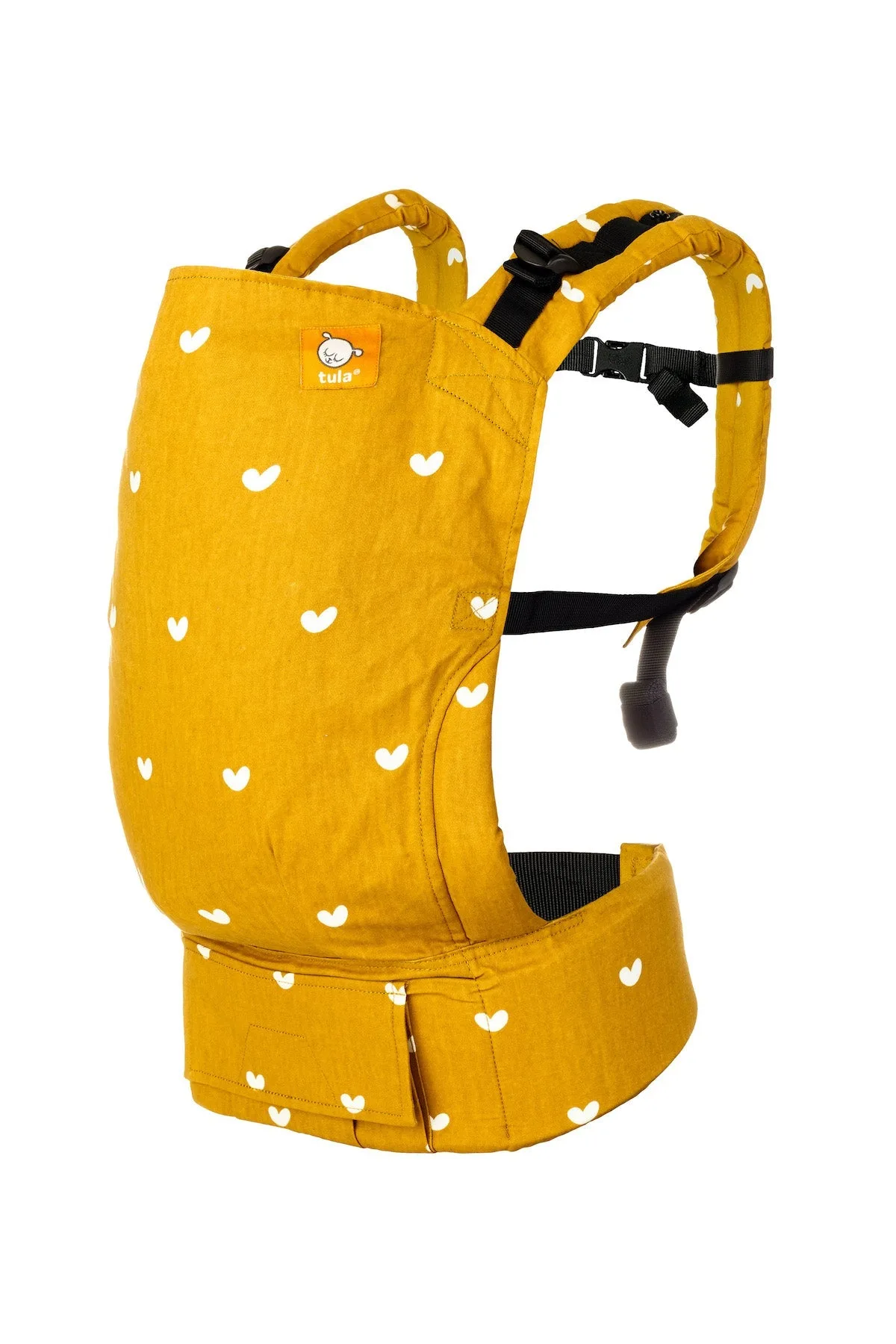
Play - Tula Toddler Carrier
Which carrier fits your child?
Best for
- Parents of toddlers 25–45 pounds who want a comfortable, supportive carrier for daily walks or outings.
- Families who already own a standard carrier and need an upgrade for a growing child.
Not ideal for
- Parents of infants or small babies who still fit comfortably in a standard carrier.
- Those who need a compact, ultra-light carrier for occasional use or travel.