Quick answer
When your toddler loses interest in blocks, the fastest fix is to change the invitation, not the toy. Rotate the blocks, add a new material, or join in with a simple challenge—most children re-engage within a few minutes.
Why blocks suddenly lose their appeal
Toddlers often drop blocks not because they are bored with the blocks themselves, but because the play scenario has become predictable. The same stack, the same spot, the same adult response can turn a once-favorite activity into background noise.
Another common cause is developmental: around 18 to 24 months, toddlers shift from exploring objects alone to wanting social play. If blocks are offered solo, they may walk away simply because they want company, not because they dislike the toy.
The trade-off: new materials vs. too many choices
Adding new loose parts can revive block play, but more is not always better. A huge assortment can overwhelm a toddler, causing them to scatter pieces rather than build. A small, curated tray of natural items often works better than a full bin.
Similarly, stepping in to play can help, but taking over the build can make your toddler feel sidelined. The goal is to be a partner, not a director.
Diagnose and fix block disinterest
- Symptom: Toddler walks away after one minute: Likely cause: the play setup is too predictable or too isolated. Corrective action: move the blocks to a new location (like the kitchen table) and sit down to build alongside them. Point to stop: if they still leave after two attempts, they may simply need a break from blocks today.
- Symptom: Toddler knocks down every tower immediately: Likely cause: they are exploring cause and effect, not rejecting blocks. Corrective action: turn knocking into a game by building a tower and letting them knock it down, then rebuild together. Point to stop: if they only knock and never build, try adding a different material like the loose parts kit to shift the play pattern. If knocking is the only play, introduce a new material rather than forcing building.
- Symptom: Toddler ignores blocks when other toys are nearby: Likely cause: competing toys are more visually stimulating. Corrective action: put away other toys during block time so blocks are the only option, or offer blocks in a separate room. Point to stop: if they still don't engage, they may prefer a different type of play today—honor that and try blocks again tomorrow. A clean, distraction-free space often re-engages toddler play more than any new toy.
A tool that can help
-
Nature's Geometry: Toddler Loose Parts STEM Kit: The Nature's Geometry Toddler Loose Parts STEM Kit is designed to inspire children to experiment and explore while encouraging sensory experiences and intriguing curiosity about natural materials. Introducing a few new natural shapes and textures alongside your blocks can give your toddler a fresh reason to return to block play, without overwhelming them with dozens of options.
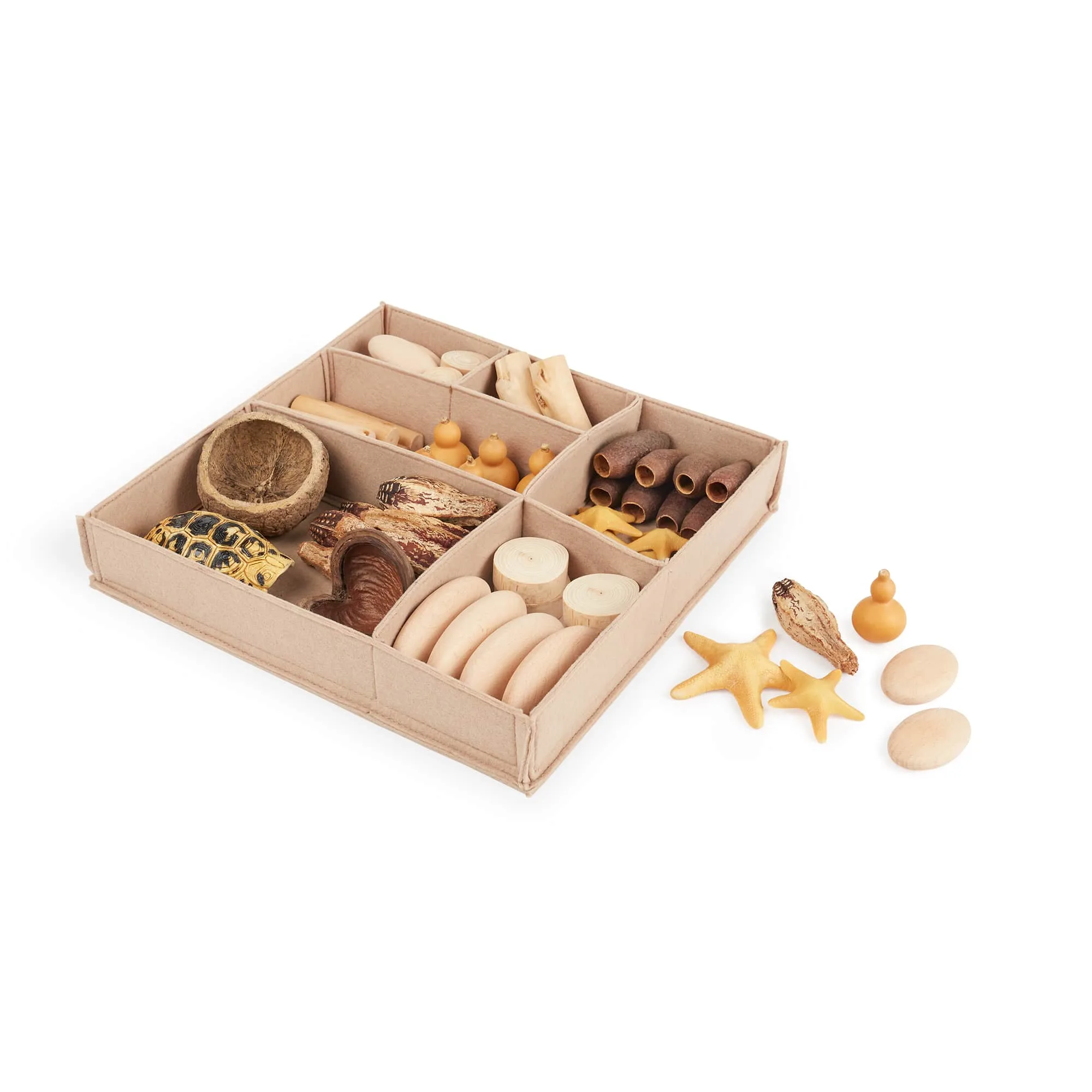
Nature's Geometry: Toddler Loose Parts STEM Kit